
KP-234 · Crop-Specific Guides
True Potato Seed (TPS): Seed from the Flower, Not the Tuber
What true potato seed is and how it differs from a seed tuber, how Pedaver raised TPS in a nursery and transplanted the seedlings to multiply its own seed tubers, what TPS does for the cost of seed, and the aeroponic method of multiplying seed tubers.
Read or listen to the full paper ↓Abstract
Farmers plant potatoes from tubers, and so do almost all commercial growers. But the tuber is not the potato's seed: it is a swollen underground stem, a piece of the parent plant. The true seed of the potato forms above the ground, in a small fruit that follows cross-pollination of the flowers.
True potato seed (TPS) is very fine. Pedaver sowed it in a nursery and transplanted the seedlings to the field, near Lahore in 2013 and in Pakpattan from 2013 onwards, where they grew into a crop whose tubers became seed for the next crop. Planting TPS cuts the cost of seed sharply, and on PQNK beds the seed cost is already low because a seed tuber is cut into single-eye pieces.
A newer method, aeroponics, grows plants from the TPS nursery with their roots hanging in a dark, misted chamber, where one plant can set 70 to 100 small seed tubers against 7 or 8 in the soil. Pedaver did not use this method. Raising TPS is technical work that needs a deep understanding of the potato plant and the nursery.
Full Paper
If you use “Listen”, the text of the page may be sent to your browser or operating system’s speech provider, such as Apple, Google or Microsoft, depending on the voice your device uses. Pedaver does not process, transmit or store any audio.
A tuber is a piece of the plant. A true seed is a new plant. True potato seed comes from the flower, not from the soil.
1. Tuber or True Seed?
Many crops that farmers grow from an underground part are not grown from seed at all. Potato, sweet potato, turmeric and ginger are planted from tubers, roots or rhizomes that grow in the soil. These are pieces of the parent plant. Each one grows into a plant that is a copy of the plant it came from.
A true seed is different. It forms on the plant, above the ground, after a flower is pollinated by pollen from another flower. In the potato, the flowers that are cross-pollinated set a small green fruit, like a small green tomato, and the true seeds form inside that fruit. Whenever we create the conditions for the plant to flower and for the flowers to cross-pollinate, the seed the plant then carries above the ground is its true seed. This is true of the potato and of every other crop that is usually grown from a tuber.
2. Raising TPS: Nursery First, Then Transplant
True potato seed is very fine, much finer than the seed of most field crops. It cannot be sown straight into the field the way a seed tuber is planted. It is first sown in a nursery, where the young seedlings are cared for until they are strong enough to move. The seedlings are then transplanted to the field, and from there they grow into a normal potato crop that forms tubers in the soil. Those tubers become the seed tubers for the next potato crop (Figures 1 and 2). This is the method Pedaver used for TPS.
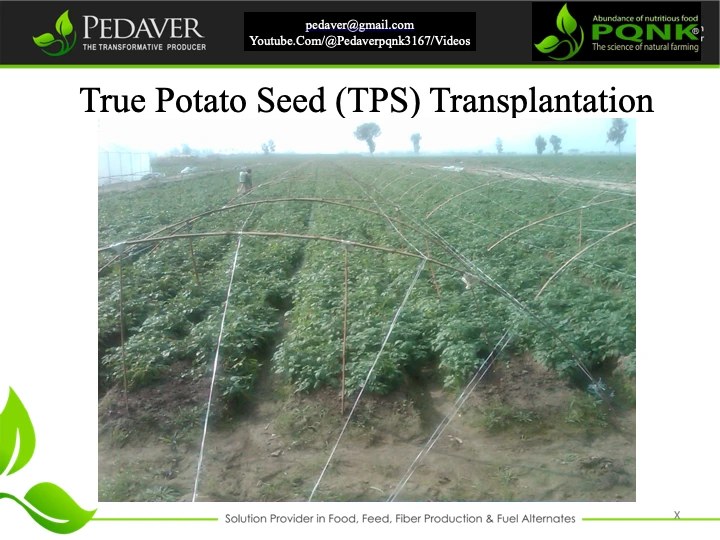
Figure 1. True potato seed (TPS) seedlings transplanted to the field from the nursery, near Lahore, Pakistan, 2013.
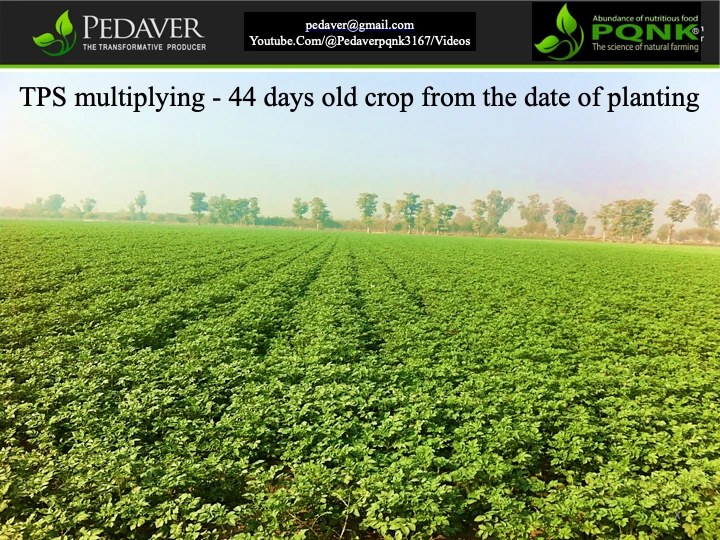
Figure 2. TPS multiplying: the crop 44 days after planting, Pakpattan, Pakistan, from 2013 onwards.
3. What TPS Does for the Cost of Seed
Seed is one of the largest costs of a potato crop. A conventional farmer plants about 1,500 kg of seed tubers on an acre (about 3,700 kg on a hectare). Planting TPS instead cuts the cost of seed a great deal, because a small packet of true seed replaces a trailer load of tubers.
On PQNK beds the cost of seed is already low, even with tubers. The thick mulch protects the planted seed, so a seed tuber does not need a chemical seed treatment and can be cut into single-eye pieces, each planted on its own. An 80 g tuber becomes four pieces of about 20 g, and the cost of seed falls by about three-quarters (KP-135). The full details are given in the PQNK potato lecture (see Related PQNK Sources).
4. Another Method You May Hear Of: Aeroponics
A newer way of multiplying seed tubers is aeroponics (Figure 3). Young plants from the TPS nursery are set in holes in the lid of a closed, dark chamber. Their roots hang freely in the air inside, with no soil, and a fine mist sprayed from nozzles feeds them. A pump lifts the water from a tank to the nozzles, and the water that is not taken up runs back to the tank. The seed tubers form on stolons inside the chamber, where they are picked as they reach size while the smaller ones keep growing.
The difference in numbers is large. A potato plant growing in the soil sets no more than 7 or 8 tubers; grown by aeroponics, it can set 70 to 100 small seed tubers. These are then planted out as seed for the next potato crop. Pedaver did not use this method. Its TPS work was done by nursery raising and transplanting, as described above.
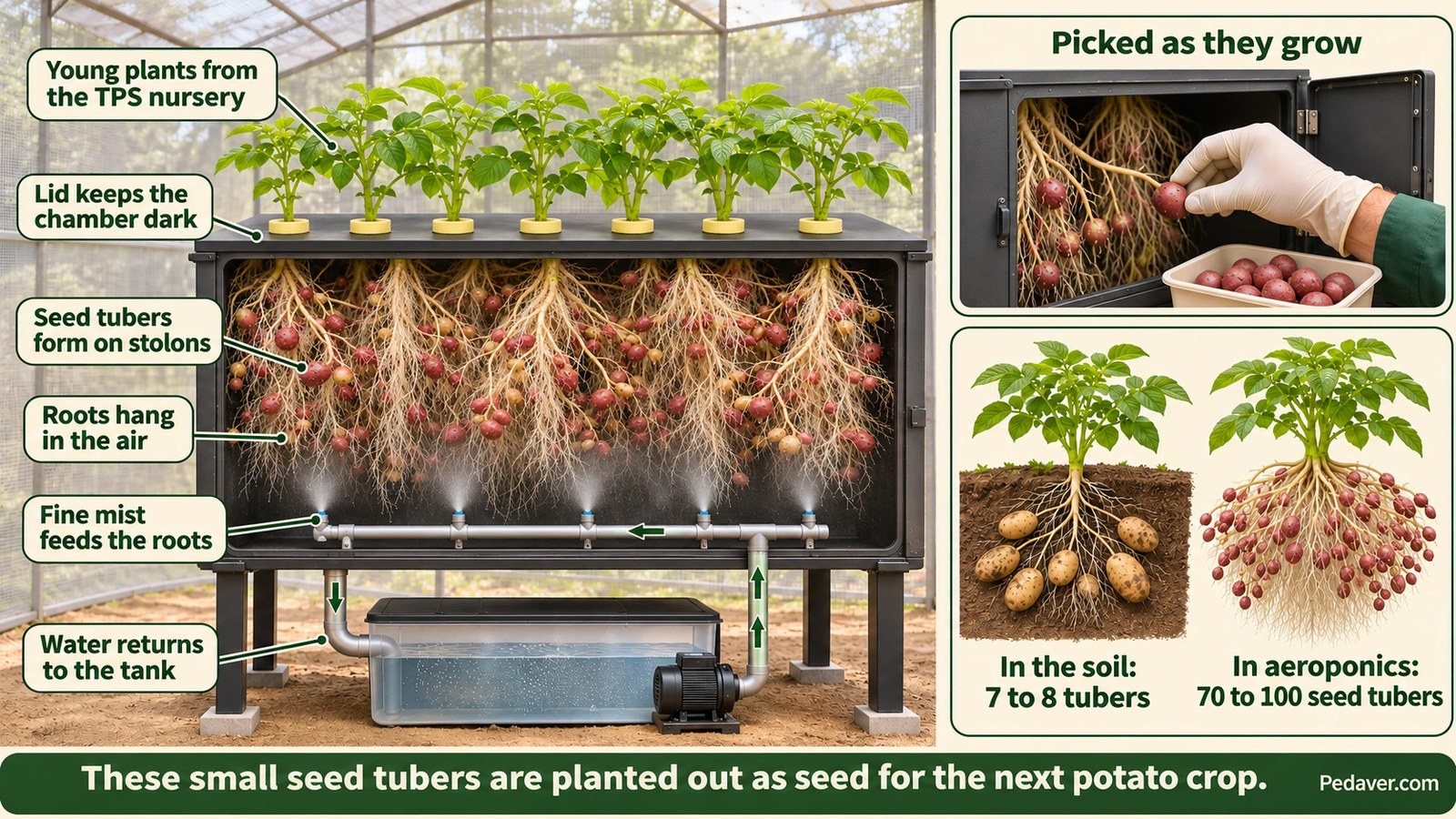
Figure 3. Raising seed tubers in an aeroponic arrangement, and the number of tubers on one plant in the soil and in aeroponics.
5. Is It for You?
Raising TPS in a nursery and transplanting the seedlings is technical work. It needs a deep understanding of the potato plant and of how to raise strong seedlings in a nursery. Before starting, a farmer should look honestly at whether they can do all of this work properly.
If you can, do it. A farmer or a group of farmers who can produce their own seed in this way is no longer tied to buying seed tubers every season.
Conclusion
The potato has two kinds of planting material. The tuber is a piece of the plant and gives a copy of its parent. The true seed forms above the ground, in the fruit that follows cross-pollination, and gives a new plant. True potato seed is raised in a nursery and transplanted, and the crop it gives provides seed tubers for the next crop, cutting the cost of seed sharply. It is technical work, best taken up by those who are ready for it, and on PQNK beds the cost of seed is low even with ordinary cut tubers.
PQNK Principle: The tuber is a piece of the plant. The true seed is a new plant, born from the flower.
Related PQNK Sources
1. KP-011: The Future of Potato Cultivation: A Scientific and Economic Comparison of ACI, Global Best Practices, and the PQNK Framework. https://pedaver.com/papers/the-future-of-potato-cultivation-through-pqnk/
2. KP-135: Potato Planting Depth vs Mulch-Based No-Till Planting. https://pedaver.com/papers/potato-planting-depth-vs-mulch-no-till/
3. KP-136: Achieving High Yields in Potato Cultivation within Mature PQNK Systems. https://pedaver.com/papers/achieving-high-yields-in-mature-pqnk-potato-systems/
4. KP-109: Every Seed Is a Promise. https://pedaver.com/papers/every-seed-is-a-promise/
5. Potato on PQNK: crop page. https://pedaver.com/crops/potato/
6. Lecture by Asif Sharif (Urdu): Potato cultivation on PQNK. https://www.youtube.com/watch?v=O1WNhA2yogM
7. Ask PQNK: https://pedaver.com/ask, or on WhatsApp at https://wa.me/923437506442
About This Paper
- Crop
- Potato · Sweet Potato · Turmeric · Ginger
- Problem
- High Input / Production Cost · External Input Dependency
- Science
- Plants
- Evidence
- Field Observation
- Authority
- Current / Approved PQNK Knowledge
Related PQNK Science
Key Takeaways
- A tuber is a piece of the plant and grows into a copy of its parent; a true seed forms above the ground, in the fruit that follows cross-pollination, and grows into a new plant.
- Potato, sweet potato, turmeric and ginger are planted from tubers, roots or rhizomes; their true seed comes only from the flower.
- TPS is very fine, so it is sown in a nursery and the seedlings are transplanted to the field; the tubers of that crop become seed tubers for the next crop.
- TPS cuts the cost of seed sharply, since a small packet of true seed replaces a trailer load of seed tubers (about 1,500 kg per acre conventionally).
- On PQNK beds the seed cost is already low: mulch protects the planted seed, so an 80 g tuber can be cut into four single-eye pieces, cutting seed cost by about three-quarters (KP-135).
- Aeroponics: 70 to 100 small seed tubers per plant against 7 or 8 in the soil; Pedaver's TPS work used nursery raising and transplanting, not aeroponics.
- Raising TPS is technical work; a farmer or group that can do it is no longer tied to buying seed tubers every season.
Related Crops
Related Knowledge
same crop
Channeling Plant Energy: A PQNK Guide to Managing Vegetative Growth for Regenerative Production
With no grazing animals left to signal plants that their surplus foliage is being used, PQNK farmers must manually replicate that missing pressure. This guide sets out four directives, stamping, grazing, pruning and pinching, and bruising, with a crop-by-crop protocol for redirecting a plant's vegetative surplus into reproductive yield.
same problem
Five Decades of Agricultural Innovation: Interventions and Achievements in Chronological Order, 1973–2023
Asif Sharif's own year-by-year record of fifty years of hands-on agricultural intervention in Pakistan, from early machinery and seed distribution through the 2008 development of PQNK and its crop-by-crop expansion since, presented as the primary evidentiary record behind PQNK: a ground-up, farmer-verified track record rather than a journal citation.
same problem
From Philosophy to Form: Vandana Shiva’s Movement and the PQNK Pristine Organic System
Vandana Shiva’s movement asks who controls agriculture; PQNK asks how a field must be worked so that nature can produce again. This paper sets out what the two share, against input dependency and for the farmer’s own seed and freedom, and where they differ: one works at the level of policy, law and culture, the other defines in the soil the exact, ordered steps that return a degraded field to natural ecosystem function. By PQNK’s test, organic farming that still ploughs, floods or leaves soil bare is a step away from chemicals but not yet the natural system.
same problem
The Chain of Devastation: From the Seed Bag to the Hospital Bed, and Where PQNK Breaks It
A short podcast clip names a trap in eight links: seed that needs NPK and urea, a fertilised plant whose own resistance falls, insects, pesticide, a family that eats the crop and falls ill, then medicines, hospital and insurance, and back to the seed. In ACI agriculture each link is a purchase that makes the next one necessary. PQNK breaks the chain at the soil: a living soil feeds the crop without fertiliser, the plant keeps its resistance, pests stay below 2 percent where every step is followed, nothing is sprayed, and the family eats whole food.