
Vegetables & Tubers
Potato
A production and economics comparison: mulch-based no-till planting versus conventional deep-burial ridging.
Like every PQNK crop, Potato is governed by the same four principles: no soil disturbance, no inundation, permanent biological cover and maximum biodiversity. What follows is specific to Potato — the engineering and management, not the underlying biology.
Overview
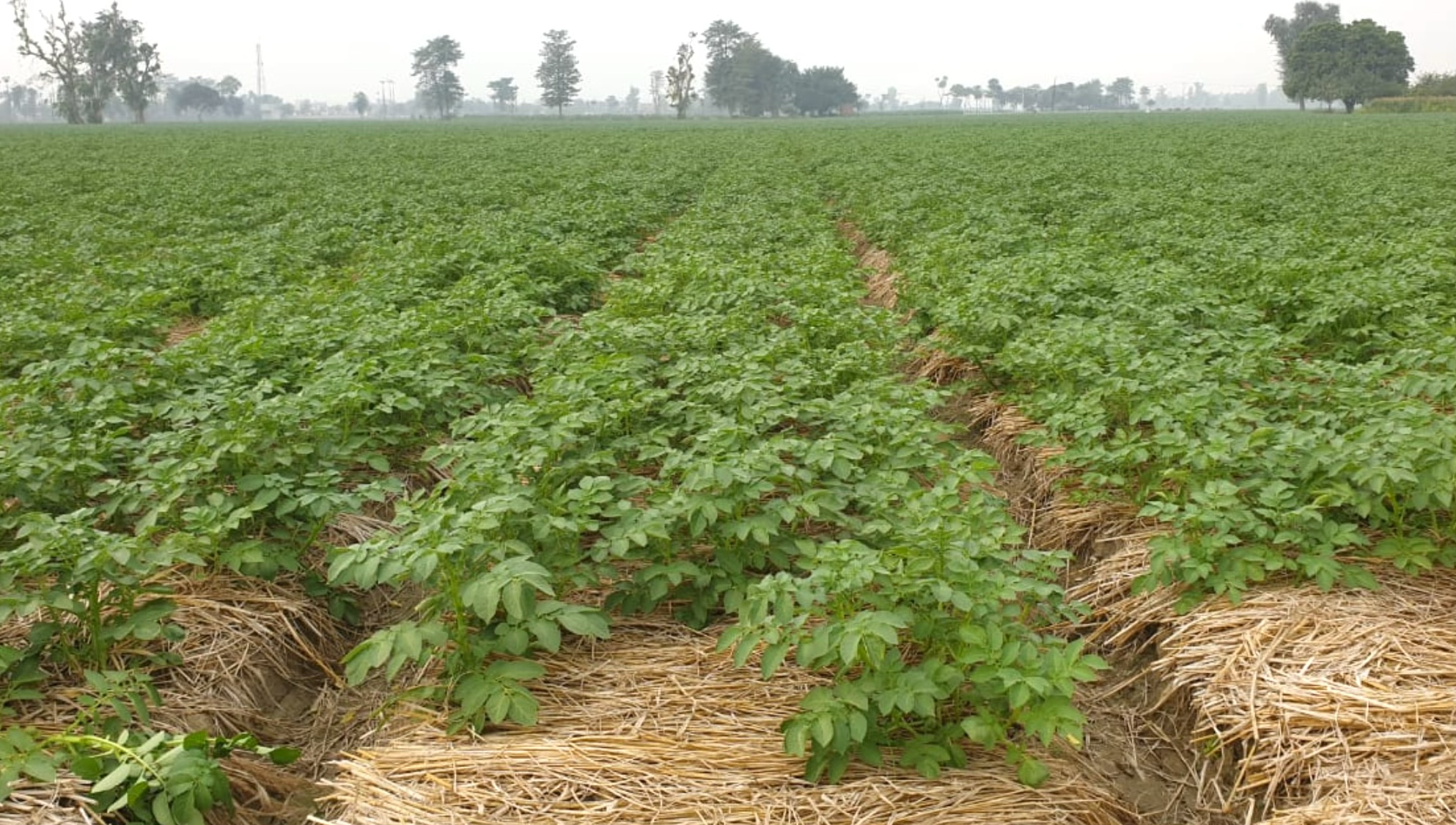
Conventional potato farming buries seed roughly six inches deep in ridged soil to protect it from Punjab's punishing autumn heat, where bare soil can exceed 70°C at the surface. Pedaver's knowledge paper compares this against the PQNK approach: shallow surface seed placement under 4–6 inches of thick organic mulch, on permanent no-till raised beds.
PQNK Practices Applied
- Surface seed placement instead of deep ridge burial
- 4–6 inches of organic mulch for temperature buffering and moisture retention
- Permanent no-till raised beds, avoiding repeated soil disturbance
- Untreated cut seed, cutting seed cost sharply versus certified treated seed
Documented Field Result — Punjab, Pakistan
Even where yield is marginally lower than deep-burial ridging, mulch-based PQNK planting delivers superior economic returns, produce quality, and system resilience — while also enabling earlier planting and higher plant populations through optimized bed design.
Related Knowledge Papers
The full science and field data behind potato under PQNK.
- The Future of Potato Cultivation: A Scientific and Economic Comparison of ACI, Global Best Practices, and the PQNK Framework
- Can High-TDS Water Be Used to Rehabilitate Saline Soils?
- Channeling Plant Energy: A PQNK Guide to Managing Vegetative Growth for Regenerative Production
- PQNK Knowledge Paper: The Twofold Art of Pruning as Compensatory Grazing