

KP-220 · Crop-Specific Guides
Planting Sugarcane Setts in the Centre of the 42-Inch Bed
A sugarcane sett is a stored packet of juice that feeds the bud until the young plant has roots and leaves of its own. PQNK plants the cane once in the centre of the permanent 42-inch bed, with less than 5 maunds of seed cane per acre against nearly 150 in conventional planting, so every sett matters: pushed upright into the bed centre with the bud no deeper than 3 inches, or laid lengthwise in a shallow slit with two nodes and both cut ends sealed with cement, always in soil at wattar and under mulch. A sett laid in dry soil loses its juice before the water arrives, as a planting at Haroonabad showed. The strongest recommendation is bud chipping: the bud chips are raised in nursery trays and healthy seedlings transplanted, while the whole cane is sold to the mill.
Read or listen to the full paper ↓Abstract
PQNK plants sugarcane once, in the centre of the permanent 42-inch bed, and never earths it up. The sett is the young plant’s only food until its roots and leaves take over: of the whole plant’s dry weight, more than 95 percent is built from carbon dioxide and water, with nitrogen also from the air through soil microbes, but none of that is possible until the first leaves are working.
Sugarcane holds its juice in the internodes, sealed by the skin and the nodes. A cut face loses that juice to a dry soil, so a single-node sett open on both sides can dry within hours. Two nodes with a whole internode between them, and cement on both cut ends, are the safety factor. In soil at wattar, the sett is either pushed upright into the centre of the bed, bud no deeper than 3 inches and no cement needed, which suits smallholders, or laid lengthwise about two inches deep in a shallow slit, which is easier at large scale; the bed is then covered with 3 inches of mulch. Conventional planting hides careless cutting with saturated soil and nearly 150 maunds of seed cane per acre; PQNK uses less than 5 maunds, so every sett must be prepared and placed with care.
At Haroonabad in September and October 2026, setts laid in dry, powdery soil and watered afterwards lost their juice before the water reached them, and germination failed. At Shorkot, Jhang, crumbly soil took in the water quickly and germination was 100 percent. The rule holds for every soil: plant at wattar, and never let the sett wait in dry soil. The strongest recommendation is bud chipping: only the bud is cut out, the whole cane is sold to the mill, the chips are raised in nursery trays, and healthy seedlings are transplanted, treating sugarcane as an orchard, not a seasonal crop.
Full Paper
If you use “Listen”, the text of the page may be sent to your browser or operating system’s speech provider, such as Apple, Google or Microsoft, depending on the voice your device uses. Pedaver does not process, transmit or store any audio.
A sugarcane sett is a stored packet of juice. That juice feeds the bud until the young plant has roots and leaves of its own. PQNK lays the sett in the centre of the permanent 42-inch bed, in soil at wattar, so the juice is kept for the bud and is not lost to a dry soil before the water arrives.
1. Why the Centre of the Bed
The standard PQNK profile has a 42-inch bed top, an 18-inch furrow top, an 8-inch furrow bottom and an 8-inch depth (Chapter Twenty-Three). Sugarcane is planted once in the centre of that bed and is never earthed up: the hardpan below has been broken, the roots go deep, and anchorage comes from the roots, not from soil piled around the stem (Chapter Thirty-Seven, KP-211). The crown stays near the aerated surface, and new tillers rise from the inside of the stool (KP-218).
The centre is also the right place for moisture. When water is given in the furrows it moves sideways into the bed from both sides. At Haroonabad the moisture moved about 9 inches into the bed within an hour and a quarter and was expected to meet in the centre by evening. The centre is therefore the last part of the bed to dry and the last to be saturated: a moist, aerated root zone for the sett. And with the cane in the centre, the two sides of the bed remain free for other crops.
2. What the Sett Does
A sett is a piece of cane stalk carrying one or more buds. Until the bud has formed roots and opened enough leaves, it cannot feed itself: it lives on the juice stored in the sett. That juice is its energy. With it, the bud pushes out its first roots and its shoot. Without it, the bud cannot germinate, and if it does germinate on the last of its juice, the young shoot will not survive.
Of the whole plant’s dry weight, above and below ground, more than 95 percent is carbon, hydrogen and oxygen, built by photosynthesis from carbon dioxide taken from the air through the leaves, and from water. Nitrogen, a few percent more, also comes from the air, made available in the soil by microbes. Only the small remainder, the minerals, comes from the soil itself. Until its first leaves are open and working, the young plant has no other source of energy than the sett. No leaves, no energy, and no survival. So two things must last until the roots have formed and there are enough leaves for the plant to carry on growing by itself: the juice in the sett, and moist, aerated soil around it.
3. Never Let the Sett Wait in Dry Soil
Juice leaves a sett only through its exposed parts, above all its cut ends. A dry soil draws moisture from whatever it touches. A sett laid in dry soil is therefore drained through its cut ends from the moment it is placed, and if the water reaches it a day or two later, the juice the bud needed may already be gone. The rule is simple: the sett must go into soil that is already at wattar, moist enough to form a ball when pressed in the hand (the ball test), and never wait in dry soil for water to follow.
The PQNK planting is done in this order. When the bed is at wattar, open a small, shallow slit along the centre of the bed. Lay the setts in it lengthwise, at about two inches depth (Chapter Thirty-Seven). Cover them with soil, and then lay mulch over the bed. The mulch keeps the soil surface from drying and from heating, so the sett stays in moist, aerated soil while the bud roots and shoots.
There are two ways to place the sett in the centre of the bed. It can be laid lengthwise in the slit, as above, or it can be pushed into the soil upright. For vertical insertion the bed must be at wattar: the soil is then soft and crumbly, and the sett slides in by hand, node end first, with its upper end left above the surface (Pictures 1 and 2). The bud must not go deeper than 3 inches. The soil is pressed firmly around the sett, so that there is no air gap between the sett and the moist soil, and the bed is then covered with a 3-inch layer of mulch.
Standing upright, the sett has its bud in the moist, aerated soil of the bed centre, where the roots form, and its shoot has only a short way to the surface. An upright sett does not need the cement coating: its open upper end stands above the ground and is well covered by the mulch, so it is not in contact with the soil that would draw out its juice. Vertical insertion also carries its own test of the soil: if the sett cannot be pushed in by hand, the bed is too dry or too hard, and it is not yet time to plant.
Vertical insertion is easy for a smallholder working by hand. For a large-scale farmer, laying the setts lengthwise may be easier. Our most preferred method, however, is neither: it is to raise the cane in a nursery and transplant healthy plants (see Section 8).
Picture 1 (left): a sett pushed upright into the moist soil of the bed centre, node end first. Picture 2 (right): the sett in place, its upper end just above the surface, with the soil pressed around it; the bed is then covered with 3 inches of mulch.
4. How a Sett Keeps or Loses Its Juice
Sugarcane stores its juice in the internodes, the lengths of stalk between the nodes. Each internode is a sealed store: the hard skin around it and the node at each end close it in. As long as an internode is whole, its juice stays inside, ready for the bud. When the stalk is cut through an internode, that store is opened, and the cut face is where the juice leaves. How the sett is cut therefore decides how much juice the bud will still have when it needs it. The two pictures below show what to look for.
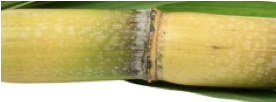
Picture 3: a sett cut with a single node in the centre and the stalk cut open on both sides.
In Picture 3 the sett has only one node, in the centre, and the stalk is cut open on both sides of it. Both halves are exposed. Laid in dry soil, this sett loses its juice through both cut faces: the dry soil absorbs it, and the sett can dry out within a few hours. The bud on the node is then left without the energy it needs. It will not germinate, and if it does, the shoot will not survive.
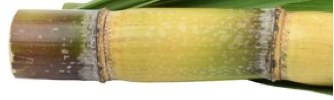
Picture 4: a sett cut about 2 inches away from the nodes, with a whole internode between them.
In Picture 4 the stalk is cut about 2 inches away from the node at each end (the piece shown carries no buds; it shows how the cut is made). The short lengths beyond the two nodes are open, and in dry soil the juice in them is absorbed from both cut ends. The whole internode between the two nodes is different. Its skin and the nodes at its two ends protect it and hold its juice inside, so that juice stays available for the buds to grow roots and leaves.
What this means for the farmer:
• A cut face always gives its juice to a dry soil; a whole internode keeps it.
• Cut the sett so that its juice is held in whole internodes closed by nodes, about 2 inches beyond the node, and never through the stalk right beside a single bud.
• Above all, lay the sett in soil that is already at wattar. Then there is no dry soil to draw the juice out, and the bud keeps its energy until its roots and leaves can take over.
Seal both ends of every sett laid lengthwise with cement before planting. The cut ends are the only place the juice can escape, so a coat of cement on each cut face closes them: the juice stays inside the sett for the bud until its roots and leaves have formed. Apply the cement to both ends, never to one alone, because an end left open will still lose its juice.
A sett pushed in upright does not need the cement: its open upper end stands above the ground under the mulch.
The quality of the seed cane matters as much as the cut. PQNK plants either setts or nursery-raised transplants, with less than 5 maunds of seed cane per acre, and adjusts the spacing of the clumps to the variety, the machinery, the intercropping plan and the population wanted (Chapter Thirty-Seven).
Where setts are planted, two nodes with a whole internode between them, and cement on both cut ends, are the safety factor. A single-node sett open on both sides (Picture 3) has no reserve against a dry soil. Where the seed cane is weak, a farmer may place two or three setts at each station to make sure of a full stand, as was done at Haroonabad; the better answer is good seed cane, cut correctly and planted at wattar. Better still is a nursery: our strongest recommendation is to raise the cane in a nursery and transplant it (see Section 8).
5. Why the Cut Does Not Matter in Conventional Planting, and Why It Does in PQNK
In conventional sugarcane, the way a sett is cut hardly matters. The setts are laid in furrows and the field is irrigated again and again to keep the soil saturated. A saturated soil has no dryness to pull the juice out of a sett, so open cut ends lose little, and any setts that still fail are covered by sheer quantity: nearly 150 maunds of seed cane are planted per acre.
PQNK plants with precision instead, with less than 5 maunds of seed cane per acre. The setts are laid in the middle of the raised bed, where the soil is moist and aerated and is never saturated. With so few setts, every sett matters, and each must be given the right conditions to germinate:
• cut precisely, so that its juice stays sealed in whole internodes, as explained above;
• both open ends coated with cement;
• laid in soil that is kept moist, at wattar, never dry; and
• covered with mulch, which holds the moisture and keeps the temperature even through the germination stage.
Saturated soil hides a careless cut at the cost of 150 maunds of seed and a waterlogged root zone. PQNK saves that seed and keeps the soil alive, and asks in return that each sett is prepared and placed with care.
6. Field Case: Haroonabad, September and October 2026
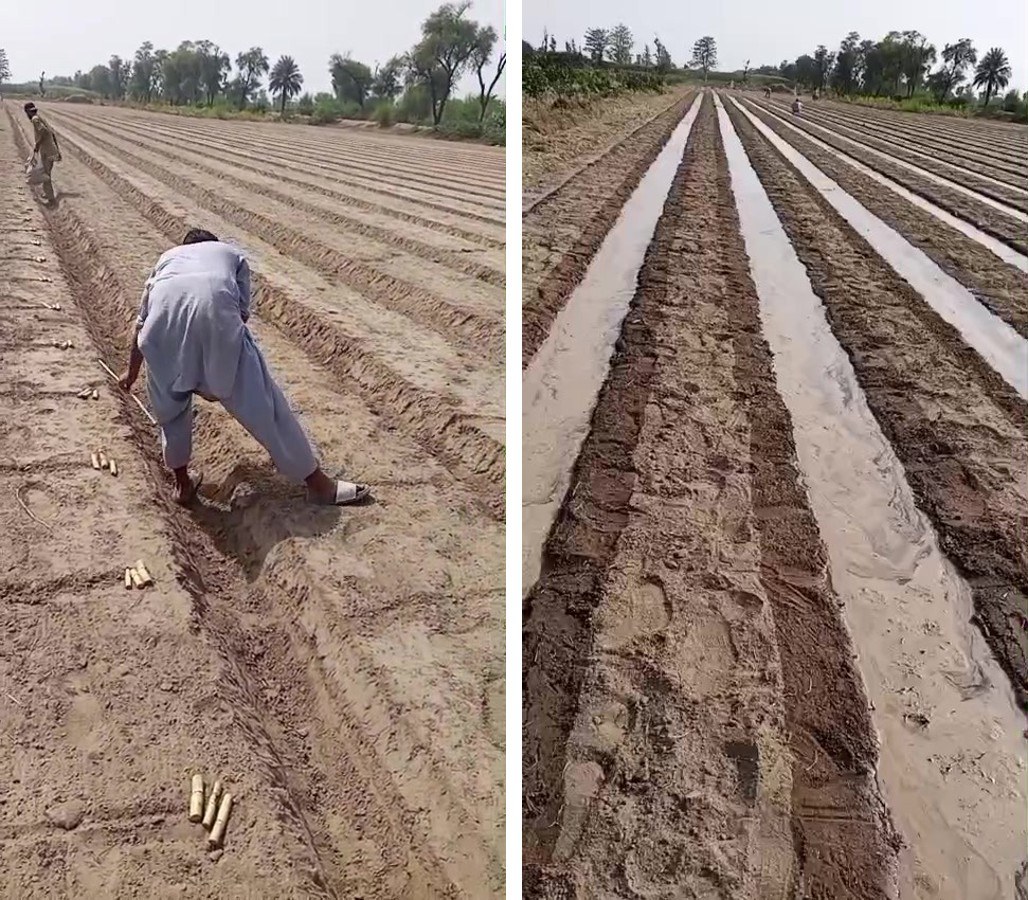
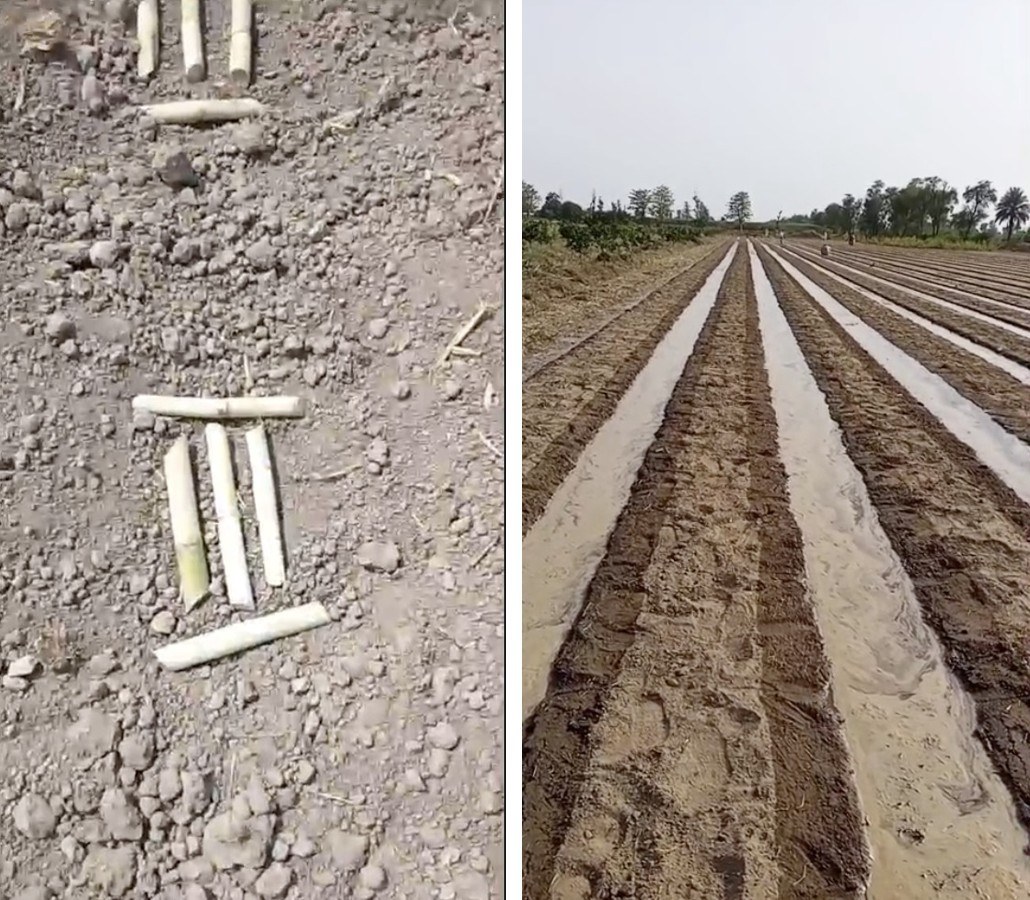
At a PQNK farm in Haroonabad, about one acre of sugarcane was planted on permanent beds at the end of September 2026. The seed cane was weak, so single-bud setts were laid in groups of two or three along the centre of the beds, and the beds were dry when the setts were laid. Water was started in the furrows immediately: the planting ran from morning to evening and the furrows were filled through the night, and the moisture moved about 9 inches into the bed within an hour and a quarter. The beds were then covered with a full mulch.
Haroonabad, 30 September 2026: setts laid in groups along the centre of the dry bed (left), and furrow water moving sideways into the beds after planting (right).
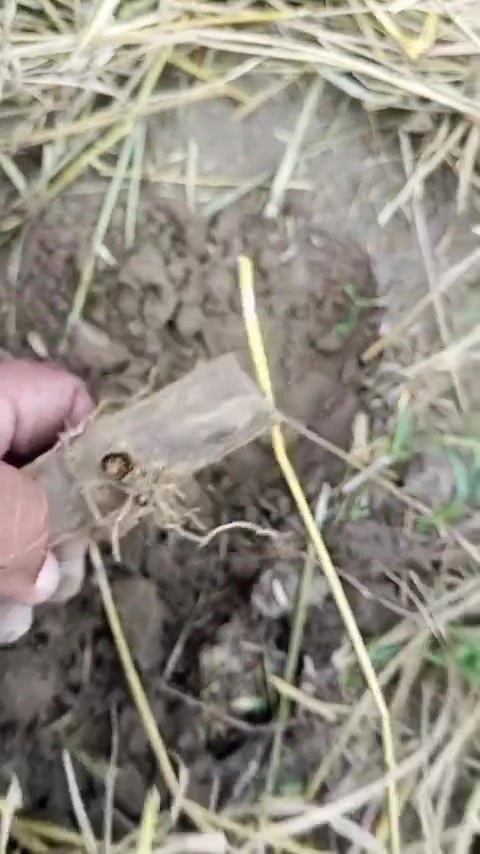
The first shoots came up well. Then, about ten days before the farmer’s report of 22 October, rain fell on the mulched beds, and germination stopped: many stations produced no shoot, and setts dug out from under the mulch had dried or rotted. The farmer’s reading was that the rain left too much moisture under the mulch. The PQNK reading is that the setts had already lost much of their juice: they were laid in dry, powdery soil, the soil drew the juice out through the cut ends before the water reached them, and the buds that remained had too little food left to carry them. The quality of the seed cane and the way the setts were cut add to the same loss.
Haroonabad, 22 October 2026: a sett dug out from under the mulch, with no shoot.
The same planting succeeded at Shorkot, Jhang. There, PQNK farmer Asif Raza Qureshi also laid his setts in dry soil and watered them afterwards, and germination was 100 percent. The difference was the soil. At Shorkot the soil is not powdery (Picture 5): it is crumbly, with open spaces between its crumbs, so it takes in water quickly, and the furrow water wets the soil around the sett before the soil can absorb its juice. At Haroonabad the soil is powdery (Picture 6), with little space between its pores for capillary movement, so it took much longer for the water to wet the soil around the sett. By then the dry soil had already absorbed the juice. Water that reaches the sett after a dry soil has dried it has no value.
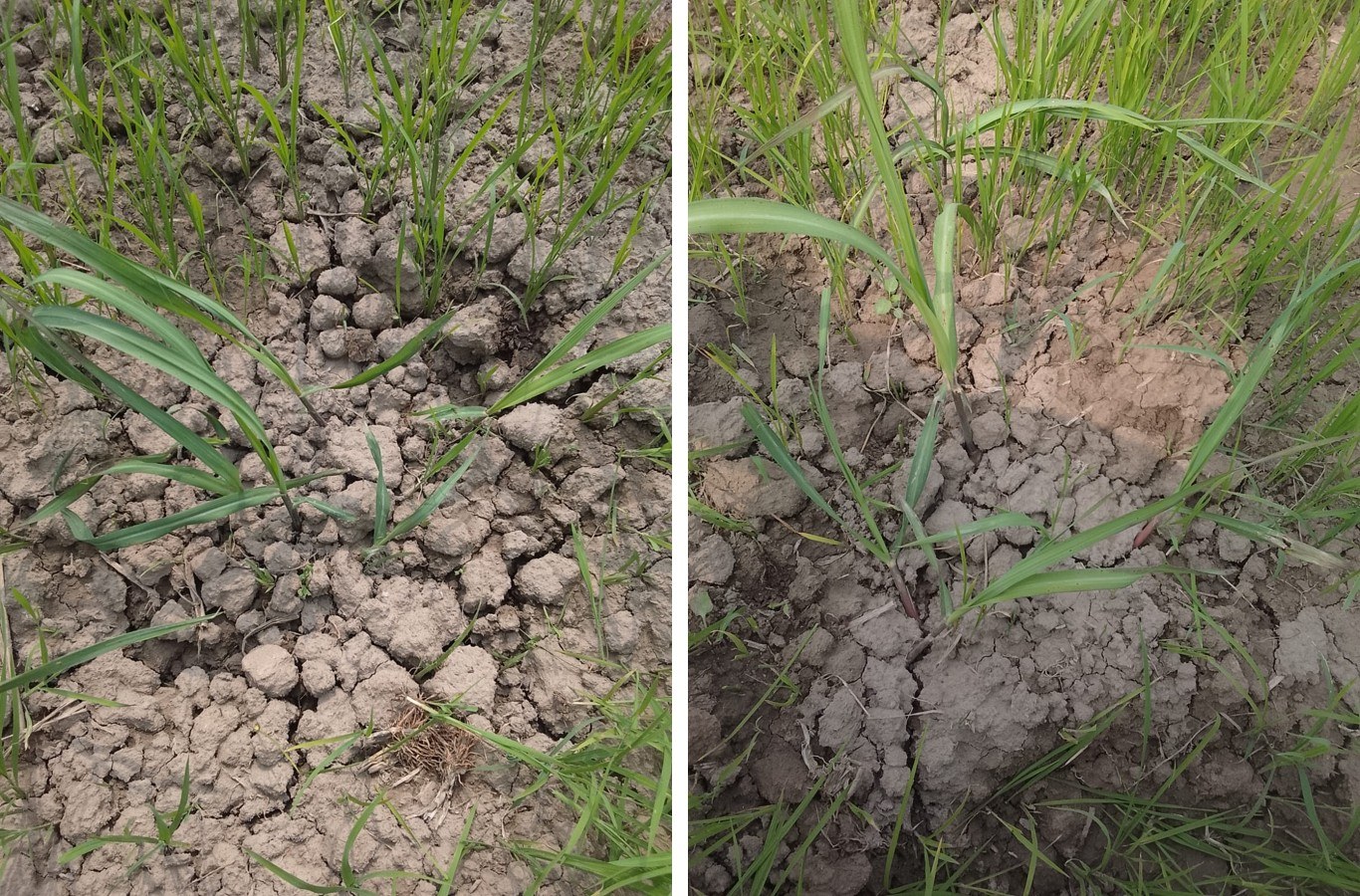
Picture 5 (left): setts at Shorkot, Jhang, on crumbly soil that takes in water quickly. Picture 6 (right): powdery soil at Haroonabad, where the furrow water was slow to wet the bed.
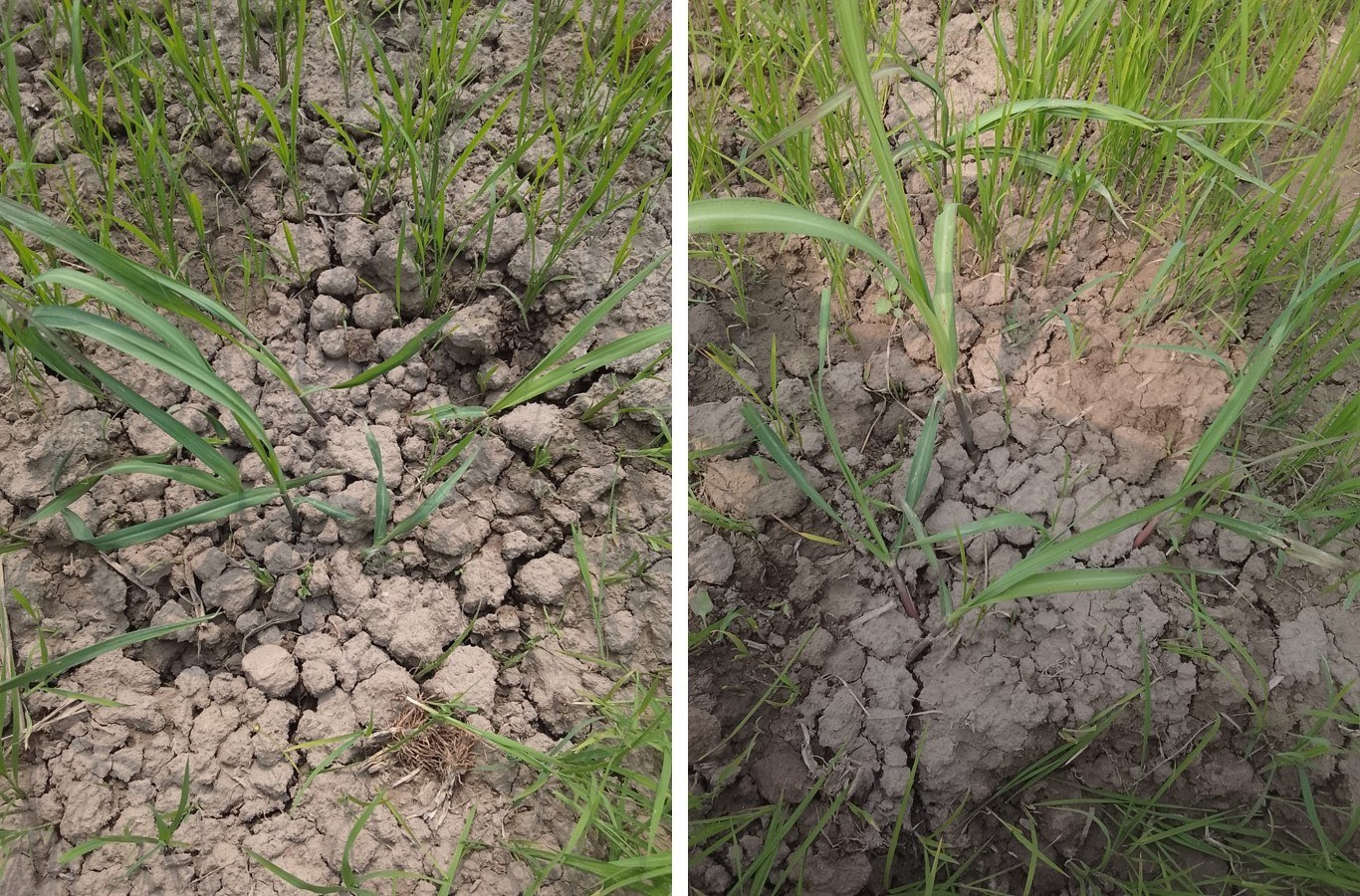
Picture 7: Shorkot, Jhang: good germination, young sugarcane shoots from setts planted in the centre of the bed.
Shorkot shows that a sett laid in dry soil can survive where the soil takes in water fast; Haroonabad shows that it cannot be relied on. The PQNK rule stays the same for every soil: plant at wattar, and never let the sett wait in dry soil for the water to follow.
7. The Two Sides of the Bed: Crop-in-Crop
With the cane in the centre, the two sides of the 42-inch bed carry other crops. At Haroonabad canola is planned in two lines, one on each side of the cane. Two lines are enough. The plants should stand at least 12 inches apart, and up to 16 inches, with two seeds per hill if wanted; 6 inches is too close. The leader shoot of each canola plant is chopped off when the plant is about 12 inches tall, so that it branches and carries more pods (KP-215). Wheat can also be grown on the sides, and toria or mustard can be sown with it, as farmers have long done.
8. Our Strongest Recommendation: Bud Chips in a Nursery, Then Transplant
Our most preferred method is to raise the cane in a nursery and transplant healthy plants. It begins with bud chipping (Picture 8). A simple hand-operated cutter scoops out only the bud, with a small piece of the stalk around it. The rest of the cane stays whole and is sold to the mill, so the seed costs almost nothing: no cane is cut up into setts at all.
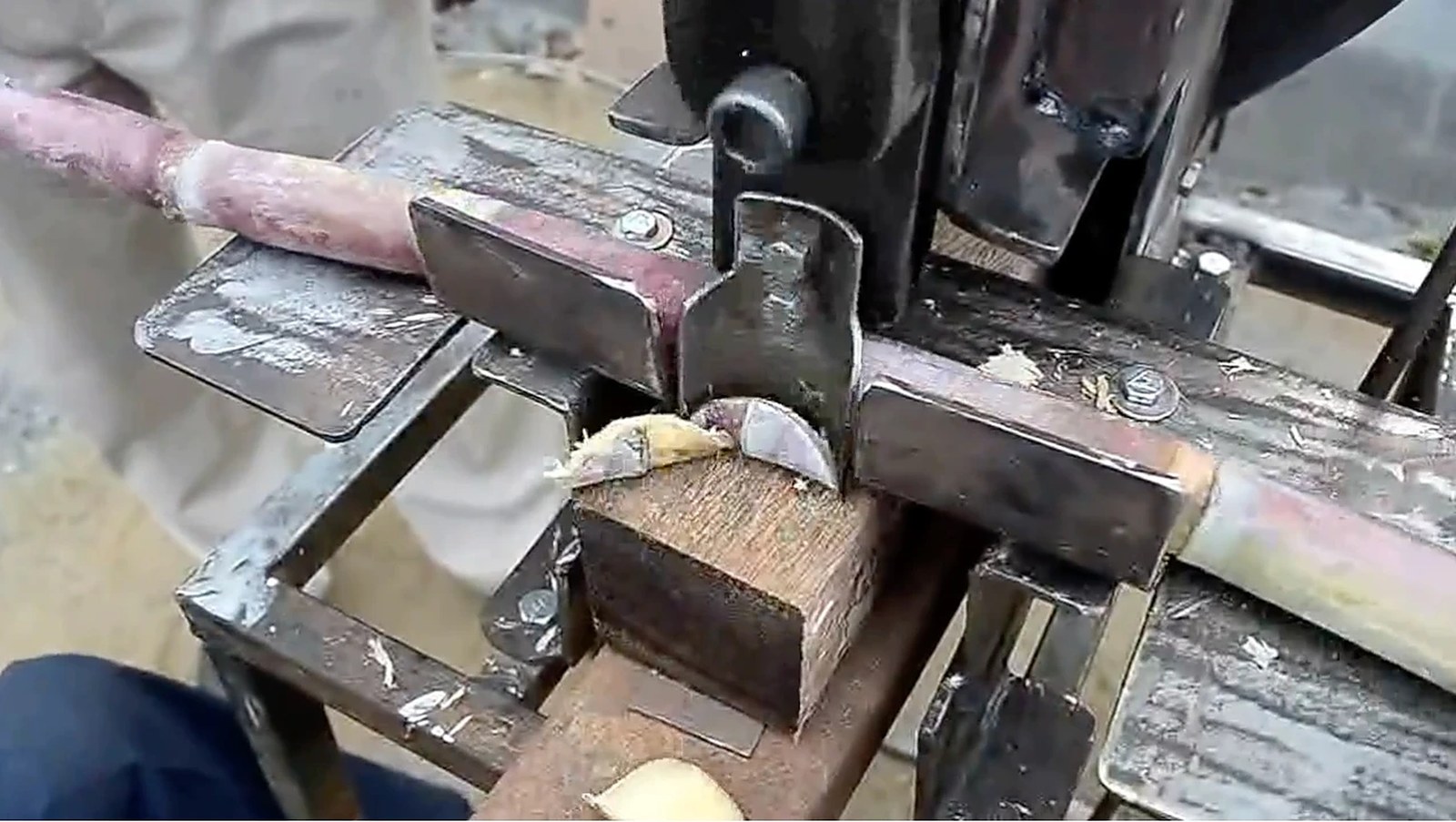
Picture 8: bud chipping. The cutter takes out only the bud; the cane stays whole and goes to the mill.
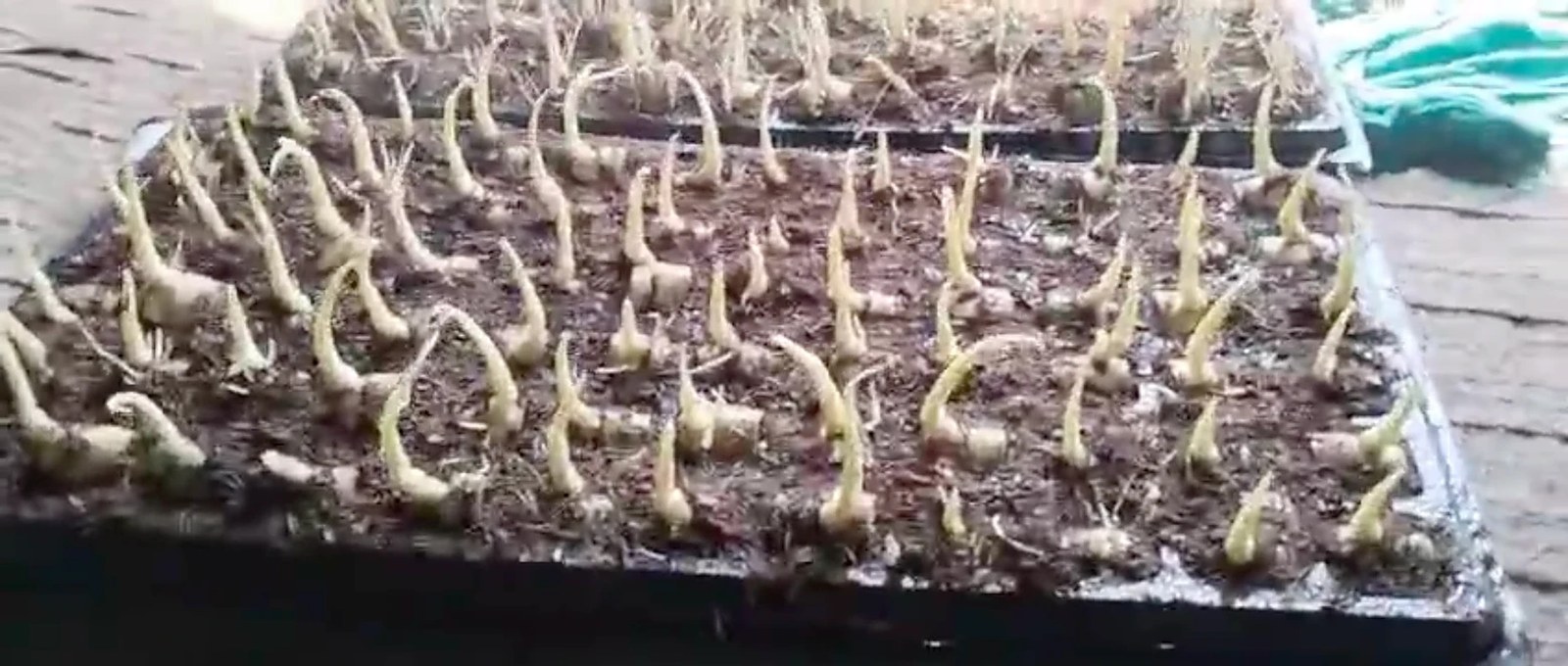
The bud chips are set in nursery trays filled with a moist growing mix (Picture 9), where every chip can be watched and kept moist until it sprouts. Within a few weeks the trays are full of healthy seedlings (Picture 10).
Picture 9: bud chips sprouting in a nursery tray.
The healthy seedlings are then transplanted into the centre of the permanent bed, with the soil at wattar, and the bed is covered with mulch (Picture 11). Only plants that have already rooted go to the field, so every station starts with a living plant, and none is lost to a dry soil, a weak bud or a poorly cut sett. Sugarcane lasts for years like bamboo, and a field planted from healthy transplants is planted once, as an orchard is planted.
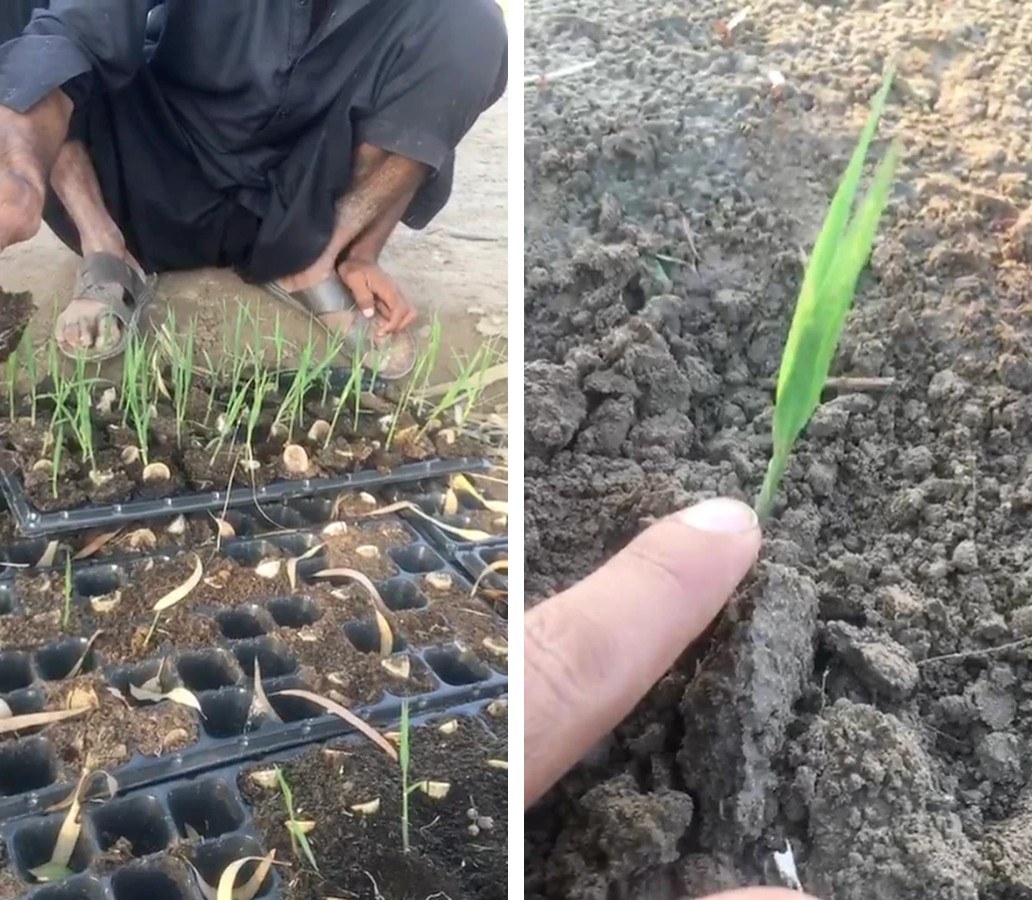
Picture 10 (left): healthy seedlings in the nursery trays, ready for the field. Picture 11 (right): a seedling transplanted into the moist soil of the bed.
9. In Practice
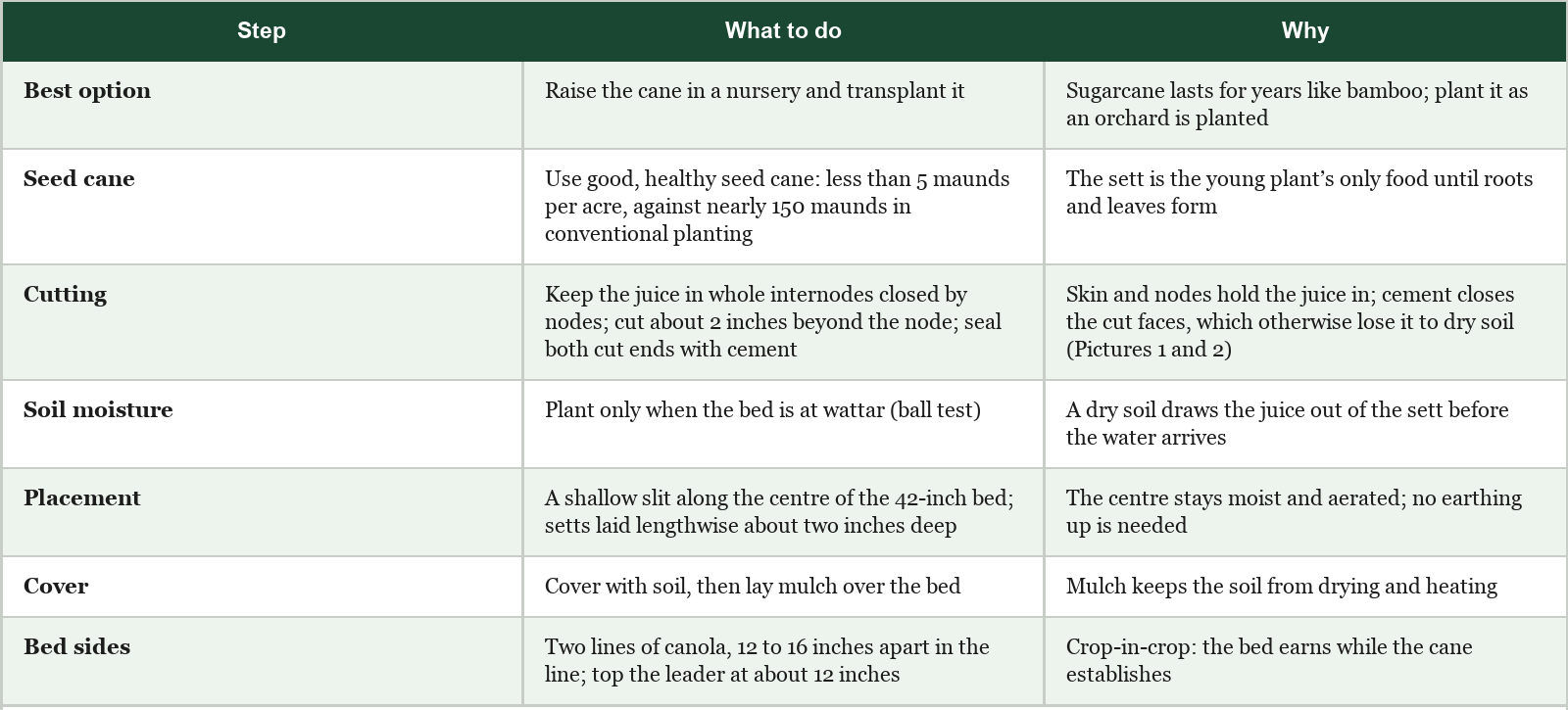
| Step | What to do | Why |
|---|---|---|
| Best option | Bud chipping: raise the bud chips in nursery trays and transplant healthy seedlings | The whole cane is sold to the mill; every station starts with a rooted plant; the field is planted once, like an orchard |
| Seed cane | Use good, healthy seed cane: less than 5 maunds per acre, against nearly 150 maunds in conventional planting | The sett is the young plant’s only food until roots and leaves form |
| Cutting | Keep the juice in whole internodes closed by nodes; cut about 2 inches beyond the node; seal both cut ends with cement when laying setts lengthwise (not needed for upright setts) | Skin and nodes hold the juice in; cement closes the cut faces, which otherwise lose it to dry soil (Pictures 3 and 4) |
| Soil moisture | Plant only when the bed is at wattar (ball test) | A dry soil draws the juice out of the sett before the water arrives |
| Placement | In the centre of the 42-inch bed: pushed upright, node end first, bud no deeper than 3 inches (easy for smallholders), or laid lengthwise about two inches deep in a shallow slit (easier at large scale), always into soil at wattar; then 3 inches of mulch | The centre stays moist and aerated; no earthing up is needed; if a sett cannot be pushed in by hand, the soil is not ready |
| Cover | Cover with soil, then lay mulch over the bed | Mulch keeps the soil from drying and heating |
| Bed sides | Two lines of canola, 12 to 16 inches apart in the line; top the leader at about 12 inches | Crop-in-crop: the bed earns while the cane establishes |
Note: Our strongest recommendation is to raise a nursery and transplant. PQNK treats sugarcane as bamboo: once established it lasts for years without yield loss (KP-027). It should therefore be planted as an orchard is planted, not as a seasonal crop.
Conclusion
The sett carries the young cane plant until its roots and leaves can feed it. Everything in PQNK sugarcane planting protects that stored juice: good seed cane, setts cut so that their juice stays sealed in whole internodes and both ends sealed with cement, soil at wattar before the sett goes in, a shallow slit in the centre of the permanent bed, soil and then mulch over it. A sett that waits in dry soil loses its juice, and no water given afterwards can give it back. Best of all, raise the cane in a nursery and transplant it, and treat the field as an orchard.
PQNK Principle: Plant the sett in moist soil, in the centre of the bed, and keep its juice for the bud. Never let the sett wait in dry soil for the water to follow.
Related PQNK Sources
1. PQNK Book, Chapter 23: The Eight-Step Transition Protocol; Chapter 37: Sugarcane, The Bamboo Principle. https://pedaver.com/books/natural-ecosystem-science/
2. KP-027: Sugarcane: The Bamboo Principle. https://pedaver.com/papers/sugarcane-the-bamboo-principle/
3. KP-211: Why PQNK Sugarcane Does Not Need Earthing Up. https://pedaver.com/papers/why-pqnk-sugarcane-does-not-need-earthing-up/
4. KP-218: Why PQNK Sugarcane Tillers From the Inside. https://pedaver.com/papers/why-pqnk-sugarcane-tillers-from-the-inside/
5. KP-028: Sugarcane Cultivation on PQNK: A Perennial, Circular Production System. https://pedaver.com/papers/sugarcane-cultivation-on-pqnk/
6. KP-215: Rapeseed, Frost and the Sowing Window. https://pedaver.com/papers/rapeseed-frost-and-the-sowing-window/
About This Paper
- Crop
- Sugarcane
- Problem
- Poor Germination / Emergence · Evaporation / Moisture Loss · Suboptimal Planting Density · Poor Soil Structure / Aggregation
- Science
- Plants · Soil
- Evidence
- Field Observation
- Authority
- Current / Approved PQNK Knowledge
Related PQNK Science
Key Takeaways
- Plant sugarcane in the centre of the permanent 42-inch bed; the centre stays moist and aerated, and the bed sides carry crop-in-crop such as two lines of canola.
- The sett’s juice feeds the bud until roots and leaves form; a sett laid in dry soil loses that juice through its cut ends before the water arrives.
- Cut setts with two nodes and a whole internode between them, and seal both cut ends with cement.
- Only in soil at wattar (ball test): push the sett upright, bud no deeper than 3 inches (no cement needed), or lay it lengthwise about two inches deep in a slit; then cover with 3 inches of mulch.
- Less than 5 maunds of seed cane per acre in PQNK, against nearly 150 in conventional planting; best of all, bud chips raised in nursery trays and transplanted as healthy seedlings, with the whole cane sold to the mill.
Related Crops
Related Knowledge
same problem
Understanding Mulch: Types, Functions, and Selection
A practical selection guide to PQNK's three mulch types, live, dead/organic, and plastic, setting out the priority order for choosing between them, the seed-specific adjustments (broadleaf vs narrowleaf, small vs large seed) that determine mulch texture and depth, and the narrow, deliberately transitional case for plastic mulch.
same problem
The Qudratti Nizam as a Holistic Organism: The Principle of Closed-Loop Perception
This foundational document asks farmers to stop seeing their fields as a collection of managed parts and instead see a self-executing, closed-loop organism, then works through what that lens means diagnostically when poor germination, insect presence, or start-up nutrient deficiency shows up in a converted PQNK field.
same problem
The PQNK Strawberry Production System: Achieving Commercial Abundance Through Ecosystem Logic
A full production system for open-field commercial strawberries under PQNK, covering ultra-high-density planting (19,600 plants/acre, nearly double the conventional standard), a mulch-hydration system that eliminates irrigation, a three-layer pest defense, and a post-harvest cold-chain protocol, plus a winter-crop rotation that keeps the same permanent bed productive year-round.
same problem
Farming Beyond the Calendar
Explains why changing weather has made the fixed sowing calendar unreliable and why PQNK does not depend on weather forecasts. Permanent raised beds under continuous organic mulch hold soil temperature and the moisture-air balance, so healthy plants withstand heat, cold, drought, intense and excessive rainfall and an erratic monsoon; a 1-2% ethanol foliar spray relieves ambient temperature stress, and the sowing decision is made from the condition of the field.