
Industrial Devastation To Natural Abundance
The PQNK System · Chapter 30
The Seed Is Potential. The Soil Is the Production System.
Genetics, Germination, Precision Establishment and Seed Sovereignty
Release 1.0 · 2026-09-21
If you use “Listen”, the text of the page may be sent to your browser or operating system’s speech provider, such as Apple, Google or Microsoft, depending on the voice your device uses. Pedaver does not process, transmit or store any audio.
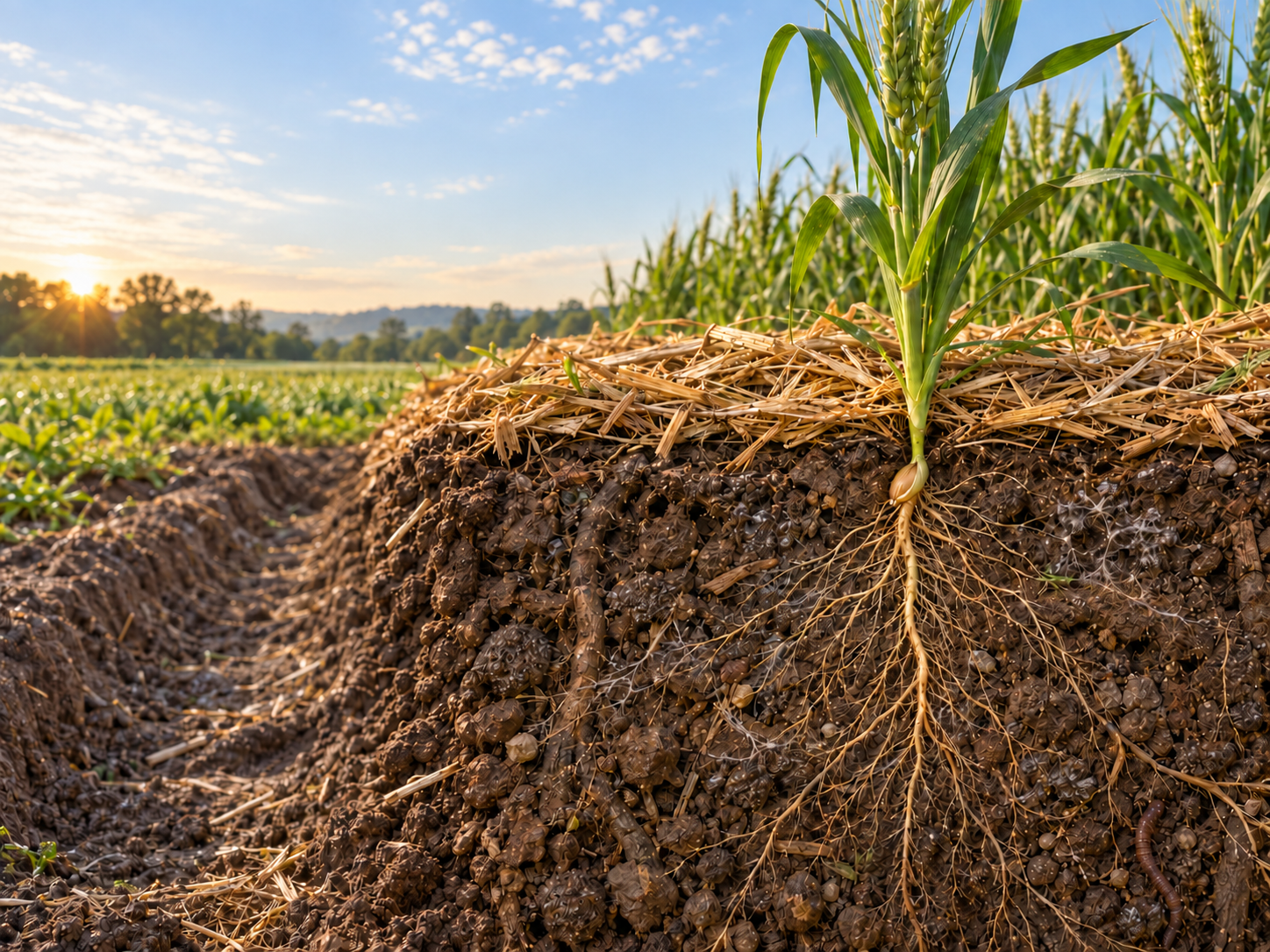
“The future of agriculture should not require choosing between science and nature, or between modern genetics and traditional genetics. The real task is to place genetics, old or new, back inside the production system that made plant life possible in the first place.”
Asif Sharif, Lahore, 2026
Chapter Twenty-Nine described the SIPP and VIPP, the machines that place seed at a deliberate position, depth and interval without rebuilding the permanent bed. The question now begins before either machine enters the field: which seed should be planted, how many living plants should be established, and what conditions will allow each plant to become productive? Precision establishment joins seed biology, seed quality, population design, machine calibration, operator discipline and the PQNK environment in which the seed must germinate.
A seed carries inherited potential, not a guaranteed yield. Its genetics, physiological condition and post-sowing environment interact throughout the crop’s life. PQNK protects that interaction through four governing rules: no inundation, no soil disturbance, permanent organic cover and encouraged biodiversity. On a permanent raised bed these rules create moist, aerated soil, moderated temperature and continuous biological activity around the emerging root. This chapter follows the seed from selection and storage through germination, precision placement, reproduction and the farmer’s ability to retain control of future seed.
A SEED IS STORED POTENTIAL, NOT A PROMISE
Every seed is a package of inherited biological instructions. Natural evolution modifies those instructions over generations through variation, reproduction and selection within a particular environment. Human seed selection accelerates the same process toward characteristics people value, higher yield, disease resistance, grain quality, a shorter growing season, a particular taste. This is not a modern invention. Farmers have been selecting, saving and re-sowing seed for roughly ten thousand years, since the first deliberate plantings of the Neolithic; the genetics of nearly every staple crop grown today carries the accumulated imprint of that selection.
What changed was not the existence of selection but its formal understanding. Gregor Mendel’s experiments with garden peas, published in 1866, gave breeders a working model of inheritance for the first time: discrete units passed from parent to offspring according to predictable ratios. Mendelian genetics, and the population and quantitative genetics built on it across the twentieth century, turned seed selection from an intuitive craft into a science that could be accelerated, targeted and, eventually, engineered directly at the level of DNA.
None of that changes the basic relationship. A wheat seed may carry genes for grain production, stature, disease resistance, root architecture or drought tolerance. Whether those genes are fully expressed, partly expressed or barely expressed at all depends on the environment the plant grows in: the soil’s physical structure, its biological activity, the water and air available at the root, the nutrients the plant can actually reach. The genotype establishes what is possible. The growing environment governs what happens next.
TEXTURE AND STRUCTURE, GENOTYPE AND ENVIRONMENT
Chapter Two set out the same distinction from the soil’s side of the relationship. Soil texture, the proportion of sand, silt and clay a soil contains, is essentially inherited: it is fixed by the parent rock and the geological processes that weathered it, and no amount of biological management turns clay into sand or sand into clay. Soil structure is a different matter entirely. It is dynamic, built and rebuilt continuously by roots, fungal hyphae, microbial secretions, organic residues, water and air, organising the same fixed mineral particles into a functioning, porous, biologically active system. A sandy soil with strong biological structure holds far more water and nutrients than the same sand left biologically bare. A clay soil with strong biological structure develops porosity, infiltration and root penetration that compacted clay never achieves.
Genetics is to the plant what texture is to the soil: an inherited starting condition. The production environment is comparable to structure: the dynamic, biologically governed layer that determines how much of that starting condition can actually be used. This is not a loose metaphor. It restates, in agricultural terms, something plant breeders have measured formally for decades under the name genotype-by-environment interaction, the well-established finding that a given genotype’s yield, height, disease response and nutrient uptake are not fixed properties of the seed alone but the joint product of genetics and the environment the plant is grown in, and that the same genotype can rank very differently across different growing conditions. “Fertiliser-responsive” is, properly read, a statement about that interaction, not a statement about the seed in isolation.
High nutrient availability and high synthetic-fertiliser application are not the same proposition. A fertiliser bag introduces a measured concentration of soluble salts into the soil solution. A biologically functioning soil supplies plant-available ions through mineral weathering, organic-matter decomposition, microbial transformation, mycorrhizal transport and continuous recycling. In PQNK, water carries those soluble nutrients while living roots and their biological partners regulate acquisition. The chemical route is rapid and concentration-driven; the biological route is continuous and coupled to root demand. A response to applied fertiliser therefore does not prove that the plant requires nutrients to arrive from a bag.
SEED ANATOMY: WHAT IS ACTUALLY PLANTED
A true seed contains an embryo, stored reserves in the endosperm or cotyledons, and a protective seed coat. The embryo produces the first root and shoot; stored food sustains early growth until leaves begin photosynthesis. Seed size, reserve quantity, coat permeability and dormancy vary by crop and variety. A seed potato tuber, sugarcane sett or vegetative cutting is planting material, but not a botanical seed. Its handling, disease risk and planting geometry must be treated separately.
The first root requires water, oxygen and a suitable temperature. Imbibition rehydrates the dry seed, metabolism resumes, the radicle emerges and the shoot advances toward light. Waterlogged soil may contain abundant water but insufficient oxygen; dry soil may contain abundant air but too little available water. PQNK Soil Moisture Management therefore seeks moist, aerated contact around the seed rather than a visibly wet field. The ball test and controlled furrow irrigation help maintain this balance without inundating the bed. Dormancy, hard seed coats, chilling requirements and light responses explain why apparently sound seeds do not always germinate immediately.
SEED QUALITY BEGINS BEFORE THE PLANTER
A viable seed is capable of germinating; a vigorous seed is more likely to establish rapidly and uniformly under less-than-ideal field conditions. Genetic purity, physical purity, germination, vigour, moisture content and freedom from seed-borne pests and pathogens are distinct quality attributes. A lot can meet a laboratory germination standard yet establish poorly when the seed is damaged, infected, unevenly sized or planted into unsuitable conditions.
Select seed from healthy, true-to-type plants and reputable, traceable lots. Remove inert matter, broken grains, weed seed and visibly damaged or diseased material. Grade for size and shape so that the cell of a metering roller accepts the intended number of seeds consistently. Grading does not make genetically different seeds identical, nor does a larger seed automatically guarantee higher yield. It makes mechanical delivery more predictable. Test a representative sample before planting, recording normal seedlings rather than counting every swollen or cracked seed as germinated. If field emergence is substantially below laboratory germination, investigate placement, seed health, moisture, temperature, pests and soil contact rather than simply increasing seed rate.
FROM SEED WEIGHT TO A TARGET PLANT POPULATION
A kilogram is a weight, not a plant population. Thousand-kernel weight (TKW), measured from a representative seed lot, converts a target seed number into kilograms. The relationship is: seeds per kilogram = 1,000,000 ÷ TKW in grams. A lot with TKW 40 g contains approximately 25,000 seeds per kilogram; a lot with TKW 50 g contains approximately 20,000. These are illustrative calculations, not fixed geographical classifications. Wheat kernel size can vary widely within a region, variety and season, so the actual lot must be counted or weighed.
First decide the desired number of established plants or productive hills per acre from crop architecture, permanent-bed geometry, expected tillering or branching and the season. Then account for tested germination and expected field establishment. Required seeds equal target established plants divided by the expected establishment fraction. Seed weight then equals required seeds divided by the measured number of seeds per kilogram. When the design calls for two seeds per hill, calculate from the number of hills and recognise that either one or both seeds may establish. A two-seed hill must not be counted automatically as one plant.
For wheat, the mature PQNK design targets approximately 62,000 well-spaced plants per acre, delivered by the standard five rows across the 42-inch bed at 8 inches seed-to-seed set out in the preceding chapter. With a graded, vigorous seed lot, two seeds dropped per hill and accurate SIPP or VIPP placement, the seed requirement should be under 5 kg per acre. This is a performance target, not a weight to apply blindly to every lot. The Production Manager must check the actual seeds per kilogram, germination, expected field establishment and the planter’s misses and doubles. During transition, any departure from the target should be recorded and corrected at its cause rather than hidden by returning to conventional broadcast rates.
PQNK POPULATION DESIGN IN PRACTICE
Population must be expressed as hills or living plants, not as kilograms alone. On the standard 42 inch permanent bed, row number and within-row spacing are selected for the crop’s architecture. The seed weight follows from that geometry, the measured seed count and tested establishment. This reverses the conventional habit of choosing a bag weight first and accepting whatever population results.
Sesame illustrates the method. Five rows per 42 inch bed can produce approximately 145,200 hills per acre. At two seeds per hill the planter meters about 300,000 seeds, after which emergence and final stand are recorded. Sugarcane uses a different unit: single-bud planting material at approximately 160 kg per acre. The crop changes, but the rule remains the same: define the biological population and placement first, then calculate the quantity of planting material.
PRECISION PLACEMENT: SEED, MACHINE AND BED AS ONE SYSTEM
The SIPP and VIPP share the principle of controlled singulation. Seed flows from the hopper to interchangeable horizontal metering rollers selected for the crop and the graded seed size. Roller speed, synchronised with ground travel, governs spacing. The SIPP opens a continuous slit approximately 2 inches wide and 2 inches deep through residue. The VIPP uses a narrow conical opener, less than half an inch at the bottom and about 1 inch at the top, to insert seed at discrete positions to a working depth of about 1.5 inches. The setting must still be adapted to the crop and actual soil moisture. Neither machine can compensate for the wrong roller, ungraded seed, inconsistent travel speed or an operator who fails to inspect the first planted rows.
Calibrate with the actual seed lot. Count seeds discharged per roller revolution, check misses and doubles, and verify actual spacing and depth in the field, not only the nominal setting. Inspect the first planted stretch, then recheck after changes in seed lot, roller, crop, speed, residue or soil condition. The target is a living, evenly established stand. Mechanical placement accuracy and biological establishment are different measurements.
A permanent raised bed must remain protected. After the one-time conversion operations, tractor tyres travel in the furrows and must not press the bed top or sidewalls. Mulch remains on the surface while the seed reaches moist soil beneath it. A seed stranded in dry residue, planted below its emergence capacity or left without firm soil contact has not been correctly placed merely because its horizontal spacing is accurate.
DEPTH, SPACING AND THE FIRST DAYS OF LIFE
Planting depth cannot be determined by seed size alone. Two characteristics must be considered together: seed size and the way the emerging seedling reaches the surface. For practical planting purposes, PQNK therefore considers four broad combinations: small-seeded broad-leaf crops, small-seeded narrow-leaf crops, large-seeded broad-leaf crops and large-seeded narrow-leaf crops. Seed size determines, among other things, the reserves available to support early growth, while plant type strongly influences the mechanics of emergence.
Broad-leaf crops generally emerge through a curved or hooked seedling structure that protects the growing point as it pushes upward. Once it reaches the surface, the emerging shoot straightens and the first leaves expand. This makes excessive planting depth and high soil resistance particularly important constraints. A broad-leaf seed may contain substantial stored energy and still fail to emerge if it is planted too deeply or if the soil above it becomes dense or crusted. Such resistance may already exist because of poor soil structure, or it may develop after sowing when rainfall causes an exposed or structurally weak surface to seal and form a crust. The seed may germinate successfully below the surface but the hooked seedling can exhaust its reserves before it is able to break through.
Narrow-leaf crops, particularly cereals and grasses, have a different emergence architecture. Their young shoot is protected by a pointed sheath, the coleoptile, which pushes upward through the soil much like a narrow needle before the first true leaf emerges. This streamlined structure generally enables narrow-leaf seedlings to tolerate deeper placement and greater soil resistance than many broad-leaf seedlings, although every crop and variety still has biological limits to the depth from which it can emerge successfully.
Correct planting depth must combine seed size, emergence behaviour, stored reserves, soil structure, moisture, temperature and expected surface resistance. Depth is measured from the effective soil surface to the seed; loose mulch above the soil is not counted as burial depth. The objective is to place each seed at the shallowest reliable depth that provides moist soil contact while allowing the seedling to reach the surface with minimum resistance and maximum remaining energy. Precision is therefore biological as well as mechanical.
THE MULCH ADVANTAGE AT GERMINATION
The condition immediately surrounding the seed is just as important as planting depth. This is where the permanent organic mulch covering a mature PQNK bed creates a major establishment advantage. In conventional ACI production, the soil is commonly left bare after cultivation and sowing. The exposed upper one or two inches can lose moisture rapidly through evaporation, particularly under warm, dry and windy conditions. A structurally degraded soil with little organic matter also has reduced capacity to absorb, retain and redistribute that moisture. Farmers consequently use higher seed rates partly to compensate for an unreliable seedbed in which not every seed will encounter the moisture, aeration and physical conditions required for successful establishment.
Rain can make the problem worse. Raindrop impact on bare, disturbed soil breaks weak aggregates and moves fine particles into surface pores. As the surface dries, these particles can form a sealed or crusted layer. Water infiltration and gas exchange are restricted, while the mechanical resistance confronting an emerging seedling increases. Germination requires oxygen as well as water and suitable temperature. A seed may therefore absorb water and begin germinating beneath the surface yet fail during emergence because the surrounding soil has become poorly aerated or the surface crust is too resistant, a problem that is especially serious for broad-leaf seedlings emerging through a curved or hooked structure.
A PQNK bed presents the seed with a very different surface environment. Permanent organic mulch intercepts the direct impact of raindrops, shields the soil from solar radiation and wind, moderates temperature fluctuations and greatly reduces direct evaporation from the soil surface. At the same time, undisturbed structure, biological aggregation, roots and soil organisms help maintain connected pores through which water and air can move. Consequently, moisture can remain available much closer to the surface while the rooting zone remains aerated. The seed does not have to be buried unnecessarily deep merely to reach dependable moisture.
PQNK field observations make this relationship particularly visible. Under a sufficiently moist mulch-covered bed, a viable seed dropped beneath the mulch at the mulch-soil interface can begin germination even without being buried in the soil, because the mulch can maintain the moisture and temperature required for germination. Successful establishment still requires the emerging root to make contact with and penetrate the soil, which is why controlled seed placement remains important. The observation nevertheless demonstrates a fundamental principle: the objective is not to bury a seed; the objective is to provide the biological conditions in which that seed can germinate, emerge and establish successfully.
PQNK can use substantially less seed because it removes avoidable establishment losses instead of purchasing extra seed to compensate for them. Permanent mulch protects near-surface moisture, undisturbed structure preserves pores, SMM protects the water-air balance and precision placement gives each seed a defined position. The lower seed rate is justified only when those conditions and the target population are verified in the field.
WHY SEMI-DWARF CEREALS WERE DEVELOPED
The clearest illustration of genetics answering an environmental problem is also the most consequential breeding programme of the twentieth century. From the 1940s, agronomist Norman Borlaug and colleagues working in Mexico, in what became the International Maize and Wheat Improvement Center (CIMMYT), crossed high-yielding wheat with Japanese dwarfing genetics, most notably the Norin 10 line, to produce short-strawed wheat carrying what became known as the Rht (reduced height) genes. A parallel breeding effort at the International Rice Research Institute in the Philippines released IR8 in 1966, a semi-dwarf rice built around a single recessive gene, sd1, that shortened the plant in much the same way. Both programmes are credited with averting famine across large parts of Asia and Latin America and are the technical foundation of what came to be called the Green Revolution.
The engineering logic behind the dwarfing genes was specific and well understood. Tall traditional wheat and rice varieties respond to nitrogen with vigorous vegetative growth, more leaf and stem, as well as more grain. Under heavy nitrogen application that additional vegetative growth raises the plant’s centre of gravity and weakens its stem, and the crop lodges: it falls over before harvest, and a fallen crop can lose much of its yield to disease, sprouting and mechanical loss. Semi-dwarf architecture redirects a larger share of the plant’s biomass toward grain rather than stem and leaf, a ratio agronomists call the harvest index, while keeping the plant short and mechanically stable enough to carry a heavy grain load without lodging under the nitrogen rates the Green Revolution package supplied.
Semi-dwarf wheat and rice were bred to improve lodging resistance and harvest index under high-yielding management, including conditions of ample nitrogen supply. This does not establish that these varieties inherently require synthetic fertiliser or that all fields in which they were developed were degraded. Their performance in a mature PQNK environment is a separate genotype-by-environment question.
THE SAME GENETICS CAN EXPRESS DIFFERENTLY IN A DIFFERENT ENVIRONMENT
Genotype is the inherited potential carried by the seed. Environment governs how much of that potential is expressed. In production agriculture, environment includes climate and the physical, chemical and biological conditions created by the production system around the plant.
A modern variety may have been selected for decades under repeated tillage, bare soil, soluble fertiliser, conventional irrigation, chemical control and dense plant populations. Its published performance describes that genotype within those conditions. It cannot by itself predict performance when the rooting environment, plant population and nutrient pathway change together.
A mature PQNK bed creates a different environment. The 42 inch bed remains permanently protected while tractor tyres and irrigation stay in the 18 inch furrows. Organic mulch moderates surface temperature and evaporation. Undisturbed roots, aggregates and pores maintain aeration and infiltration. SMM supplies water without flooding, and biological nutrient cycling continues from crop to crop. Plant population can then be designed around productive plants rather than expected establishment failure.
The description fertiliser-responsive records a response observed under particular experimental conditions. It does not establish a genetic requirement for nutrients to arrive from a fertiliser bag. The plant requires available nutrient ions, water and oxygen in a suitable root environment. Whether those ions come from a soluble application or from biological release and recycling is a production-system question, and the two pathways should be tested separately.
The same genotype-by-environment interaction affects root architecture, tillering, branching, plant height, lodging, maturity, water use, pest and disease expression, grain filling and yield. A variety observed in a crowded, tilled and externally fertilised field should not be assumed to behave identically at precision spacing in a biologically active, mulch-covered PQNK bed.
PQNK does not reject modern genetics or assume that traditional genetics are automatically superior. It evaluates each seed within a restored production environment and asks how fully that genotype can express its useful characteristics without the avoidable limitations created by compaction, flooding, bare soil and disrupted biology.
That question requires comparative field measurement. Different genetics should be grown under clearly documented PQNK and conventional conditions, with seed lot, population, season, water, yield, root development, quality and cost recorded. The purpose is to measure genotype expression, not to substitute belief for evidence.
RESTORING THE FEEDING SYSTEM
Conventional ACI management commonly asks what fertiliser dose a variety needs. PQNK asks what conditions allow roots and soil biology to acquire and regulate nutrients within the natural system. Its operating environment is moist but aerated soil, no repeated disturbance, permanent organic cover and encouraged biodiversity. Roots release carbon compounds through exudates; microorganisms transform nutrients; mycorrhizal fungi extend the explored soil volume; retained roots preserve channels; and organic residues return minerals and carbon to the surface cycle. Water then carries soluble ions through this living root zone.
PQNK describes this as demand-driven rather than bag-driven nutrition. The phrase does not mean that microorganisms dispense an exact fertiliser formula on command. It means that nutrient release and acquisition remain coupled to living roots, biological activity, moisture and plant growth, rather than being imposed as a fixed calendar dose of concentrated soluble salts. During transition, limited corrective nutrition may still be used under the established PQNK safeguards, but it is support for a developing biological system, not the permanent feeding system.
Comparisons of seed genetics across production systems can measure yield, root development, water use, nutrient composition and costs. The aim is to quantify how different varieties perform in different environments, not to validate the operating principles of nature. Such comparisons should keep seed lot, season and measured outcomes explicit and should distinguish field observation from controlled results.
ALL SEED OBEYS THE SAME BIOLOGY
The label on a seed packet does not change the biology of the plant that grows from it. An open-pollinated or heirloom variety, a modern high-yielding variety, a commercial hybrid and a genetically modified variety are all, first and last, plants. Their genetics differ, sometimes substantially, but every one of them requires water, oxygen, light, carbon dioxide, mineral nutrients, functioning roots and a biologically active rooting environment to express whatever potential its genetics carry. A hybrid can express hybrid vigour. A semi-dwarf high-yielding variety can express its harvest index. An heirloom can express characteristics accumulated over generations of local adaptation. A genetically modified variety can express its engineered trait. None of them escapes the biological laws governing plant life, and none of them is exempt from the condition of the soil it is grown in.
Heirloom and locally maintained open-pollinated varieties deserve particular attention for a reason that has nothing to do with nostalgia. They represent generations of interaction between genetics, local environment and farmer selection, retained because they performed under a specific place’s soils, rainfall, pests, diseases and culinary preferences. That is both biological and cultural capital, and it has been eroding for decades. The Food and Agriculture Organization has repeatedly estimated, across successive State of the World’s Plant Genetic Resources reports, that crop genetic diversity has eroded in many farming systems as farming systems worldwide converted to a narrower set of genetically uniform, high-yielding varieties. Once a locally adapted line is no longer grown and its seed is no longer saved, the genetic diversity it carried can disappear permanently; it cannot be regenerated once lost, only, at best, partially recovered from whatever germplasm collections happened to preserve it. That is the reasoning behind the international genebank network coordinated through the CGIAR research centres, the Svalbard Global Seed Vault built as a back-up repository for the world’s national and regional seed collections, and the 2001 International Treaty on Plant Genetic Resources for Food and Agriculture, which formally recognises farmers’ historic contribution to crop diversity and their right to save, use, exchange and sell farm-saved seed, subject to national law.
Preserving natural, traditional and farmer-maintained seed is therefore better understood as biological risk management than as sentiment. It is not a claim that every old variety outperforms every modern one, or the reverse. It is a claim that genetic diversity is accumulated capital, and that a system which allows it to disappear is choosing, whether deliberately or by neglect, to narrow the biological options available to every future harvest.
SEED PRODUCTION, SELECTION, HARVEST AND STORAGE
Seed saving under PQNK should be much more than collecting part of the harvest for sowing next season. It should become a continuing process of observation, selection, preservation and local adaptation. The farmer is in the field throughout the crop cycle and is therefore in the best position to identify which individual plants are expressing themselves most successfully under his particular climate and production environment.
Selection should begin while the crop is still standing, before the harvested seed is mixed. Within the same PQNK field, the farmer should identify and mark the plants that show greater vigour than the surrounding plants. Selection should focus on superior fruit-bearing capacity and on produce with better size, colour and overall quality. Seed from these distinctly better-performing plants should be harvested separately and preserved for the next crop.
The ribboned plants should be allowed to reach proper physiological maturity and then harvested separately from the commercial crop. Their seed should never disappear into the general harvest. It should be separately threshed or extracted, cleaned, graded, identified and stored specifically for planting the following season. This creates a direct generational connection: the plants that performed best this season become the parents of the farmer’s next crop.
The process becomes increasingly valuable when repeated. In the following season, the saved seed is planted again, the crop is observed again, and the best-performing plants are once more ribboned and harvested separately. The cycle becomes:
Grow → Observe → Select → Ribbon → Harvest Separately → Save → Replant → Select Again.
Repeated season after season, this becomes farmer-led selection under the actual environment in which the crop must perform. In genetically variable, open-pollinated or farmer-maintained populations, plants that repeatedly perform well contribute disproportionately to subsequent generations. Over time, the farmer can progressively maintain and develop a population increasingly suited to his local climate, season, soil environment and production objectives. The result is not merely seed saved from the previous harvest, but a living locally adapted seed population continuously selected for vigour, productivity, resilience and desirable crop characteristics.
This process must not, however, confuse genetic selection with nutritional density. The seed carries the inherited genetic potential of the plant. It does not carry the mineral nutrition from which the next crop will build its food. Nutritional density and nutritional diversity arise principally from the environment in which the plant grows and, in PQNK, particularly from the functioning soil-plant biological system.
A mature PQNK bed provides that nutritional environment. Undisturbed soil structure, living roots, microorganisms, mycorrhizal associations, decomposing organic matter, mineral particles, moisture and air operate together as a biological nutrient-cycling and acquisition system. Roots explore the soil while their biological associations extend access to nutrients beyond the immediate root surface. Organic residues are returned and recycled, and water acts as the carrier through which soluble nutrients move toward and into the plant. The seed determines the plant’s genetic potential; the living PQNK soil system provides the nutritional environment through which that potential is expressed.
This distinction is important. The farmer selects seed from the most vigorous and productive plants because he wants to carry desirable genetics and local adaptation into the next generation. He does not select a seed on the assumption that nutritional density is stored genetically inside that seed and will automatically appear wherever it is planted. Put the selected seed into a degraded production environment and the plant must still operate within the nutritional limitations of that environment. Put it into a mature PQNK bed and the functioning biological system provides access to the diverse nutritional resources from which the plant builds the crop.
PQNK therefore brings two processes together without confusing them. Repeated farmer selection develops and preserves seed increasingly adapted to the local environment and production objectives. The mature PQNK soil system provides the biological and mineral environment required to produce nutritious, nutrient-dense and nutritionally diverse food. One improves and preserves the genetic starting material; the other provides the living production system in which that genetics performs.
Where varietal purity is important, seed selection must also respect the reproductive biology of the crop. Self-pollinated crops are generally easier to maintain genetically, whereas cross-pollinated crops require greater attention to neighbouring crops, flowering periods, isolation and pollen movement. Off-types should be removed before they contribute pollen or seed where maintaining a defined population is important. The farmer is not merely storing seed; he is managing a living genetic population from one generation to the next.
Harvest quality is equally important. Selected seed plants should reach appropriate physiological maturity and should not be mixed with immature, diseased or weather-damaged material. Harvesting, shelling and threshing must avoid cracking embryos, damaging seed coats or otherwise reducing viability. A seed may look normal externally while mechanical damage has already reduced its ability to germinate or produce a vigorous seedling.
After harvest, seed should be cleaned and graded so that broken, shrivelled, damaged, diseased and obviously abnormal seed is removed. This is particularly important for precision planting because SIPP and VIPP depend upon reasonably uniform seed dimensions for accurate singulation. The best genetics cannot compensate for poor physical seed quality or an improperly calibrated planter.
Drying must reduce moisture to a safe level for the crop, seed type, packaging, climate and intended storage period without exposing the embryo to damaging heat. There is no universal safe percentage for every seed and every storage system. For many seasonal grain seed lots, approximately 10 to 11 percent may be suitable, but the crop-specific requirement and local humidity must govern the decision.
Each selected seed lot should remain identifiable. Labels and records should include, where appropriate, crop, variety or population, original source, field, year and season, harvest date, selection history, important observed characteristics, germination percentage and any treatment applied. Over successive seasons, these records allow the farmer to know not simply what seed he possesses, but how that seed population has developed.
Stored seed should be kept cool, dry and protected from insects, rodents, water intrusion and repeated fluctuations in humidity. Airtight storage is useful only after seed has first been dried adequately; sealing seed containing excessive moisture can accelerate deterioration rather than preserve it. Germination should be tested again before planting, particularly after prolonged storage. Botanical seed and vegetative planting material should be recorded and managed separately because their storage, propagation and disease behaviour are different.
The farmer’s seed store can consequently become far more than a collection of bags awaiting the next planting season. It becomes a living archive of repeated observation and selection under the farmer’s own environment and the PQNK production system. Each generation begins with what performed best in the generation before it, while the mature PQNK bed continues to provide the biological conditions required for those genetics to express themselves.
The seed carries potential. The farmer selects and preserves that potential. The mature PQNK soil system provides the environment, biology and nutrition through which that potential becomes a crop.
SEED HEALTH, PRESERVATION AND BIOLOGICAL TRANSITION
PQNK begins seed health with prevention. Routine inorganic chemical seed treatment is excluded because the system should not admit unhealthy planting material and then rely on a coating to suppress the resulting risk. Seed must come from healthy, properly matured parent plants or a reputable tested source. Where a seed-borne problem is suspected, diagnosis and exclusion take priority over chemical masking.
Seed intended for the following season should therefore be collected from healthy, vigorous and properly matured plants. Diseased, damaged, shrivelled, immature or otherwise questionable seed should not enter the saved seed lot. Where a seed-borne problem is suspected, the source should be identified and the affected material excluded rather than assuming that a chemical treatment can make unsuitable seed acceptable for PQNK planting.
After harvest, seed should be cleaned and dried to the safe moisture range for that crop and storage method. Approximately 10 to 11 percent may be appropriate for many seasonal grain seeds, but it is not a universal rule. Store the lot in a clean, dry and stable environment protected from moisture fluctuations, insects, rodents and excessive heat. Test germination again before sowing because storage behaviour varies among crops and lots.
This approach is consistent with the wider PQNK principle: protect biological health rather than introduce a problem and then attempt to suppress its consequences chemically. Healthy parent plants, proper maturity, careful harvesting, correct drying and stable storage form the seed-health system.
Once planted, the seed enters another biological environment. A mature PQNK bed provides mulch protection, moderated temperature, moisture close to the surface, aerated soil and active biological processes. During transition, when these conditions are still developing, the farmer should pay particular attention to Soil Moisture Management (SMM), surface condition, residue management and seedling establishment.
Poor emergence should be investigated rather than automatically answered with more seed or chemical intervention. The farmer should observe germination, missing hills, seedling vigour and the pattern of any failures. The cause may lie in seed quality, incorrect placement, excessive depth, insufficient moisture, excessive moisture, poor aeration, surface resistance or planter calibration. Precision agriculture begins by identifying and correcting the cause, not by compensating for failure with more inputs.
THE GENE THAT TRAVELS ON THE WIND
Saving seed is usually described as something that happens after harvest: dry it, clean it, store it, replant it next season. For crops that cross-pollinate, that description misses half the task. Genetic continuity has to be protected while the crop is still flowering, in the field, before a single seed is ever stored.
Maize is the clearest example, because it is predominantly wind-pollinated and naturally outcrossing. A single maize tassel can release millions of pollen grains over the course of its flowering period, and that pollen can fertilise the silks of other maize plants some distance away. If pollen from a genetically modified maize plant fertilises the silks of a non-GM plant nearby, the mother plant itself is not transformed by the event. The kernel that forms on her ear, however, is the offspring of both parents, and it can inherit the engineered trait carried in the pollen. If that kernel is harvested and replanted as seed, the introduced gene enters the following generation of what had been a non-GM population, where it can persist, spread further through subsequent crossing, or be reduced through deliberate selection and seed-purity management. This is why pollen-mediated gene flow behaves less like a single season’s chemical exposure and more like an inheritance event: a field boundary is a physical and legal boundary, but it is not automatically a reproductive one.
Maize pollen dispersal and successful fertilisation are not identical. Most successful outcrossing generally occurs relatively near the pollen source, while low-frequency crossing may occur farther away under suitable wind and flowering conditions. No isolation distance guarantees purity for every field. Field size, prevailing wind, overlap in flowering, neighbouring crops and the purity threshold all matter.
The practical response is not alarm but stewardship: isolation distance, flowering-time separation so that two populations are not shedding and receiving pollen at the same time, border or buffer management, controlled seed multiplication, and, where genetic purity genuinely matters, laboratory testing of harvested seed. Maize is the sharpest case because of its reproductive biology, but it is not unique; wheat, predominantly self-pollinating, has nonetheless shown measurable pollen-mediated gene flow under field conditions in some studies, and the general principle, that a crop’s reproductive biology determines how far its genes can travel beyond the field it was planted in, applies in some degree across many cross- and even partly self-pollinated species. The maize example should inform that judgement without being mechanically applied to every crop.
SEED SOVEREIGNTY IS FOOD SOVEREIGNTY
Seed sovereignty means that farmers retain the practical ability to select, preserve, reproduce and improve seed from their own crops. This capacity protects locally adapted genetics, maintains crop diversity and allows each generation of farmers to continue improving seed under its own climate, soil environment and production objectives. When farmers lose the ability to reproduce their planting material, they also lose control over the biological foundation of future food production.
Modern commercial seed may be protected through patents, plant breeders’ rights, licences or contractual conditions. These protections do not apply identically to every variety or jurisdiction, but they can restrict the saving, replanting, exchange or sale of protected seed. Hybrid seed creates a different form of dependence because seed saved from an F1 crop may segregate in the next generation and may not reproduce the uniformity or performance of the purchased seed. Farmers should therefore understand the genetic origin, reproductive behaviour and legal conditions of every seed lot before deciding whether it can become part of a continuing farmer-managed seed population.
The 2001 International Treaty on Plant Genetic Resources for Food and Agriculture recognises the historic contribution of farmers to conserving and developing crop diversity. Its Farmers’ Rights provisions address the saving, use, exchange and sale of farm-saved seed and propagating material, subject to national law. The 1991 Act of the International Convention for the Protection of New Varieties of Plants permits countries to create a limited exception allowing farmers to replant harvested material from protected varieties on their own holdings, but each country determines whether and how that exception applies. Seed sovereignty therefore requires both biological capacity and legal awareness. A farmer must be able to preserve suitable seed, protect its genetic continuity and know the conditions governing its future use.
For PQNK, seed sovereignty is not opposition to scientific breeding or improved genetics. It is protection against permanent dependence on reproductive material that the farmer cannot preserve, reproduce or adapt. A resilient food system should keep modern varieties, traditional varieties and farmer-developed populations available without allowing locally reproducible seed to disappear. The farmer who can retain and improve suitable seed preserves choices for the next crop; the farming community that preserves diverse seed protects part of its future food security.
GENETIC ENGINEERING AND THE PRODUCTION PACKAGE
It is not scientifically defensible to claim that all genetically modified crops inherently require large quantities of water and fertiliser, or that genetic engineering itself, as a technique, damages soil. Genetic modification is a breeding method, not a single trait, and different genetically modified varieties carry entirely different genetics for entirely different purposes.
The Bt trait discussed earlier in this book is a useful check on this point: Bacillus thuringiensis is a naturally occurring soil bacterium, and the genetic engineering involved identified genes already present in a living biological system and inserted them into a crop, rather than inventing pest resistance from nothing. The trait is real and narrow; it does not, by itself, restore the wider ecological pest-regulation network of predators, parasitoids and soil biology that a degraded, tilled and chemically simplified field has lost.
The stronger and more defensible PQNK criticism concerns the production architecture into which many commercial genetically modified crops happen to be introduced: monoculture, repeated tillage, chemical weed control, external fertilisation, irrigation dependence and proprietary input packages bundled together as a single purchasing decision. Inside that architecture, a farmer growing a genetically modified crop can become dependent on the whole package, seed, chemistry, credit and extension advice together, not merely on the inserted gene.
That dependency belongs to the system into which the seed was sold, not automatically to the genetics themselves, and the same caution applies in reverse: putting an heirloom seed into waterlogged, compacted, repeatedly tilled and biologically impoverished soil will suppress its potential just as effectively as it suppresses a modern variety’s. Neither an engineered seed nor an heirloom seed repairs abused soil on its own. This chapter therefore separates three questions that public debate routinely collapses into one: the genetics of the seed, the ownership and reproductive control of the seed, and the production environment the seed is grown in. Each deserves to be examined on its own evidence.
FIELD OBSERVATIONS AND FOOD QUALITY
PQNK farmers have repeatedly reported differences in crops grown under the system: a stronger, more distinct taste; a perceived improvement in produce quality; smaller quantities eaten before feeling satisfied; longer periods before hunger returns. These observations are worth documenting carefully as field evidence, and they are equally worth testing rather than simply repeated. Nutrient analysis can examine mineral and biochemical composition directly. Controlled sensory evaluation can examine taste without the confound of price, branding or expectation. Human studies can examine satiety and metabolic response under controlled conditions.
What should not be done is inferring a specific physiological claim, such as a lower glycaemic index, from an unrelated report of improved taste or prolonged satiety. Glycaemic index is a defined measurement obtained under a defined protocol; if the same genotype grown under PQNK management produces a measurably different metabolic response, that needs to be demonstrated directly, not assumed from an adjacent and more subjective observation. PQNK does not need science to validate that biological processes exist in living soil; the processes are well described in the existing literature on soil biology and plant nutrition. What PQNK asks of science is narrower and, for that reason, more useful: to measure precisely what happens to a given crop’s composition, quality and human effect when agriculture is returned to an environment governed more closely by those processes.
THE FARMER’S SEED RECORD
A practical seed record must connect the seed lot to the harvested crop. For each field, record the source and variety, thousand-kernel weight or measured seeds per kilogram, laboratory germination, target hills, seeds per hill, roller specification and speed, planting date, 42 inch bed and row geometry where used, actual depth, soil moisture by the ball test, field emergence and final productive stand. At harvest, record yield, produce quality, seed retained and any contamination or disease concern. These records show whether the next correction belongs to seed selection, metering, the opener, SMM, crop density or the soil system.
The same discipline protects farmer independence. Save and multiply seed where agronomically and legally appropriate; maintain purity through crop-specific isolation and selection; and preserve diverse local germplasm alongside improved varieties. Hybrid seed may segregate in the next generation and fail to reproduce the uniformity of the purchased F1 crop. Intellectual-property and seed rules vary by jurisdiction and variety. Farmers should know the provenance and permitted use of a seed lot before committing the next harvest to seed multiplication.
WHAT THIS CHAPTER HAS ESTABLISHED
The seed is inherited potential, not the production system. Its performance depends on genetics, viability, vigour, health, uniformity, population, accurate placement and the living conditions around the emerging root. Chapter Twenty-Nine established how SIPP and VIPP place seed without reconstructing the bed. This chapter establishes the biological discipline that must accompany that engineering: select and test the lot, calculate plants rather than kilograms, calibrate with the actual seed, protect moist aerated contact, observe emergence and record the result.
A mature PQNK bed does not erase genetic differences or make every seed equally suitable. It gives each viable genotype a protected environment in which roots can function without flooding, repeated disturbance, bare-soil heat or unnecessary competition. Farmer selection and seed conservation preserve future genetic choices; precise establishment converts those choices into productive plants. The governing principle is practical: place the right number of healthy seeds correctly, protect the soil ecosystem, and measure what each plant becomes. The next chapter assembles all the elements of Part Four into their final expression: the closed-loop PQNK farm in its fully established state.
Chapter Thirty-One: The Closed-Loop Farm