

Industrial Devastation To Natural Abundance
Extended Knowledge · Chapter 53
The Four-Step PQNK Transition Protocol
Reopening the Living Earth
Release 1.1 · 2026-10-25
If you use “Listen”, the text of the page may be sent to your browser or operating system’s speech provider, such as Apple, Google or Microsoft, depending on the voice your device uses. Pedaver does not process, transmit or store any audio.
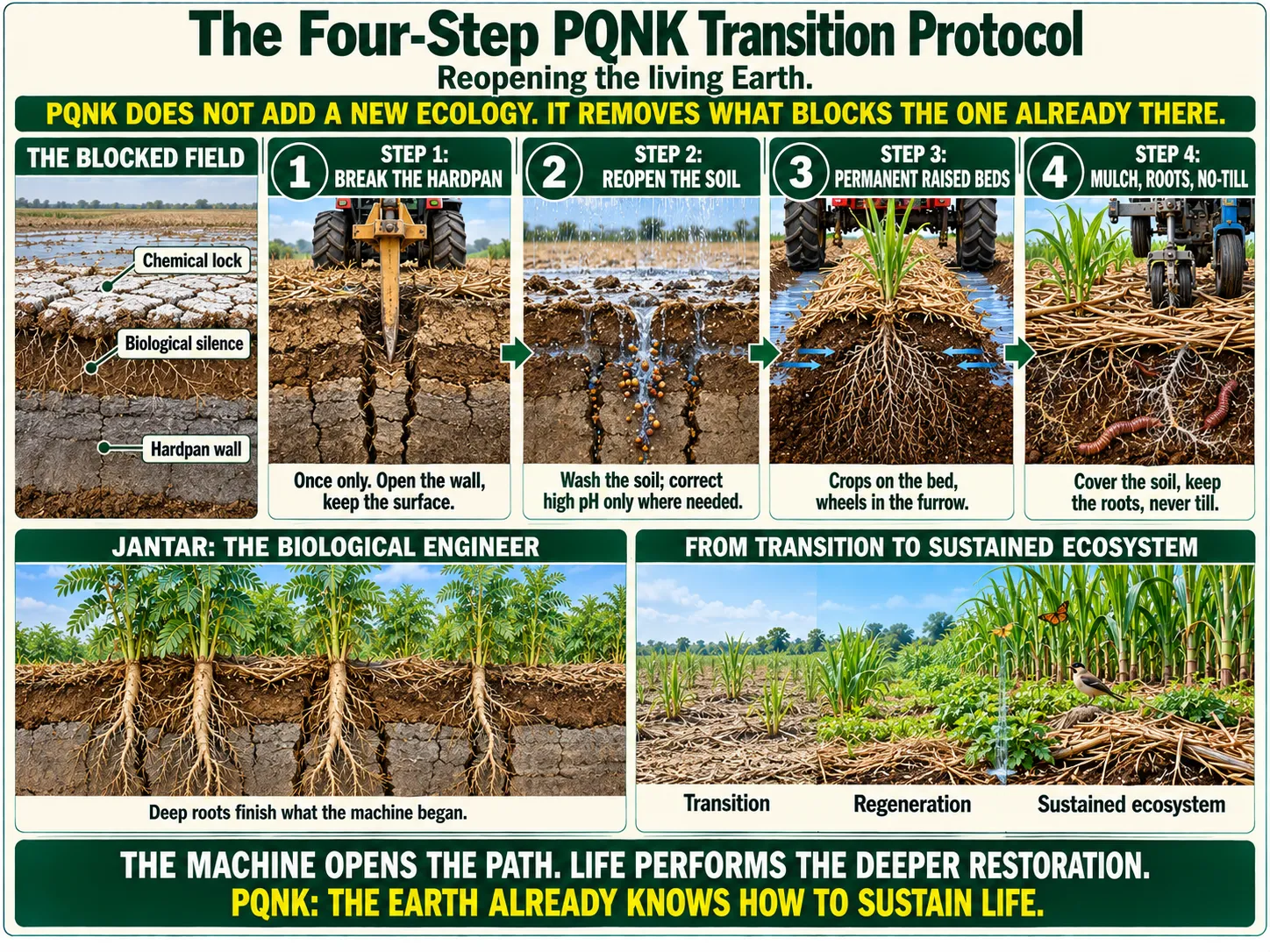
The Four-Step PQNK Transition Protocol: the machine opens the path, life performs the deeper restoration.
“The Earth already knows how to sustain life. We do not have to teach it. We only have to remove what we put in its way: the hardpan, the chemical lock, the flooding, the plough. The machine opens the path. Life does the rest.”
Asif Sharif, Lahore, 2026
Beneath the surface of every degraded field lies a question that conventional agriculture has never asked: what biological architecture once allowed this soil to sustain itself, and what sequence of disruptions removed it? The PQNK Four-Step Transition Protocol does not attempt to improve agriculture by adding more inputs or refining existing practices. It begins from a fundamentally different premise. The soil is not an inert growing medium waiting to be activated by chemicals and machines. It is a living biological civilization that once operated in full ecological continuity, and can do so again, once the interruptions are systematically removed.
The four steps are not a checklist of isolated techniques. They are a single integrated biological reconstruction sequence. Each step prepares the conditions for the next. Each removes one category of structural barrier that is preventing the living system from resuming function. The protocol works because it works with the logic of the Earth, not against it. It does not import a new ecology. It removes the obstacles that are suppressing the ecology already present within the soil.
Chapter Twenty-Three set out the field conversion in eight steps. This chapter groups the same work into four, by the barrier each one removes: the hardpan, the chemical lock, the missing structure, and the broken biological continuity.
The Earth already knows how to sustain life. PQNK begins by removing the interruptions that prevented it from doing so.
I. THE INVISIBLE ARCHITECTURE: WHY THE PROTOCOL EXISTS
Across the agricultural landscapes of South Asia and beyond, farmers observe the same symptomatic picture: declining yields despite increasing inputs, waterlogging after modest rainfall, drought stress within days of irrigation, soil that has become hard, pale, and biologically silent. Conventional diagnosis treats these as separate problems requiring separate chemical solutions. PQNK diagnosis recognises them as a single structural condition, the collapse of soil biological architecture, expressed through multiple symptoms simultaneously.
This collapse has three primary physical expressions. The first is the hardpan: a dense, compacted layer formed below tillage depth through decades of mechanical pressure, waterlogging, and salt accumulation, which severs vertical continuity between the surface biological zone and the deeper mineral profile. The second is chemical lock: the accumulation of calcium carbonate, sodium salts, and alkaline compounds in the soil profile that immobilise nutrients, restrict microbial activity, and prevent water from moving freely. The third is biological silence: the destruction of the fungal networks, microbial communities, and root-mediated biological exchange systems that once allowed soil to function as a self-regulating organism.
The Four-Step Protocol addresses each of these conditions in sequence. It does not treat symptoms. It restores structure. The distinction is not merely philosophical, it determines whether interventions produce lasting recovery or temporary relief followed by continued decline.
II. STEP ONE, HARDPAN FRACTURE: ECOLOGICAL SURGERY
The first step of the PQNK protocol is hardpan fracture. This is the foundational intervention, the act of ecological surgery that restores vertical continuity to a soil profile that has been structurally severed. No subsequent biological recovery is fully possible without it. Roots cannot descend. Water cannot percolate. Oxygen cannot reach the anaerobic zone below the pan. Biological activity cannot spread downward into the mineral reserves. The hardpan is not merely a physical inconvenience, it is a wall that has turned the soil into a closed system.
Fracture is performed once, with a heavy-duty subsoiler working to approximately 22 inches (about 56 centimetres), below the compaction layer rather than through it. The geometry of fracture matters. Lines should follow the slope of the land, so that water moves down into the opened profile. Spacing should be calibrated to the depth of the pan and the biological recovery plan that follows. The goal is not to pulverise, it is to fracture with minimal surface disturbance. Pulverisation destroys fungal networks and soil aggregate structure at the surface. Fracture opens the vertical pathway while leaving surface ecology largely intact.
Timing and technique are equally important. The hardpan is the layer that restricts both infiltration and root penetration, so the pan itself is always dry, while the layer above it may be wet, moist or dry. Breaking the hardpan needs a great deal of traction, so the operation is done when the soil is moist, not powdery. The traction tyres are filled two-thirds with water to add weight for grip, and if the front of the tractor lifts, front weights are added. If the subsoiler tine will not penetrate, dig a pit about 26 inches deep, lower the tine into it and pull from there; the tip of the tine then stays under the hardpan layer. The tractor is driven in a low gear at high engine RPM, with the position-control hydraulic lever used to hold the depth.
The machine opens the path. Life performs the deeper restoration afterward.
After fracture, oxygen re-enters the anaerobic zone below the former pan. This single event triggers a cascade. Aerobic microbial populations begin recolonising the newly oxygenated profile. Root-following fungi begin extending hyphal networks downward. Within one growing season, root systems of deep-rooting cover crops, particularly Jantar, begin penetrating through the fracture planes, widening them biologically and secreting root exudates that chemically dissolve remaining mineral barriers. The machine initiates the process. Biology completes it, and biology sustains it.
III. STEP TWO, CHEMICAL REOPENING: DISSOLVING THE LOCKED PROFILE
In many severely degraded agricultural soils, hardpan fracture alone is not sufficient to restore functional water movement and root penetration. Decades of over-irrigation with alkaline water, combined with the accumulation of calcium carbonate and sodium salts, have created a second layer of structural resistance: chemical lock. This condition expresses as extreme alkalinity, white surface crusting, sodic pan formation, and the near-complete immobilisation of phosphorus, zinc, iron, and other essential minerals that are physically present in the soil but chemically unavailable.
Step Two addresses this condition with the conversion water wash that follows hardpan fracture (Chapter Twenty-Three). Where soil pH is 8 or above, approximately 8 kg of sulfuric acid per acre is applied with the irrigation water, to dissolve calcium carbonate clusters and displace sodium ions from exchange sites. This is not industrial chemical dependency. It is ecological correction, a one-time or transitional intervention designed to remove a specific chemical barrier that is preventing biological recovery from proceeding. Once the chemical barrier is dissolved, the biological recovery processes activated by Step One and accelerated by Steps Three and Four will maintain soil chemistry through biological acid production, organic acid secretion, and microbial mineral cycling.
The field lost access, not necessarily abundance. The minerals were present. The pathways to reach them were chemically sealed.
Precision matters in Step Two. Over-acidification damages the soil microbial community, destroys clay mineral structure, and creates new chemical imbalances. The goal is targeted dissolution of specific mineral barriers, not wholesale alteration of soil chemistry. A soil pH test at conversion, read with local water chemistry and the field’s history of salt accumulation, decides whether the acid is needed at all. In many cases, a single correctly calibrated application provides sufficient chemical reopening for biological recovery to take over completely.
IV. STEP THREE, PERMANENT RAISED BEDS: STRUCTURAL DISCIPLINE
Step Three establishes the physical architecture that will govern all subsequent biological recovery and agricultural production. Permanent raised beds are not a cultivation technique in the conventional sense, they are ecological engineering structures that permanently separate the biological production zone from the compaction zone, create sustained moisture and air gradients, organise underground ecological activity, and enforce the structural discipline that prevents re-degradation.
The raised bed creates a cross-sectional ecology. The crown of the bed, the permanent biological zone, maintains optimal moisture, oxygen, and biological activity conditions for plant root systems and soil organisms. The furrow, the water and traffic corridor, carries the water that soaks sideways into the bed and receives all mechanical traffic, concentrating compaction in a defined zone that never receives biological investment. This spatial separation is fundamental. It means that the biological recovery work being performed in the bed crown is never undone by the compaction events that inevitably accompany any agricultural operation.
Permanent beds also create underground gradients that are invisible from the surface but biologically decisive. The moisture gradient from furrow to crown creates a capillary pull that draws water upward into the root zone during dry periods. The oxygen gradient from the bed surface downward sustains aerobic microbial populations at depth. The biological activity gradient, highest in the crown, declining toward the furrow, means that the most productive ecological zone is precisely where the crop root system is positioned. These gradients are not installed, they emerge from the geometry of the bed structure once biological activity begins.
A natural question follows from this gradient: a single plant's own root system reaches out well beyond its row, so in principle every plant touches every zone from furrow to crown. Why, then, do plants seated closer to the crown so often look visibly stronger than their neighbours seated nearer the furrow? The answer is that a root system does not use the soil it touches evenly. The densest mass of any plant's roots stays close to where the plant itself is standing, and roots also grow preferentially toward whichever patch of soil already offers the best conditions, rather than spending equal effort searching in every direction. A plant seated on the crown builds its main root mass directly inside the zone the whole bed was engineered to create; a plant seated toward the furrow builds its main root mass in a wetter, less favourable zone, and only a thinner fringe of its roots ever reaches the better ground above it. That small early difference compounds as the season goes on: the plant with easier access to the right zone puts on more growth, casts more shade, and out-competes its neighbour for light, until what began as a few inches of row position becomes a visibly different plant by harvest.
JANTAR AND THE RECOVERING PROFILE
Within the permanent bed architecture, Jantar, Sesbania bispinosa, functions as the biological engineer of the recovering underground world. Its deep taproot system follows the fracture planes opened in Step One and widens them biologically. Root exudates secreted along the root path dissolve residual mineral barriers, acidify the immediate rhizosphere, and feed the microbial communities recolonising the newly oxygenated profile. PQNK grows Jantar for this deep root system, not for its nodules: the nitrogen of a PQNK field comes from free-living nitrogen-fixing bacteria in a living, covered soil (KP-047).
The plant begins reconstructing the Earth from within. Jantar does not merely grow through the recovering soil, it actively participates in the recovery process itself.
Jantar is used as a transitional biological accelerator, not as a permanent fixture of the production system. After one or two seasons, once the biological architecture it has established is self-sustaining, production crops replace it. But the underground infrastructure it built, the widened fracture channels, the fungal networks it seeded, the organic matter deposits along its former root path, remain as a legacy of biological engineering that all subsequent crops will inherit and build upon. Life gradually replaces the force that opened the initial pathway.
THE UNDERGROUND AIR: WHY THE GRADIENT MAKES NODULATION WORK
One PQNK practitioner, watching Jantar grow on raised beds, noticed something the protocol itself does not explain: the root nodules looked bigger and more numerous than on the same crop grown in a conventional flat bed. His own explanation was direct and, it turns out, scientifically exact. The microbes fixing nitrogen in those nodules are not breathing the atmosphere the way a person would surface for air. They are using the air held in the soil around them, underground air, and that means the balance of air and water in the soil, not just its fertility, decides how well nitrogen fixation actually works. PQNK practitioners refer to this balance as the Water : Air ratio, a soil's position along the continuum from dry, to moist, to saturated, and the raised bed's gradient described above is what creates it.
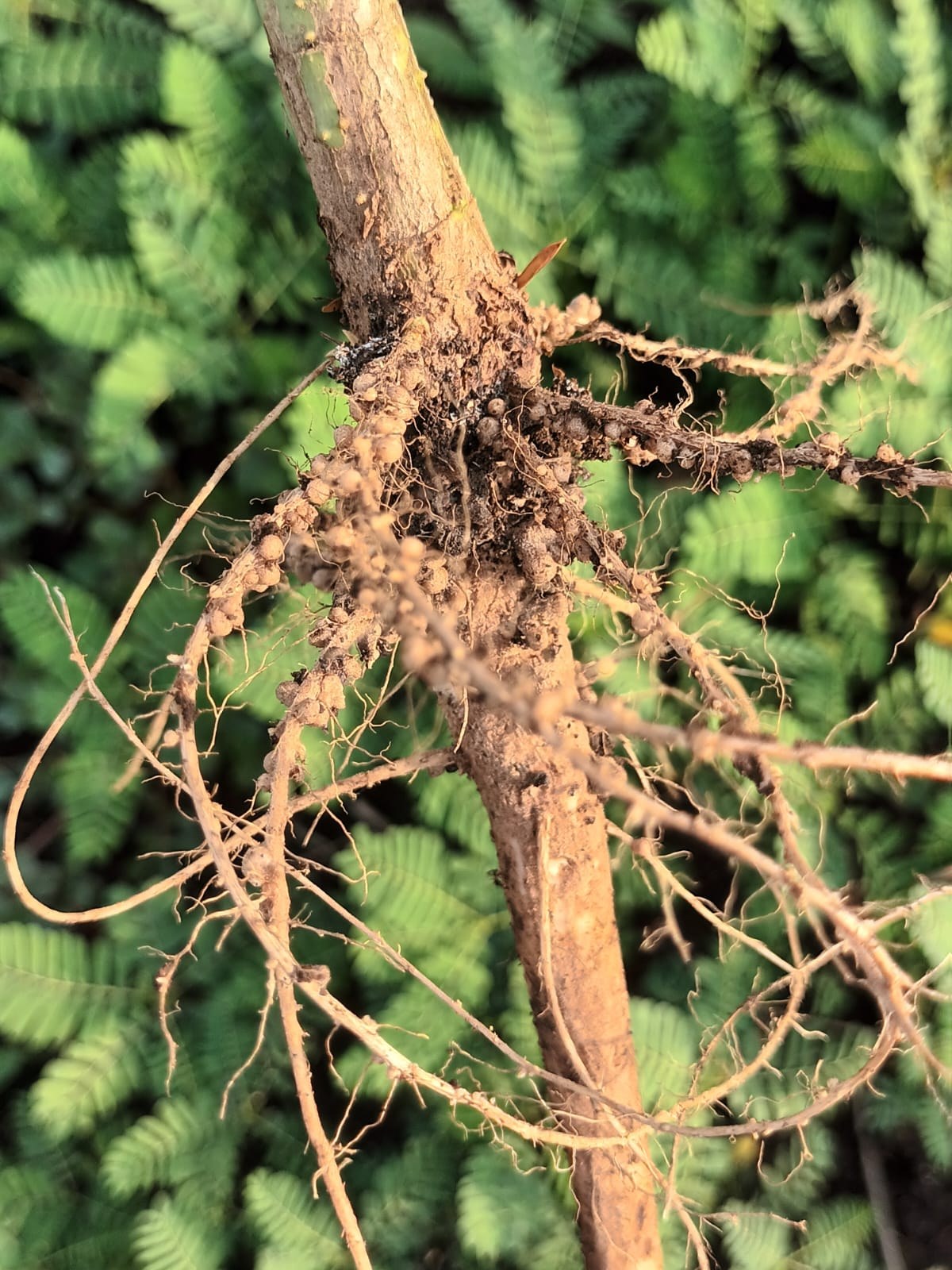
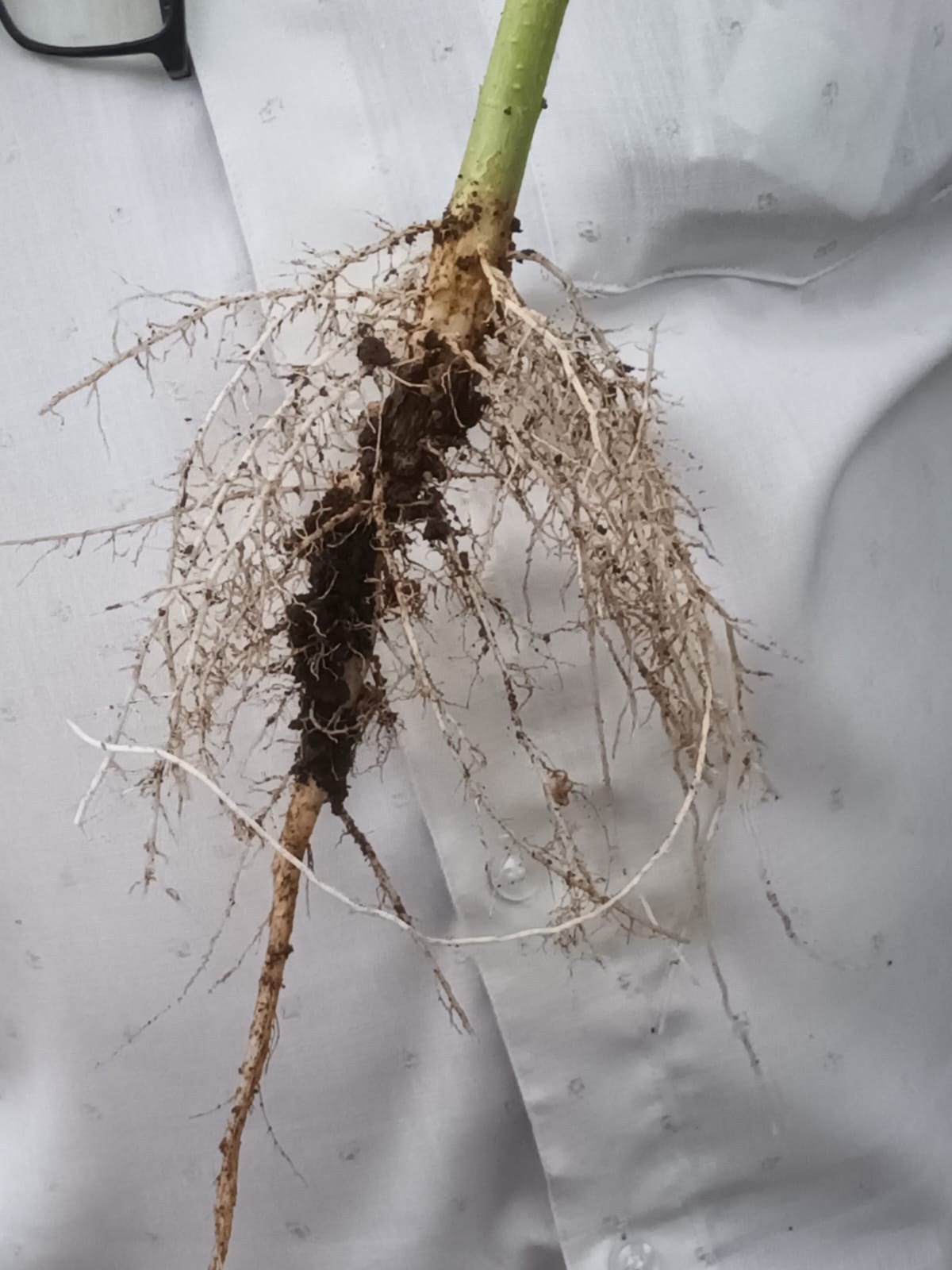
Left: PQNK raised bed: heavy nodulation. Right: Conventional bed: sparse nodulation.
Field photographs from a PQNK trial plot: the raised-bed plant (left) carries visibly larger and more numerous nodules than the conventional flat-bed plant (right), exactly the difference the practitioner described.
The reason air matters this much is a paradox built into the chemistry of nitrogen fixation itself. The nitrogenase enzyme that rhizobia use to split atmospheric nitrogen is destroyed almost instantly by oxygen, yet the reaction it performs is so energy-hungry that it can only be powered by oxygen-dependent respiration. Rhizobia resolve this paradox inside the nodule, not outside it: an internal oxygen diffusion barrier and a dedicated oxygen-carrying protein, leghemoglobin, hold oxygen concentrations inside the nodule to a few dozen nanomolar, thousands of times lower than the surrounding atmosphere, just enough to fuel respiration without destroying the enzyme it powers. The nodule never touches atmospheric air directly. It runs on a managed trace of oxygen diffusing through the soil pore space that surrounds it, which is precisely the underground air the practitioner described.
A waterlogged furrow starves the nodule of oxygen. A bone-dry mound lets in too much. The upper shoulder of the bed, the zone the gradient above places precisely at the crop's root line, is the only part of the bed that holds the Water : Air ratio in balance, and that is the zone where nodulation is heaviest.
Not every nitrogen-fixing microbe lives inside a nodule. Free-living soil bacteria such as Azotobacter face the identical oxygen paradox without a host plant, a leghemoglobin, or any diffusion barrier to protect them, and they solve it entirely on their own. Azotobacter runs one of the highest respiration rates recorded in any organism, consuming oxygen in its immediate surroundings faster than it can diffuse in, and backs this with a dedicated protective protein that locks the enzyme into an inactive, oxygen-tolerant state whenever oxygen briefly rises. Other free-living fixers reach the same outcome by different routes: some cyanobacteria dedicate entire specialised cells to the task, while many soil bacteria simply seek out the low-oxygen microsites, inside an aggregate, inside a decomposing root fragment, that structured soil already provides. The lesson for PQNK holds either way: the Water : Air balance is not a requirement unique to legumes. It is a requirement of the nitrogenase enzyme itself, wherever it is found, with or without a nodule.
The same underground air principle reaches beyond nitrogen fixation alone. Soil is not simply wet or dry, aerobic or airless, it is a fine mosaic of both, often within the same clump of earth. The outer surface of a soil aggregate, well supplied with oxygen, favours one community of decomposers and nutrient-cyclers. A few millimetres inward, where oxygen can no longer keep pace with what the soil life is consuming, an entirely different community takes over, one built for a world with little or no free oxygen. The Water : Air balance is not a nitrogen-fixation concept alone. It is the balance that decides which community of soil life is active in any given pocket of the bed, nodule-forming or not, and the same raised-bed geometry that favours vigorous nodulation is quietly organising the entire underground population at the same time.
A second, more recent discovery adds a further layer to why bed geometry matters so much. Research published in Science in March 2025 by a team at the Max Planck Institute for Plant Breeding Research, working with the legume Lotus japonicus, found that the Casparian strip, the waterproof suberin band that lines the root's endodermis, acts as a gatekeeper twice over, not once. Before any nodule forms, an apoplastic barrier related to the Casparian strip is what allows the plant to sense that it is nitrogen-deficient in the first place and permit rhizobial infection to begin at all. Once a nodule has formed, a second version of the same barrier, this time inside the nodule itself, regulates the sugar the plant trades the bacteria for the nitrogen they fix, preventing the bacteria from taking sugar without giving nitrogen back in return. Both versions of this barrier are living tissue that depends on cellular energy generated through oxygen-dependent respiration, which means both depend, in turn, on the same Water : Air balance the raised bed provides.
None of this changes what a PQNK farmer does. It explains why what the protocol already prescribes, permanent beds, no-till, and mulch that stops the surface from flooding or baking dry, is not just good general practice but the exact physical precondition an oxygen-sensitive enzyme and a living microscopic gatekeeper both require to function. The practitioner who noticed bigger nodules on a raised bed was not being wishful. He was observing biology responding correctly to a physical condition the bed had created.
The full biochemistry, the nitrogenase oxygen paradox in detail, the Casparian strip's two functions, and the complete citations, is developed in Part One of the companion PQNK Knowledge Paper, The Underground Air.
WHY WATER DELIVERY METHOD MATTERS: THE HARDPAN AS A FALSE FLOOR
PQNK's permanent mulch does more than keep the soil surface cool. Bare soil loses water in two stages: first a fast stage, where capillary action continuously pulls moisture up from the subsoil to replace whatever evaporates at the surface, and then a much slower stage, once the surface itself dries out and that pull stops working. Mulch keeps the surface from ever drying out in the first place, by catching dew and light rain in its own fibres and releasing it slowly at the soil surface. Because the surface never dries, the capillary pull that drags water up out of the root zone never gets started, and the water that does evaporate is shallow surface moisture being constantly replenished from above, not the reserve the crop's roots depend on.
A hardpan changes this picture for the worse under flood irrigation. Instead of letting water percolate down to a depth safe from evaporation, the hardpan traps it in the shallow zone right where it is most exposed to the sun. PQNK's own field arithmetic makes the scale of the loss concrete: of a typical 2.9-inch flood-irrigation layer, roughly 298,000 litres applied to one acre, only about a third infiltrates into the top six inches of soil before the hardpan stops it; the rest sits on or near the surface and is largely lost to evaporation before the crop ever gets to use it. Even the fraction that does infiltrate keeps evaporating back out under summer soil temperatures above 60°C. Net result: as little as 5 to 16 percent of the water applied in a single flood event is actually retained where the crop's roots can reach it.
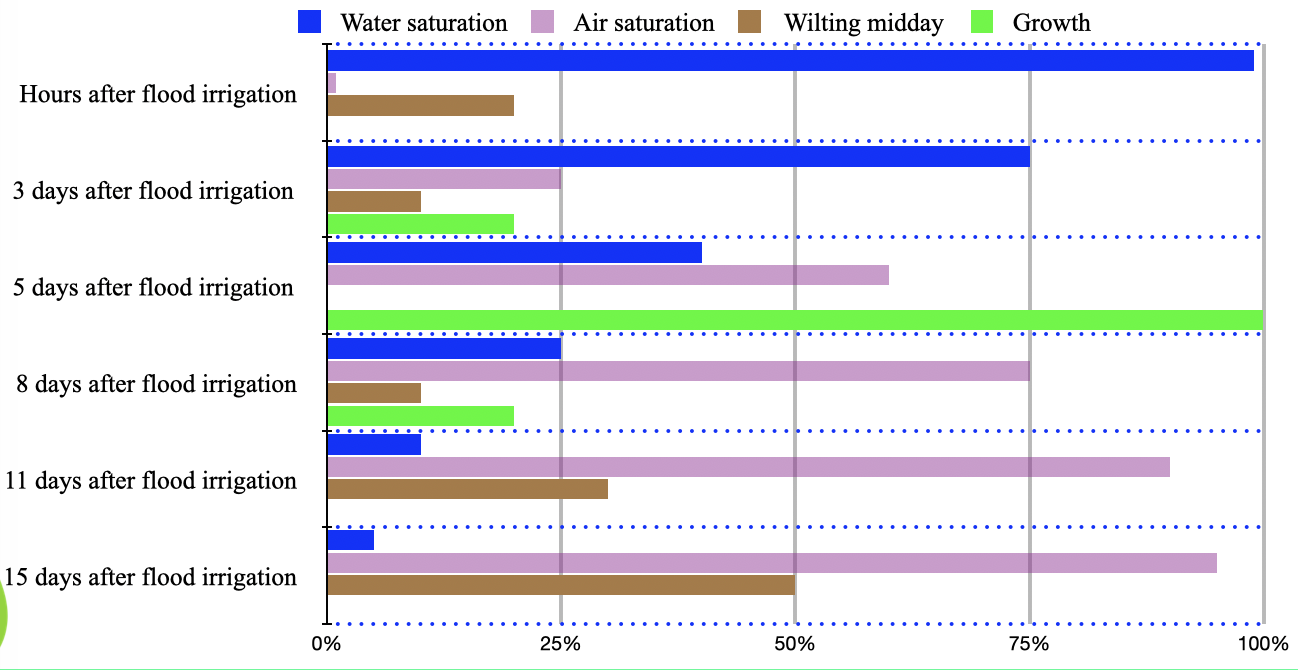
PQNK's multi-season field observation of a flood-irrigated field: water saturation and midday wilting both peak in the hours after flooding, the field only briefly nears a healthy balance around day 5, then swings into the opposite failure mode, too airy and too dry, by day 11 to 15.
PQNK's multi-season field observation of flood-irrigated ground tracks what this produces over time, shown above: the field briefly passes through a healthy water-to-air balance around day five after flooding, only to swing straight through it into the opposite failure mode by day eleven to fifteen, air-rich but too dry for the crop. Wilting can even appear within hours of flooding, while the field is still fully saturated, because oxygen-starved roots shut down their own water-uptake channels within minutes of being submerged. A flood-irrigated field spends most of its time in one of these two failure modes and only passes through the productive middle band in transit. A PQNK raised bed does not pass through that band, it lives there, which is also why breaking the hardpan is the first step in every PQNK transition: until that false floor is removed, no irrigation method can either reach a safe depth or stop cycling the crop between suffocation and drought.
Two further factors affect how much water a crop needs in the first place, beyond how much is lost at the surface. Roots draw in most of their mobile nutrients, nitrate, calcium, potassium and the rest, riding along with the water they pull in, so a diluted, leached soil solution forces the plant to pull in more water for the same nutrition than a nutrient-dense one does. Flood irrigation dilutes and leaches the soil solution every time it is applied, adding a second water cost on top of the evaporation loss above. And because transpiration is driven by how much hotter the air is than the leaf, the same hardpan that bakes a bare, exposed surface above 60°C also forces the crop to transpire harder just to stay cool, a third cost stacked on the same underlying problem.
BEYOND THE NODULE: THE SAME AIR, EVERY ROOT
The underground air principle does not stop at nitrogen. After reading Part One of The Underground Air, Professor Norman Uphoff of Cornell University, the scholar most responsible for carrying the System of Rice Intensification to international recognition, made a simple and generous observation: the same soil aeration that mattered so much for Jantar's nodules should matter just as much for every crop that carries no nodule at all, wheat, rice, maize, and the vegetables and oilseeds grown on PQNK beds. He was right. The same Water : Air balance governs four further services, none of which involve a nitrogen-fixing bacterium.
The first is access to minerals already present in the soil in far greater abundance than any crop actually needs. For a typical two-tonne wheat yield in the subcontinent, an acre's topsoil holds roughly 800 kilograms of total phosphorus against a crop removal of only about 4.4 kilograms, a reserve some 180 times larger than a single season's demand, and the same accounting for potassium runs even further ahead, around 1,167 times larger. The shortage farmers experience is rarely a shortage of minerals. It is a shortage of the aerobic bacteria and fungi, phosphate- and potassium-solubilizers among them, whose organic-acid metabolism unlocks that reserve, an aerobic workforce that only functions when the soil's own air supply is intact.
The second is the physical architecture that lets air, water, and roots move through the profile at all. Earthworm burrows, the root channels Jantar's own taproots leave behind, and the hyphal networks of mycorrhizal fungi together build and hold open the macropores a PQNK bed depends on, structures a single season of tillage destroys and that no-till management instead lets accumulate, season after season, exactly the compounding effect Step Four is designed to protect.
The third is soil pH itself. PQNK's own field measurements on matured beds show it directly: a soil sample drawn twelve inches from a plant reads a bulk pH near 8, typical of Punjab's calcareous soils, while a sample drawn from inside that same plant's own root net, on the same bed, reads near 7, a full unit lower. This is the documented rhizosphere effect of a biologically active root zone, roots and their associated microbes releasing protons and organic acids as they take up nutrients, and it is exactly the kind of local buffering that keeps phosphorus, iron, zinc, and manganese available to the root regardless of what the surrounding bulk soil measures.
The fourth operates inside the root itself. Water enters a root cell through aquaporins, membrane channels that shut within minutes when a root is starved of oxygen, cutting off water and nutrient uptake even in a plant whose Casparian strip is otherwise functioning normally. A well-balanced Water : Air bed keeps those channels open in every root growing on it, legume or not.
The full mechanisms, citations, and Professor Uphoff's own role in prompting this extension are developed in Part Two of the same companion PQNK Knowledge Paper, The Underground Air.
V. STEP FOUR, MULCH, ROOT RETENTION, NO-TILL, AND SMM: RESTORING BIOLOGICAL CONTINUITY
Step Four is not a single intervention but a permanent operational discipline, a set of practices that, once established, operate continuously to maintain and deepen the biological recovery initiated by the first three steps. Together, mulch application, root retention, no-till precision planting, and Soil Moisture Management form the biological continuity layer of PQNK agriculture. They ensure that the ecological work performed in Steps One through Three is not disrupted season after season by the same practices that originally destroyed it.
Each element of Step Four addresses a specific mechanism of biological continuity. Mulch restores the Earth's protective skin, the layer of decomposing organic material that moderates soil temperature, prevents moisture evaporation, feeds surface decomposer communities, and sequesters carbon in stable soil organic matter. Root retention maintains the underground skeleton, the network of former root channels, mycorrhizal connection points, and organic matter deposits that represent accumulated biological infrastructure. No-till precision planting ensures that seeds enter the living Earth without disrupting the fungal networks, aggregate structures, and biological communities that have been painstakingly rebuilt. Soil Moisture Management reorients the field's relationship with water from irrigation dependency to biological moisture retention, the fundamental hydrological transition that PQNK agriculture is built upon.
VI. THE BIOLOGICAL TRANSITION PHASE: RECOVERY IN LAYERS
Once all four steps have been applied, the field enters a biological transition phase. This phase is not a passive waiting period, it is an active, self-directed biological reconstruction process in which the soil begins to recover its former ecological complexity, layer by layer and season by season. Understanding this phase is essential for farmers and agronomists who may otherwise misinterpret its signs, temporary yield variation, unusual weed succession, unexpected changes in how water moves through the field, as failures of the protocol rather than expressions of it.
The transition phase begins underground, where it is invisible. The first expressions of recovery are microbial: populations of aerobic bacteria, actinomycetes, and decomposer fungi expand into newly oxygenated zones. These microbial pioneers begin processing accumulated organic matter residues and releasing mineral nutrients that have been locked in unavailable forms. Root systems of recovery crops begin extending into depth profiles they could not previously access. Mycorrhizal networks begin reconnecting across the fracture planes, establishing the underground exchange infrastructure that will eventually link every plant in the system into a coherent biological community.
Regeneration is not the final destination. It is the transitional process that leads to the sustained ecosystem, the condition in which the field becomes self-organising and self-maintaining without continuous external intervention.
Each growing season adds a layer of biological complexity. Organic matter accumulates. Aggregate structure improves. Water infiltration rates increase as biological channels multiply. The field communicates its recovery through visible ecological succession, the appearance of pioneer plant species, changes in insect populations, the return of earthworms and surface biological activity. These are not incidental observations. They are the biological language of a recovering ecosystem reporting its own progress.
MANAGING THE TRANSITION: FROM SUBSTITUTION TO SUPPLEMENTATION
This recovery is not instantaneous, and farmers new to PQNK need a practical answer to a specific question: what should be done if a crop shows real distress before that underground recovery is complete? The answer begins with a distinction. Conventional agriculture runs on soil system substitution, chemical fertiliser substituting for biological nutrient cycling, pesticide for natural predation, herbicide for ecological weed regulation. PQNK's objective was never to substitute one external input for another. It is to restore the natural processes those inputs replaced. During the transition phase described above, that restoration is not yet complete, and the right response is not substitution but supplementation: the minimum temporary assistance required to protect the crop while the underlying biology continues recovering beneath it.
Most of the difficulty farmers report during this period traces back to an incomplete step rather than a flaw in the system itself. Hardpan broken only partially, a thin or patchy Jantar cover crop, residue removed rather than retained, soil disturbed before the biological community has established, or Soil Moisture Management not properly maintained, each of these delays biological recovery and increases the likelihood of a visible deficiency, pest pressure, or weed competition the underground recovery has not yet caught up to. The corrective is to find and complete the missing step, not to abandon the protocol.
Where a genuine nutrient deficiency is visible, and only then, a small, temporary correction is appropriate: approximately four kilograms of NP fertiliser dissolved into the irrigation water flowing through the furrows. The quantity is small because PQNK's own hydraulics make it effective at that scale. Since Soil Moisture Management applies only a fraction of the water conventional flood irrigation would use, the same small dose reaches the root zone far more concentrated than it would across a flooded field. One application is often enough; occasionally two or three are needed across the first few crops, with plain water on the alternating irrigations to hold the moisture balance. These applications support the crop. They do not replace the biological nutrient cycle still under construction beneath it.
Temporary pest and weed intervention follows the same logic and the same restraint. Biological protection, predator populations, parasitoid wasps, the beneficial insect community, needs time to rebuild after years of chemical suppression, and a farmer should not expect complete natural control in the first season. If monitored pest pressure remains below the point of real economic damage, roughly a tenth of the crop, no intervention is needed. If it exceeds that threshold, a temporary pesticide application is a legitimate protective measure, not a departure from PQNK. The same applies to weeds: where competition genuinely threatens crop establishment, particularly in warm-season crops before the mulch layer and biological ground cover have matured, herbicide may occasionally be warranted. In both cases, the intervention is triggered by what the field actually shows, never by a fixed calendar, and it should be needed less with every successive crop as the biological system strengthens.
None of this contradicts the recovery this chapter has just described. A patient recovering from major surgery may need temporary medical support despite the ultimate goal of complete natural healing. A biologically damaged soil is no different. The objective has never been ideological purity, an unbroken record of zero inputs from day one. The objective is a full biological recovery achieved without exposing the farmer to a yield loss severe enough to make them abandon the system before that recovery is complete. A farmer who receives careful, minimal support during this window keeps faith with PQNK long enough for the biology described above to finish its work.
Supplementation is not a departure from PQNK. It is the bridge that keeps a recovering field productive while its biology finishes the work substitution once did.
VII. SOIL MOISTURE MANAGEMENT: THE BIOLOGICAL HYDROLOGICAL SYSTEM
PQNK makes a distinction that conventional agriculture does not recognise: the distinction between irrigation and Soil Moisture Management. Irrigation is the mechanical delivery of water from an external source to compensate for the soil's lost ability to retain and regulate moisture internally. It treats the symptom, crop water stress, without addressing its biological cause: a soil that has lost the organic matter content, aggregate structure, biological activity, and root channel infrastructure that once allowed it to absorb, distribute, store, and slowly release water independently.
The hydrological crisis is frequently a biological crisis first. The farm is not short of rainfall, it is short of the biological capacity to retain and use what falls.
Soil Moisture Management is PQNK's framework for restoring the Earth's internal hydrological function. As mulch accumulates and decomposes, it builds soil organic matter, the single most important determinant of water-holding capacity. As root channels multiply through retention and depth recovery, they become percolation conduits that move water rapidly from the surface into the deeper profile, where it is held against evaporation and released slowly to roots over weeks rather than days. As mycorrhizal networks expand, they extend the effective root system of every plant into a vastly larger soil volume, accessing moisture reserves that an isolated root system could never reach.
Water in PQNK is understood not as food but as a transport medium, the vehicle through which dissolved minerals, biological signals, and metabolic products move through the soil-plant system. A healthy soil does not need more water; it needs the biological architecture that allows it to use water efficiently. SMM is the cultivation of that architecture, season by season, layer by layer, until the field's internal hydrological system operates with a degree of independence that progressively reduces, and eventually transforms, the field's dependency on external irrigation.
VIII. ROOT RETENTION: THE UNDERGROUND LEGACY SYSTEM
Among the practices of Step Four, root retention is perhaps the most counterintuitive to farmers accustomed to conventional tillage. After harvest, conventional practice incorporates or removes root stubble, treating it as agricultural waste or as material to be ploughed under. PQNK recognises root systems as biological infrastructure, a legacy investment in underground architecture that should be preserved and built upon rather than destroyed.
When a crop root system is left in place after harvest, it dies and decomposes in situ, but it does not disappear. It leaves behind root channels: cylindrical voids in the soil lined with decomposing organic matter and colonised by bacteria and fungi. These channels become preferential pathways for the root systems of subsequent crops, which follow the chemical gradients and fungal networks already established by their predecessors. Each generation of crops inherits and extends the underground infrastructure of the previous generation. The result, over multiple seasons, is a progressively more complex and deeply penetrating root channel network that improves water infiltration, aeration, and biological connectivity with each cycle.
The dead root becomes the architecture of future life. The Earth accumulates intelligence season after season, each crop building on what the previous generation left behind.
Root retention also preserves mycorrhizal connection points. When roots are destroyed by tillage, the fungal networks that were attached to them are severed. Rebuilding these networks requires metabolic investment from the next crop, energy that could otherwise go into growth and production. When roots are retained, the fungal networks remain partially intact, and the next crop can reconnect to an existing network rather than rebuilding from scratch. This is not a minor efficiency, it represents a fundamental difference in the biological condition of the soil at the beginning of each growing season.
IX. MULCH AND THE REBIRTH OF THE CARBON CYCLE
Mulch in PQNK is not merely a moisture-conservation technique. It is the mechanism through which the surface carbon cycle, the process that built and maintained the Earth's living skin for millions of years before agriculture interrupted it, is restored and sustained. Every natural ecosystem maintains a continuous layer of decomposing organic material at its surface. This layer is simultaneously the Earth's insulation, its moisture management system, its primary carbon sequestration pathway, and the feeding platform for the entire decomposer community that drives mineral cycling and soil formation.
When this layer is removed, by tillage, bare fallow, or residue burning, the consequences cascade downward through the entire soil ecosystem. Without organic material at the surface, decomposer populations collapse. Without decomposer activity, mineral cycling slows. Nutrients become locked in unavailable mineral forms. Soil aggregate structure, maintained by fungal hyphae and bacterial polysaccharides produced during decomposition, begins to degrade. The soil loses its capacity to absorb rainfall. Erosion increases. Carbon that was sequestered over decades or centuries is oxidised and released to the atmosphere within a few seasons of exposure.
Death becomes nourishment within living systems. The decomposition of mulch is not the end of organic matter, it is its transformation into a new form of biological wealth.
Mulch restoration reverses this cascade. As surface organic material accumulates and begins decomposing, each layer feeds the next. Decomposer populations recover. Fungal hyphae extend through the decomposing layer, binding particles and creating the stable aggregates that give healthy soil its characteristic crumb structure. Carbon is stabilised in humic compounds that persist for decades. The restored carbon cycle begins operating as an ecological engine, continuously converting surface organic matter into stable soil carbon while simultaneously feeding the biological communities that maintain every other aspect of soil function.
X. NO-TILL PRECISION PLANTING: ENTERING THE LIVING EARTH GENTLY
No-till precision planting is the operational discipline that ensures every biological investment made through Steps One to Four is protected at the moment of most vulnerability: the planting event. In conventional agriculture, planting is preceded by tillage, an act that, from the perspective of soil biology, is catastrophic. Tillage shatters soil aggregates formed over seasons by fungal activity. It severs mycorrhizal networks. It inverts the soil profile, burying surface biological communities in anaerobic depths and exposing deep anaerobic communities to the surface oxygen levels that kill them. It creates a bare, structurally simple growing medium that is biologically equivalent to starting over.
PQNK no-till precision planting uses PQNK’s own precision planters, the SIPP and the VIPP (Chapter Twenty-Nine), or hand dibbers on small plots, that open a minimal slot in the soil surface, deposit the seed at the correct depth, and close the slot without disturbing the surrounding soil structure. The crop enters the living Earth gently, finding itself immediately surrounded by functioning biological communities, intact fungal networks, moisture gradients, and the accumulated organic matter infrastructure of previous seasons.
The crop enters the living Earth gently. It does not arrive into a biologically reset void, it arrives into a living community that is already prepared to support it.
The practical implications of this difference are measurable from the first growing season. No-till crops planted into biologically active soil establish root systems faster, access mycorrhizal networks sooner, begin mineral cycling earlier, and experience less transplanting stress. Over multiple seasons, the cumulative biological capital preserved by no-till operations compounds, each season building on the preserved infrastructure of the previous one in a trajectory of increasing biological wealth that tillage-based agriculture structurally cannot replicate.
XI. ECOLOGICAL SUCCESSION: THE FIELD SPEAKS THROUGH RECOVERY
One of the most important literacy skills that PQNK develops in the Production Manager is the ability to read ecological succession, the observable sequence of biological changes through which a recovering field communicates its internal condition. Succession is not random. It follows a predictable logic determined by the biological architecture of the soil at any given stage of recovery. Pioneer species appear first, fast-growing, deep-rooting plants that are adapted to disturbed, low-organic-matter soils. As biological activity increases and soil structure improves, more complex communities replace them. The appearance of specific plant species, insect communities, earthworm populations, and fungal fruiting bodies at the soil surface are all readable signals in the biological language of the recovering ecosystem.
Understanding succession prevents the most common error of transition management: intervening against recovery expressions that are mistaken for problems. A farmer who does not know ecological succession may see the appearance of pioneer weeds and respond with herbicide, destroying the biological message and the biological process it represents. A farmer who reads succession sees the same weeds as indicators of a specific stage of soil recovery and responds by allowing them to complete their ecological role before removing them through mulch or successor crop competition.
The deepest recovery often begins invisibly. By the time it becomes visible at the surface, the foundation it rests on has already been rebuilt underground.
XII. FROM INPUT DEPENDENCY TO ECOLOGICAL SELF-REGULATION
The defining trajectory of PQNK transition is the progressive replacement of external input dependency with ecological self-regulation. This is not an ideological position, it is a biological consequence of successful protocol implementation. As soil biological activity recovers, the processes that external inputs were compensating for are restored internally. Nitrogen fixation resumes through free-living nitrogen-fixing bacteria. Phosphorus solubilisation resumes through mycorrhizal exudation. Pest and disease pressure declines as predatory and parasitic biological communities reestablish. Water regulation improves as organic matter content increases. The inputs were always compensating for the absence of biological function. As biological function returns, the compensatory inputs become progressively unnecessary.
This transition follows a non-linear curve. Early in the recovery process, biological function is still establishing, and some external support, the transitional amendments, cover crops and small safeguards described above, may be needed. As the system gains biological momentum, input needs decline sharply. In a fully recovered system, what PQNK calls the Sustained Ecosystem, the field maintains its own fertility, manages its own pest ecology, regulates its own moisture, and produces nutritionally complete food with minimal external inputs beyond seeds and labour.
The crisis often lies in interruption rather than absence. The Earth did not lose the capacity for self-regulation, the capacity was suppressed by the practices that replaced it.
XIII. NUTRIENT-DENSE FOOD AND THE LIVING SOIL FOUNDATION
PQNK agriculture does not produce food in the conventional sense of filling a yield quota. It produces food in the ecological sense, the output of a living biological system operating in full nutrient-cycling continuity. The distinction is not semantic. It is measurable. Food grown in biologically active soil, with access to the full spectrum of minerals released through microbial activity, mycorrhizal exchange, and root exudate chemistry, contains nutritional profiles that food grown in chemically maintained dead soil cannot replicate.
Mineral density, the concentration of zinc, iron, magnesium, calcium, selenium, and the full range of trace elements, is determined primarily by the biological activity in the rhizosphere, not by the mineral content of the soil parent material. Mycorrhizal fungi can access minerals in crystal lattices that plant roots cannot directly dissolve. Bacterial metabolites and organic acids produced in biologically active soil convert unavailable mineral forms into plant-available ions. A crop growing in a fully functional PQNK soil accesses a mineralogical library of nutrients. A crop growing in chemically maintained dead soil accesses only the specific minerals added in fertiliser form.
Healthy food begins in living soil. The body inherits the condition of the field. When the field is biologically alive, food carries the nutritional depth of a complete ecosystem.
This connection between soil biology and human nutrition is not incidental to PQNK, it is central to its purpose. The restoration of living soil is simultaneously the restoration of the nutritional foundation of human health. A civilisation that destroys its soil biology is not merely reducing its agricultural efficiency, it is gradually undermining the nutritional basis of its own health, generation by generation, in ways that conventional medicine will treat symptomatically but can never fully address without addressing the soil condition that is the primary cause.
XIV. CLIMATE RESILIENCE: THE SOIL AS THE CLIMATE SOLUTION
The global climate crisis has multiple dimensions, atmospheric, oceanic, geological. But one of its most consequential dimensions is agricultural, and it operates primarily through soil. The destruction of soil biology has released billions of tonnes of carbon from the world’s farmed soils into the atmosphere, one of agriculture’s largest contributions to the rise in atmospheric carbon dioxide. Simultaneously, the destruction of soil water-holding capacity has altered regional hydrology, increasing flood frequency in degraded catchments, intensifying drought stress in areas where soil can no longer retain rainfall, and disrupting the moisture-recycling processes that once moderated regional climate variability.
The climate crisis is also a soil crisis. The flood begins where infiltration dies. The drought begins where organic matter was destroyed. The solution begins where the Earth's biological skin is restored.
PQNK transition does not merely reduce the agricultural sector's contribution to climate disruption, it actively reverses it. As soil organic matter accumulates through mulch decomposition and root retention, atmospheric carbon is sequestered in stable soil carbon forms. As water infiltration recovers, flood peaks in degraded catchments diminish. As soil biology reactivates, the soil resumes its role as a moisture-recycling system, moderating the extremes of rainfall and drought that have intensified as soil biological function has declined. Each farm that completes the PQNK transition becomes a climate restoration node, not through policy, carbon markets, or external investment, but through the simple biological logic of a living soil doing what living soil has always done.
XV. THE SUSTAINED ECOSYSTEM: THE TRUE DESTINATION
Throughout the PQNK framework, the term 'regenerative' describes a transitional condition, the process of biological recovery, not the final state. PQNK's true destination is the Sustained Ecosystem: the condition in which the field has recovered sufficient biological complexity and ecological self-organisation to maintain its own fertility, water regulation, pest ecology, and productivity without continuous external management of inputs and conditions. In the Sustained Ecosystem, the farmer does not maintain the system through intervention, the system maintains itself through ecological function, and the farmer's role is to understand, read, and work within that self-maintaining ecology.
The Sustained Ecosystem is not a static endpoint. It is a dynamic, continuously evolving ecological condition in which biological complexity deepens season after season. New species of bacteria, fungi, invertebrates, and surface organisms continue colonising and enriching the system. Soil organic matter continues accumulating, increasing water-holding capacity and mineral availability. Root channel networks extend deeper, accessing increasingly diverse mineral reserves. Mycorrhizal networks become more complex, connecting more plants across larger areas through underground exchange systems of increasing efficiency.
Regeneration is not the final destination. It is the journey. The sustained ecosystem is the place where the field no longer needs to be regenerated, because it has resumed the capacity to sustain itself.
XVI. THE PRODUCTION MANAGER: ECOLOGICAL LITERACY AS AGRICULTURAL INTELLIGENCE
PQNK transition redefines the role of the farmer. In conventional agriculture, the farmer is an input operator, someone who manages the application of external chemicals and mechanical force to produce crop yields. The primary skills are input timing, dosage calculation, and machinery operation. Knowledge of soil biology, ecological succession, plant communication, and the dynamics of a living soil system is largely irrelevant to this role, because the system being managed is not a living biological system, it is a chemically maintained growing medium.
In PQNK agriculture, the farmer becomes a Production Manager, someone whose primary skill is ecological literacy: the ability to read the field as a biological language and respond to its communications with ecological interventions rather than chemical force. This requires a fundamentally different knowledge base. The Production Manager must understand soil biology and the succession of biological communities through recovery stages. They must be able to read plant expression, leaf colour, root architecture, growth patterns, stress responses, as biological signals carrying information about underground conditions. They must understand the seasonal rhythms of the living soil, the periods of peak biological activity, the conditions that support or suppress specific ecological functions, the signs that indicate when a biological process has completed its role and the system is ready for the next stage.
The restoration of living soil ultimately becomes the restoration of agricultural intelligence itself. The farmer who learns to read the biological language of the field is not simply becoming a better farmer, they are becoming a practitioner of a knowledge system that conventional agriculture abandoned in its pursuit of industrial simplicity.
XVII. RURAL STABILITY AND NATIONAL FOOD POWER
The consequences of PQNK transition extend far beyond the individual farm. When soil biology recovers, yields stabilise and then improve, not through intensification but through the recovery of the ecological conditions that make agricultural production naturally abundant. Input costs decline as biological self-regulation replaces chemical compensation. Irrigation requirements decrease as soil water-holding capacity improves. Pest management costs drop as biological pest regulation reactivates. The farm becomes more profitable, not because prices improved or subsidies increased, but because the ecological foundation of production was restored.
At the regional and national scale, these individual farm-level recoveries aggregate into a fundamentally different agricultural landscape. Water tables stabilise as infiltration recovers across entire catchments. Flood frequency declines. Dust storm intensity diminishes as soil aggregate stability improves. Rural communities that have been in economic and demographic decline, losing population to urban migration as conventional agriculture became progressively less viable, find a new economic foundation in ecologically competent farming that produces higher-quality food with lower operating costs.
The living soil becomes a strategic national resource. National Food Power, the sovereign capacity to feed a population from its own ecological foundation, is not a political aspiration. It is a biological condition. It exists in direct proportion to the biological health of the nation's agricultural soils.
PQNK frames the transition to ecological agriculture not as an environmental choice but as a civilisational strategy. A nation whose agricultural soils are biologically alive maintains food sovereignty independent of global supply chains, input price volatility, and climate disruption. A nation whose agricultural soils are biologically dead is dependent, on imported inputs, on international food markets, on the goodwill of trading partners, in ways that no military force or diplomatic agreement can ultimately secure. The most fundamental form of national security is biological. It is built not in defence ministries but in fields.
CONCLUSION: THE PROTOCOL AS AN ACT OF ECOLOGICAL RESTORATION
The Four-Step PQNK Transition Protocol is, at its deepest level, an act of ecological restoration, the systematic removal of the structural barriers that decades of ACI (Ancient Conventional Industrial) agriculture have imposed on living soil, followed by the creation of conditions in which the soil's own biological intelligence can resume the work of self-organisation and self-maintenance that it performed for millions of years before those barriers were installed.
Step One fractures the physical wall. Step Two dissolves the chemical lock. Step Three establishes the architectural discipline that prevents re-degradation. Step Four restores the biological continuity that allows the living system to deepen its recovery season by season until it reaches the Sustained Ecosystem state, the true destination of PQNK agriculture, where the field has resumed its ecological competence and no longer requires regeneration because it has recovered the capacity to perpetually regenerate itself.
The protocol does not manufacture this competence, it restores it. The biology was always there, suppressed beneath the hardpan and the chemical lock and the biological silence imposed by inundation, tillage, and bare soil. PQNK does not bring a new ecology to the field. It removes the obstacles that were preventing the existing ecology from expressing itself. It trusts the Earth's own intelligence, accumulated over geological time, to do what that intelligence has always done: build complexity, deepen function, and sustain life in perpetuity, once the interruptions are removed.
The Earth already knows how to sustain life. Every living system that ever existed is evidence of that knowledge. PQNK begins not by teaching the Earth how to recover, but by stepping back, removing the barriers, and allowing the recovery that was always waiting to proceed.
Chapter Fifty-Four: The PQNK Bed System, Engineering the Physical Architecture of Living Agriculture