
Industrial Devastation To Natural Abundance
The Evidence · Chapter 37
Sugarcane, The Bamboo Principle
One Planting, Many Ratoons, from a Protected Living Base
Release 1.2 · 2026-10-04
If you use “Listen”, the text of the page may be sent to your browser or operating system’s speech provider, such as Apple, Google or Microsoft, depending on the voice your device uses. Pedaver does not process, transmit or store any audio.
“Bamboo teaches a simple lesson: a perennial system becomes stronger when its living base is protected rather than rebuilt after every harvest. PQNK applies that principle to sugarcane. The first crop establishes the clump, roots and biological soil environment. Later ratoons begin with that living infrastructure already in place.”
Asif Sharif, Lahore, 2021
Sugarcane is a perennial grass, yet it is often managed as though each planting were a short-lived production cycle. Conventional ratooning is well established, but ratoon performance can decline because of variety, disease, soil condition, drainage, harvest damage and management. PQNK asks a different question: how long can a healthy sugarcane clump remain productive if the soil is left undisturbed, roots are retained, residues are returned, traffic is controlled and moisture is managed without prolonged saturation?
THE BAMBOO INSIGHT
The comparison with bamboo is an analogy, not a claim that the two plants are biologically identical. Sugarcane ratoons from buds on the basal and underground portions of the harvested clump. That perennial capacity allows a new crop to begin without replanting. PQNK builds its sugarcane system around preserving this living base. The first crop establishes the soil and root environment; subsequent ratoons inherit that structure instead of starting from newly disturbed soil. PQNK field experience includes plantations maintained through eight harvest cycles from one planting without the expected decline, but longevity must be judged field by field because ratoon performance is strongly affected by genotype, climate, disease and management.
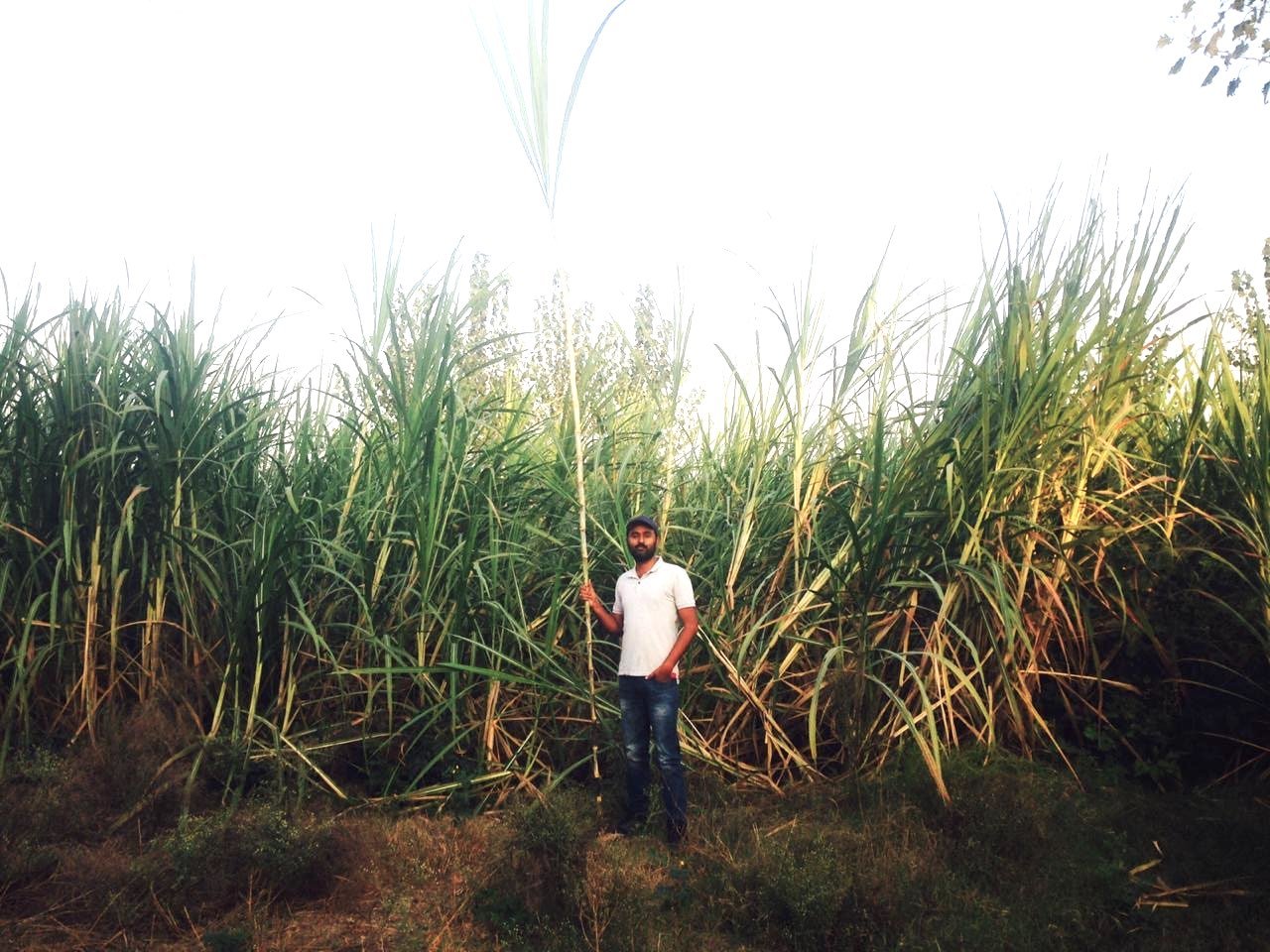
A PQNK sugarcane field: the soil, roots and surface cover are protected and carried forward from crop to crop
THE MANAGEMENT CONTRAST: REBUILDING THE FIELD OR PRESERVING THE LIVING BASE
Conventional sugarcane production commonly depends on repeated tillage, substantial seed-cane, fertiliser, crop-protection inputs and frequent irrigation. PQNK seeks to reduce that dependence by restoring biological nutrient cycling, keeping the soil covered, retaining roots and residues, and using permanent beds with controlled traffic. The distinction is not that conventional farming has no biology, but that repeated disturbance and poorly managed saturation can weaken the soil structure and biological processes on which long-term ratoon performance depends.
Planting and harvest geometry also matter. Sugarcane stores sucrose in the stalk as internodes mature; it does not settle downward because sucrose is denser than water. The lower, older portion of a mature stalk can therefore be commercially important, and cutting close to ground level helps recover millable cane while leaving the underground clump and buds intact for ratooning. PQNK shallow placement and permanent-bed management are intended to keep the clump in an aerated, biologically active zone and make close, clean harvest practical.
Compaction affects the crop primarily through the root zone. A hardpan restricts rooting depth, drainage and gas exchange; it does not prevent tillers from emerging simply because they cannot “push through” the pan. Poor drainage and repeated saturation can reduce oxygen around roots and weaken the crop. Disease must also be treated accurately: red rot, caused by Colletotrichum falcatum, is a serious stalk disease whose development depends on pathogen pressure, varietal susceptibility and crop condition. Healthy soil and good management may reduce stress, but they do not make a susceptible crop biologically immune.
IRRIGATION: MOIST SOIL WITHOUT PROLONGED SATURATION
Conventional sugarcane is frequently irrigated; it is not normally grown as a continuously submerged crop. The problem arises when compacted or poorly structured soil accepts water slowly and remains saturated for too long. Oxygen diffusion falls sharply in water-filled pores, root respiration is restricted, and salts may accumulate where irrigation water repeatedly evaporates. PQNK therefore manages moisture rather than simply applying water on a calendar. Furrows carry the irrigation, the permanent bed remains aerated, and the next irrigation is determined by soil condition and crop demand.
THE FOUR MANDATORY CONVERSION STEPS
Sugarcane can express its perennial character only when the root zone can remain aerated, moist and physically open. PQNK therefore establishes the field before expecting the crop to carry the system.
Step One: Hardpan Fracture. Where a plough pan or hardpan is present, make one subsoiler pass to about 22 inches to open the compacted layer. This is a conversion operation, not a recurring tillage practice.
Step Two: Deep Water Wash and pH Correction. Give the opened field a deep water wash to move accumulated soluble salts below the active root zone. Where soil pH is 8 or above, approximately 8 kg of sulfuric acid per acre is recommended with the wash water. This is a one-time corrective step, not a routine input.
Step Three: Permanent Raised Beds. Shape the standard PQNK profile once: 42-inch bed top, 18-inch furrow top, 8-inch furrow bottom and 8-inch depth. Tractor traffic remains in the furrows and the biological bed is not rebuilt between crops. Plant cover crops for retention of roots in soil to open soil pores for infiltration and aeration, and use foliage as organic mulch.
Step Four: Permanent No-Till with Root and Residue Retention. The soil and roots remain after harvest. Dry leaves and other suitable residues return to the bed as mulch. The objective is to build a continuously occupied, protected root zone rather than repeatedly resetting the field.
PLANTING GEOMETRY AND ESTABLISHMENT
PQNK uses single-bud setts or nursery-raised transplants placed shallowly in moist soil on the permanent bed. The working protocol places material at about two inches depth and adjusts clump spacing to the variety, machinery, intercropping plan and desired population. The purpose of shallow placement is not to “move sugar upward”; it is to establish the clump in a warm, aerated zone from which roots can explore the undisturbed bed and subsoil.
The PQNK seed-cane target is approximately 160 kg per acre when single-bud planting is used. Conventional seed-cane rates vary widely with the planting method, so any saving should be calculated against the local conventional rate rather than quoted as a universal percentage. At planting, the seed zone must be moist enough to prevent desiccation of the bud. Mulch helps moderate temperature and moisture fluctuations during establishment.
PQNK cane is planted in the centre of the permanent 42-inch bed and is never earthed up: anchorage comes from unrestricted roots below, not from soil piled around the stem. Tillering is managed biologically, by removing the leader tiller early to break apical dominance. The leader is not allowed to grow to maturity: within a few weeks of emergence, once several secondary tillers have developed enough leaf area for photosynthesis, the dominant leader tiller is removed. While the leader remains, apical dominance suppresses the growth of the secondary tillers; removed at this stage, that dominance is broken and the secondary tillers are released. PQNK fields have repeatedly shown the response: instead of one dominant cane with weaker, uneven followers, the released tillers develop together and become much more uniform in height and girth. How many tillers become millable canes depends on the variety’s genetic potential, on how far the soil has progressed from the regenerative to the sustained state, and on planting accuracy.
The PQNK sugarcane sequence is therefore: one-time hardpan correction, centre planting on the permanent 42-inch bed, unrestricted rooting, no earthing up, early leader removal to manage apical dominance, uniform tiller development, and selective or circular harvesting where practicable.
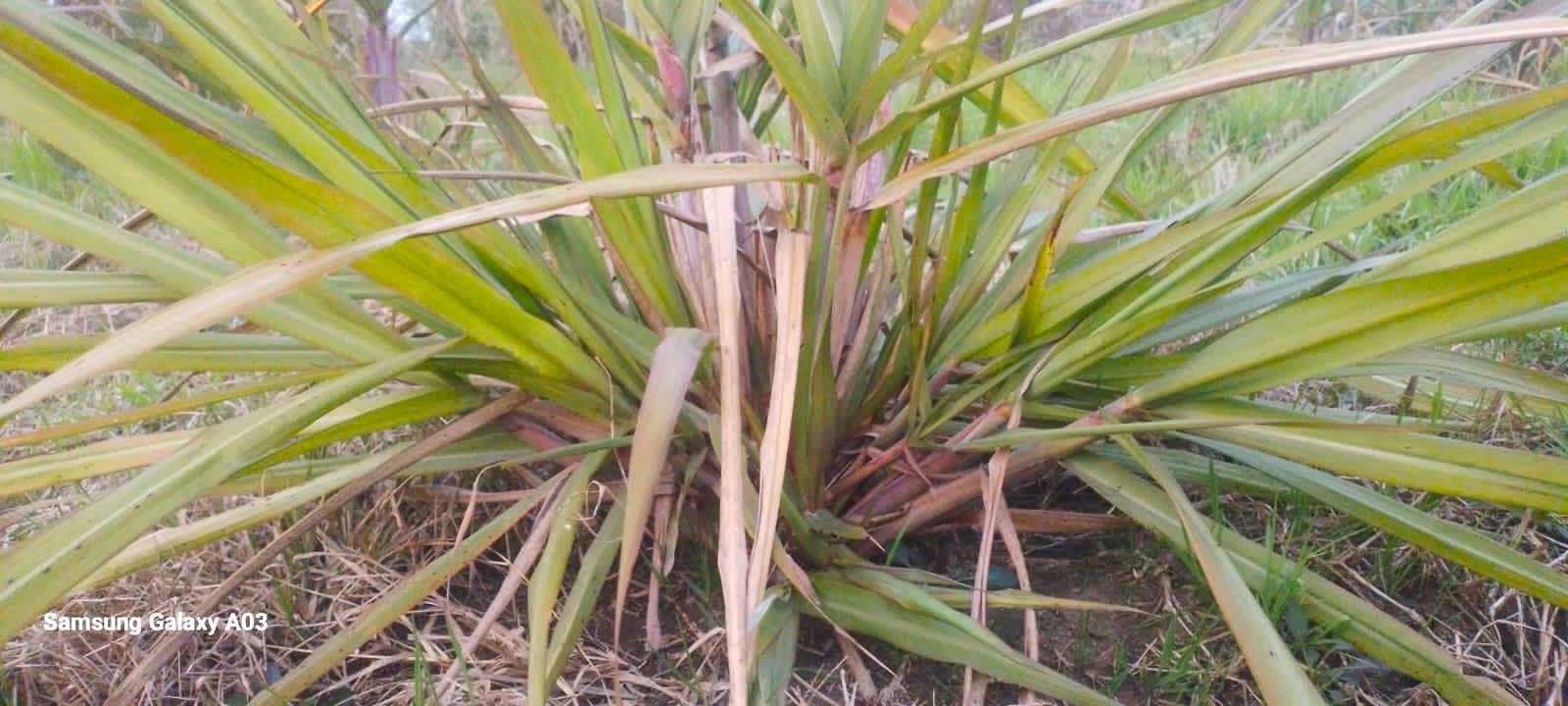
A single PQNK sugarcane clump on a mulched bed, tillering freely from its base
THE PERENNIAL PRINCIPLE: RATOONS, ROOT RETENTION AND COMPOUNDING BIOLOGY
The first PQNK crop does two jobs at once: it produces cane and establishes the long-lived clump, root channels and biological environment on which later ratoons depend. A ratoon begins with an existing root and bud system, so establishment is faster and replanting operations are avoided. PQNK field cases have maintained productive cane for eight harvest cycles from one planting. In documented PQNK sugarcane cases, farms have reported yields of over two thousand maunds per acre, and documented fields have reached 2,800 maunds (about 112 tonnes) per acre. That observation is important, but it should not be turned into a universal rule that every ratoon must outyield the one before it. Research on sugarcane shows that ratoon longevity is strongly influenced by variety, environment, disease, harvest quality and management.
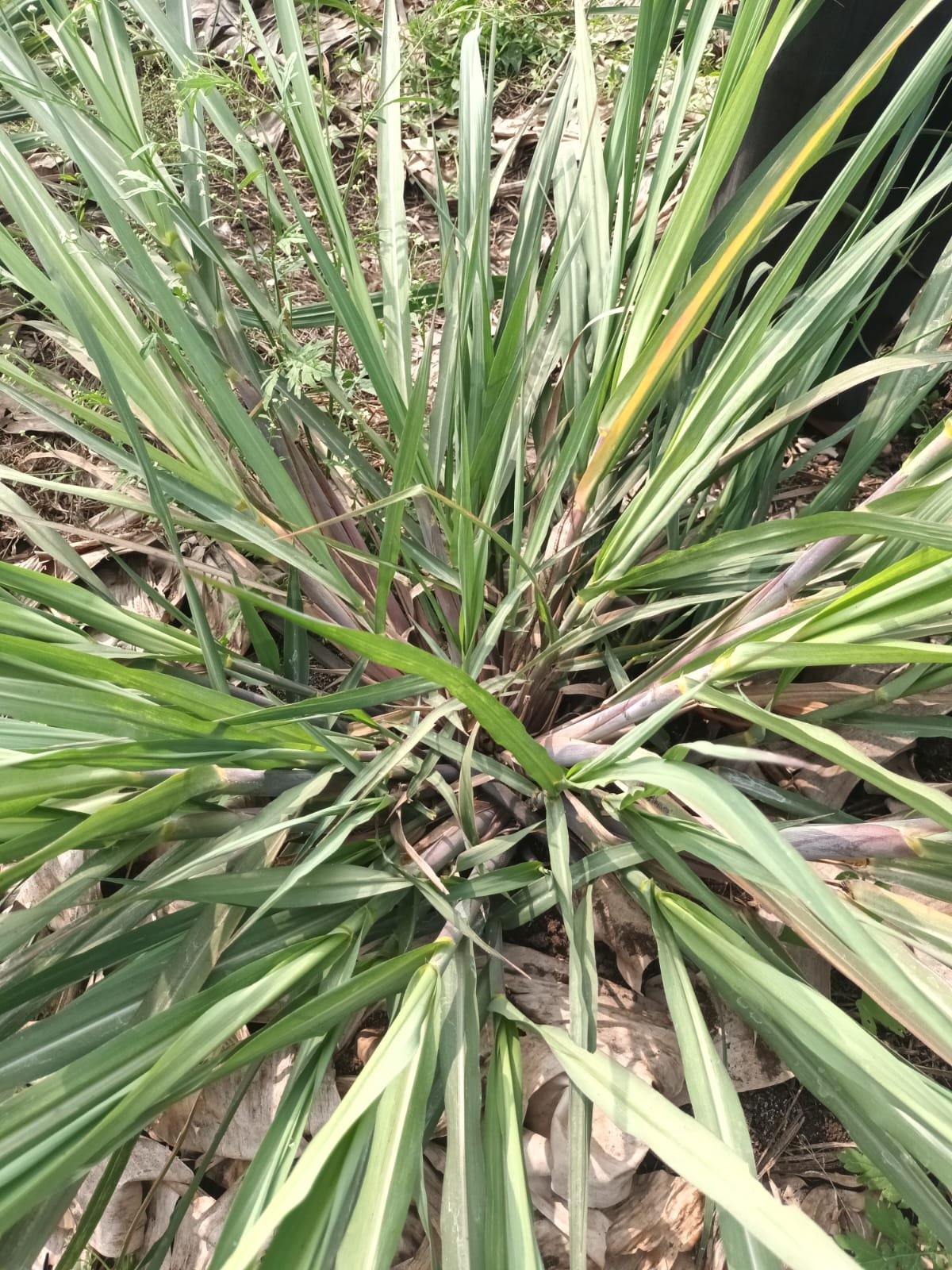
Many tillers rising from one established clump: the living base that every ratoon inherits
PQNK also allows selective harvesting where the market and labour system make it practical. Mature canes can be removed while younger shoots remain, particularly for fresh juice or on-farm gurr production. Where cane is supplied to a mill under block-harvest arrangements, the harvest system must follow mill maturity, cutting and delivery requirements. In either case the governing principle is the same: cut cleanly, protect the clump, retain the root system and return suitable residue to the soil surface.
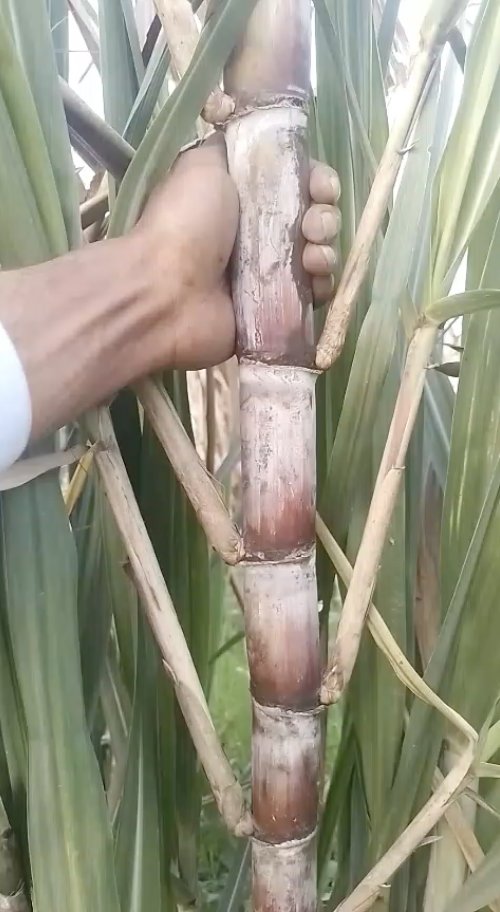
The lower internodes of a mature cane are the oldest and the sweetest part of the stalk; a clean cut close to the ground recovers them
SUCROSE: BIOLOGY, MATURITY AND MEASUREMENT
Sucrose accumulation is a physiological process governed by photosynthesis, translocation, internode maturity, variety, temperature, water status and nutrient balance. Older mature internodes generally accumulate more sucrose than young elongating internodes, but sugar does not settle to the bottom of the cane by gravity. For farm comparison, sucrose should therefore be treated as a measured outcome from mill or laboratory analysis, not inferred from stalk appearance.
PQNK field records have reported sucrose values in the 10 to 14 percent range in fields where comparable conventional cane was reported at 8 to 10 percent. These figures are useful field evidence, but they are not a universal biological constant. Each comparison should record variety, crop age, harvest date, sampling method and mill or laboratory result. Mulch, improved root-zone aeration and balanced moisture management may support maturation indirectly by reducing stress and maintaining root function.
Potassium and nitrogen both influence sugarcane growth and sucrose accumulation, but the relationship is not a simple “potassium makes sugar, nitrogen makes stalk” switch. Excessive nitrogen late in the crop can prolong vegetative growth and delay ripening, while adequate potassium is important for water relations, enzyme function and carbohydrate transport. PQNK therefore avoids routine high-rate fertilisation and relies first on biological cycling, using the transition safety net only when the crop shows a genuine deficiency.
BIOLOGICAL PEST AND DISEASE MANAGEMENT
PQNK protects the ecological community around the crop by avoiding routine pesticide use and maintaining permanent cover and undisturbed habitat. Bacillus, Trichoderma, predatory insects, parasitoids and many other organisms can contribute to biological regulation, but their presence should not be described as guaranteed systemic protection inside every cane plant. Red rot and other diseases also remain biological risks. The practical rule is observation: maintain plant and soil health, use clean planting material and suitable varieties, and intervene when a verified pest or disease problem crosses the agreed threshold. During transition, PQNK permits targeted crop protection when economically significant pressure reaches about 10 percent.
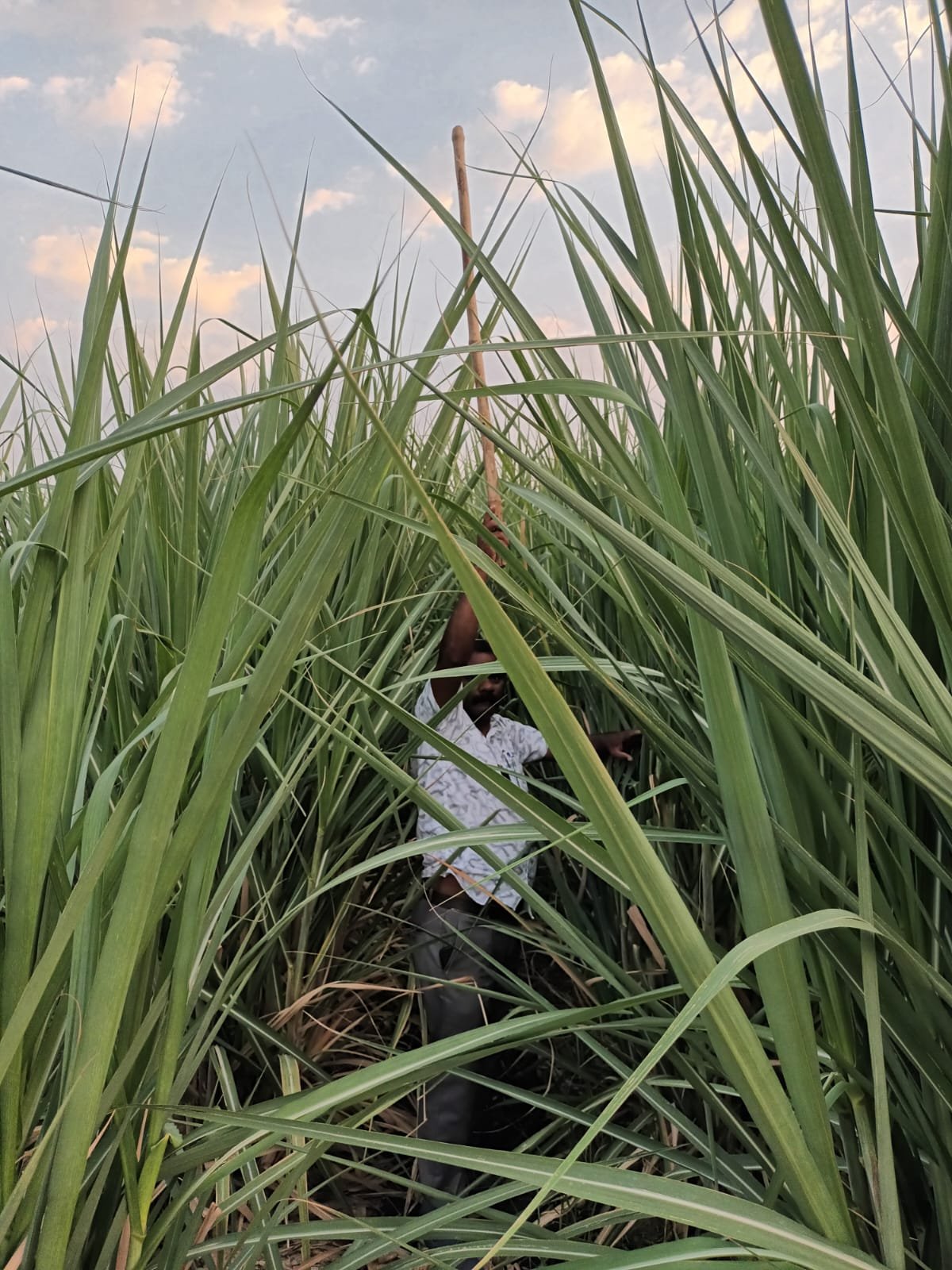
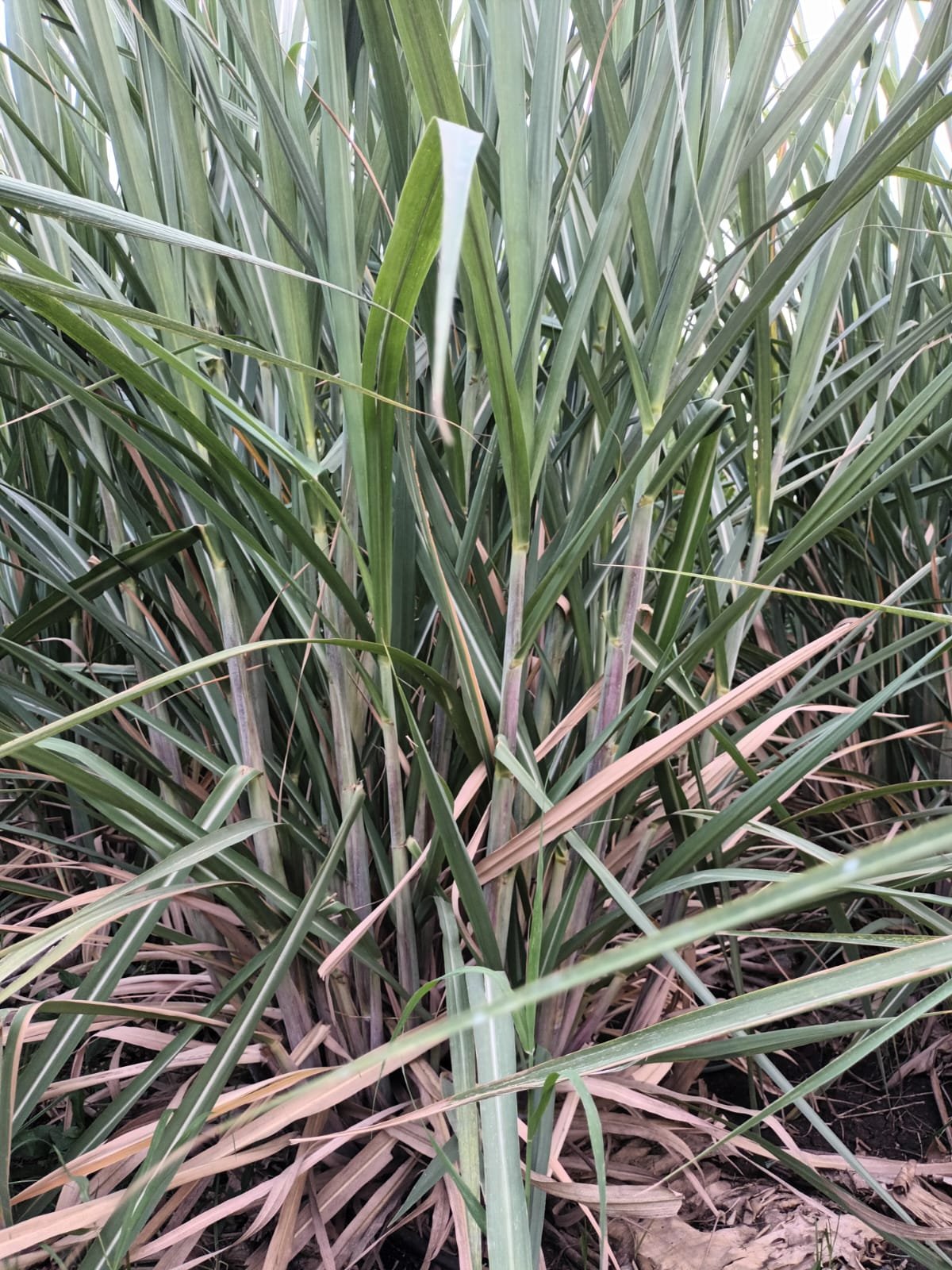
Sugarcane planted on 14 August 2025 from single-bud setts at 5 × 4 feet on a semi-PQNK field: 41 tillers per plant
THE CORE DATA: PROTOCOL TARGETS AND FIELD OBSERVATIONS
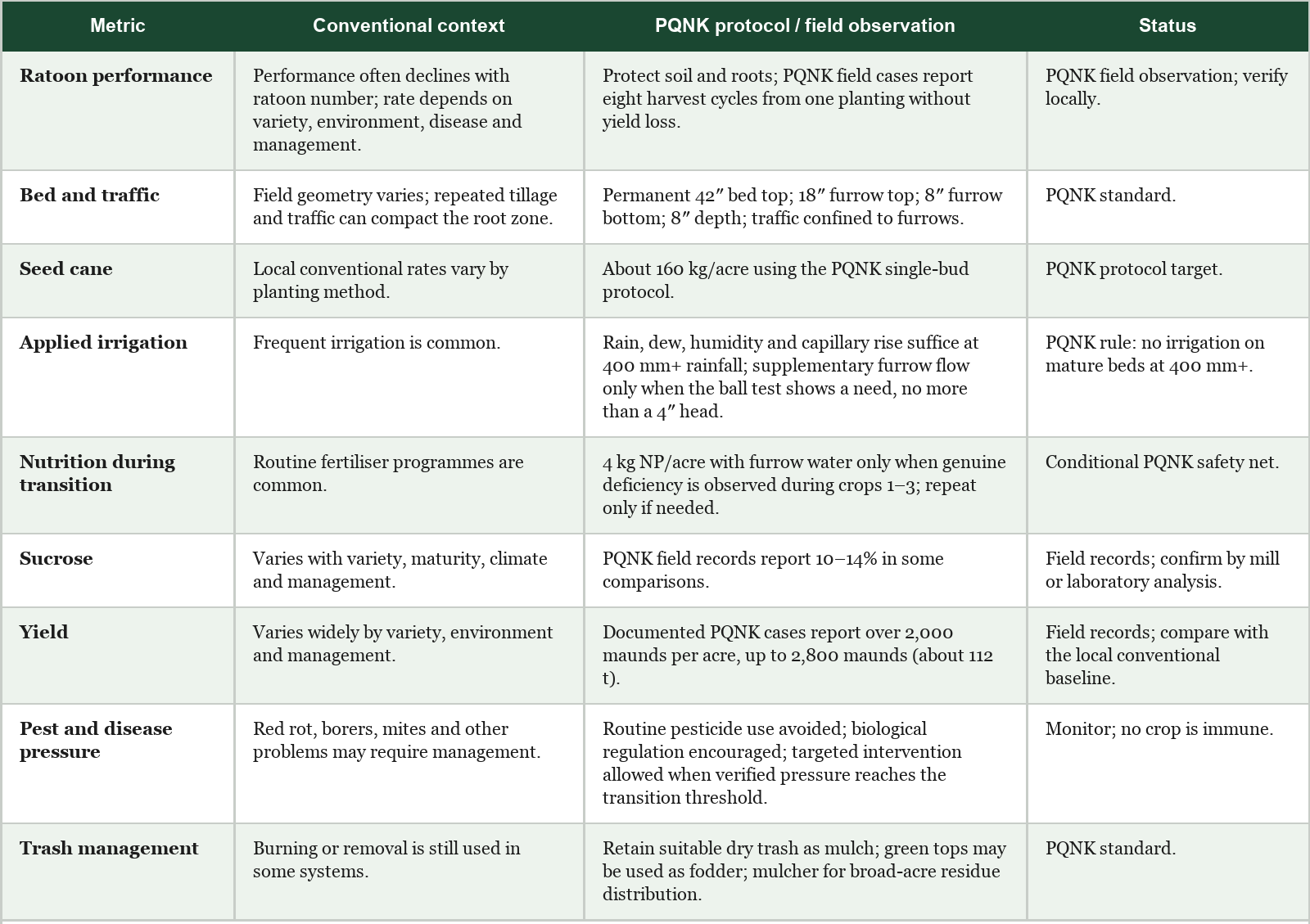
| Metric | Conventional context | PQNK protocol / field observation | Status |
|---|---|---|---|
| Ratoon performance | Performance often declines with ratoon number; rate depends on variety, environment, disease and management. | Protect soil and roots; PQNK field cases report eight harvest cycles from one planting without yield loss. | PQNK field observation; verify locally. |
| Bed and traffic | Field geometry varies; repeated tillage and traffic can compact the root zone. | Permanent 42″ bed top; 18″ furrow top; 8″ furrow bottom; 8″ depth; traffic confined to furrows. | PQNK standard. |
| Seed cane | Local conventional rates vary by planting method. | About 160 kg/acre using the PQNK single-bud protocol. | PQNK protocol target. |
| Applied irrigation | Frequent irrigation is common. | Rain, dew, humidity and capillary rise suffice at 400 mm+ rainfall; supplementary furrow flow only when the ball test shows a need, no more than a 4″ head. | PQNK rule: no irrigation on mature beds at 400 mm+. |
| Nutrition during transition | Routine fertiliser programmes are common. | 4 kg NP/acre with furrow water only when genuine deficiency is observed during crops 1–3; repeat only if needed. | Conditional PQNK safety net. |
| Sucrose | Varies with variety, maturity, climate and management. | PQNK field records report 10–14% in some comparisons. | Field records; confirm by mill or laboratory analysis. |
| Yield | Varies widely by variety, environment and management. | Documented PQNK cases report over 2,000 maunds per acre, up to 2,800 maunds (about 112 t). | Field records; compare with the local conventional baseline. |
| Pest and disease pressure | Red rot, borers, mites and other problems may require management. | Routine pesticide use avoided; biological regulation encouraged; targeted intervention allowed when verified pressure reaches the transition threshold. | Monitor; no crop is immune. |
| Trash management | Burning or removal is still used in some systems. | Retain suitable dry trash as mulch; green tops may be used as fodder; mulcher for broad-acre residue distribution. | PQNK standard. |
TRANSITION VIGILANCE AND THE CLOSED LOOP
PQNK does not replace one fixed input programme with another. During biological recovery, the farmer observes the crop and uses the minimum corrective input required while the soil system rebuilds.
During the first one to three crop cycles, if visible symptoms and field assessment indicate a genuine nutritional deficiency, the PQNK transition protocol allows 4 kg NP per acre with furrow irrigation. The application may be repeated two or three times where the deficiency persists. It is a conditional safety net, not a scheduled fertiliser programme.
As root occupancy, residue return and biological cycling improve, the objective is to remove this safety net. “Closed loop” in PQNK means that routine fertiliser and pesticide dependence has been eliminated and crop residues and biological processes are carrying the normal production cycle. It should not be read as a claim that a farm is physically closed to every external material forever; seed or planting material, corrective inputs, machinery, labour and exceptional interventions may still be required.
Leaf colour must also be read in context. Temperature, light, water status, disease and nutrient supply can all alter colour. A rapid change following a cold night or heat event may be temporary, while a true deficiency usually persists or progresses. Colour alone is not a diagnosis.
The practical test is to connect the symptom with weather, soil moisture, pattern in the field and the behaviour of new growth before applying anything. The companion PQNK Knowledge Paper, Why Leaves Change Color With the Weather, develops the field checklist in greater detail.
TRASH AS MULCH: KEEPING THE BIOLOGICAL CAPITAL ON THE FIELD
Sugarcane produces a large mass of leaves and tops at harvest. Burning converts that resource into smoke and ash and exposes the soil. PQNK treats dry cane trash as surface cover: carbon for decomposers, insulation against temperature extremes, protection against evaporation and raindrop impact, and physical suppression of many weeds.
In manually harvested fields, usable green tops may be fed to animals while dry leaves are spread over the bed. On broad-acre farms, a mulcher can chop and distribute residue more uniformly. The amount retained should be managed so that ratoon shoots can emerge and irrigation furrows remain functional. The objective is simple: return as much suitable biological material as practical without disturbing the permanent bed.
THE PQNK SUGARCANE PROTOCOL
Planting. Establish single-bud setts or nursery transplants shallowly, about two inches deep, in moist soil on permanent raised beds. The PQNK seed-cane target is about 160 kg per acre. Adjust clump spacing to variety, machinery and intercropping plan. Protect the seed zone with mulch and retain the permanent bed geometry. Remove the leader tiller within a few weeks of emergence, once the secondary tillers have enough leaf area, to break apical dominance; never earth up.
Irrigation. Sugarcane is not a high-water crop. It is a narrow-leaved grass that uses water efficiently for the biomass it produces; its total need is larger than that of a short crop only because it stands in the field so much longer, ten to thirteen months from a September sowing and nine to ten months from a February sowing, against about 90 to 110 days for maize. Under PQNK, rain, dew, humidity and capillary rise through the living, mulch-covered bed are enough where annual rainfall is 400 mm or more. Water through the furrows is a supplementary option, used only when and where the soil-ball test shows a need, never by the calendar. When it is given, it flows slowly, never higher than half the furrow’s depth (no more than a 4-inch head in the 8-inch furrow), so moisture moves sideways into the bed without inundating it.
Nutrition. During crops one to three, use 4 kg NP per acre with furrow water only when a genuine deficiency is observed. Repeat only if the deficiency persists. The objective is zero routine fertiliser after biological cycling is established.
Trash and harvest. Retain roots and suitable residue. Use dry leaves as mulch; green tops may be used as fodder where appropriate. Harvest mature cane cleanly and protect the clump. Selective harvesting is an option for juice and gurr markets; mill cane should follow the harvest and delivery system required by the receiving mill.
LONG-TERM CONSIDERATIONS
Long-lived ratooning requires continued observation. Gaps, disease, declining clump vigour or a poorly adapted variety should not be hidden behind the perennial principle. Where replacement is needed, introduce healthy planting material into the system with the least possible disturbance. Introducing a new clone or variety changes the genetic material; simply replanting the same clone does not “refresh” its genetics.
At scale, the most important water claim is the one that can be measured. PQNK sugarcane is designed to reduce applied irrigation by improving infiltration, retaining mulch and using furrow delivery rather than flooding the bed. The actual saving will vary with soil, climate, rainfall, groundwater contribution, crop age and conventional baseline. The established comparison reported in Chapter Twenty-Six puts PQNK sugarcane water use at about 12 percent of the conventional reference, a saving of approximately 88 percent. Every farm should therefore record irrigation events and water volume so that regional water-saving estimates are built from measured field data rather than extrapolated from a fewer cases.
WHAT THIS CHAPTER HAS ESTABLISHED
Sugarcane already possesses the biological capacity to ratoon. PQNK builds its system around protecting that capacity: fracture the hardpan once where present, establish permanent raised beds, keep traffic in the furrows, retain the clump and roots, cover the soil with residue, manage moisture without inundation, and allow biological cycling to replace routine external inputs as the field recovers. The bamboo principle is therefore a management principle: preserve the living base and harvest from it repeatedly. PQNK field experience indicates that this can extend productive ratooning substantially, but yield, sucrose, water use, pest pressure and longevity remain outcomes to be measured, not promises to be assumed.
The next chapter turns to potato, where the same permanent-bed principle is applied to a very different crop: short-cycle tuber production, precision seed placement and rapid crop-after-crop transition.
Chapter Thirty-Eight: Potato, Circular Production