
Industrial Devastation To Natural Abundance
The Original System · Chapter 2
Rock, Dirt, Soil, Life
Release 1.0 · 2026-08-29
If you use “Listen”, the text of the page may be sent to your browser or operating system’s speech provider, such as Apple, Google or Microsoft, depending on the voice your device uses. Pedaver does not process, transmit or store any audio.
“The farmer who has never seen his soil alive does not know what farming is. He has only seen what farming has done to soil that was once alive.”
Asif Sharif, Lahore, 2017
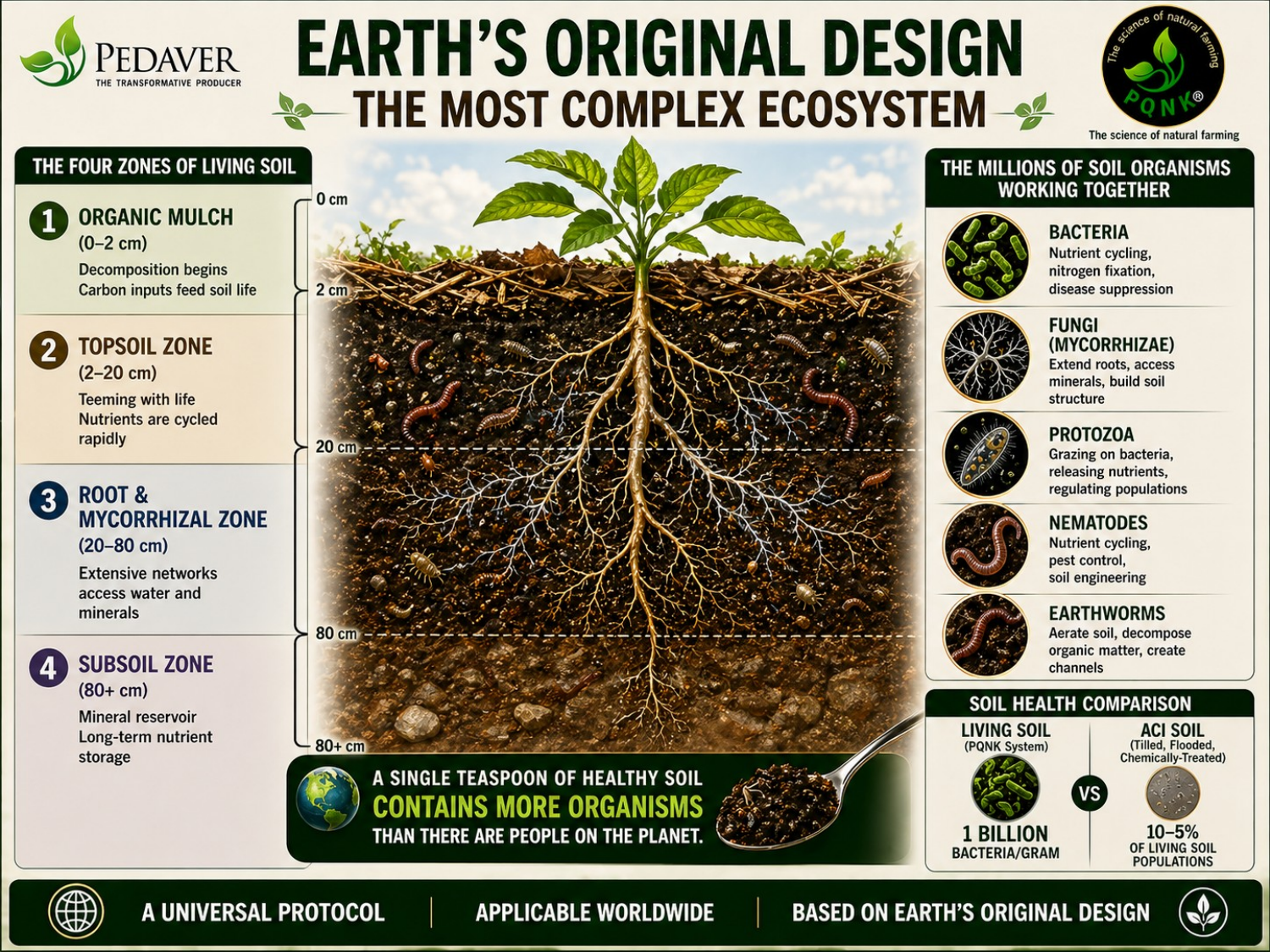
Pick up a handful of soil from a healthy, undisturbed field. Hold it. What you are holding is not dirt. It is not inert material. It is one of the most complex ecosystems on Earth, compressed into your palm. In that handful are more living organisms than there are people on the planet, bacteria, fungi, protozoa, nematodes, microarthropods, and thousands of other life forms, all interacting, all serving a function, all contributing to a system that has been producing food for four hundred million years without a single external input.
Now pick up a handful of soil from a typical conventionally farmed field that has been plowed and flooded and chemically treated for thirty years. The difference is not obvious to the eye. But hold both samples in your hands long enough, and you will begin to notice. The healthy soil is dark, slightly moist, crumbly, it holds together when compressed, but falls apart easily when released, like a rich cake. The degraded soil is pale, either bone dry or clumped into hard, dense lumps that resist breaking. It smells of little. It holds nothing.
Those two handfuls tell the story of this chapter. The distance between them, between living soil and biological ruin, is the distance that Ancient Conventional Industrial agriculture (ACI) — the trajectory that began with the domesticated, human-powered farming of some twelve thousand years ago, passed through the animal-draft-powered agriculture of most of recorded history, and arrived at today’s mechanised, industrial system — has traveled in more than a century and a half. And the journey back, which PQNK maps in precise and reproducible steps, begins with understanding exactly how the living system is built, because you cannot restore what you do not understand.
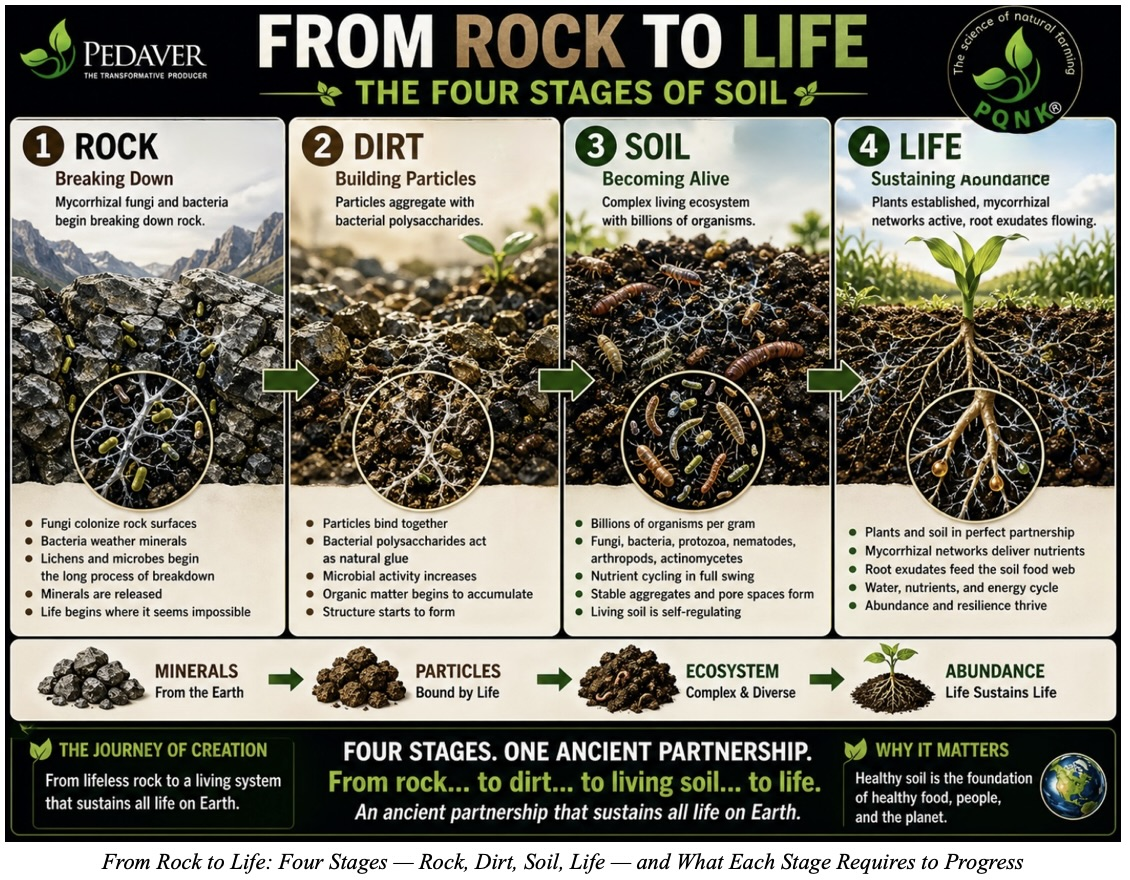
THE FOUR-STAGE JOURNEY: FROM ROCK TO LIFE
The soil beneath any productive field did not arrive there ready-made. It was built, over geological time, through a sequence of biological processes so interlocked and interdependent that removing any one of them eventually unravels the whole. Understanding these four stages, rock, dirt, soil, and life, is not optional background knowledge for the PQNK farmer. It is the foundation upon which every practical decision in the PQNK system rests.
STAGE ONE: ROCK, THE GEOLOGICAL BANK
Every mineral a plant will ever need is already present in the rock that underlies every field on Earth. Iron, phosphorus, potassium, calcium, magnesium, zinc, copper, manganese, boron, molybdenum, the entire periodic table of plant nutrition is locked within the mineral structure of geological formations laid down over billions of years. The soil is not a depleting resource that must be replenished from outside. It is a bank of almost incomprehensible depth, requiring only the right biological mechanisms to make withdrawals.
The organisms that make those withdrawals are among the oldest on Earth. Mycorrhizal fungi, the great ecosystem engineers, appeared approximately four hundred and sixty million years ago, around the same time that the first plants colonized land. This timing is not coincidental. The two arrived together because neither could succeed without the other. Plants needed minerals from rock; fungi needed carbon from photosynthesis. A partnership formed that has never been dissolved, and that still governs the fertility of every hectare of productive land on Earth, or should, where it has not been destroyed.
The mechanism of rock weathering is elegant in its simplicity. Mycorrhizal fungi, along with specialised lithotrophic bacteria, secrete organic acids and chelating compounds, molecular tools evolved specifically to attack mineral crystal structures. These secretions dissolve the bonds holding minerals within the rock matrix, liberating individual ions into the soil water around the fungal threads. The fungi then absorb these ions and transport them, through their hyphal networks, to the roots of the plants they are associated with. The rock becomes mineral-rich dirt. The fungi receive carbon sugars from the plant in exchange. The transaction has been occurring, without interruption, for nearly half a billion years.
The soil does not need fertiliser. It needs the biological machinery to access what is already there. Every field on Earth sits above a mineral bank containing thousands of times more nutrients than any crop will ever remove. The bank is not empty. The withdrawal mechanism has been broken.
To understand the scale of this geological bank, consider phosphorus, the nutrient most often cited as a reason for fertiliser application. The top six inches of one acre of average soil contains approximately eight hundred kilograms of phosphorus. A tonne of wheat removes approximately 4.4 kilograms. The ratio of bank reserves to annual withdrawal is one hundred and eighty-two to one. For potassium, the ratio exceeds one thousand to one. The minerals are not scarce. The biology that accesses them has been killed, and the industry that killed it sells the substitutes.
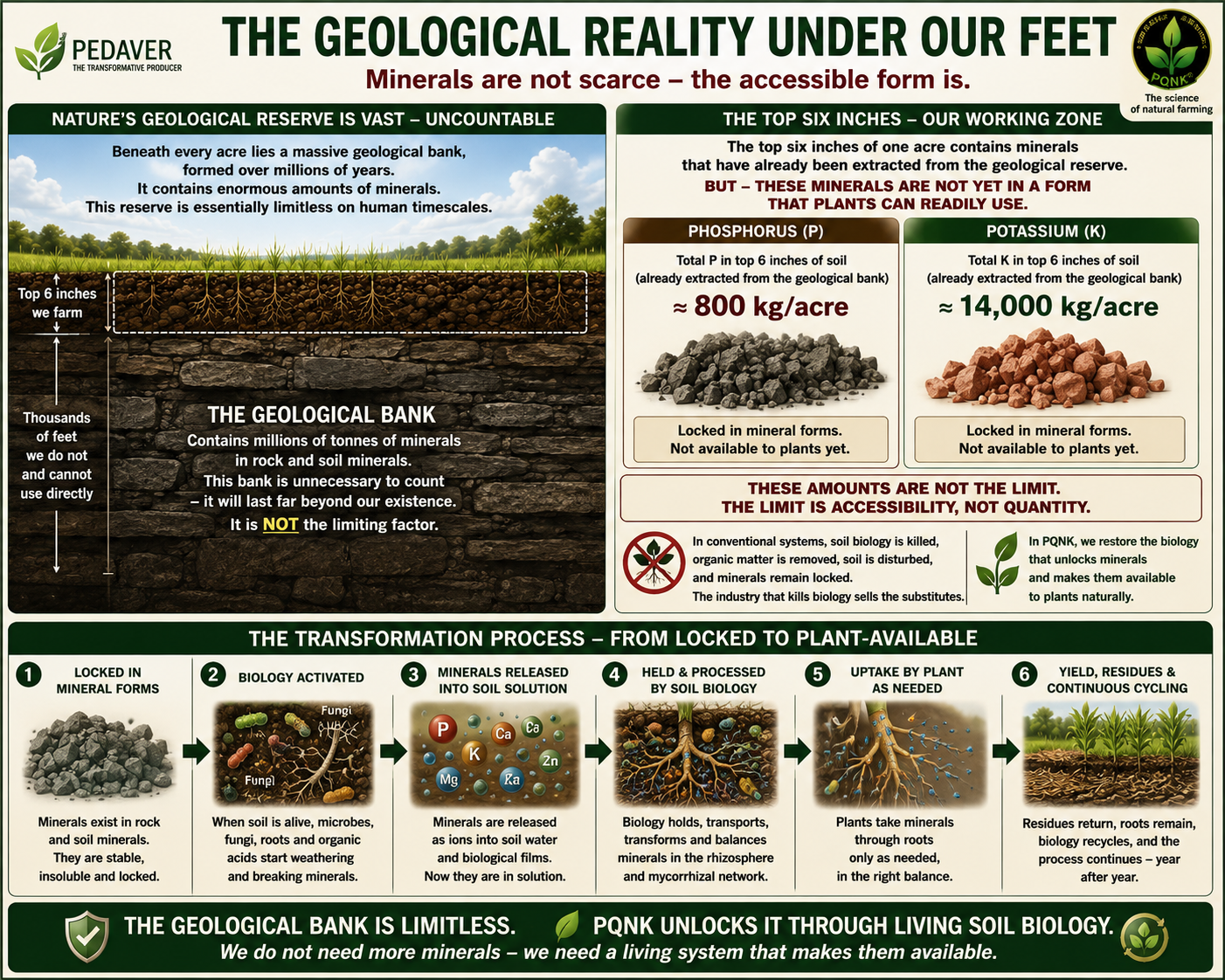
Soil already contains vast mineral reserves; the challenge is not scarcity, but biological access. PQNK restores the living processes that make these minerals available to plants.
STAGE TWO: DIRT, RAW MATERIAL WITHOUT ARCHITECTURE
The distinction between dirt and soil is one of the most important concepts in this book, and one that conventional agriculture has effectively erased from farming practice. Dirt is the raw mineral material produced by geological weathering, particles of sand, silt, and clay, free of their parent rock but not yet organised into the living architecture of productive soil. Dirt can grow things, after a fashion, the way a hydroponic tank full of nutrient solution can grow things, by forcing the inputs from outside rather than generating them from within. But it cannot sustain itself. It has raw material but not intelligence.
The agricultural significance of this distinction is this: ACI farming, through decades of tillage, flooding, and chemical application, progressively destroys soil and converts it back toward dirt. The farmer is left with a substrate that has lost its biological architecture, its aggregate structure, its pore networks, its fungal threads, its microbial community, and must substitute for all of it with purchased inputs. Fertilisers substitute for microbial nutrient cycling. Irrigation substitutes for soil water retention. Pesticides substitute for biological pest control. The farmer has not lost fertility; he has lost the machinery of fertility, and is now running his farm on a combination of geological capital and chemical props.
Understanding what transforms dirt into soil, and therefore what must be restored to reverse ACI damage, requires understanding the role of three biological processes: aggregation, structuring, and the formation of the pore network.
Aggregation. The first transformation of loose mineral particles into something more than dirt is performed by bacteria. Certain soil bacteria produce sticky polysaccharide compounds, essentially biological glues, that bind individual mineral particles into larger composite units called microaggregates. These microaggregates are more stable than individual particles; they do not disperse in water or compact under pressure as readily as loose minerals do. The formation of microaggregates is the first step in building soil architecture from raw mineral material.
Structuring. Mycorrhizal fungi produce a glycoprotein called glomalin, one of the most important and least publicly discussed substances in agriculture. Glomalin is a sticky, water-resistant protein that coats soil particles and microaggregates, binding them into larger, more stable macroaggregates. These macroaggregates are the building blocks of soil structure, the crumbly, coherent texture of genuinely healthy soil. Glomalin is also carbon-rich; a soil high in glomalin is a soil high in stable organic carbon, which is the foundation of long-term fertility. Tillage destroys glomalin by shredding the fungal threads that produce it. A single pass of a plow can eliminate decades of glomalin accumulation.
Pore network formation. Earthworms, the largest engineers of soil structure visible to the naked eye, consume mineral particles and organic matter together, processing them through a digestive system that produces castings of exceptional structure and fertility. Earthworm channels, some running several metres deep in undisturbed soil, create the macropores through which water moves rapidly downward during rainfall and through which oxygen exchanges with carbon dioxide in the soil atmosphere. Bacterial and fungal threads create the micropores between aggregates, which hold the film of water available to plant roots between rainfall events. Without this dual pore network, soil cannot simultaneously drain excess water and retain available water, the twin requirements that every crop needs.
STAGE THREE: SOIL, THE LIVING SYSTEM
When aggregation, structuring, and pore-network formation are complete, something remarkable has happened: a complex, self-organising, self-renewing biological system has established itself. This is living soil, and it is categorically different from dirt in the same way that a living animal is categorically different from a collection of the chemicals it is made of. The components of living soil, minerals, water, air, and organisms, interact with one another in ways that produce capabilities none of the components possesses individually.
The soil food web, as ecologists call this community, is organised into layers of mutual dependency. At the base are the primary decomposers, bacteria and fungi that break down organic matter into simpler compounds and release minerals in plant-available form. Above them are the grazers, protozoa that consume bacteria and release excess nitrogen as they digest, making it available to plants in its most immediately usable form. Nematodes graze on both bacteria and fungi, regulating their populations and preventing any single organism from dominating and disrupting the ecological balance. Arthropods, beetles, and other macro-fauna fragment organic material into pieces small enough for bacteria to process, serving the community as pre-digesters. At the apex of the soil food web are the plant roots themselves, not passive recipients of whatever the soil provides, but active managers of the entire system.
The plant’s role as manager is exercised through root exudates: chemical compounds released continuously from root tips into the surrounding soil. These exudates are not waste products. They are signals, incentives, and raw materials. Simple sugars in the exudate provide energy to bacteria and fungi in the immediate root zone, stimulating their activity. More complex compounds, organic acids, amino acids, flavonoids, and secondary metabolites, serve as specific attractants or repellents, selectively recruiting the microbial community the plant needs at a particular moment. A plant deficient in phosphorus releases compounds that specifically attract and stimulate the phosphorus-solubilising bacteria and mycorrhizal fungi that can access more of it. A plant under pest attack releases compounds that attract predatory organisms. The plant does not wait passively for the soil to provide; it actively requisitions what it requires, and the soil food web responds.
The plant is not a passive occupant of the soil. It is the system’s chief executive, continuously managing a workforce of trillions through a chemical language so precise that no agrochemist has ever come close to replicating it.
The scale of this underground enterprise is staggering. A single teaspoon of living soil contains between one hundred million and one billion bacteria, representing thousands of species — and that is before the fungi, protozoa, and nematodes sharing the same teaspoon are added in. Combined, they add up to more organisms than there are people on Earth. It contains several metres of fungal threads, many belonging to the mycorrhizal networks that extend across entire fields, connecting individual plants in a common nutrient-sharing infrastructure. The mycorrhizal network of a mature ecosystem has been compared to the internet, a distributed, redundant, self-repairing communication and resource-transfer system. Like the internet, it does not have a central point of failure; damage to one part is routed around by the others.
THE MYCORRHIZAL NETWORK: NATURE’S INTERNET
Of all the organisms in the soil food web, mycorrhizal fungi deserve particular attention, because they are simultaneously the most important and the most vulnerable to the practices of ACI. Understanding what they do, and what their loss means, is the key to understanding why conventional farming produces the results it does, and why PQNK produces different ones.
The word ‘mycorrhiza’ means ‘fungus-root’, a composite term for the symbiotic union between a fungal organism and a plant root. In this union, the fungus extends the plant’s effective root system by orders of magnitude. A plant root is a relatively coarse structure, able to absorb water and minerals from the soil it physically contacts. Fungal hyphae, the threads of the mycorrhizal network, are many times thinner than the finest root hair. They penetrate spaces in the soil matrix that roots can never reach. They access mineral surfaces that roots can never contact. And because they are connected to the plant, everything they absorb becomes available to it.
The reach of a single mycorrhizal network is remarkable. Studies of undisturbed forest soils have documented fungal networks spanning hundreds of metres, connecting individual trees of different species in a common biological infrastructure. Carbon produced by a tree in sunlight has been traced, through the fungal network, to the roots of a neighbouring tree in shade, effectively subsidising its survival. Phosphorus mined from deep subsoil has been traced upward through the network to surface roots of plants whose own root systems cannot reach that depth. The network does not merely connect; it redistributes, equalises, and stabilises. It is, in the truest sense, a commons, a shared resource infrastructure that benefits all participants.
In exchange for these services, the plant pays in carbon. Between twenty and thirty percent of the total carbon a plant fixes through photosynthesis is directed to mycorrhizal fungi through root exudates. This is a substantial biological investment, one that the plant makes willingly because the returns are so superior to what the plant could achieve alone. The partnership is so ancient and so mutually beneficial that the vast majority of terrestrial plant species, an estimated ninety percent, form mycorrhizal associations. The ten percent that do not, notably, the brassicas and sedges, are the exceptions that prove the rule.
Now consider what a single pass of a plow does to this network. The fungal threads are severed. The connections are broken. The network, the result of years or decades of patient biological construction, is shredded in an afternoon. The plant, deprived of its extended root system, is suddenly confined to what it can reach alone. Its access to deep minerals is cut off. Its ability to communicate nutritional needs to a responsive microbial community is severed. It is, in effect, placed in isolation. And then the farmer applies fertiliser to compensate for the nutritional deficit he has just created.
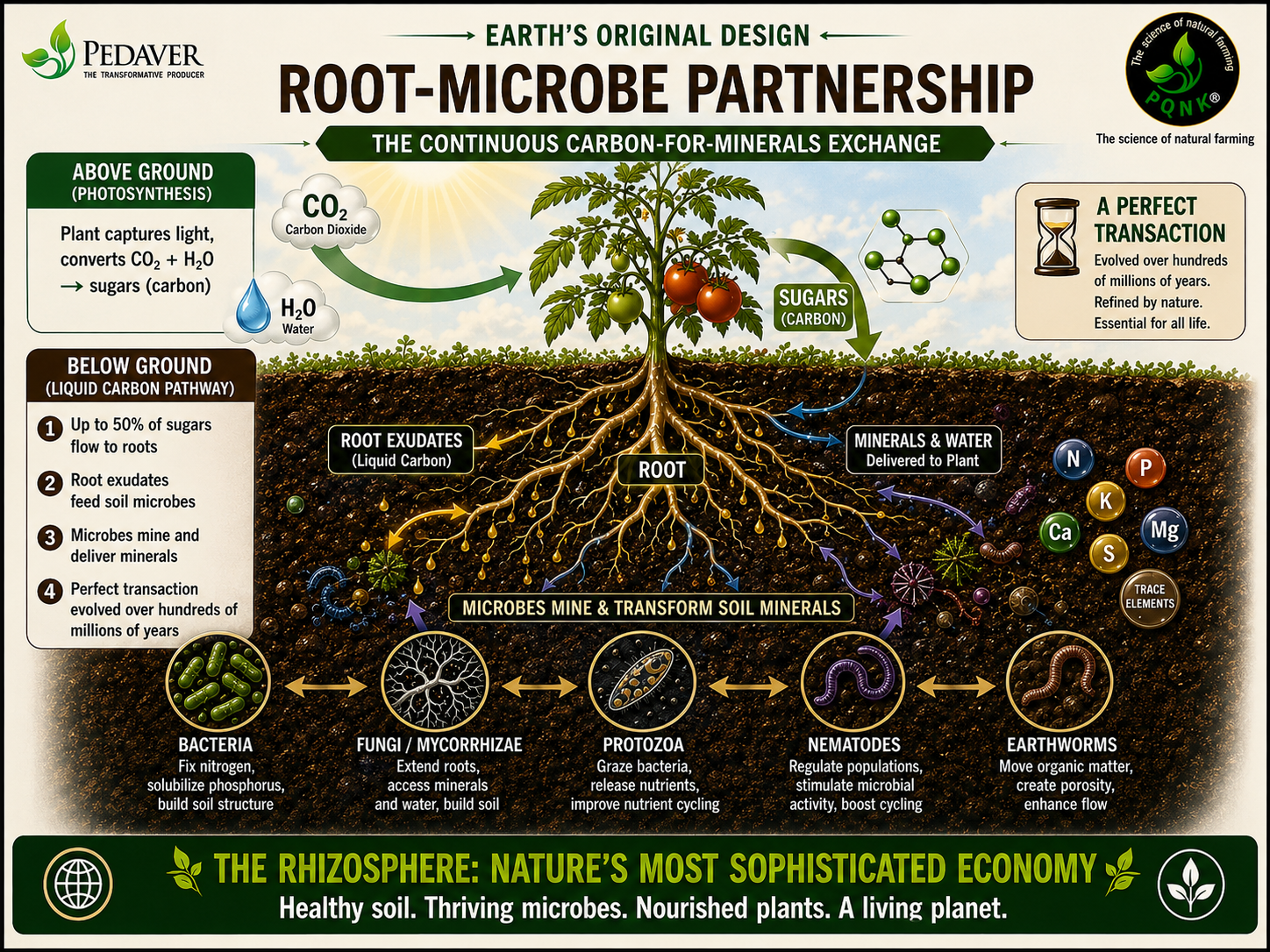
Tillage severs the mycorrhizal network, the biological infrastructure that took years to build and that the plant depends on for nutrition, communication, and protection. The farmer then buys fertiliser to replace, imperfectly and at considerable cost, what was free.
STAGE FOUR: LIFE, THE PLANT AS ALCHEMIST
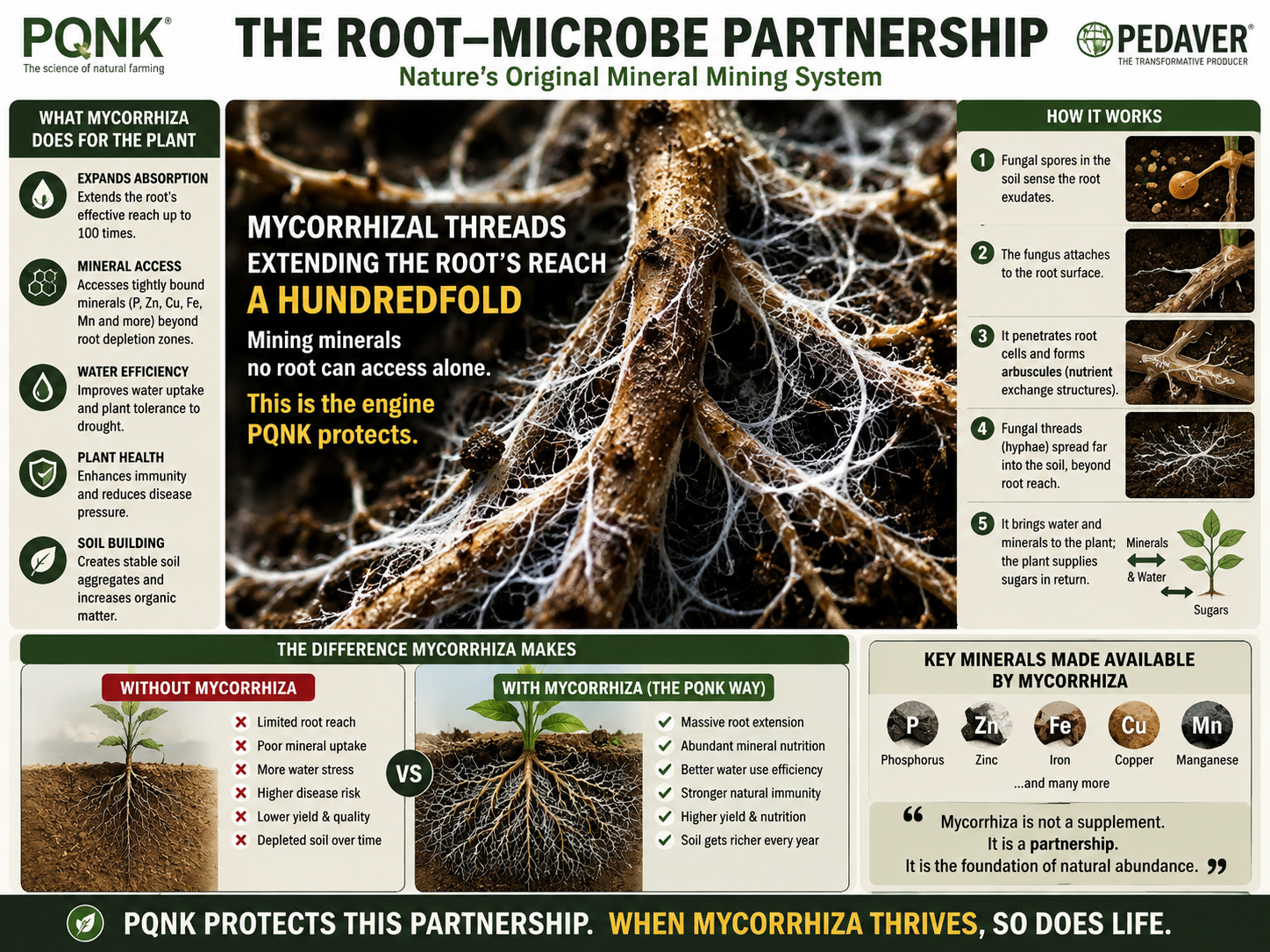
The fourth stage of the soil cycle is the one most visible to the farmer: the plant itself. But in the PQNK understanding, the plant is not what most farmers have been taught to think it is. It is not a passive consumer of soil inputs, to be stimulated with fertiliser and protected with pesticide. It is an alchemist: an organism of extraordinary sophistication that transforms raw geological minerals, atmospheric carbon, sunlight, and water into the most complex nutritional compounds that biology has ever produced.
The plant fulfils this alchemical role through a set of physiological systems of remarkable precision. Begin with photosynthesis, not as a school biology abstraction but as a living industrial process. In the chloroplasts of every leaf, the light-dependent reactions capture solar energy and use it to split water molecules, liberating oxygen and producing the chemical energy currency, ATP and NADPH, that drives everything else. The light-independent reactions then use that currency to fix atmospheric carbon dioxide molecule by molecule through the Calvin cycle, assembling the simple sugar molecules that are the carbon skeleton from which every organic compound the plant will ever produce is built. A single well-nourished wheat plant conducting photosynthesis at full capacity on a clear day is processing carbon at a rate, and with an energy efficiency, that no chemical factory on Earth can replicate.
The raw minerals, delivered from the geological reserve via the mycorrhizal network, are absorbed through the root surface by highly specific protein transporter molecules embedded in the root cell membranes. Each mineral element has its own transporter, and many of these transport processes are active: they consume ATP because they must move ions against concentration gradients. This is why a plant growing in a living soil, where mycorrhizal fungi pre-process and deliver minerals in the precise ionic forms that the transporters are designed to accept, absorbs nutrients with dramatically greater efficiency than a plant growing in chemically fertilised soil, where soluble compounds flood the root zone in forms that may overwhelm the transporter system and bypass the biological control mechanisms entirely.
Once inside the plant, water and dissolved minerals move upward through the xylem, drawn by the negative pressure created at the leaf surface by transpiration, a pulling force so precisely calibrated that it lifts water to the tops of trees sixty metres tall without a single mechanical pump. Sugars and synthesised compounds travel through the phloem in both directions, distributed to growing tissues, storage organs, and developing seeds, and critically, back down to the root zone. Up to thirty percent of all the photosynthate a healthy plant produces is released through its roots as exudates: sugars, amino acids, and organic acids specifically formulated to recruit, feed, and communicate with the microbial community in the rhizosphere. This is not leakage. It is deliberate investment, the plant paying its biological partners in real time for the services they provide.
It is within these physiological systems, the chloroplast, the transporter membrane, the vascular architecture, the rhizosphere communication channel, that the transformation actually occurs. The plant does not passively receive inputs and produce outputs. It operates an integrated biological manufacturing system whose output is precisely calibrated to the quality of its mineral nutrition, the integrity of its mycorrhizal partnerships, and the freedom of its metabolic signalling pathways from chemical disruption. We must respect this plant intelligence by not disturbing it, and by creating an environment conducive to its full efficiency.
The chemistry of what happens inside a healthy plant growing in living soil is, by any measure, astonishing. The simple minerals delivered by the mycorrhizal network and microbial assembly line are incorporated into proteins of almost unimaginable complexity. Carbon from the air is fixed through photosynthesis and assembled into carbohydrates, lipids, vitamins, and thousands of secondary metabolites, compounds produced not for the plant’s own nutrition, but for defence, signalling, and ecological interaction. Flavonoids, polyphenols, terpenes, alkaloids, glucosinolates, these are the compounds that give food its flavour, its colour, its medicinal properties, and its nutritional power. They are also the compounds that are measurably depleted in food grown by ACI methods, because they require a living soil ecosystem to produce.
The reason for this depletion is now well understood in plant science, even if it has not penetrated agricultural practice. Many secondary metabolites are produced by plants as responses to stress, specifically, the mild, managed stresses of competition, predator pressure, and environmental variation that a plant in a living ecosystem continuously experiences. A plant that has been force-fed synthetic nitrogen and shielded from all pest pressure by chemical intervention has no biological reason to produce many of these compounds. It puts its energy into rapid vegetative growth, producing large, water-filled cells that look productive but are nutritionally hollow. The result is the food we have learned to accept as normal: big, uniform, visually appealing, and measurably less nutritious than what grew in the same fields sixty years ago.
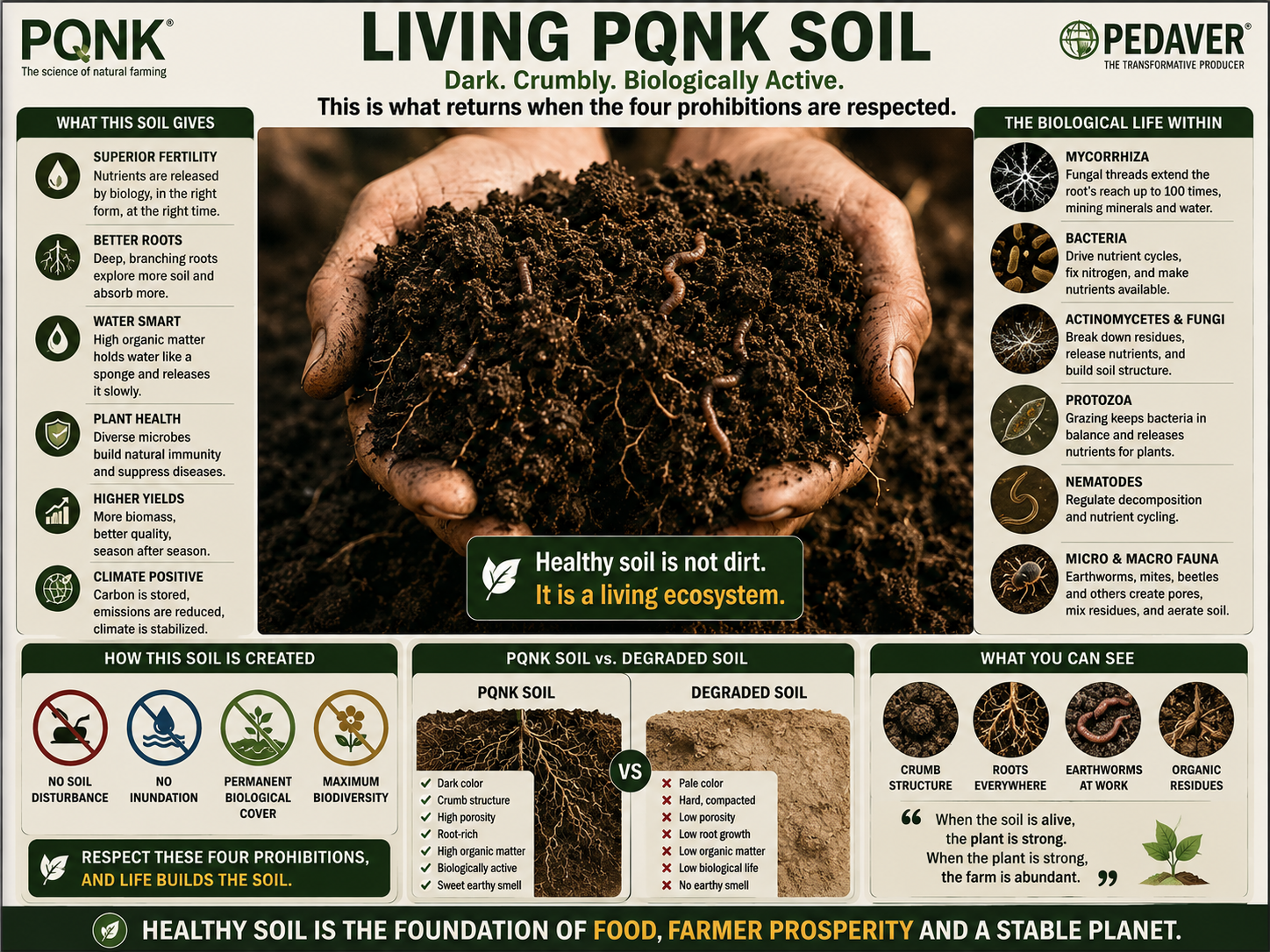
PQNK restores the conditions under which the plant performs its full alchemical function. With mycorrhizal nutrition delivered precisely and in balance, with mild biological stresses from a diverse soil ecosystem, with no chemical disruption to its metabolic signalling, the plant produces the full spectrum of compounds it is genetically capable of. The food that results is not merely ‘organic’ in the sense of being produced without synthetic chemicals. It is nutritionally superior in composition, denser in minerals, richer in secondary metabolites, more complex in flavour, and more stable in storage. PQNK produce does not merely meet organic standards. It surpasses them on every measurable axis.
WHAT ACI DOES TO EACH STAGE
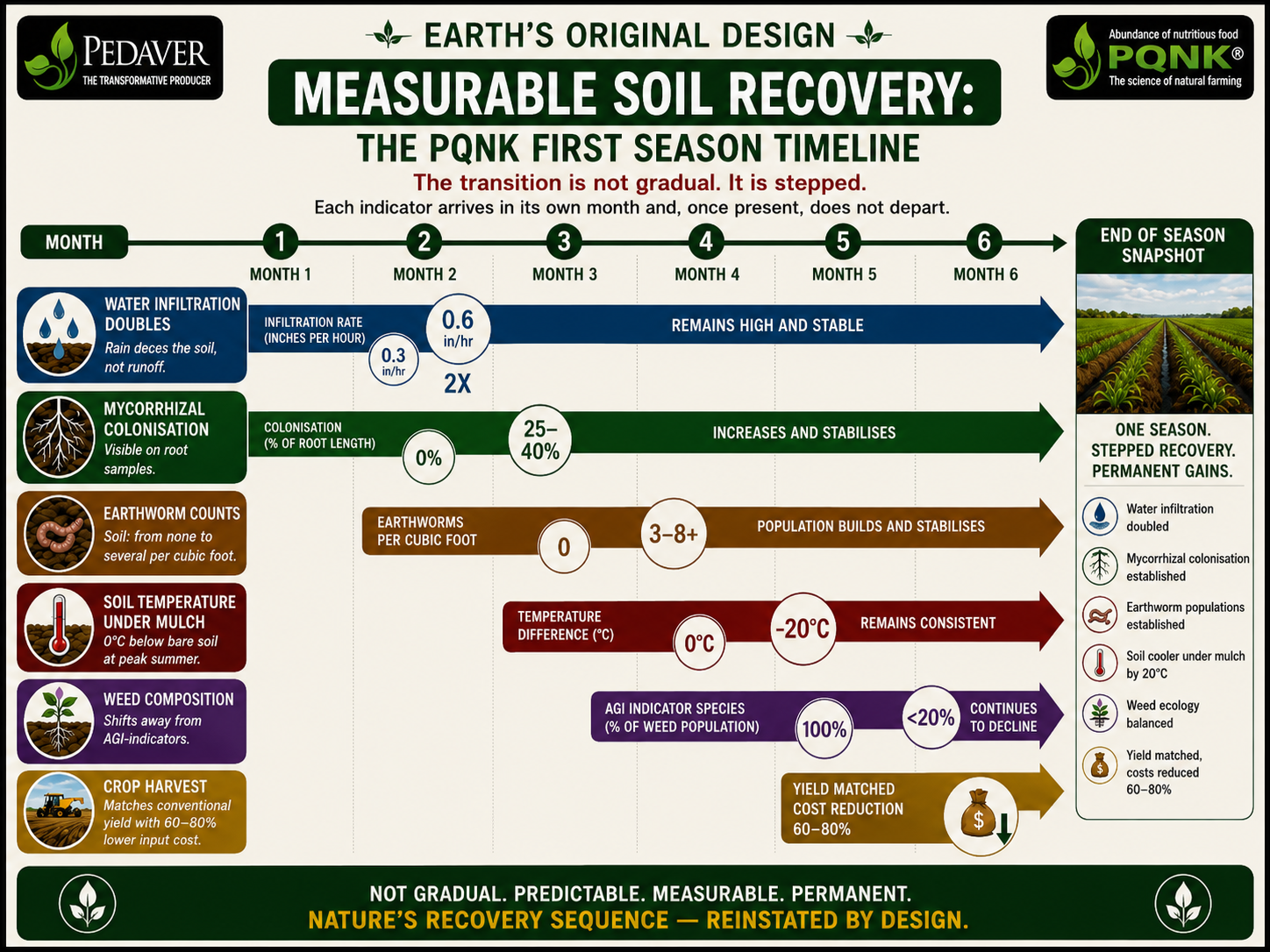
Now that the four stages of the natural soil cycle are clear, it is possible to be precise about what ACI does to each of them, and therefore precise about why the PQNK transition follows the sequence it does. Every step in the PQNK protocol is a direct response to a specific form of ACI damage.
To the geological bank (Rock stage): ACI does not damage the geological mineral reserve directly, it is too vast to deplete through farming. What ACI damages is access to it. By destroying the mycorrhizal networks and lithotrophic bacteria that weather and transport minerals from the geological reserve, ACI cuts the supply line. The minerals are still there, in exactly the quantities they have always been. The farmer simply cannot reach them without the biological machinery that was his original access mechanism.
To dirt-to-soil transformation: Tillage physically destroys the aggregate structure that soil organisms spend years building. A single tillage pass shatters macroaggregates into individual particles, severs fungal threads, kills earthworms, and exposes previously protected organic matter to oxidation. The soil is reset toward dirt. Flood irrigation then compounds this damage by dispersing the remaining aggregates through hydraulic pressure, the force of water hitting unprotected soil particles destroys structure from above while waterlogging destroys aerobic biology below. After decades of this cycle, many conventional fields have effectively no aggregate structure at all, they are, in biological terms, dirt.
To living soil: The application of synthetic fertilisers disrupts the chemical signalling between plant roots and the soil food web. When soluble nutrients are supplied directly, the plant no longer needs to produce the root exudates that recruit and reward its microbial partners. The microbial community, deprived of its carbon food source, declines. Pesticides and herbicides kill non-target soil organisms directly. Flood irrigation creates anaerobic conditions that kill the aerobic organisms responsible for nutrient cycling. What begins as a living system, the most complex ecosystem on Earth per unit volume, is progressively simplified toward a biological desert.
To the plant (Life stage): A plant growing in biologically impoverished soil is not performing its full alchemical function. Deprived of mycorrhizal delivery of balanced minerals, it receives instead whatever soluble compounds happen to be present in its immediate root zone, primarily the nitrogen, phosphorus, and potassium of the NPK fertiliser, in isolation from the complex mineral balance that living soil provides. The result is rapid vegetative growth driven by nitrogen, but nutritionally unbalanced and structurally weak. The plant’s immune system, its production of secondary metabolites and its relationship with protective soil bacteria like BT, is compromised. It becomes exactly what the pesticide industry requires it to be: a vulnerable crop in need of constant chemical protection.
THE CLOSED LOOP: WHY NATURAL SYSTEMS NEVER RUN OUT
There is one more principle of the natural soil cycle that must be understood before the PQNK protocol makes complete sense: the principle of the closed loop. In a natural ecosystem, nothing is wasted and nothing is permanently removed. Every organism that dies becomes food for decomposers. Every leaf that falls becomes organic matter for the soil food web. Every root that decays becomes a channel, a food source, and eventually a contribution to stable soil carbon. The system runs on what it produces, indefinitely, without depletion, without input, and without waste. There is an important precision to add here. The organic matter that accumulates and returns to the surface plays a specific and critical role: it maintains the moisture, temperature, and microbial habitat conditions under which biological weathering of the local mineral matrix operates. If the organic layer degrades, if the loop is broken, the microbial community degrades with it, and access to the mineral reserve is interrupted. The closed loop is not merely about recycling minerals in a simple circuit; it is about maintaining the living infrastructure through which the local geology is made continuously available to plants. This is why the return of organic matter to the soil is not optional in PQNK. It is the mechanism that keeps the biological key in the lock.
ACI systematically opens this loop. Grain is harvested and removed from the field, taking its minerals with it. Straw is burned, releasing its carbon into the atmosphere rather than returning it to the soil. Roots are plowed up and oxidised rather than left to decompose in place. The soil receives nothing back from what it gave. Every harvest is a net withdrawal from a bank that receives no deposits. The deficits must then be covered by external inputs, a dependence that deepens with every season, as the soil’s own biological capacity to generate fertility declines.
PQNK closes the loop again. Crop residues stay on the field as mulch. Roots are never removed. Cover crops are terminated in place. Every harvest removes only what is intended for consumption; everything else remains in the system. Over successive seasons, the soil’s biological capital grows rather than declines. The amount of biological activity increases. The depth of the active root zone extends. The water-holding capacity improves. The pest and disease resilience strengthens. The farm becomes more productive without becoming more expensive, a trajectory that ACI has never achieved and can never achieve, because its structural logic runs in the opposite direction.
In a PQNK farm, every season leaves the soil richer than the one before. In an ACI farm, every season leaves it poorer. This single difference, in the direction of biological change over time, is the difference between a farming system that can last forever and one that cannot.
READING SOIL HEALTH: WHAT THE PQNK FARMER OBSERVES
Theory becomes practice when the farmer can look at a field and read its biological condition. The PQNK system teaches farmers to use the land itself as its own diagnostic instrument. The following observations, all immediately accessible without laboratory equipment, are among the most reliable indicators of where a field sits on the journey from ACI degradation to PQNK restoration.
Water infiltration rate. Pour a bucket of water onto the soil surface. In a healthy PQNK field, the water disappears rapidly, absorbed into the sponge-like aggregate structure and pulled downward through root channels and earthworm burrows. In a compacted ACI field, the water pools, sits on the surface, and eventually runs off or evaporates. This simple observation reveals more about soil health than most laboratory analyses.
Soil colour and smell. Healthy, biologically active soil is dark, often nearly black in its richest zones, because of its high organic matter content. It smells of petrichor, the distinctive earthy fragrance produced by actinomycetes bacteria: a smell universally described as pleasant and associated with rain on dry ground. Degraded soil is pale, often with a greyish or yellowish cast, and smells of little or nothing. Waterlogged, anaerobic soil smells sulphurous or fetid, the odour of the wrong kind of biological activity.
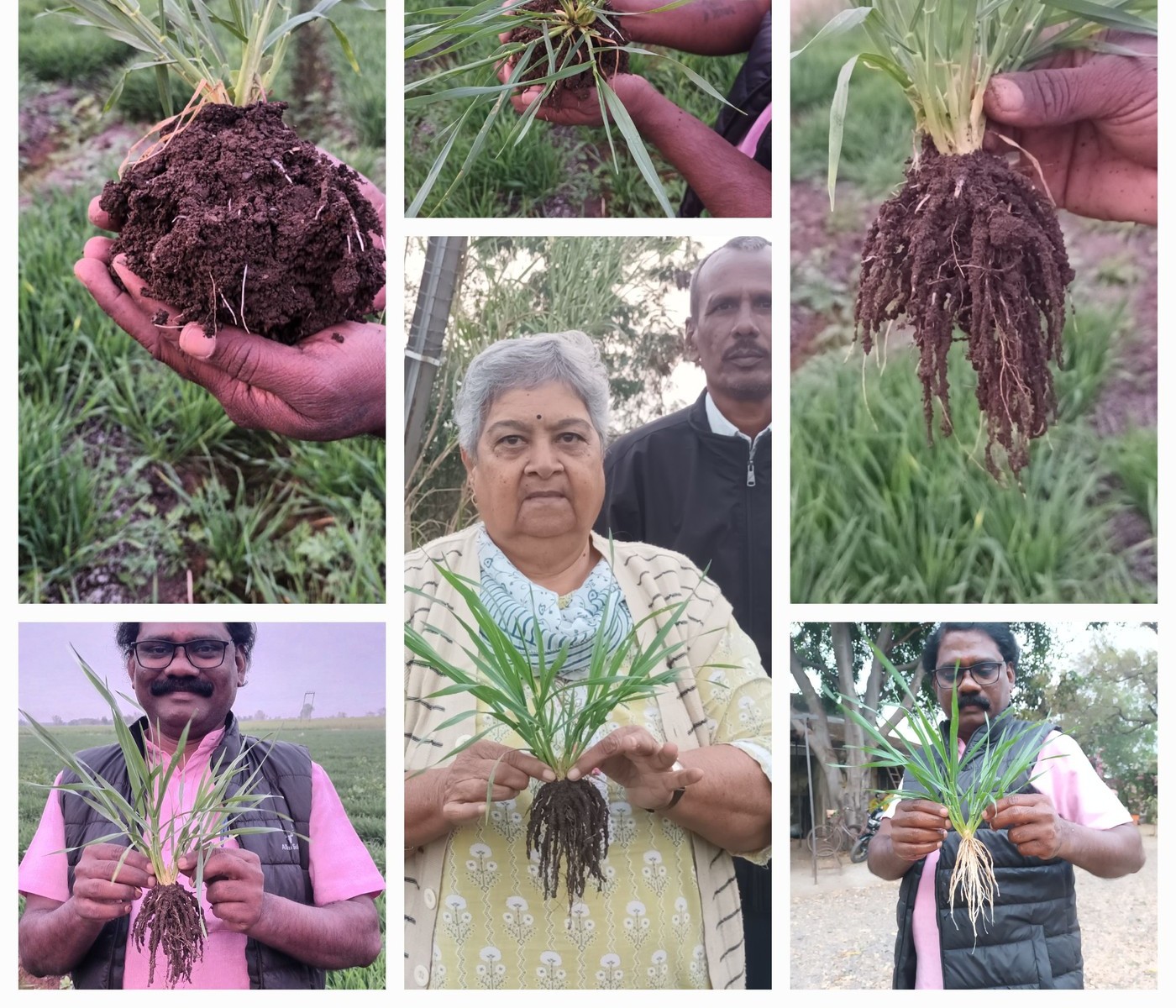
A PQNK wheat crop, pulled from the field by farmers in Maharashtra, India: roots reaching deep, coated in living soil, the rhizosphere visibly intact.
Farmer Vasudha Sardar (centre), Maharashtra, India — demonstrating the living root architecture of a wheat plant grown under PQNK management. The dense, dark, soil-clinging root ball she holds is not cleaned or prepared for display. It is pulled directly from the PQNK bed and presented as it was found — a living record of what happens when a root system is freed from hardpan, given oxygen at depth, and connected to an active soil biology. The root mass is deep, branched, and coated in the dark, biologically rich soil that only forms around roots that have been feeding a living ecosystem rather than a chemically managed one. Beside her and in the surrounding photographs, the same story repeats: hand after hand holding plants whose root systems carry more biological weight than their above-ground growth would suggest in any conventional field. Vasudha Sardar transitioned her farm from ACI management to PQNK practice. What she holds is the evidence of that decision — not a yield figure, not a soil report, but the root itself, still warm from the earth that grew it.
Earthworm presence. Dig a spade of soil and count the earthworms visible in it. A healthy soil will contain ten to thirty earthworms per spade. A degraded conventional field may contain none. Earthworms are highly vulnerable to tillage, flooding, and pesticide application, and in the most degraded fields, populations are eliminated entirely. Their presence is one of the most reliable single indicators of biological soil health.
Soil aggregate stability. Take a small clod of moist soil and drop it gently into a glass of water. A soil with good aggregate structure will hold together or break slowly into stable crumbs. A soil with poor structure will immediately disperse into a cloud of individual particles that settle as a fine silt at the bottom of the glass. This dispersal is called slaking, and it is directly correlated with susceptibility to surface crusting, erosion, and waterlogging.
Root architecture. Pull up a plant from a PQNK field and examine its roots. In a biologically healthy soil with no hardpan restriction, roots grow deeply, branch extensively, and carry a visible coating of soil particles, the rhizosphere, the zone of intense biological activity that immediately surrounds root surfaces. In a compacted field, roots are shallow, thick, and blunt, they have hit the hardpan and turned sideways or stopped. The shape of a root system tells the precise history of the soil it grew in.
WHAT THIS CHAPTER HAS ESTABLISHED
Chapter One established that the natural system was in permanent operation for four hundred million years, and that modern agriculture has been systematically dismantling it. This chapter has explained, in biological and mechanistic detail, how that system actually works, and therefore what precisely must be restored.
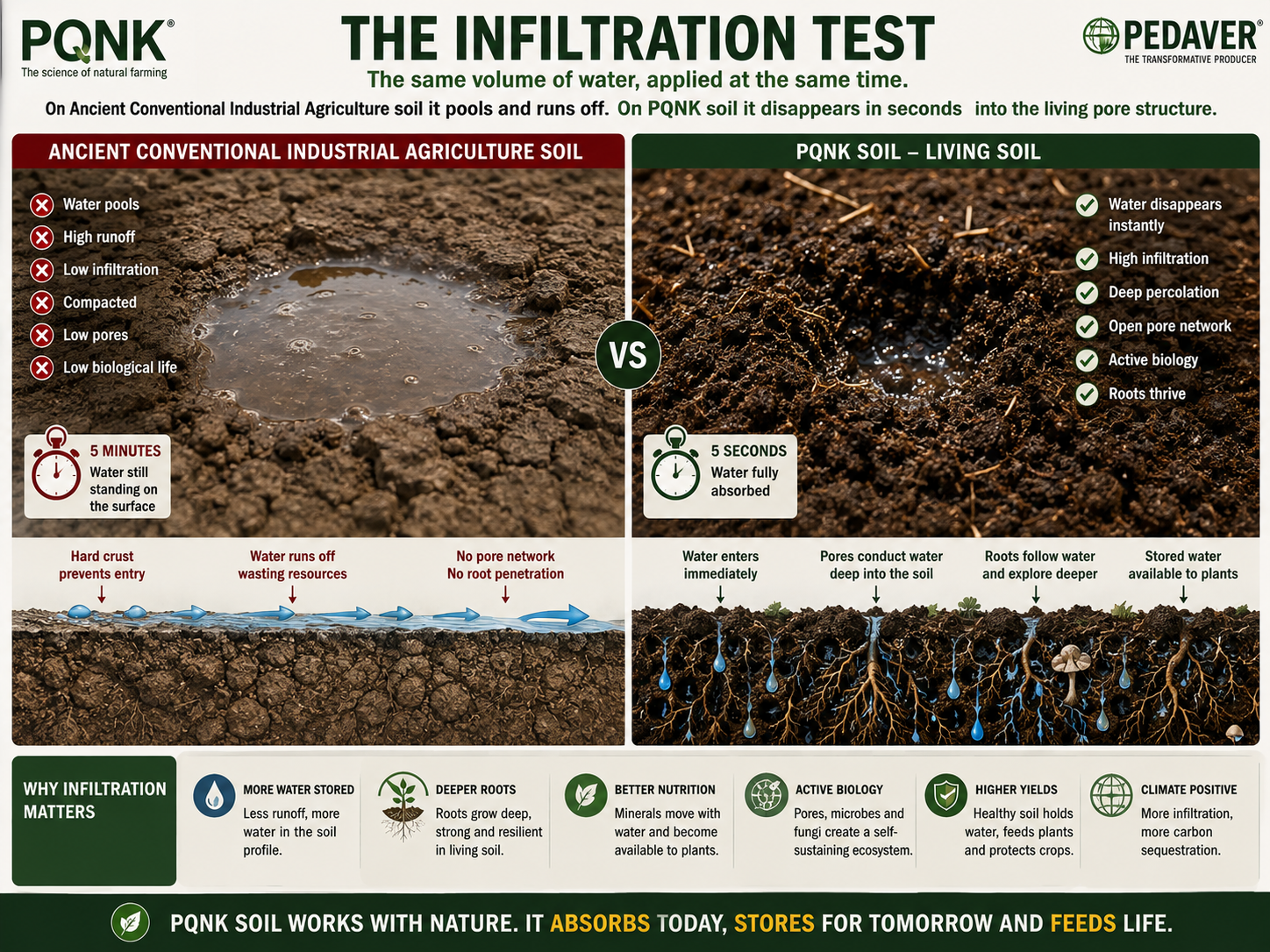
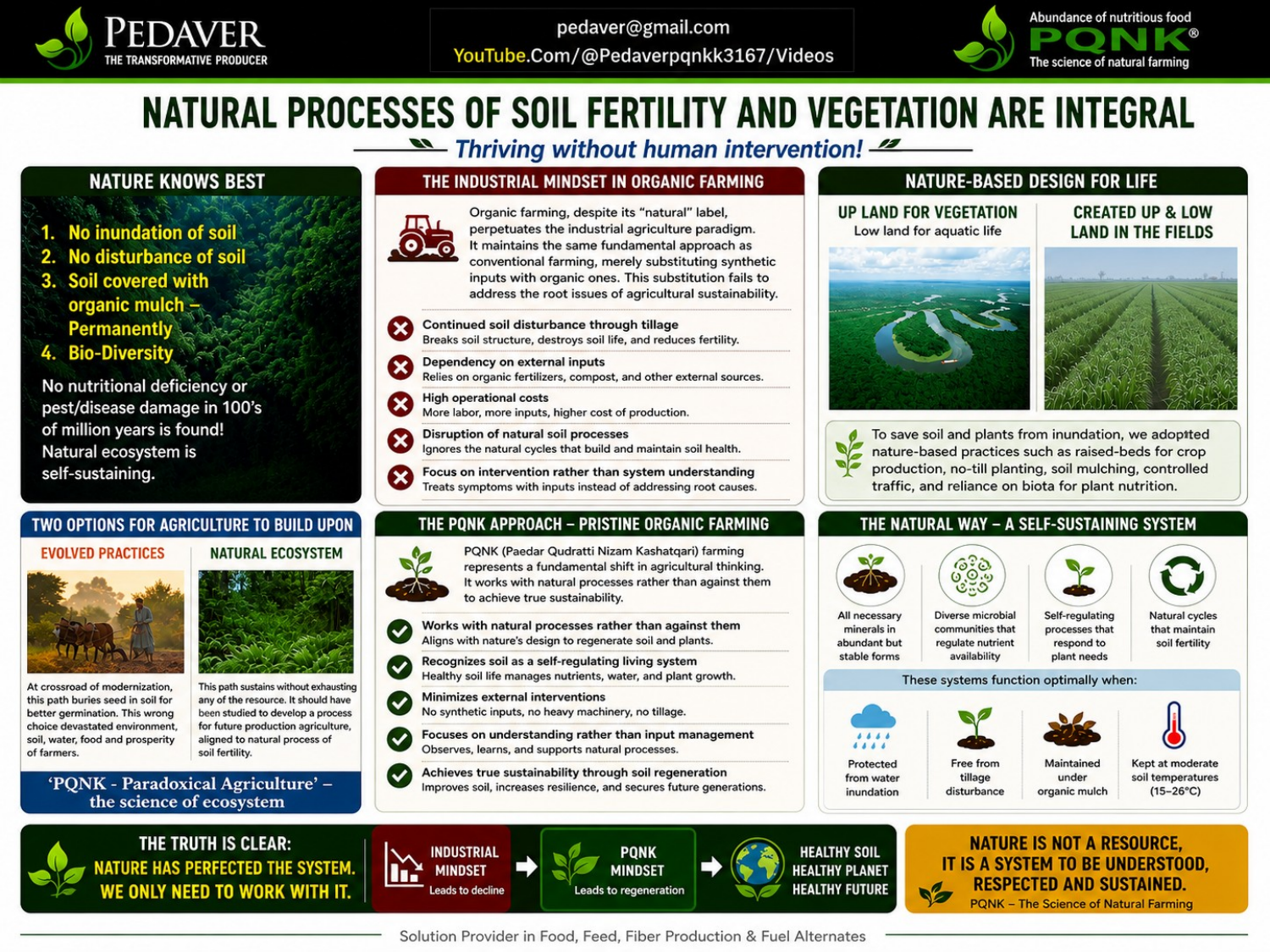
The soil is not an inert substrate. It is a living system of four interdependent stages: a geological mineral bank of overwhelming abundance; a biological transformation process that converts raw minerals into structured, productive soil; a self-organising food web of almost incomprehensible complexity that manages nutrient delivery, water retention, pest control, and climate regulation simultaneously; and a plant that serves as alchemist and chief executive, transforming the soil’s outputs into the most nutritionally complex food that biology can produce.
ACI damages every one of these stages: it cuts access to the geological bank by destroying the biological machinery that mines it; it destroys aggregate structure through tillage and flooding; it kills the soil food web through chemical application and anaerobic conditions; and it deprives the plant of the biological ecosystem it needs to perform its full function.
PQNK restores all four stages, in a specific sequence, using a precise protocol that initiates biological recovery within a single growing season. That protocol begins where the damage is most fundamental: with the physical structure of the soil itself. The next chapter examines the geological bank in detail, the evidence that makes the case for perpetual abundance more rigorously, and more devastatingly for the fertiliser industry, than any previous analysis has done.
Chapter Three: The 0.083% Paradox, Plants Eat Air, Not Soil