
Industrial Devastation To Natural Abundance
The Evidence · Chapter 42
New Frontiers
Five Crops Grown Better: Strawberry, Olive, Bamboo, Watermelon and Saffron in PQNK Systems
Release 1.0 · 2026-10-19
If you use “Listen”, the text of the page may be sent to your browser or operating system’s speech provider, such as Apple, Google or Microsoft, depending on the voice your device uses. Pedaver does not process, transmit or store any audio.
“Every crop I have been told requires expensive inputs to be viable has been grown without inputs in PQNK soil. The pattern is consistent. The conclusion is simple: the agricultural advice Pakistan has received was based on what can be done in dead soil. In living soil, the possibilities are different.”
Asif Sharif, Lahore, 2023
The preceding chapters showed what PQNK does for the field crops, vegetables, orchards and tropical fruit that fill most of Pakistan’s farmland. This chapter turns to five crops that sit at the edge of that picture: strawberry, olive, bamboo, watermelon and saffron. Four of them are not new to Pakistan. Strawberry, olive, bamboo and watermelon already grow here without difficulty. What holds them back is not the land or the climate. It is the cost of the inputs they are given and the poor quality of what comes out.
Under PQNK the same crops are grown on living soil: the hardpan broken once, permanent raised beds, soil never tilled and never left bare, water given by soil moisture management (SMM), and no chemical fertiliser or pesticide. The cost falls and the quality rises. The fifth crop, saffron, is a different kind of frontier: a developing story that only an experienced PQNK farmer should take on.
FOUR ESTABLISHED CROPS, GROWN BETTER
Strawberry, Clean fruit the consumer can trust again
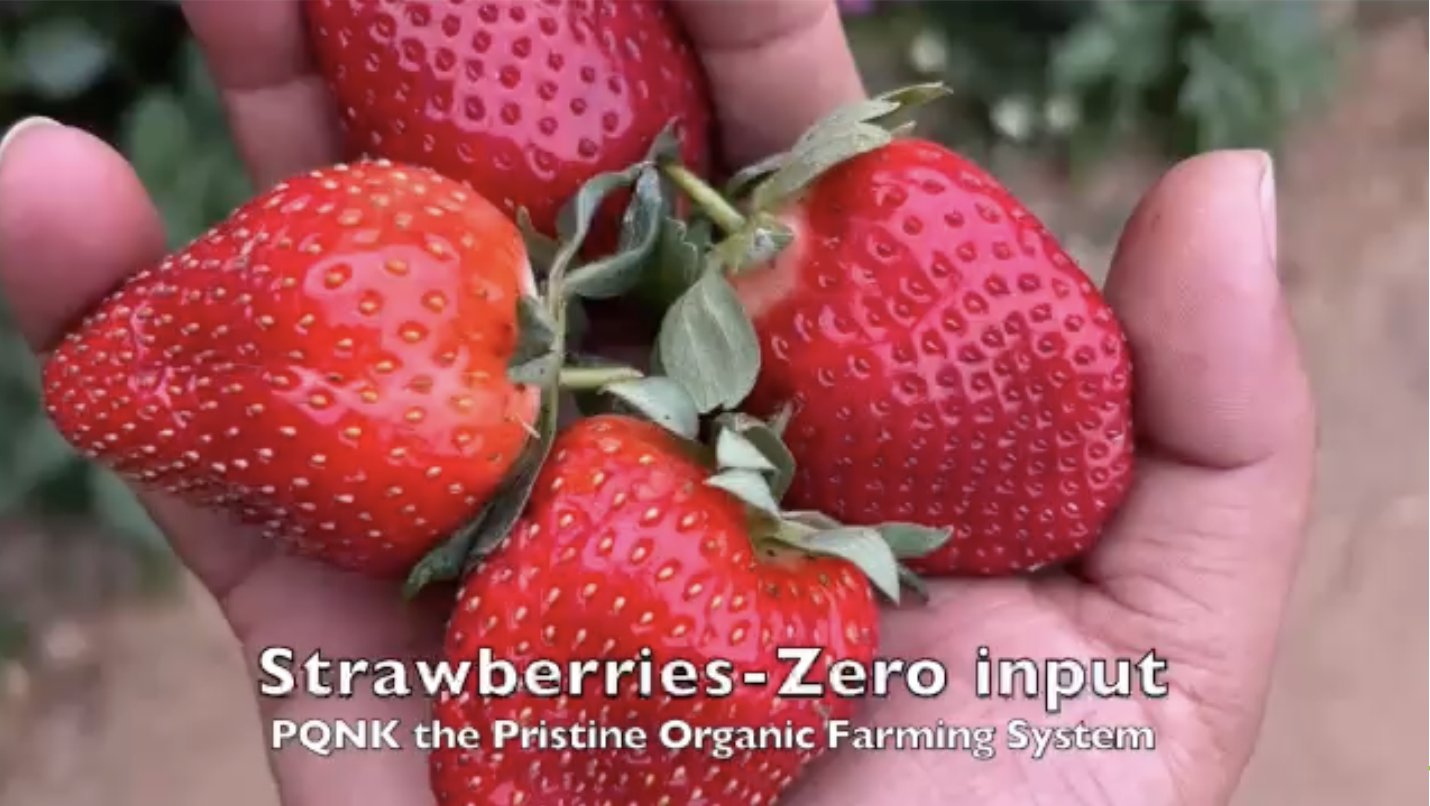
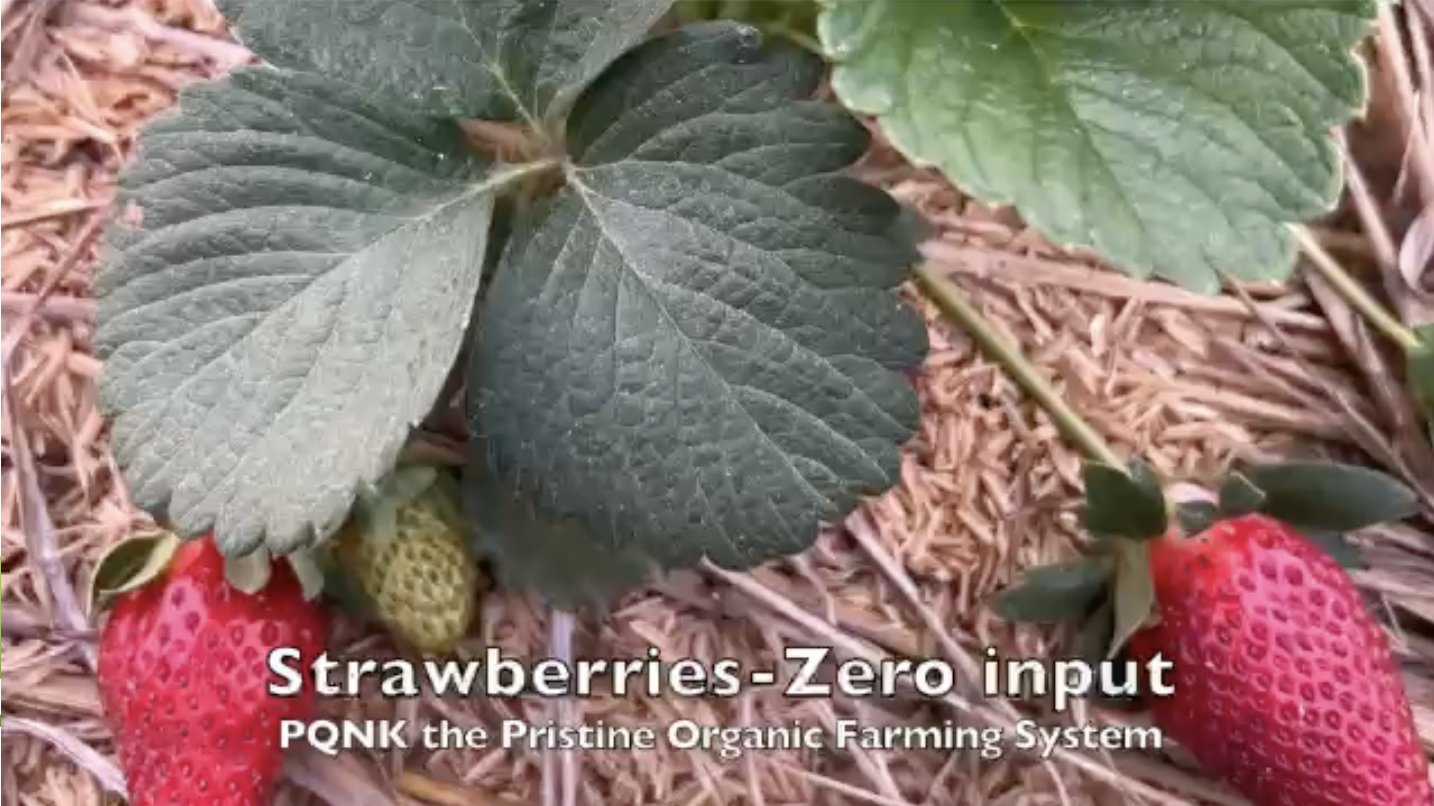
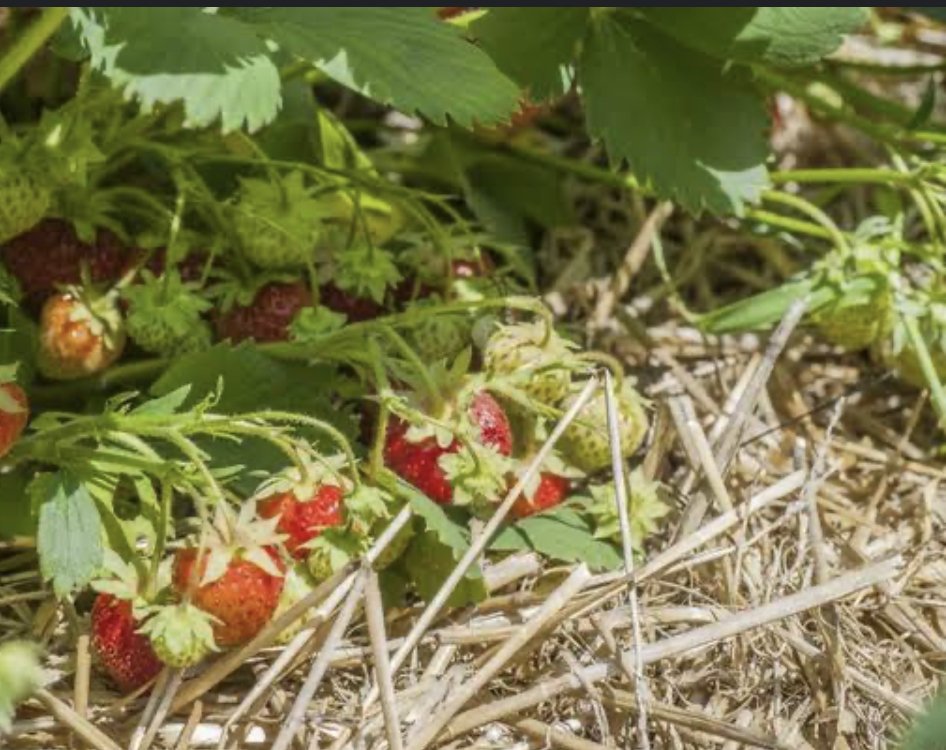
Strawberry (Fragaria × ananassa) is an established crop in Pakistan, yet it is declining. Grown conventionally on tilled beds under plastic, with heavy fertiliser, the crop is weak and attracts pests, so it is sprayed again and again, often close to picking. Strawberry is eaten whole and unpeeled, and there have been many cases of consumers who fell ill, some needing hospital care, after eating sprayed fruit. When those reports spread on the media, buyers turned away from the crop, and the growers paid the price.
PQNK removes the cause. On permanent raised beds under organic mulch, the plants grow in living soil that feeds and protects them, so no agrochemical is needed at any stage. Strawberry is grown as a perennial at about 19,600 plants per acre, against about 10,000 in conventional planting, and the plants bear from February through October without annual replanting (Knowledge Paper KP-141). With no plastic, fertiliser or spray to buy, the cost of production falls, and the fruit carries no trace of poison.
Fruit from living soil is also sweeter and more aromatic, because a plant given a complete range of minerals by its soil biology builds sugar and flavour rather than soft, watery growth. A grower who can offer clean, tasty strawberry can win back the consumer.
Agrochemicals: None needed (living soil feeds and protects the plant)
Plant population: About 19,600 per acre (vs about 10,000 conventional; KP-141)
Harvest: February to October (perennial plants, no annual replanting)
Olive, Rolling land without a drip system
Olive is a well-established crop in Pakistan, grown on the Potohar plateau, in the Khyber Pakhtunkhwa hills and in the Balochistan highlands, yet the country still imports almost all of its olive oil, about 15,000 to 20,000 tonnes a year (Knowledge Paper KP-124). Much of the land suited to olive is sloping or rolling and rainfed, and it suffers from runoff, erosion and shallow soil moisture. The conventional answer is a drip system with its pond, pumps and pipes. That capital cost, and the long wait before an orchard pays, keep ordinary growers out.
Yet most of this land receives more than 400 mm of rain a year, about twice what a crop needs under PQNK. The failure is not a shortage of rain but the inability of the soil to receive, store and regulate it. PQNK contour farming corrects this with only two physical interventions (Knowledge Paper KP-068). First, the hardpan is fractured with a subsoiler, without turning or mixing the soil, so that rain has no reason to run off and roots can go deep. Second, furrows are made at regular intervals strictly along the contour lines, across the slope. Each furrow acts as a small check dam: the runoff slows almost to a stop, the water is held where it falls, and with no hardpan beneath, it soaks in.
The olive trees stand on the raised beds between the furrows, the uplands where roots stay aerated and never waterlog, while the furrows below, the lowlands, collect the water and recharge the deeper soil. A deep-rooted cover crop is grown first to open the profile; it is cut, never pulled, so its roots remain as channels and food for soil life, and its tops are laid on the beds as a thick mulch. The mulch keeps the soil from drying and absorbs dew and humidity from the air. On steeper ground each tree can also be given a curved furrow on its downhill side leading to a borehole one foot wide and four feet deep, which holds the water at its own root zone (Knowledge Paper KP-124). Once established, the orchard lives on rainfall alone, with no drip system; PQNK practitioners on such land have gone seven to eight years without irrigation.
Between the rows of trees, wheat, barley, oilseeds or vegetables can be grown, so the orchard earns while the trees come into bearing. Where machinery is used, it travels only in the furrows and never compacts the beds. Where irrigation is already in place, olive is planted on permanent raised beds at 10 feet between rows and 8 feet between trees, about 545 trees per acre, with water given only in the furrow (Knowledge Paper KP-134). Olive comes from the dry Mediterranean and is drought-tolerant by nature; living soil lets that tolerance show. Without drip, fertiliser or spray, the cost of establishment falls, and fruit grown on balanced soil nutrition is of better quality.
Rolling land: Hardpan fractured, contour furrows (rain held where it falls; KP-068)
Water: Rainfall alone, from 400 mm a year (no drip system once established)
Irrigated land: 10 × 8 ft, about 545 trees per acre (permanent raised beds; KP-134)
Bamboo, The perpetual resource crop
Bamboo is a well-established crop, a fast-growing perennial grass that gives poles, construction material, fibre, edible shoots and a steady fall of leaf litter from the same clumps, year after year. Grown conventionally it is watered heavily and fed with fertiliser, and the clumps age poorly on compacted soil.
PQNK plants bamboo after the foundation steps: the hardpan is broken, permanent raised beds are formed, and a deep-rooted Jantar cover crop is grown and then laid on the beds as mulch. Bamboo is planted through that mulch at 10 feet by 6 feet, about 726 plants per acre, under a mulch layer four to six inches deep (Knowledge Paper KP-015). Water is given in the furrow only during establishment, and from the third year the plantation lives on rain, with water only in extreme drought. No fertiliser is ever applied: the leaf litter and the living soil feed the clumps.
Harvest begins in year three or four, taking only 20 to 30 percent of the mature culms each year so that the clumps stay vigorous. PQNK saves the irrigation water and the fertiliser bill, and gives stronger, better culms for the market.
Planting: About 726 plants per acre (10 × 6 ft on permanent beds; KP-015)
Water: Rain-fed from year three (furrow water only during establishment)
Fertiliser: None (leaf litter and living soil feed the clumps)
Watermelon, A longer season from cooler soil
Watermelon (Citrullus lanatus) has been grown in Pakistan for centuries. Its problem is the end of the season. Grown on bare, conventionally managed soil, the crop ripens all at once when the temperature rises: the soil heats, the vines are stressed, and the whole field comes to market together, often at a low price, with fruit that is less sweet than it should be.
PQNK keeps the soil cool and moist under mulch on permanent raised beds, so the vines are not forced into ripening by the heat. The vines can also be given partial shade in the afternoon by a row of maize or another tall plant set at the right distance, which keeps them productive as the season warms. Planting a part of the beds every fifteen days spreads the harvest over several months instead of a few weeks (Knowledge Paper KP-160).
The main stem is pinched at about 9 inches and one fruit is kept on each branch, so the fruit is even in size, colour and sweetness. Fed by living soil rather than nitrogen, the vine puts its energy into sugar and flavour. Picked early in the morning, when the fruit is coolest, it keeps its freshness longer. With no fertiliser or spray, the cost of production falls and the quality rises.
Production window: Prolonged (cool, moist soil and afternoon shade on the vines)
Pruning: Main stem pinched at 9 inches (one fruit kept per branch; KP-160)
Staggered planting: Every 15 days (harvest spread over several months)
SAFFRON: A DEVELOPING STORY
Saffron, For the experienced PQNK farmer
Saffron (Crocus sativus) is the most valuable spice in the world by weight, and Pakistan imports most of what it uses. Unlike the four crops above, saffron is still a developing story under PQNK, and it is not a crop for the beginner. It can only be managed by an experienced PQNK farmer whose soil is already living and whose beds are already mature.
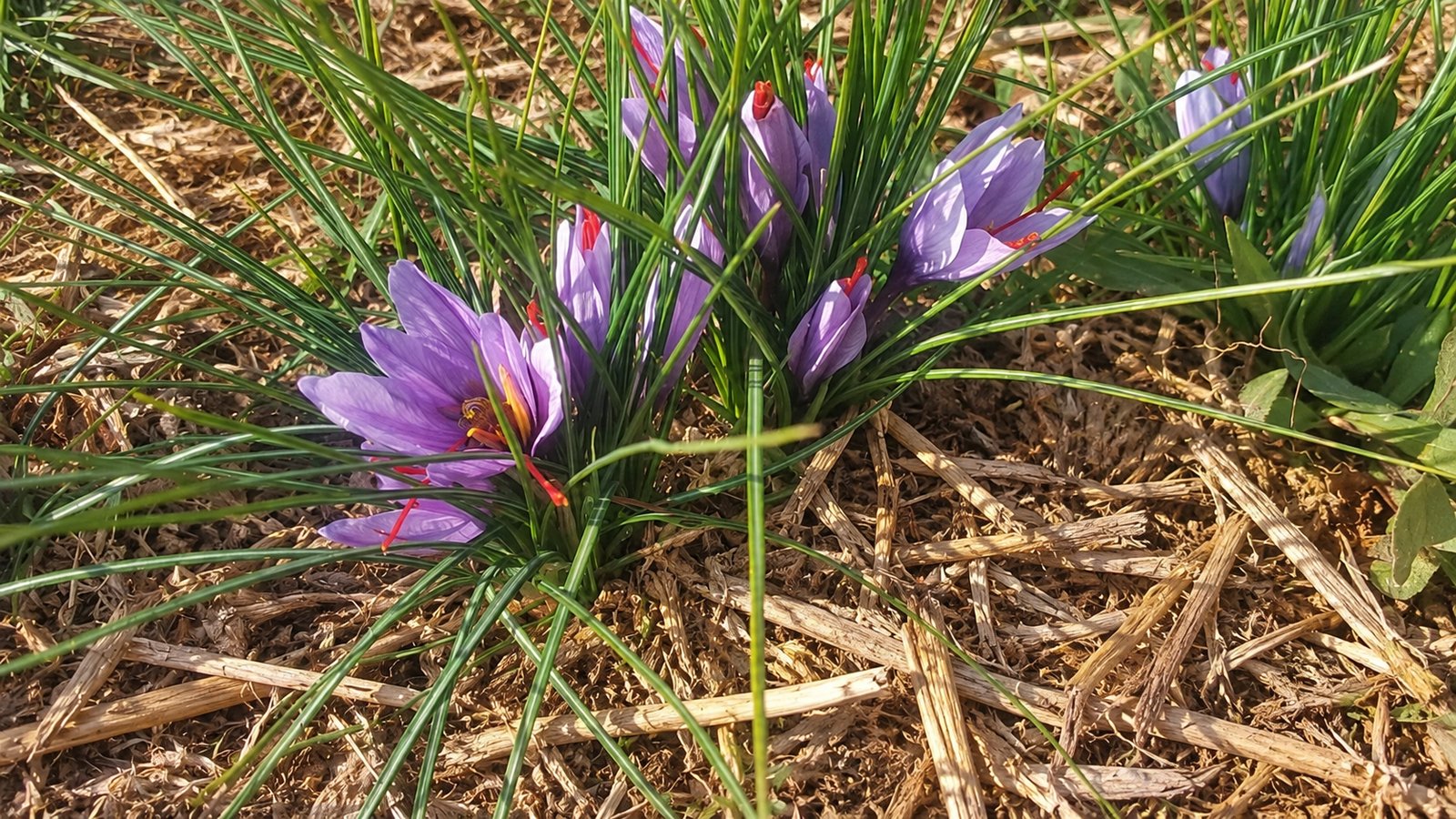
Everything in saffron turns on timing. The corms must be planted at the right time, the soil moisture must follow the crop’s seasonal pattern, dry while the corms rest and moist while they grow and flower, and the soil temperature must be held within the narrow range that brings the corms to flower. PQNK gives the farmer the tools to do this: raised, mulched beds that never waterlog, so the corms do not rot; mulch that holds the soil temperature steady; and water given only by SMM, exactly when the crop needs it. In experienced hands these tools can provide what the crop needs. Without that experience, a small error in timing can cost the season.
Who: Experienced PQNK farmers only (mature, living soil)
Critical: Timing, soil moisture and soil temperature (all managed by mulch and SMM)
Corm zone: Raised, mulched, never waterlogged (corms do not rot)
THE PATTERN ACROSS THE FIVE CROPS
These five crops differ in almost everything: a berry, a long-lived tree, a giant grass, a summer vine and a flowering corm. Yet the same PQNK tools serve them all, and the same result follows. Where conventional farming spends heavily on fertiliser, sprays, drip systems and water, and still delivers fruit of poor quality, PQNK removes most of that cost and lets living soil deliver the quality.
The limit on these crops was never the land or the climate. It was the soil they were grown in, and the inputs used to make up for it.
THE STRATEGIC IMPLICATIONS FOR PREMIUM CROP PRODUCTION
Each of these crops answers a market Pakistan already has. The country imports its olive oil and most of its saffron, and its cities pay a premium for fresh, clean fruit that consumers can trust. Grown at low cost and high quality under PQNK, these crops give the farmer new income from the same land and keep at home money that now goes abroad: a gain for the farm and for the national trade balance alike.
WHAT THIS CHAPTER HAS ESTABLISHED
Strawberry, olive, bamboo and watermelon already grow in Pakistan; under PQNK they grow at lower cost and with better quality. Strawberry needs no agrochemical and reaches the consumer free of poison; olive grows on rolling land without a drip system; bamboo saves the irrigation water and the fertiliser bill; and watermelon keeps producing as the season warms instead of ripening all at once. Saffron, the fifth, remains a developing story for the experienced PQNK farmer, where timing, soil moisture and soil temperature decide the crop. In every case, the same restored soil biology makes the difference.
The final chapter of Part Five turns to livestock and fodder: the integration of animals with crops that brings feeding cost down from 70 percent of input cost to 20 percent and completes the One Acre Prosperity (OAP) circular economy, from soil to soul.
Chapter Forty-Three: Livestock and Fodder, From 70% to 20% Feeding Cost; Soil to Soul