

Industrial Devastation To Natural Abundance
The Original System · Chapter 6
Nature's Pest Protection
BT Bacteria, the Living Immune System, and the Hundred-Billion-Dollar Lie
Release 1.0 · 2026-09-07
If you use “Listen”, the text of the page may be sent to your browser or operating system’s speech provider, such as Apple, Google or Microsoft, depending on the voice your device uses. Pedaver does not process, transmit or store any audio.
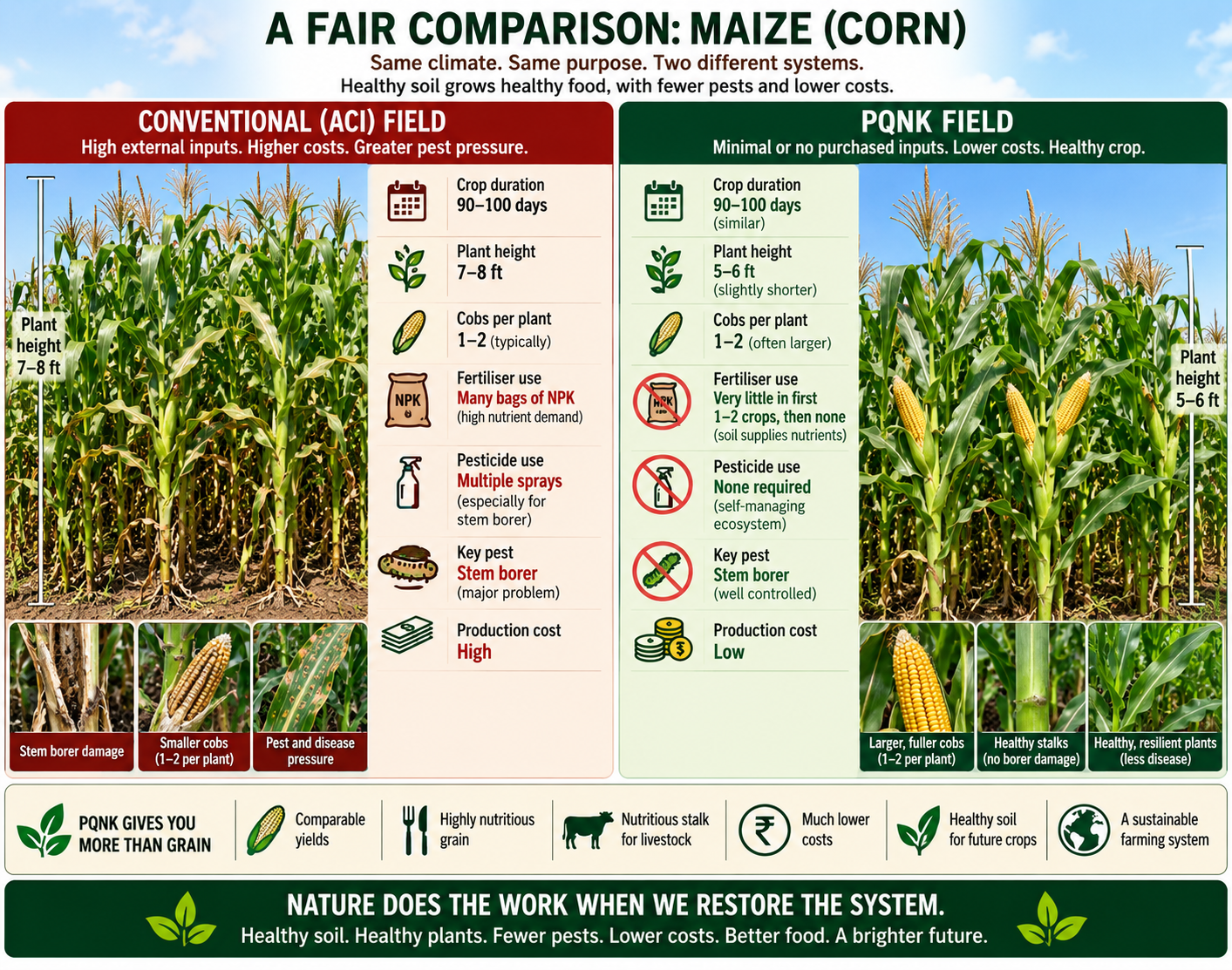
“The pesticide salesman and the fertiliser salesman went to agricultural school together. They learned the same lesson: first destroy the system that makes your product unnecessary, then sell the product. They have been remarkably successful students.”
Asif Sharif, Lahore, 2022
In 2023, the global pesticide market was valued at approximately one hundred billion US dollars. Across much of the developing world, farmers spend a large share of their total production costs on chemicals intended to protect their crops from insects, fungi, and other biological threats; in Pakistan the figure runs between a quarter and a third. In Pakistan’s cotton belt, pesticide applications have, in some seasons, accounted for more than half the total cost of the crop. Despite this expenditure, pest losses remain severe. Resistance is widespread and growing. The chemicals required become stronger and more expensive with each passing decade. Farmer debt deepens. And the insects persist.
This situation, escalating cost, diminishing effectiveness, and no resolution in sight, is presented by the agrochemical industry and its academic allies as evidence that the problem is difficult. It is not difficult. It is manufactured. The pest crisis in modern agriculture is not a natural phenomenon that human ingenuity must struggle to overcome. It is the predictable consequence of destroying the biological pest management system that was in place and functioning before the first pesticide was ever sold, and that still functions on every PQNK farm where it has been allowed to rebuild.
This chapter explains what that natural pest management system is, how it works, what destroys it, and why its restoration makes pesticides not merely unnecessary but actively harmful to a functioning farm ecosystem. It centres on one organism that has been at the heart of this story for thirty years: a soil bacterium called Bacillus thuringiensis, known universally as BT, which the industry learned to bottle and sell even as the conditions that grow it for free were being destroyed.
THE HUNDRED-BILLION-DOLLAR BUSINESS BUILT ON A BROKEN SYSTEM
Before examining what the natural pest protection system is, it is worth understanding why a hundred-billion-dollar industry exists to replace it. The answer is not that pest pressure is an inevitable feature of agriculture. In natural ecosystems, catastrophic pest outbreaks of the kind that destroy entire crop stands, that force emergency chemical intervention, that leave a farmer watching a season’s work disappear in days, are far less common. Natural ecosystems can still experience population surges, but a diverse, intact system holds multiple interlocking mechanisms that make uncontrolled proliferation of any single species less likely, and that speed recovery when a surge does occur.
These mechanisms fail in ACI agriculture for a set of reasons that are entirely the product of ACI practices, not of agriculture itself. Understanding this distinction is the key to understanding why PQNK can operate without pesticides while conventional farming cannot survive a single season without them.
Monoculture disrupts the ecological balance. A single-species crop stand is an ecological vacuum: it provides a vast, uniform food source for any insect that feeds on that species, with no competitors, no habitat disruption, and no natural enemies present in sufficient numbers to regulate the population. In a diverse natural ecosystem, the same insect species would be surrounded by predators, parasites, and competitors that prevent it from achieving outbreak densities. In a monoculture, it faces none of these constraints. The monoculture is not just a farming practice; it is a standing invitation to epidemic.
Synthetic nitrogen produces weak, attractive plants. A plant force-fed with synthetic nitrogen produces rapid vegetative growth driven by soluble nitrates. This growth is structurally weak, cells are large and water-filled rather than compact and cellulose-rich, and nutritionally imbalanced. High nitrogen content in plant tissue is precisely what sucking insects such as aphids and whiteflies seek out; it is a feeding attractant. A plant with excess nitrogen and insufficient mineral balance is, in biological terms, advertising its vulnerability to every sap-feeding insect in the field. The fertiliser that was supposed to improve crop performance is simultaneously advertising the crop’s weaknesses.
Tillage and flooding destroy the soil biological community. The soil of a healthy, functioning farm hosts a complex community of organisms that provide direct biological pest control: entomopathogenic fungi that infect and kill pest insects, predatory beetles and ground-dwelling arthropods that feed on pest larvae in the soil, parasitic wasps that lay eggs in caterpillar and aphid populations, and the BT bacteria that associate with plant roots and can protect the plant from within. Tillage and flooding destroy this community. The farmer then applies a chemical pesticide to manage the pest pressure that his own practices created, and the pesticide kills any remaining biological control agents, ensuring that pest pressure will be worse next season.
Pesticide use is not a cure for the pest problem. It is the maintenance of the pest problem, by continuously destroying the biological control system that would otherwise solve it for free.
BACILLUS THURINGIENSIS: THE BACTERIUM THAT WAS ALWAYS THERE
Bacillus thuringiensis, BT, is a naturally occurring soil bacterium present in healthy agricultural soils worldwide. It was first described scientifically in 1901, when a Japanese scientist named Ishiwata identified it as the cause of a disease affecting silkworm larvae. The German scientist Ernst Berliner formally named it in 1911 after isolating it from diseased flour moth larvae near Thuringia in Germany. The bacterium’s remarkable property, its production of crystalline protein toxins lethal to specific insect larvae, was understood by the 1950s. By the 1970s, it was being commercially produced as a spray-on biological pesticide. By the 1990s, the gene encoding its toxic protein had been inserted into crop plants to produce ‘BT cotton,’ ‘BT corn,’ and related varieties. In 1995, this technology reached Pakistan, and it was Asif Sharif who identified and propagated the first BT cotton seeds in Pakpattan, a turning point that sparked the extended study of BT bacteria that would ultimately lead to the conceptualisation of PQNK itself.
The commercial and genetic exploitation of BT has generated billions of dollars in revenue for the agrochemical and seed industries. What it has not generated is an honest answer to the question that should have been asked before the first bottle of BT spray was ever produced: if this bacterium is naturally present in soil, why are we manufacturing and selling it externally? The answer, which took decades of patient field observation to fully understand, is this: the bacterium is present in healthy soil. ACI management destroys healthy soil. The industry sells the replacement for what it destroyed.
HOW BT WORKS: A SPECIES-SPECIFIC BIOLOGICAL ARSENAL
The mechanism by which BT bacteria protect plants is one of the most elegant examples of biological specificity in all of microbiology. BT bacteria produce, during their sporulation phase, crystalline protein inclusions called delta-endotoxins, also known as Cry proteins, from ‘crystal.’ These proteins are inactive in their crystalline form and become toxic only when dissolved in the highly alkaline conditions of an insect’s midgut. Once activated, the Cry proteins bind to specific receptor sites on the cells lining the midgut wall, creating pores that disrupt the cell membrane. The midgut contents leak into the insect’s body cavity, causing rapid cell death, paralysis, and the insect’s death within hours to days.
The specificity of this mechanism is its most important feature. Different BT subspecies produce different Cry proteins that bind to different receptor sites. Because these receptor sites exist only in specific insect groups, BT toxicity is precisely targeted: a Cry protein that kills caterpillar larvae is harmless to beetles, flies, bees, earthworms, birds, mammals, and humans. There is no broad-spectrum collateral damage of the kind that makes synthetic pesticides so ecologically destructive.
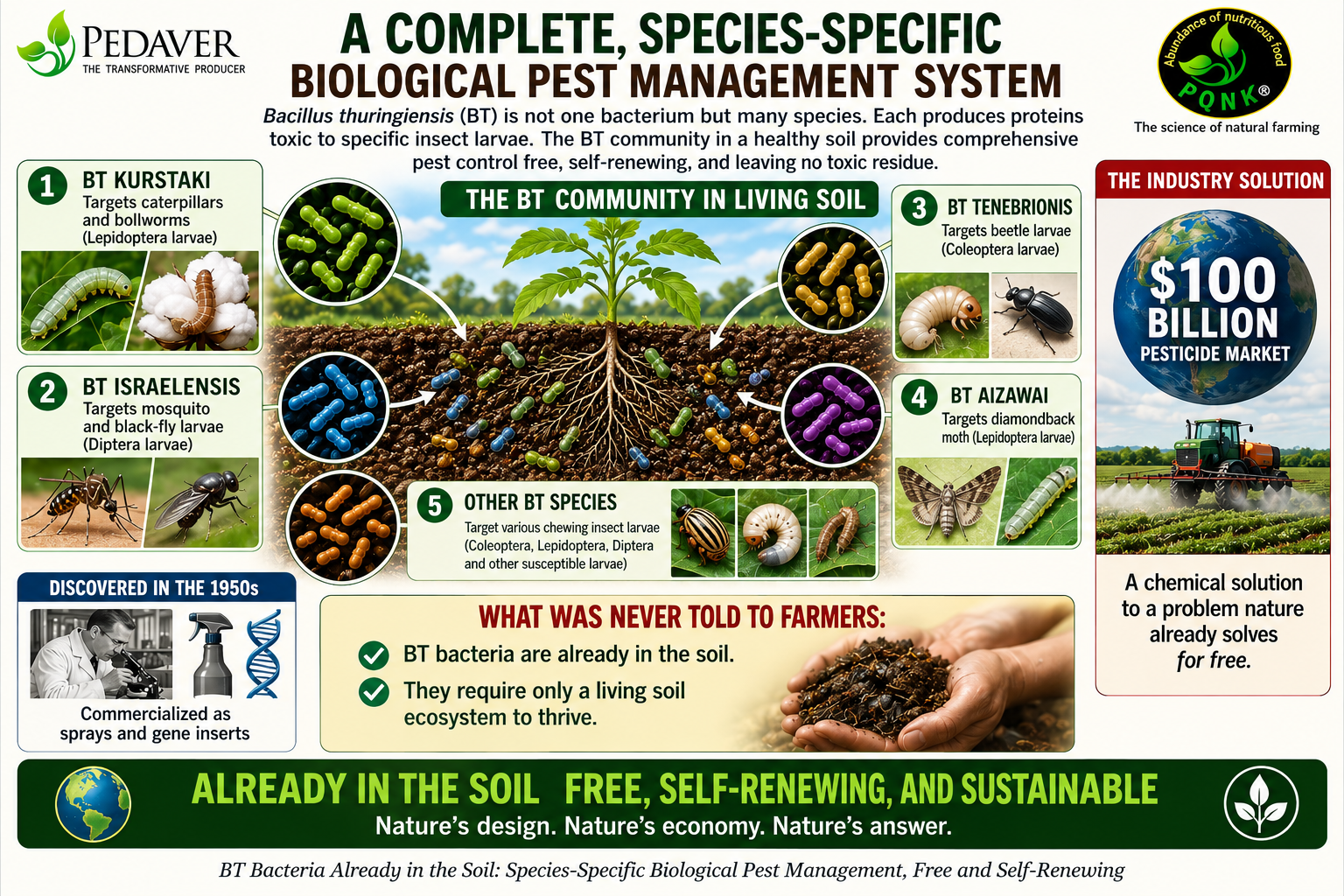
BT Bacteria Already in the Soil: Species-Specific Biological Pest Management, Free and Self-Renewing
The known BT subspecies cover an impressive spectrum of agricultural pest threats. Bacillus thuringiensis kurstaki targets caterpillars, bollworms, and armyworms, the primary lepidopteran pests of cotton, corn, and vegetables. Bacillus thuringiensis israelensis targets the larvae of mosquitoes and black flies. Bacillus thuringiensis aizawai targets a range of moth larvae including the diamondback moth, a significant pest of brassica crops. Bacillus thuringiensis tenebrionis targets beetle larvae, including the Colorado potato beetle. Additional subspecies and strains continue to be identified, each with its own specific toxin profile and target spectrum.
Between them, these naturally occurring subspecies are active against a broad range of susceptible larvae, principally among the Lepidoptera, Coleoptera and Diptera, with the exact spectrum depending on the strain and the toxin. They are present in every healthy soil. They cost nothing. They require no application, no storage, no protective equipment, and no safety precautions. They leave no residue on food. Insects can and do evolve resistance to individual Cry toxins, particularly when a single toxin is expressed continuously across millions of acres, as occurred with many first-generation BT crops.
The durability of the PQNK system comes not from any single toxin but from biological diversity, predator networks, plant defence mechanisms, and the living soil ecosystem. And this layered regulation has been operating, in natural ecosystems, for hundreds of millions of years.
FROM SOIL TO PLANT: HOW BT BECOMES AN INTERNAL IMMUNE SYSTEM
The commercial exploitation of BT, as spray-on biological pesticide and as inserted gene in transgenic crops, treats BT toxins as external protective agents: things applied to or built into the plant from outside. This framing misses the more fundamental and more powerful way in which BT functions in a healthy soil ecosystem. It misses it because understanding it requires understanding the relationship between BT bacteria and plant roots, a relationship that only becomes visible when the soil is alive enough for it to operate.
In a biologically active PQNK soil, BT bacteria are not merely present in the soil matrix and occasionally consumed by feeding insects. They form part of the rhizosphere community, the dense, biologically active zone immediately surrounding plant roots, and establish symbiotic relationships with the root system itself. Plant roots, through their exudate chemistry, selectively recruit BT bacteria into the rhizosphere, providing them with carbon-rich sugars in exchange for biological services. The bacteria colonise the root surface and, in some cases, enter the plant tissue itself as endophytes, organisms that live within plant cells without causing disease.
Where such an endophytic relationship establishes, BT bacteria can produce their Cry proteins not only in the soil but within the plant tissue itself. In PQNK field observation, crops on well-restored soil show markedly lower caterpillar damage than adjacent conventional crops, and the working interpretation is that an established BT community, in and around the plant, is part of the reason: a caterpillar feeding on such a plant is ingesting Cry proteins already present in the tissue rather than feeding on an unprotected surface. How consistently internal colonisation and Cry production occur across different crops, soils and seasons is not yet established and remains to be measured. What the field record does show is the outcome, a protected crop, with no spray applied and no gene inserted.
The BT gene in transgenic cotton did not give plants a wholly new capability. It attempted to replicate, imperfectly and at enormous commercial cost, a biological protection that plants growing in a living soil can draw on for free, through the BT community and the wider soil food web, and that ACI agriculture had suppressed before anyone thought to look for it.
THE PREDATOR NETWORK: MANY SPECIES ON GUARD
BT bacteria are the most precisely documented component of the natural pest protection system, but they are far from the only one. A complete natural ecosystem maintains a pest population regulation network of extraordinary complexity, in which a vast and diverse community of insects, arachnids, birds, and other organisms, predators and parasitoids prominent among them, takes part in the relationships that hold herbivorous pest populations in check.
This network operates at multiple levels simultaneously. At the soil surface and below it, ground beetles, rove beetles, and carabid beetles patrol the crop base, consuming pest eggs and larvae before they can emerge. Predatory mites feed on the pest mites that attack plant tissue under conditions of high heat and water stress. Parasitic wasps lay their eggs inside aphid, caterpillar, and whitefly bodies; the developing wasp larva consumes the pest from within. Above the canopy, generalist predators, lacewings, hoverflies, ladybirds, and in the evening, insectivorous bats, consume adult pest insects in numbers that no spray programme has ever matched.
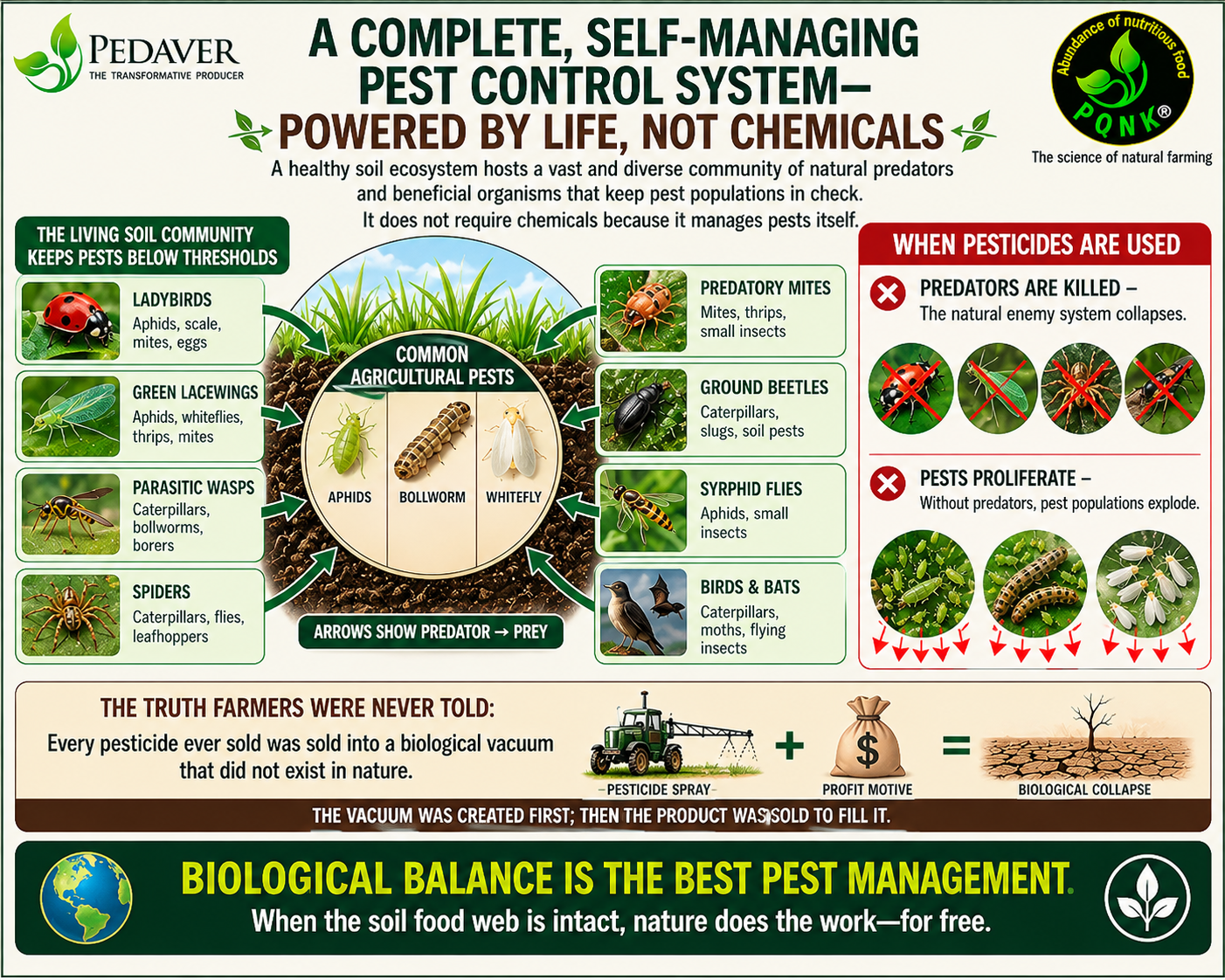
A Self-Managing Pest Control System Powered by Life, Not Chemicals: A Diverse Community of Predators and Parasitoids at Work
The regulation that results from this network is not perfect equilibrium, pest populations do fluctuate, and in a healthy ecosystem, some damage always occurs. What the network prevents is the exponential outbreak: the condition in which a pest population doubles and doubles again, unchecked by any biological resistance, until it overwhelms the crop. In ACI systems, every application of a broad-spectrum pesticide kills not only the target pest but the predators that were regulating it. The pest, with its shorter life cycle and higher reproductive rate, recovers faster than its predators. The next outbreak is larger than the one that triggered the spray. The dose must increase. The cycle accelerates.
PLANT IMMUNITY: THE BRIX CONNECTION AND ITS LIMITS
Beyond the external biological defence network, plants possess an internal immune system that is, in a healthy PQNK ecosystem, highly effective at resisting pest attack. This system operates through two interconnected mechanisms: structural resistance and biochemical defence.
Structural resistance refers to the physical properties of healthy plant tissue that make it difficult for pests to feed on. A plant growing in biologically balanced soil, receiving a complete mineral spectrum from the mycorrhizal assembly line rather than a simplified NPK package, produces cell walls of appropriate thickness and mechanical strength, leaf surfaces with the correct waxy cuticle, and vascular tissue that can respond rapidly to wounding by sealing the damage point. A force-fed nitrogen plant, by contrast, produces large, thin-walled, water-filled cells that are mechanically easy to pierce and nutritionally rich for any insect that does so.
Biochemical defence refers to the plant’s production of secondary metabolites, the complex chemical compounds that serve as deterrents, toxins, and repellents against pest insects. Terpenes, alkaloids, glucosinolates, phenolic compounds: these are the plant’s chemical weapons, produced in response to biological stress signals from the soil food web and from pest attack itself. They are also the compounds that give PQNK food its superior flavour, aroma, and nutritional density. A plant that is well-defended is a plant that tastes good, because the same compounds that deter insects are the ones that human palates and metabolisms have co-evolved to recognise as desirable and beneficial.
The general sugar content of plant sap, sometimes measured as an approximate indicator of plant health using a refractometer, can serve as a rough guide to improving plant condition during the PQNK transition. Plants with very low sugar readings are typically experiencing severe stress; as the PQNK system establishes and the soil biological community recovers, readings tend to improve. However, it is important to understand that a refractometer measures only simple sugars in the sap, and PQNK plants produce a far more complex nutritional profile than simple sugars can represent: minerals, phytonutrients, complex carbohydrates, secondary metabolites, and dozens of other compounds that a refractometer does not detect. The refractometer is therefore a rough general indicator of transition progress, not a scientific measure of PQNK produce quality or plant protection capability. The farmer’s own observation, plant vigour, root development, pest pressure levels, and soil biological indicators, is the recommended primary assessment framework.
WHAT PESTICIDES ACTUALLY DO: THE FULL ACCOUNTING
The case for pesticides rests on a single premise: that without chemical intervention, crops would be devastated by pest attack. This premise is true in the context of ACI agriculture, because ACI agriculture has destroyed the biological pest management system that would otherwise prevent devastation. The premise is false in the context of PQNK, because PQNK restores that system. But the full accounting of what pesticides do, not just to pests, but to the entire farm ecosystem, reveals that their use is not merely unnecessary in a healthy system. It is actively destructive.
Pesticides kill the predator network. Broad-spectrum organophosphate and pyrethroid pesticides, the most widely used in intensive agriculture worldwide, do not distinguish between pest insects and beneficial ones. Ground beetles, parasitic wasps, predatory mites, ladybirds, and lacewings are all killed alongside the target pest. There is a second pathway as well. Pest insects that survive a spray, or that feed on treated foliage, carry the chemical in their bodies; the predators and parasitoids that eat them ingest that residue and are poisoned in turn, often by prey that looked entirely normal. Because beneficial insects have lower reproductive rates and more complex life cycles than pest insects, they recover more slowly after each application. The result is that each pesticide application leaves the field more biologically impoverished than before: fewer natural enemies, more pest resilience, greater dependency on the next application.
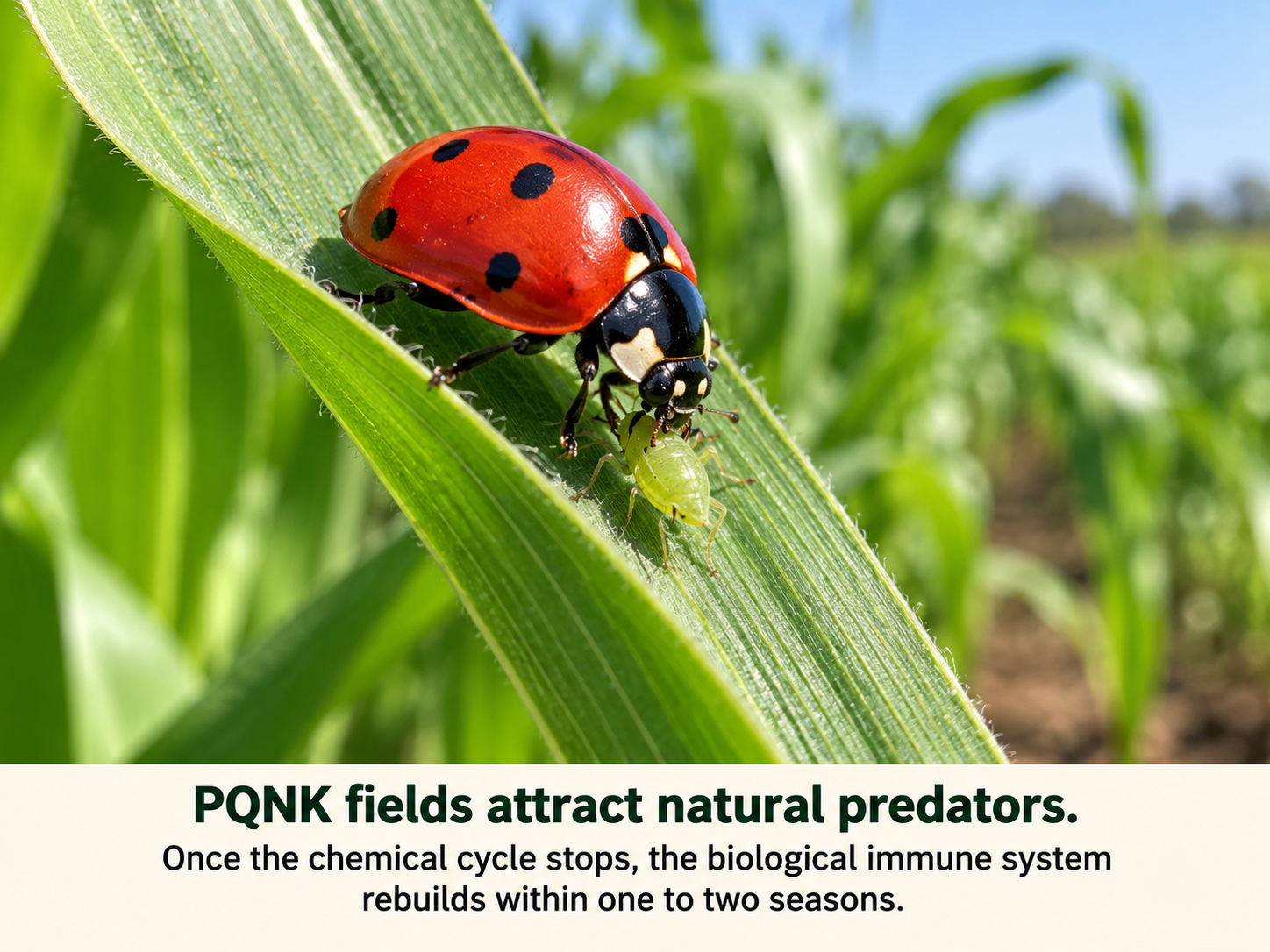
PQNK fields attract natural predators. Once the chemical cycle stops, the biological immune system rebuilds within one to two seasons.
Pesticides disrupt the soil microbial community. Effects vary with the active ingredient, the dose, and the organism, but repeated chemical application does measurable harm to the biology that regulates pests. Many insecticides have documented toxic effects on non-target soil bacteria, BT among them. Many fungicides suppress beneficial soil fungi, including mycorrhizal species, alongside their intended targets. Herbicides, while aimed at plants, can disrupt the root exudate chemistry through which a plant recruits its microbial partners. Sustained chemical management of an ACI field tends to reduce the BT bacterial population and the plant’s ability to establish the symbiotic relationships on which its natural immunity depends.
Pesticides accelerate resistance. The evolutionary dynamics of pesticide resistance are well understood and have been confirmed by experience across every major pest-pesticide combination in history. Any pest population exposed to a pesticide contains individual insects with slightly greater tolerance to the chemical; these individuals survive and reproduce, passing their tolerance to their offspring. Because pest insects breed rapidly, multiple generations per season, resistance can develop within years of a new pesticide’s introduction. The industry’s response is to develop new chemicals, which generates new resistance, which generates new chemicals, in a cycle that enriches the pesticide developer and progressively impoverishes the farmer.
Pesticides contaminate food, soil, and water. The residues of pesticide applications persist in soil, in groundwater, and in the food produced. In Pakistan’s cotton belt, soil samples regularly show pesticide residue concentrations that exceed safety thresholds. In the vegetables and fruits grown with intensive chemical management, residue levels that would disqualify the produce from European markets are not uncommon. The health consequences, to farmers exposed occupationally, to communities whose groundwater is contaminated, and to consumers who eat the food, are documented and substantial, though rarely attributed to their cause in the national disease-burden statistics.
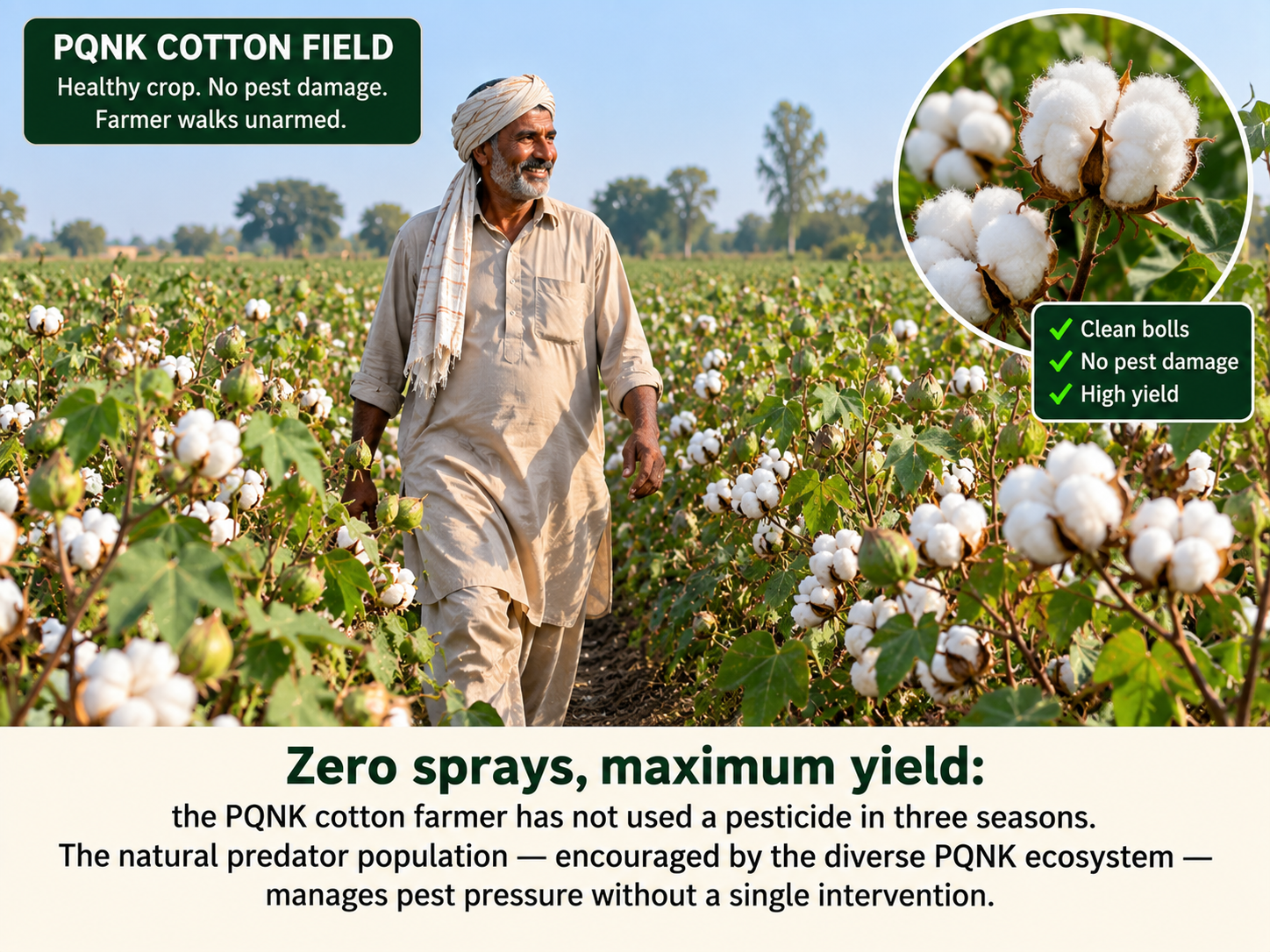
Zero sprays, maximum yield: the PQNK cotton farmer has not used a pesticide in three seasons. The natural predator population, encouraged by the diverse PQNK ecosystem, manages pest pressure without a single intervention.
BT COTTON: THE TURNING POINT AND THE LESSON
The story of BT cotton in Pakistan is one of the most instructive in the history of agricultural technology, and one of the most directly relevant to understanding how the PQNK approach to pest management was developed. It is a story that begins with genuine excitement about a biological solution, passes through commercial exploitation, arrives at disappointment and resistance, and ends with a question that the industry has never wanted to answer.
In the mid-1990s, BT cotton, varieties with the BT gene inserted into the crop genome, represented, to many farmers and researchers, a genuinely promising step away from chemical pesticide dependence. If the plant could produce its own BT toxin, it would not need to be sprayed. In 1995, Asif Sharif identified the first BT cotton seeds available in Pakistan, propagated them in Pakpattan, and observed their performance. The initial results were striking: caterpillar damage was dramatically reduced, pesticide applications fell, costs declined, and yields improved. The technology appeared to deliver what it promised.
But the observation of BT cotton performance also triggered a deeper question. If BT toxins could protect the plant when produced internally, and if BT bacteria naturally inhabit soil and can form endophytic relationships with plant roots, as was becoming understood in the scientific literature of the 1990s, then why was the genetic insertion necessary? Why were plants not already being protected by the BT bacteria in their own soil? The answer was, by then, already visible in the degraded state of the soils in which BT cotton was being grown: because those soils had been so thoroughly degraded by decades of tillage, flooding, and chemical application that the natural BT community and the wider biological system on which biological pest regulation depends had been severely disrupted. The gene insertion was a substitute for a biological service that had been deliberately, if inadvertently, destroyed.
Q How does PQNK cotton achieve zero pesticide sprays while conventional cotton requires five to eight per season?
A Conventional pest management removes predators faster than pests, because predators breed slowly and are more susceptible to contact pesticides. PQNK farming maintains the diverse community of predators and parasitoids that keeps pest species in check. When the predator community is intact, pest populations are far less likely to reach outbreak levels.
Q Why did BT cotton increase pesticide use in Pakistan rather than reduce it?
A Because the BT trait principally addresses susceptible bollworms rather than the full pest complex. As BT cotton adoption expanded in Pakistan, sucking pests such as aphids, whitefly, mites, thrips and jassids remained outside the protection provided by the BT trait, and repeated spraying against them disrupted natural enemies and eroded much of the anticipated saving in pesticide use and cost.
Q If pesticide is withdrawn, how long before the predator network recovers?
A The core predator community begins recovering within one to two seasons once pesticide inputs stop and the biological food web is fed through mulch and soil organic matter. Cotton bollworm defence through native BT bacteria is fully operational within the same timeframe.
The subsequent history of BT cotton followed a two-stage pattern. BT cotton initially reduced bollworm damage and the pesticide use directed at those target pests. As adoption expanded, however, sucking pests such as whitefly, jassids, thrips, aphids and mites, which the BT trait does not affect, became increasingly important, and repeated spraying against them eroded much of the anticipated reduction in pesticide use and spray cost. The BT gene addressed one pest category; the full spectrum of pest management still required chemicals. The farmer had not escaped the treadmill. He had merely been sold a more expensive seat on it.
PQNK cotton takes a different route, working across the whole pest spectrum through soil-biology restoration rather than a genetic or chemical fix. On documented PQNK cotton farms, caterpillar and bollworm damage is held in check by the restored BT community in and around the root zone and by the parasitic wasps that attack bollworm larvae, while sucking pests, whitefly, aphids, jassids, thrips and mites, are managed by the restored predator network and by the plant's own improved defences. Where an appropriate cotton variety is grown on mature, well-established PQNK beds, on soil that has reached a sustained biological state, such crops have produced around two hundred bolls per plant, well above the conventional average, with no pesticide application at all. That figure belongs to mature PQNK fields; it is not promised for the first transition season or for every farm.
BT cotton was sold to Pakistani farmers as liberation from the pesticide treadmill. It was, in fact, a more sophisticated seat on the same treadmill. The liberation PQNK offers is not a better gene or a better chemical. It is the restoration of the biological system that made genes and chemicals unnecessary in the first place.
THE TRANSITION: WHAT HAPPENS TO PEST PRESSURE AS PQNK ESTABLISHES
The question that farmers considering the PQNK transition most frequently ask about pest management is a practical one: what happens in the period between stopping pesticides and the biological system being fully restored? Will the farm be defenceless?
The honest answer is that the transition period requires careful management and realistic expectations. A farmer who has been applying pesticides regularly has a soil biological community that is severely depleted. The BT bacterial population is low. The predator network is sparse. The plant immune system is compromised by the imbalanced nutrition of fertiliser-dependent management. Stopping pesticides in this condition, without simultaneously implementing the full PQNK protocol, hardpan shattering, raised beds, mulch, precision planting, and the transition to biologically balanced nutrition, would indeed leave the crop vulnerable.
The PQNK approach therefore does not recommend simply stopping pesticide use as a first step. It recommends implementing the complete PQNK protocol first, and allowing pest management to follow naturally as the biological system recovers. In PQNK field experience, pesticide use in the first transition season is typically reduced substantially, often by around seventy to eighty percent, as the soil biology begins to recover and the plant nutrition improves. By the second season, most PQNK farmers report markedly lower pest pressure. By the third season, in a fully established PQNK system, PQNK farms report that routine pesticide application is neither used nor needed. These figures are field observations from PQNK farms rather than results from controlled published trials.
What the farmer observes during pest management recovery: In the first season, pest pressure may initially appear similar to the previous year, but the farmer will notice that pest populations do not reach the outbreak densities they previously did, and that the crop recovers faster from attack than it did under conventional management. The first beneficial insects to reappear are typically the fast-reproducing generalists: ladybirds, hoverflies, lacewings. In the second season, parasitic wasps and ground beetles begin to re-establish, and pest populations are visibly lower. By the third season, the farmer who walks the field sees the signs of a working BT presence: vigorous, extensively developed root systems, and pest-damaged leaves on which larvae have browned, curled and died in place rather than feeding cleanly, the pattern typical of larvae that have ingested BT toxin.
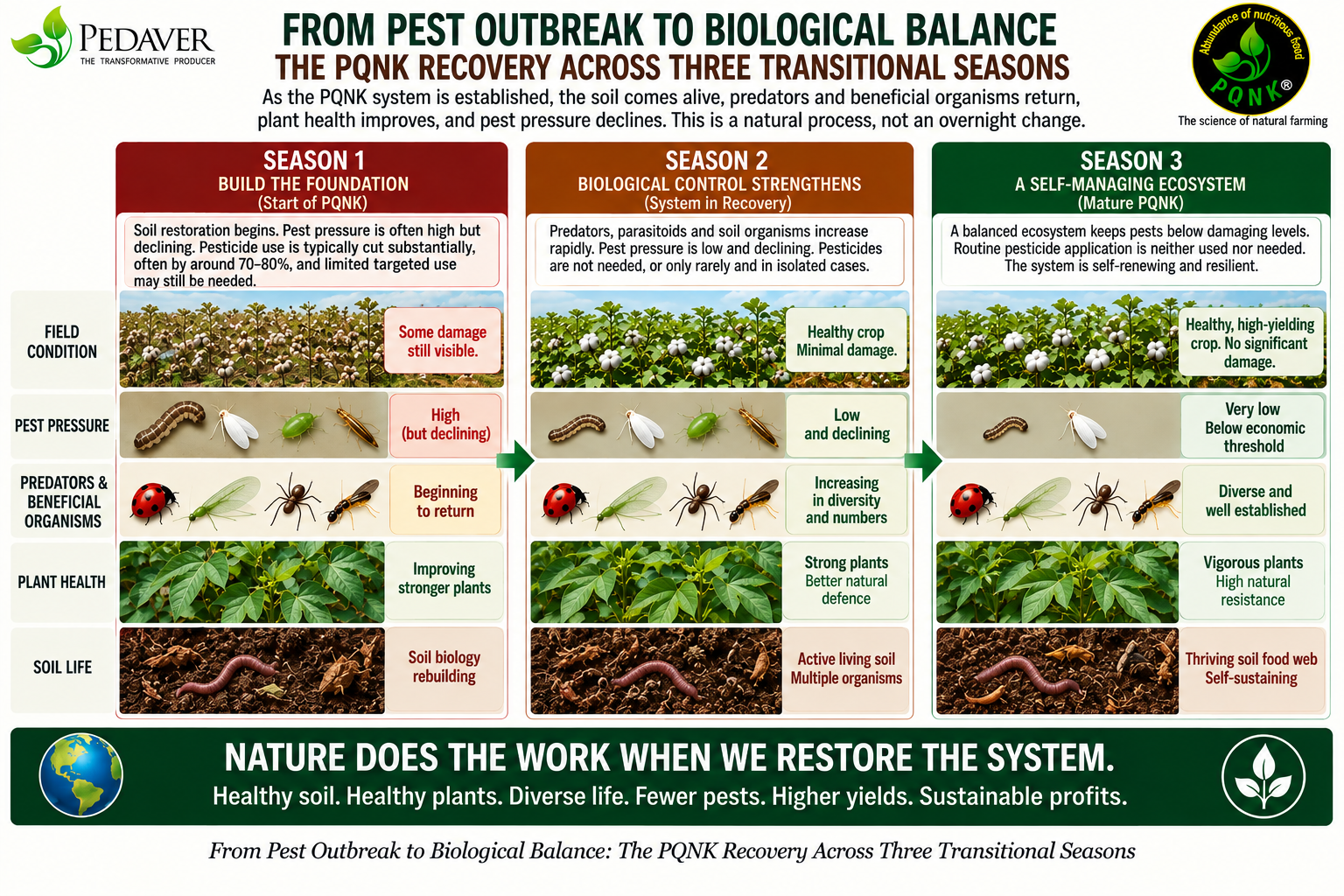
From Pest Outbreak to Biological Balance: The PQNK Recovery Across Three Transitional Seasons
SPECIFIC PEST MANAGEMENT UNDER PQNK: DOCUMENTED CASES
The claims made in this chapter are not theoretical. They are grounded in documented field experience across thousands of PQNK farms over more than a decade. The following examples illustrate how specific pest and disease challenges, which are severe management problems in conventional systems, are managed in a PQNK ecosystem without chemical intervention.
Cotton bollworm and pink bollworm. These caterpillar pests are among the most destructive in cotton production worldwide and historically among the most pesticide-intensive to manage. On PQNK cotton farms with established soil biology, bollworm damage is controlled primarily by the BT bacterial community in the rhizosphere and by the parasitic wasps that lay eggs in bollworm larvae. Documented PQNK cotton farms produce two hundred bolls per plant or more without any pesticide application, compared to conventional farms that spray five to eight times per season and still lose a significant proportion of their crop.
Fruit fly in papaya, citrus, and guava. Fruit fly infestation is a primary quality problem in papaya, citrus, and guava orchards across South Asia, cutting the yield of sound fruit and pulling down grade and price. Across PQNK papaya, citrus, and guava orchards, field observations record near-zero fruit fly damage with no trapping and no chemical intervention. The mechanism is the same in each: the plant's enhanced secondary metabolite production makes the fruit less attractive to ovipositing females, while resident predatory insects and birds consume fruit fly adults and larvae. In the Toba Tek Singh citrus comparative study, PQNK orchards showed near-zero fruit fly damage while adjacent conventional orchards required repeated chemical intervention.
Mealybug in citrus. Mealybug infestation, a severe and expensive problem in conventional citrus management, was markedly lower in the PQNK orchards observed at Toba Tek Singh. Diverse natural enemies were present and no insecticide intervention was required. Ant activity was also observed in these orchards, but its role should not be assumed to be predatory: many ant species form honeydew-feeding associations with mealybugs and can protect them from parasitoids and predators. The Toba Tek Singh observation therefore supports biological regulation of mealybug in the restored orchard ecosystem, while the organisms responsible for that regulation require specific field identification.
Nematodes. Plant-parasitic nematodes are a significant soil pest in many farming contexts, causing root damage that reduces water and nutrient uptake and makes plants vulnerable to secondary infections. In degraded ACI soils, nematode populations can reach damaging levels because the predatory nematodes and nematode-trapping fungi that regulate them have been eliminated by tillage and chemicals. In PQNK soils with restored biological diversity, the population balance between plant-parasitic nematodes and their biological regulators is maintained naturally. Nematode damage is documented as significantly lower in established PQNK fields than in adjacent conventional fields.
WHAT THIS CHAPTER HAS ESTABLISHED
The hundred-billion-dollar global pesticide market rests on a foundation that this chapter has exposed: the systematic destruction, by ACI practices, of the biological pest management system that nature provided at no cost, and the commercial exploitation of the vulnerability that destruction creates. This is not an accusation without evidence. It is a documented sequence of cause and effect that plays out on every conventionally managed farm in the world.
The natural pest protection system, BT bacteria in symbiotic relationship with plant roots, a diverse predator and parasitoid network, and the plant’s own biochemical defence system, is functional, comprehensive, and freely available in any soil that has been restored to biological health. It requires no purchase, no application, and no protective equipment.
Because it does not rest on a single mode of action, it does not drive the resistance treadmill that follows every single-chemical or single-trait solution. It does not contaminate food or water. It does not kill bees, earthworms, or predatory insects. It has been managing pest populations in natural ecosystems for hundreds of millions of years.
PQNK restores this system through the same biological protocol that restores fertility and water management: hardpan fracturing, raised beds, organic mulch, no-till precision planting, and the elimination of chemical inputs that continuously destroy the biology being rebuilt. The pest management benefit is not an additional feature of PQNK; it is an inevitable consequence of restoring the soil food web that provides it.
A body kept well by its own defences costs almost nothing to maintain; the same illness, left until it is advanced, can cost a fortune to treat and may never fully reverse. A farm is more forgiving than a body. Once the full PQNK protocol is followed, the change is quick and visible: the first crop already shows a marked improvement, the system is largely restored within a few crop cycles, and the farmer rarely needs to bring inputs in from outside the field, and then only where the soil had been degraded well beyond the average. The natural pest-protection system is free to run and quick to rebuild. The cheapest pest management is still the one that was never dismantled, but for a farm the road back is short.
The final chapter of Part One turns to the subject that Part Two will indict most thoroughly: weeds. The paradigm inversion that defines PQNK’s relationship to pest management, the pesticide is the problem, not the solution, applies with equal force to weeds. The weed that every conventional farmer spends money to kill is, in most cases, a physician diagnosing a soil problem and attempting to cure it. Understanding that inversion is the subject of Chapter Seven.
Chapter Seven: Weeds as Soil Physicians, The Paradigm Inversion