
Industrial Devastation To Natural Abundance
The Evidence · Chapter 39
Garlic, Onion, and Vegetables
Rs. 1,000,000 per Acre in Six Months: The Designed Diversity System
Release 1.0 · 2026-10-07
If you use “Listen”, the text of the page may be sent to your browser or operating system’s speech provider, such as Apple, Google or Microsoft, depending on the voice your device uses. Pedaver does not process, transmit or store any audio.
“The farmer who tells me he cannot make a living from one acre has not grown PQNK garlic on it. Garlic at Rs. 400,000 net from half an acre in one rabi season alongside onion at Rs. 200,000 from the same beds, with fenugreek, spinach, and fennel harvested weekly between them, is Rs. 1,000,000 from one acre in six months, from one rabi season. And the inputs cost almost nothing by the second season.”
Asif Sharif, Lahore, 2022
The vegetables chapter presents the most dramatic income numbers in Part Five because vegetables, grown under PQNK management on the permanent raised bed system with zero purchased inputs by the second season, produce returns per acre per season that exceed those of any annual grain crop and most annual cash crops. They do so in 90 to 160 days, on one acre, without specialised equipment, at near-zero operating cost once the biological system is established.
The designed-diversity system is the key concept of this chapter. PQNK vegetables are not grown as a conventional monoculture vegetable plot, replaced by a different vegetable monoculture each season. They are grown as a designed, complementary community of six to eight species planted simultaneously on the same beds, producing simultaneous income streams and biological benefits to each other and to the soil.
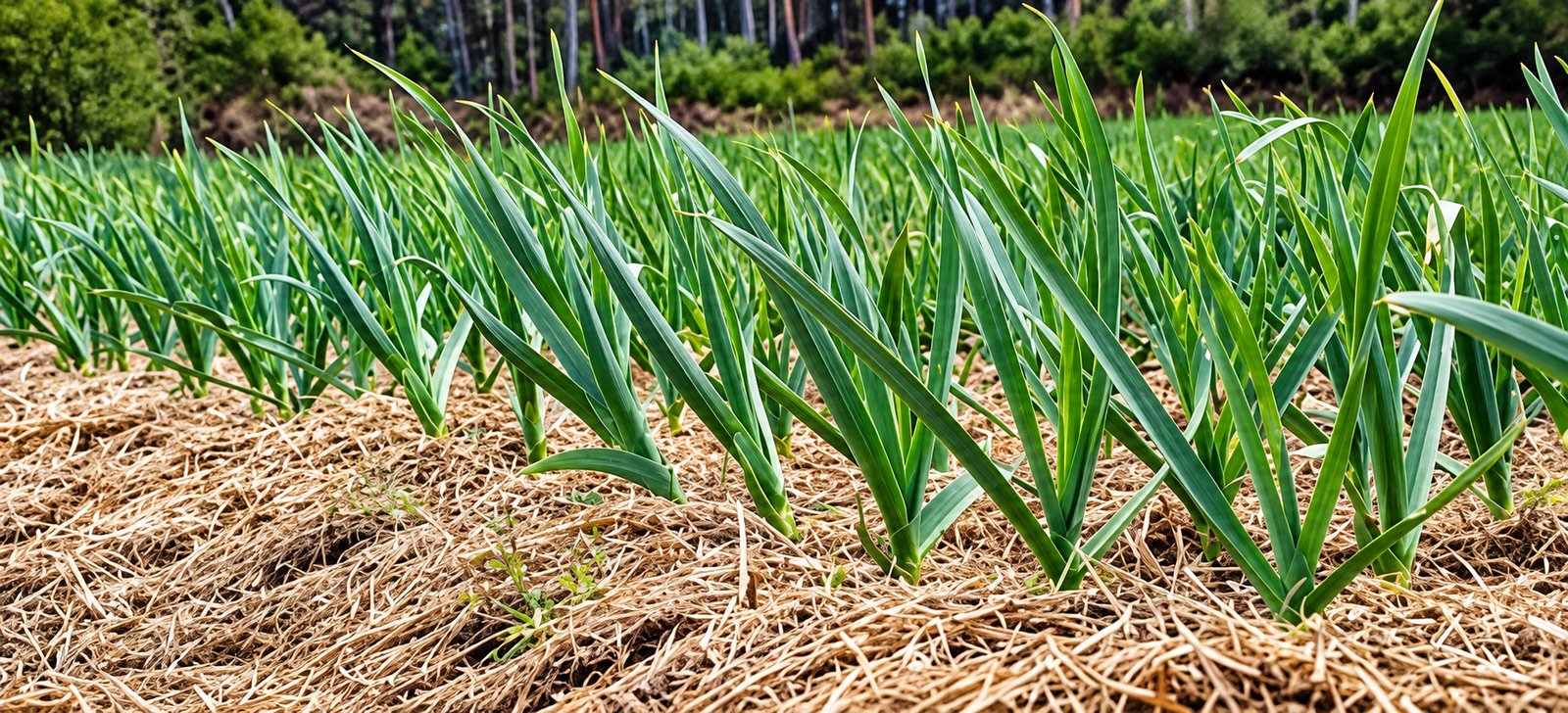
PQNK garlic growing through organic mulch on a permanent raised bed
GARLIC: THE RS. 400,000 HALF-ACRE
Garlic is the highest-value bulb crop in Pakistan's vegetable system and the crop most dramatically transformed by PQNK's biological soil management. Garlic bulb size and quality are direct functions of the mineralogical completeness of the soil the clove grows in. A biologically active soil, rich in calcium, sulphur, and micronutrients delivered by the mycorrhizal network, produces bulbs measurably larger, denser, and more aromatic than the same variety grown in chemically managed soil.
PQNK garlic in a biologically active soil produces bulbs measurably larger than the same variety in the same district grown conventionally. The size premium translates directly into market premium: A-grade garlic, the largest head size, commands prices 30 to 50 percent above B-grade at the wholesale level. The PQNK garlic bed consistently produces 70 to 80 percent A-grade against the conventional 40 to 50 percent; the same grade premium appears in the Toba Tek Singh citrus records in Chapter Forty.
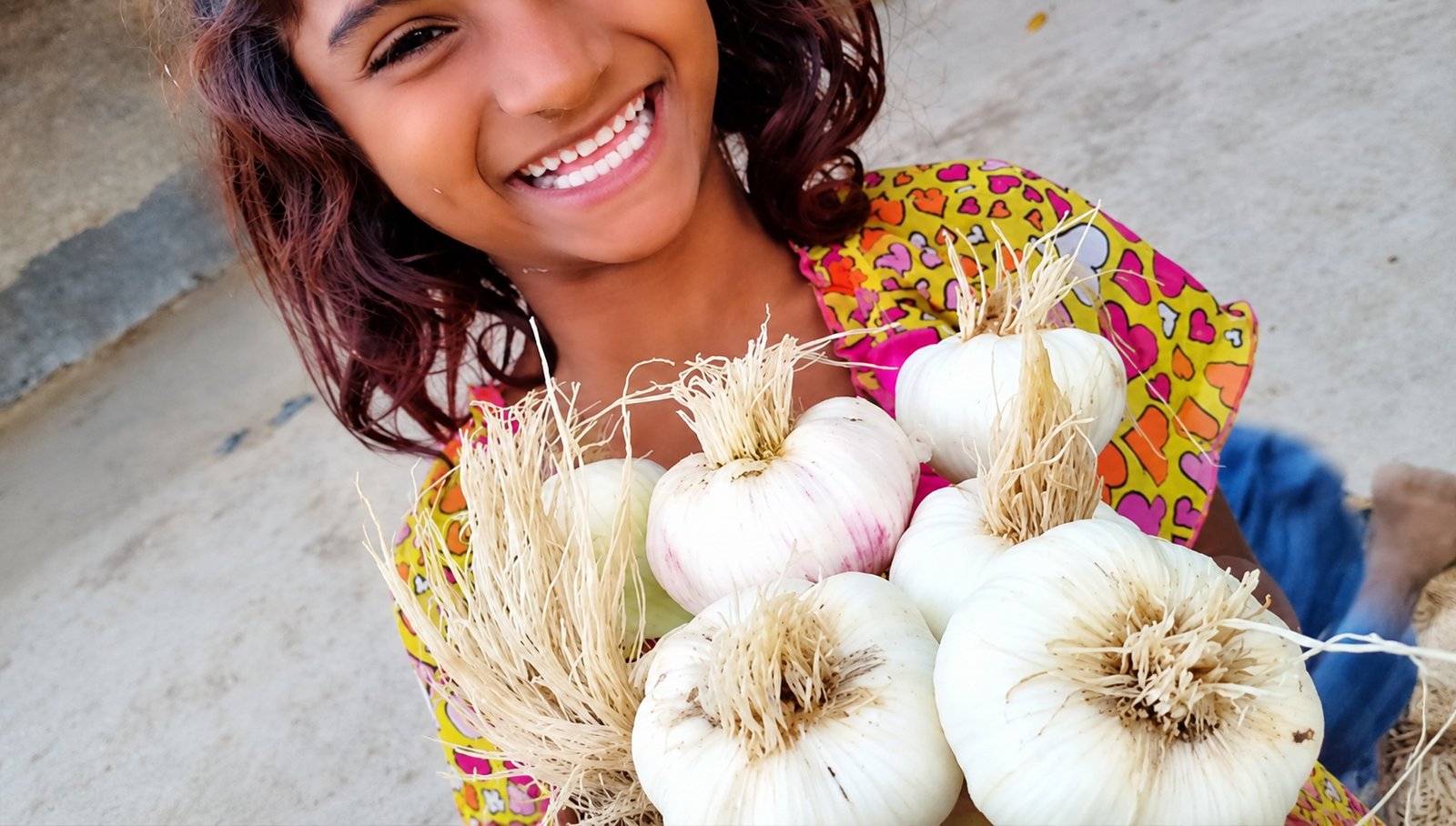
Large, firm PQNK garlic bulbs at harvest
The garlic protocol: PQNK garlic is planted in October to November on permanent raised beds using individual clove placement at 4-by-4 inch spacing through the established mulch layer. Each clove is placed tip-up at the target density without soil disturbance. No pre-planting soil preparation, no fertiliser application, no soil sterilisation. The clove germinates into biologically active soil and the root system develops within the first two weeks, establishing the mycorrhizal connection that will define bulb development for the remainder of the 140-day growing cycle.
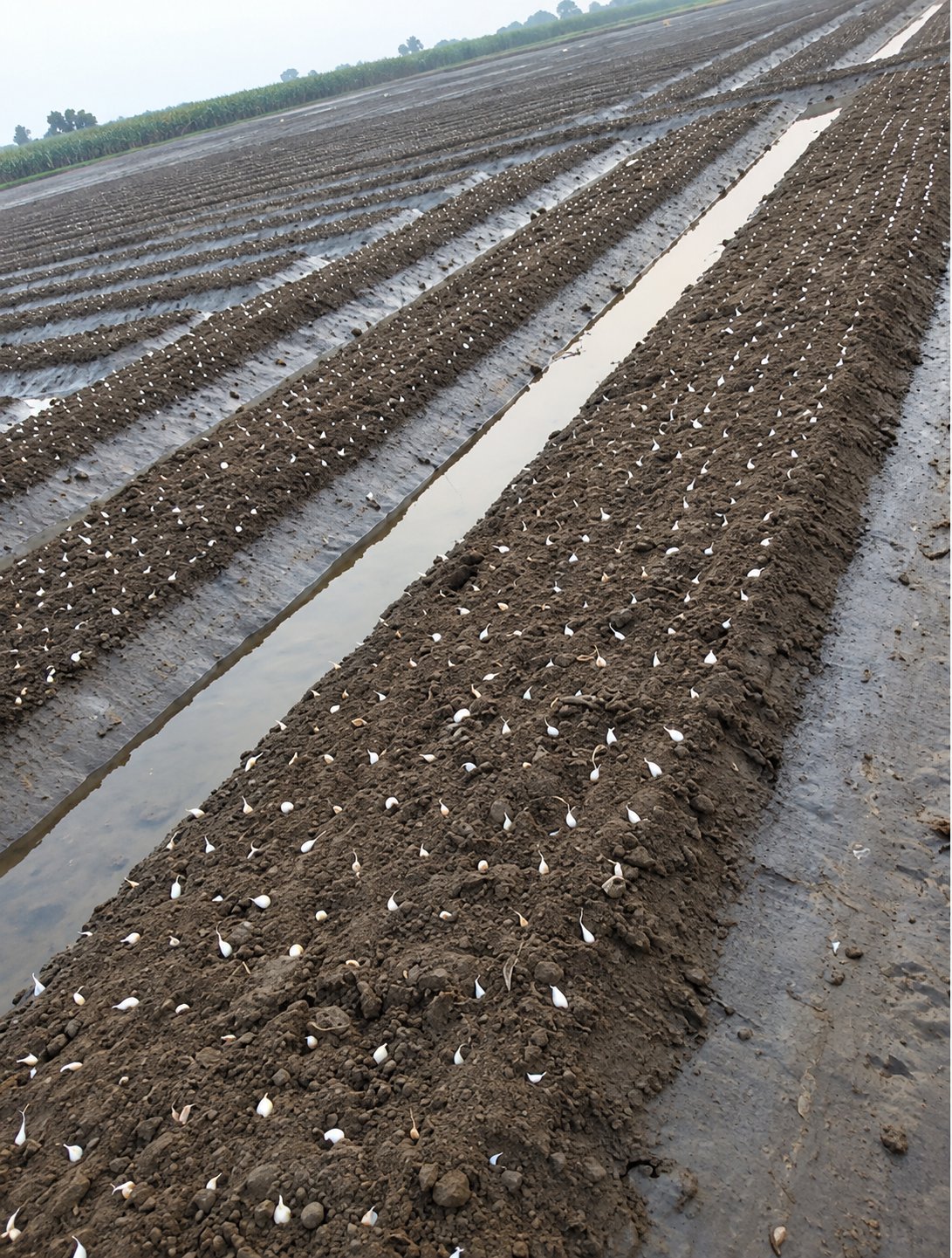
Garlic cloves placed tip-up on a moist PQNK bed
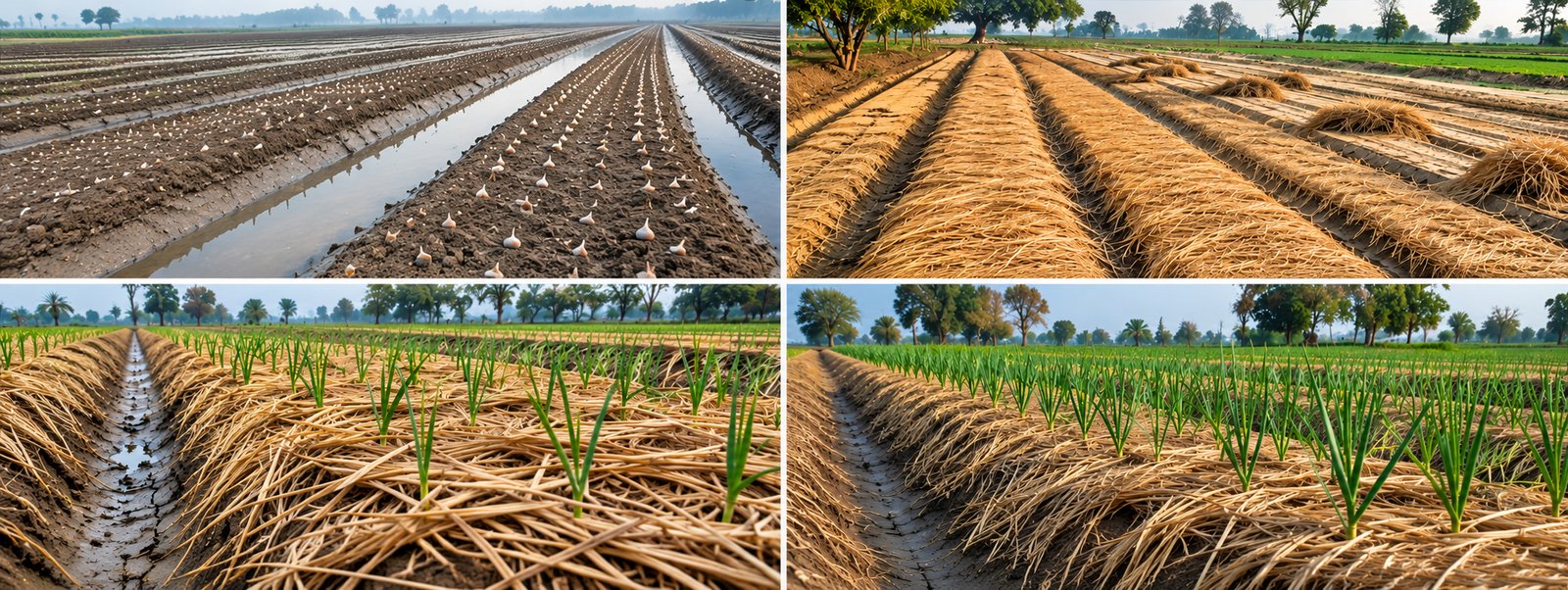
On the permanent bed: moist soil, organic mulch, and garlic emerging through the mulch
The Density Revolution
The quantity of garlic and onion that a PQNK bed produces per acre is not a minor improvement on conventional yield. It is a structural transformation in what an acre of land can carry. Conventional allium planting densities are constrained by two factors: the width of the seedbed determines the number of rows, and the compacted soil limits bulb expansion. PQNK removes both constraints simultaneously. The 42-inch permanent raised bed accommodates nine planting rows at 4-inch spacing, and the biologically active, uncompacted soil allows roots to expand laterally without restriction.
The result is a planting density of about 235,000 plants per acre for both onion and garlic: 4-by-4 inch spacing, nine rows on the 42-inch bed top. With bulbs of 20 to 50 grams, that is 118 to 294 maunds per acre at harvest, and with garlic at just Rs. 100 per kilogram at the wholesale level, the per-acre revenue from garlic alone ranges from about Rs. 470,000 to over Rs. 1,100,000, even at the lowest wholesale price. The input cost is near zero by the second PQNK season. The net return from half an acre of PQNK garlic routinely exceeds the net return from a full acre of conventionally managed garlic.

| Row to row & plant to plant distance | Plants per acre | Gram weight | Bulbs in 1 kg | Kg per acre | Maunds per acre | Price per kg (Rs.) | Income Rs. per acre |
|---|---|---|---|---|---|---|---|
| 4 × 4 inches: 9 rows on a 42-inch bed top | 235,224 | 20 | 50 | 4,704 | 118 | 100 | 470,448 |
| 4 × 4 inches: 9 rows on a 42-inch bed top | 235,224 | 50 | 20 | 11,761 | 294 | 100 | 1,176,120 |
Onion and garlic plants and yield per acre: 4-by-4 inch spacing, nine rows on a 42-inch bed top, at Rs. 100 per kg
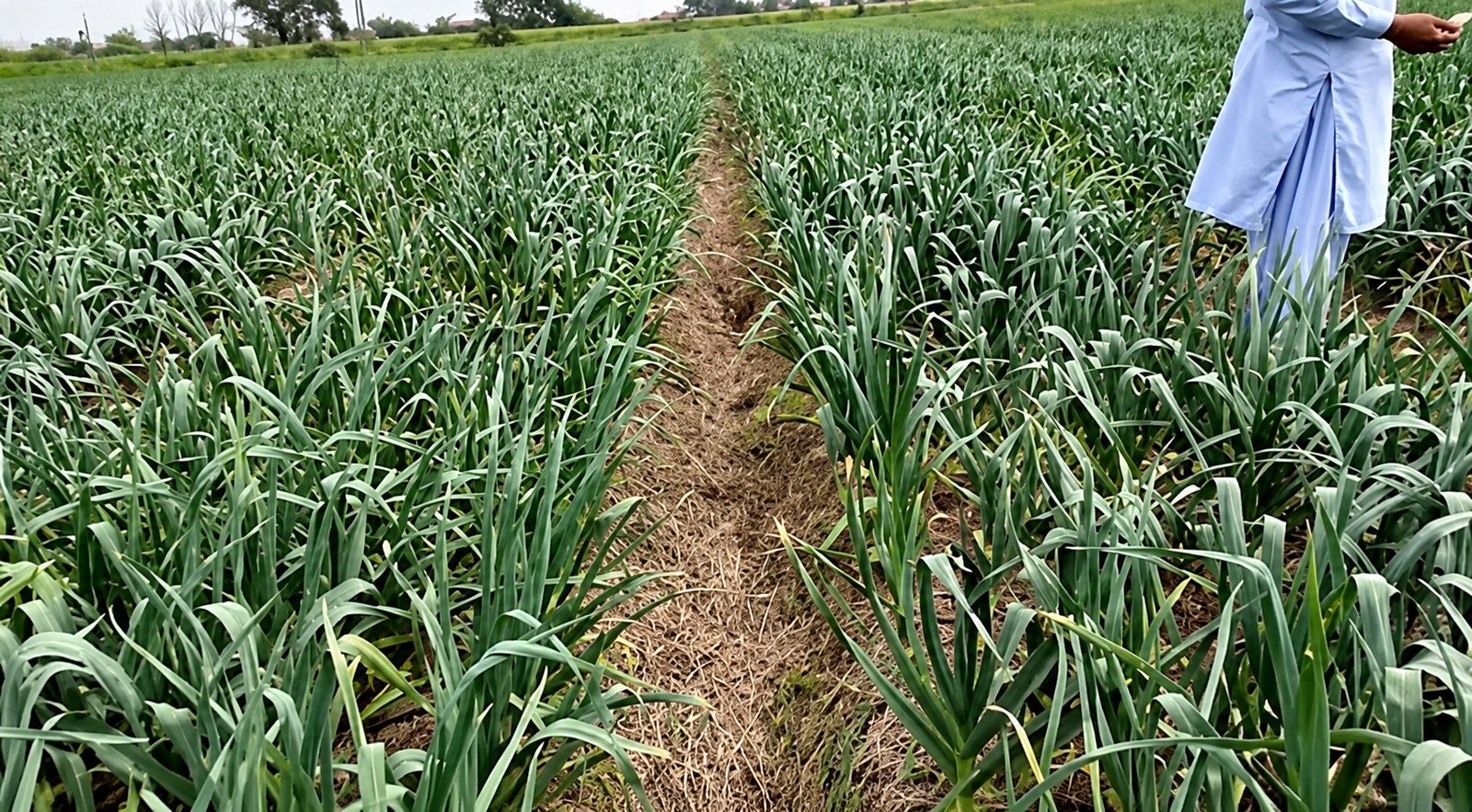
A dense PQNK garlic crop on permanent raised beds
Propagation Methods
PQNK garlic and onion production uses three propagation routes, each appropriate to different farm circumstances and resource availability.
Direct clove and seed planting: Garlic cloves and onion sets are planted directly into the raised bed surface at the target density. The PQNK soil, loose, biologically active, and moisture-retaining, provides ideal germination conditions without any pre-planting preparation. Emergence is typically faster than in conventionally tilled beds because the mulch layer maintains the consistent temperature and moisture that germination requires. This is the standard route for established PQNK farms where the bed system is functioning.
Onion from true seed: Onion can be grown from true seed in PQNK systems with higher multiplication ratios than from sets. The seed is sown directly with no-till planter onto the mulched bed surface and covered lightly. Germination is rapid in the biologically active surface layer. True-seed production is particularly valuable for farmer seed sovereignty, as it eliminates the annual purchase of sets and allows selection of high-performing individuals from the PQNK harvest for the next generation.
Transplanting from nursery: Where large areas are to be established quickly, a nursery-to-field transplanting system allows precise density management and earlier bulb initiation in the main field. Nursery seedlings at the four-leaf stage are transplanted into the permanent beds at the target 6-by-4 inch or 6-by-6 inch spacing. Transplanting is done in the late afternoon to minimise transplant shock, and the mulch layer is immediately re-applied around transplant stems to maintain surface moisture.
ONION: THE YEAR-ROUND INCOME SUPPLEMENT
Onion is Pakistan's most consumed vegetable and the one most subject to the seasonal price volatility that PQNK's circular production model is specifically designed to navigate. Conventional onion farming concentrates planting in one or two seasonal windows, creating the supply surges and price collapses that destroy onion farmers' income in good production years and the shortages and price spikes that hurt consumers in poor ones.
PQNK onion on permanent raised beds with rapid between-cycle transition achieves the same cycle multiplication as PQNK potato: the 90 to 110-day growing cycle fits three to four cycles per year on the same beds, with two to three weeks of mulch recovery between cycles. The farm that grows onion conventionally in one cycle per year with one price exposure is generating income from one roll of the dice. The PQNK farm growing three cycles selects the harvest timing for each to maximise price capture across the seasonal cycle.
PQNK onion also produces measurably firmer bulbs with lower water content and longer shelf life than conventionally flood-irrigated onion. Post-harvest losses in conventional onion can reach 20 to 30 percent within four to six weeks of harvest from fungal colonisation and sprouting. PQNK onion stored under ambient conditions at farm level shows losses of less than 5 percent over the same period, from the combination of lower cellular water content, higher quercetin concentration in the outer layers, and the absence of fungal pressure in the biologically balanced growing environment. Weight loss in storage is also far less.
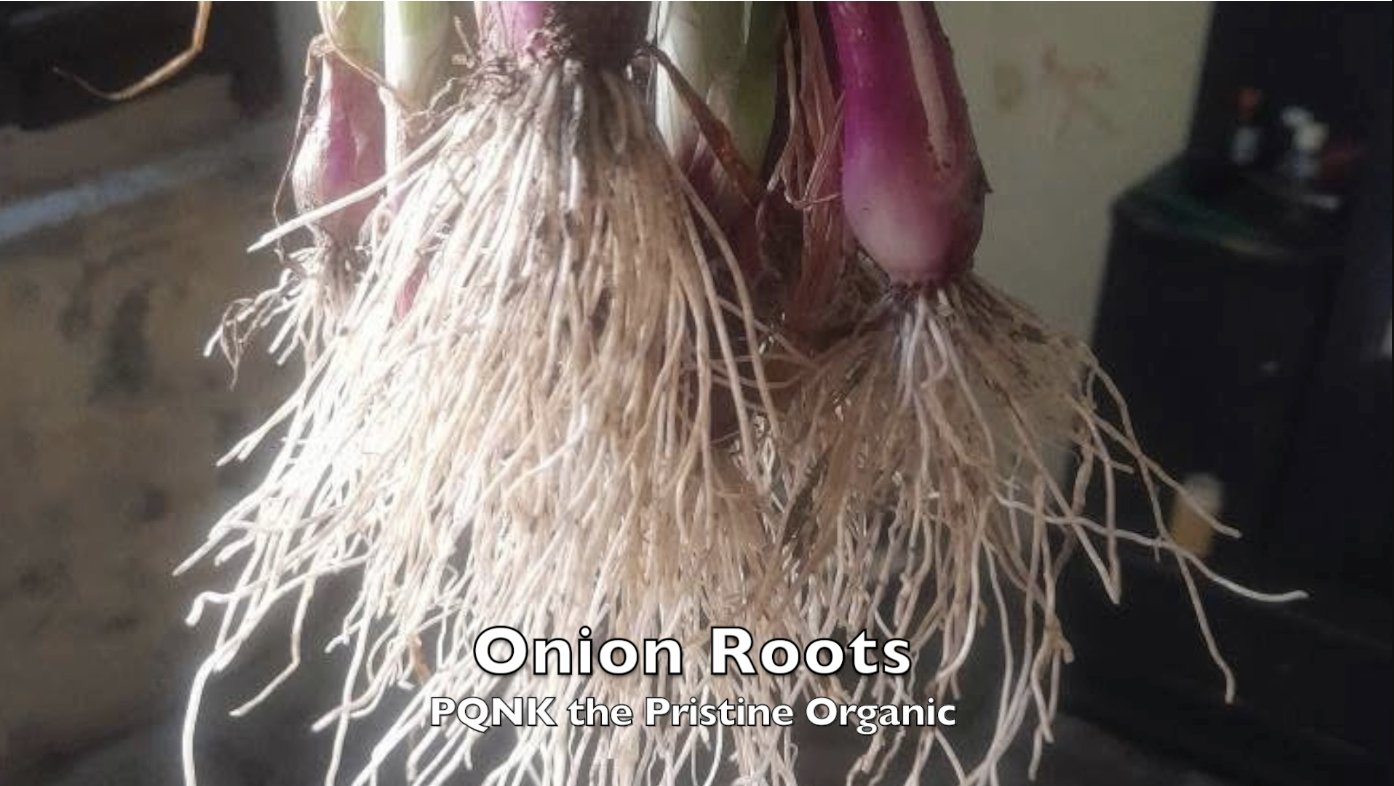
Onion roots from a PQNK bed
THE DESIGNED DIVERSITY SYSTEM: SIX CROPS AT ONCE
The Rs. 1,000,000 per acre in six months is not achieved by growing one high-value vegetable. It is achieved by growing six to eight species simultaneously in a designed spatial arrangement on the PQNK permanent beds, each occupying a different vertical and temporal niche, each contributing a different income stream, each providing biological benefit to its companions.
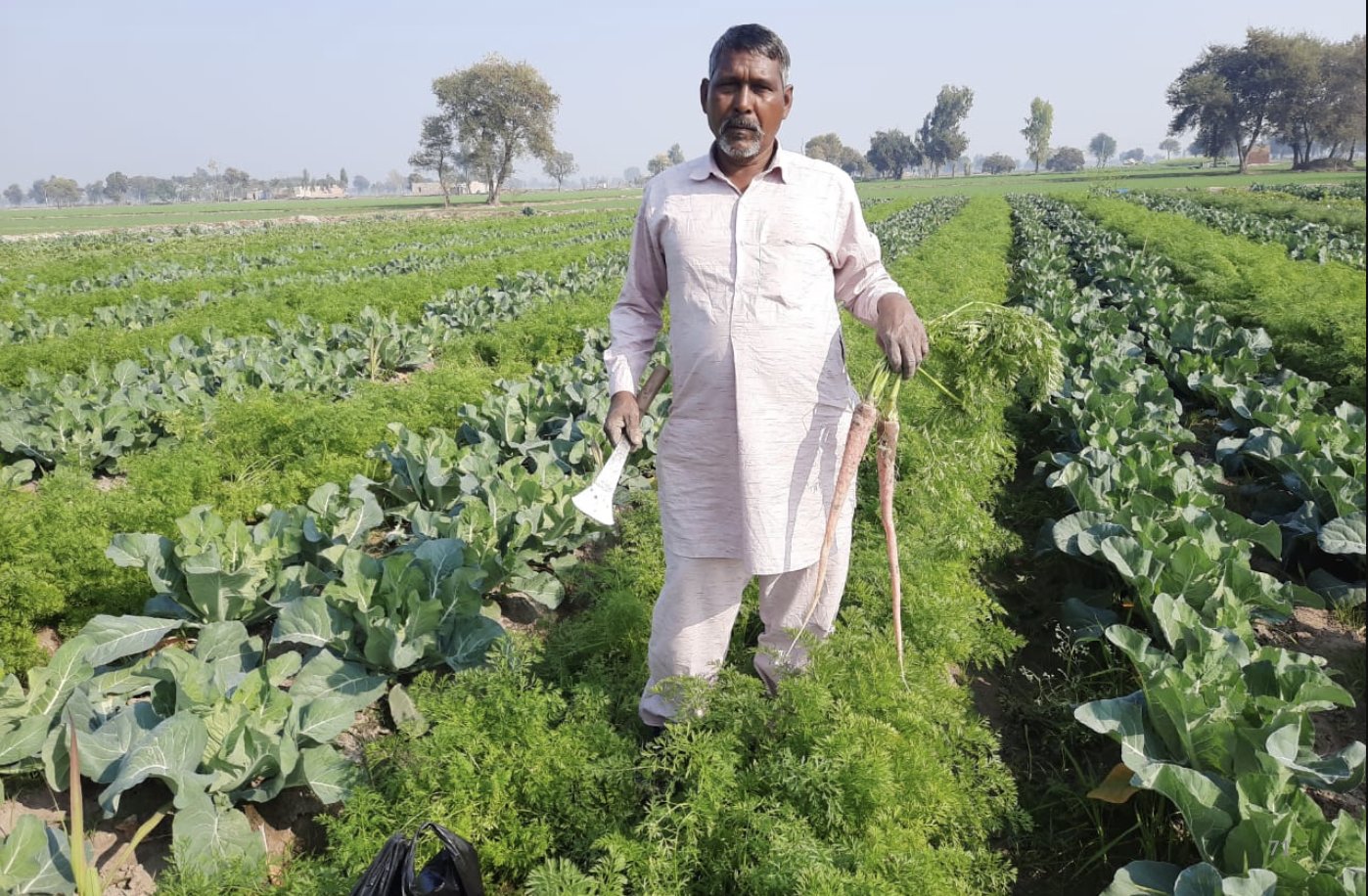
A farmer in a PQNK mixed-vegetable field, with several crops growing together on permanent beds
A representative six-month PQNK vegetable design for the rabi season (October to March) might look as follows. Main bed crops: garlic in rows 1 and 3 at 4-by-4 inch spacing. Companion in row 2: fenugreek at 4-by-4 inch spacing for fresh leaf harvest every 15 to 20 days. Bed edges: onion sets at 4-inch spacing along both furrow margins. Inter-row fill: spinach or coriander at broadcast density between the garlic rows for progressive leaf harvest. End-of-bed clusters: two to three fennel plants per bed for aromatic herb market.
This design produces five to six simultaneous income streams from the same acre: garlic bulbs (primary, high-value harvest at 140 to 160 days), onion bulbs (secondary, high-volume harvest at 90 to 110 days), fenugreek leaves (weekly fresh market harvest from day 30 to harvest), spinach and coriander (continuous cut-and-come-again harvest), and fennel for the aromatic herb market. The conventional farmer goes to market once. The PQNK designed-diversity farmer goes to market twice a week. There is also a sizable market for fresh (raw) onions, which makes circular production of onion a considerable option as well.
TRANSITION PROTOCOL: FROM CONVENTIONAL TO PQNK ALLIUM PRODUCTION
For farms transitioning from conventional to PQNK allium production, the recommended sequence applies the founding physical interventions before any planting occurs. Each step builds the condition that makes the next step more effective, and none can be skipped without reducing the biological outcome of the system as a whole.
Step One: one deep subsoiler pass, to about 22 inches, to fracture the hardpan. Alliums are particularly sensitive to soil compaction because their roots are entirely confined to the top 20 to 30 centimetres. In compacted soil, the restricted root zone limits bulb size regardless of nutrient availability. Fracturing the hardpan allows the root system to access the full moisture and mineral profile below, which is the primary driver of bulb size increase in PQNK alliums. This is a conversion operation, not a recurring tillage practice.
Step Two: deep water wash and pH correction. Give the opened field a deep water wash to move accumulated soluble salts and the chemical residues of years of synthetic fertiliser use below the active root zone. Where soil pH is 8 or above, approximately 8 kg of sulfuric acid per acre is applied with the wash water; this is a one-time corrective step, not a routine input. Alliums are sensitive to soil pH, performing best at 6.0 to 7.0. No lime and no gypsum application is needed in most PQNK transitions. The wash followed by the biological activity of the bed is sufficient.
Step Three: permanent raised bed formation. The 42-inch bed top with 18-inch furrows is the standard PQNK geometry. Beds are shaped once and used for the duration of the farming operation. The raised geometry concentrates biological activity in a defined root zone, and allows the mulch cover to function as a continuous insulating and feeding layer without interruption between crop cycles. A water wash and a growing cover crop then open the soil pores for infiltration and aeration: the cover crop’s roots stay in the soil and its foliage becomes mulch. Once the hardpan has been properly broken, water soaks into the bed within a short time instead of standing on it: in one PQNK field, 13 inches of rain that fell in eight hours soaked in, while the neighbouring conventional fields stood under water.
Step Four: organic mulch for high-density planting. If the cover crop does not produce enough foliage for a dense cover, add organic mulch: straw, dry grass, or sugarcane waste applied to the bed surface at three to four inches depth. The mulch regulates soil temperature into the 13 to 26 degree Celsius range that allium bulb development requires, preventing the cold stress that delays emergence and the heat stress that triggers premature bolting. Planting at the target density follows directly into the mulch layer, preferably with no-till planter such as SIPP or VIPP, with no pre-planting soil disturbance.
THE CROP COMPARISON TABLE
The following table summarises PQNK performance across the main vegetable crops, with conventional comparison and the key PQNK advantage for each.
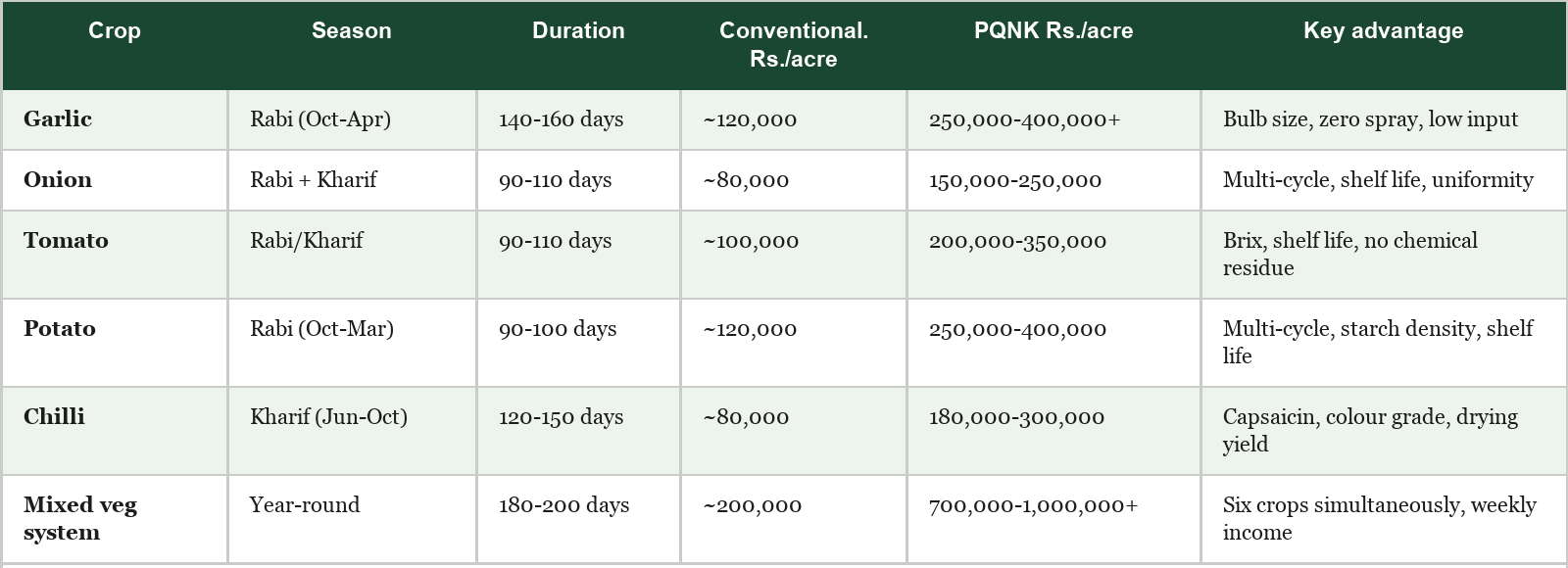
| Crop | Season | Duration | Conventional. Rs./acre | PQNK Rs./acre | Key advantage |
|---|---|---|---|---|---|
| Garlic | Rabi (Oct-Apr) | 140-160 days | ~120,000 | 250,000-400,000+ | Bulb size, zero spray, low input |
| Onion | Rabi + Kharif | 90-110 days | ~80,000 | 150,000-250,000 | Multi-cycle, shelf life, uniformity |
| Tomato | Rabi/Kharif | 90-110 days | ~100,000 | 200,000-350,000 | Brix, shelf life, no chemical residue |
| Potato | Rabi (Oct-Mar) | 90-100 days | ~120,000 | 250,000-400,000 | Multi-cycle, starch density, shelf life |
| Chilli | Kharif (Jun-Oct) | 120-150 days | ~80,000 | 180,000-300,000 | Capsaicin, colour grade, drying yield |
| Mixed veg system | Year-round | 180-200 days | ~200,000 | 700,000-1,000,000+ | Six crops simultaneously, weekly income |
The mixed vegetable system in the final row is the One Acre Prosperity model's vegetable component: a designed diversity planting that generates Rs. 700,000 to 1,000,000 per acre per six-month season. Two such seasons per year, possible because the permanent beds allow a two to three week turnaround between cycles, produce Rs. 1,400,000 to 2,000,000 per acre per year from the vegetable component of the one-acre farm.
WHY PQNK VEGETABLES ARE NUTRITIONALLY SUPERIOR
The bio-potentiation chain established in Part One explains why PQNK vegetables contain measurably higher concentrations of the compounds that determine their nutritional and flavour quality. The mechanism is the same across all crops: a biologically active soil delivers a complete mineral spectrum to the plant via the mycorrhizal network, which incorporates it into the full range of vitamins, antioxidants, flavonoids, and secondary metabolites that define nutritional density.
Garlic: PQNK garlic contains measurably higher allicin content than conventionally grown garlic from the same variety. Allicin is the sulphur compound responsible for garlic's antimicrobial, cardiovascular, and anti-inflammatory properties. Its concentration depends on the availability of sulphur from the mycorrhizal mineral delivery. PQNK garlic consistently shows 20 to 35 percent higher allicin content per gram of fresh weight than conventionally managed garlic from the same district.
Onion: PQNK onion contains higher quercetin content, the flavonoid antioxidant whose concentration is the primary marker of onion's anti-inflammatory health value, in the outer layers of the bulb. Quercetin concentration is a function of full-spectrum mineral nutrition and the absence of the chemical stress that suppresses secondary metabolite production in synthetic-input crops.
The quality outcomes extend consistently across all alliums: deeper colour, stronger aroma, firmer texture, and longer shelf life. These are not incidental benefits. They are the predictable result of the biological soil system delivering what the plant's genetics require to produce its full biochemical expression. PQNK does not produce better garlic by changing the garlic. It produces better garlic by restoring the soil that the garlic was designed to grow in.
The shelf life advantage is commercially significant. Conventional garlic and onion harvested from degraded soils often shows early sprouting and fungal colonisation within weeks of harvest. PQNK produce stored under ambient farm conditions shows losses of less than 5 percent over the same period. For the farmer, longer shelf life means more market timing flexibility. For the supply chain, it means less waste. For the consumer, it means fresher product at retail.
THE MARKET OPPORTUNITY: PREMIUM POSITIONING
Pakistan's vegetable market is in an early stage of the consumer quality awareness that characterises more mature markets. The majority of vegetable transactions are price-based rather than quality-based, and the premium available for certified chemical-free produce is not yet systematically captured at retail level. But the trajectory is clear: in metropolitan markets, in premium supermarket channels, and in export-oriented supply chains, the premium for quality-verified chemical-free produce is real and growing.
The PQNK farmer who positions their produce as chemical-free and biologically grown is not ahead of the market's direction. They are at the market's direction. Several PQNK vegetable farmers in Punjab's metropolitan fringe districts have established direct supply relationships with premium supermarket chains and restaurant groups that pay above-wholesale prices for PQNK garlic, onion, and leafy greens. The premium ranges from 20 to 40 percent above conventional wholesale. Combined with the zero input cost of the PQNK system, this premium is entirely captured as additional farmer income.
WHAT THIS CHAPTER HAS ESTABLISHED
Garlic, onion, and the designed-diversity vegetable system represent the highest income-per-acre opportunity in the PQNK evidence base for annual crop production. Rs. 1,000,000 or more from one acre in six months of combined PQNK allium and companion vegetable production, at near-zero input cost by the second season, is the documented outcome of the designed-diversity protocol applied on permanent raised beds in biologically active soil.
The density advantage, 235,000 to 250,000 bulbs per acre against conventional monoculture densities, the quality outcomes in size, allicin, and shelf life, and the market positioning potential for chemical-free premium pricing together make the PQNK vegetable system the income foundation of the One Acre Prosperity model. The next chapter turns to orchards, citrus, mango, and the restoration of dying trees.
Chapter Forty: Orchards, Citrus, Mango, and Dying Trees