

Industrial Devastation To Natural Abundance
The Discovery · Chapter 16
Building the Machine
1973-2007: Mastering Industrial Agriculture Before PQNK
Release 1.0 · 2026-09-14
If you use “Listen”, the text of the page may be sent to your browser or operating system’s speech provider, such as Apple, Google or Microsoft, depending on the voice your device uses. Pedaver does not process, transmit or store any audio.
“You cannot see what is wrong with a system from the outside. You must go in. You must master it. You must understand it so completely that when you see its failure, you recognise it not as someone else’s problem but as your own creation. That is when you know enough to fix it.”
Asif Sharif, Lahore, 2022
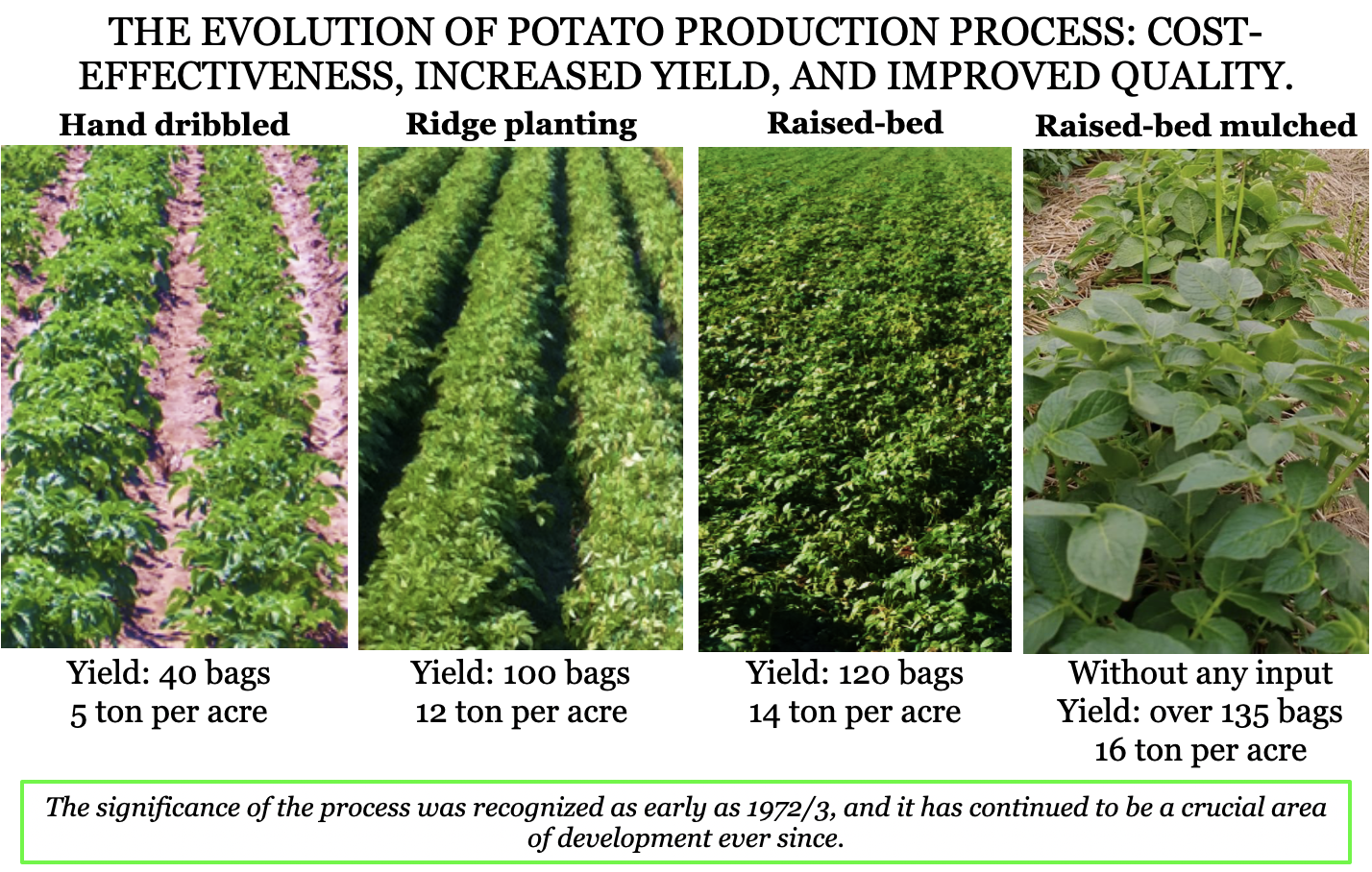
The story of PQNK does not begin with a rejection of industrial agriculture. It begins with an embrace of it, and with a single question that first became visible on a potato field: how much a crop could produce without becoming more dependent on what was done to it to produce it. The progression shown above is where Asif Sharif first traced that question in practice: hand-dribbled planting yielding roughly 40 bags, 5 tonnes per acre; ridge planting raising that to 100 bags, 12 tonnes; raised beds to 120 bags, 14 tonnes; and raised beds under mulch, without a single purchased input, to more than 135 bags, 16 tonnes. He recognised the significance of that progression as early as 1972/73, and it remained a live area of his own development work for decades afterward. Before he could understand what was wrong with the system he would eventually move beyond, he first had to understand that system from within, at the operational level where machinery, seed, irrigation, crop protection, markets and policy meet the farmer. The first twenty-one years, from 1973 to 1994, provided that mastery. The policy, biotechnology and irrigation episodes recorded later in this chapter show how the questions those years generated kept developing, quietly, for another decade before PQNK emerged formally in 2008.
This chapter marks a departure from the analytical register of the chapters before it. Parts One and Two argued through biology, chemistry, economics and institutional history. Part Three is a human and field story: the account of a man who spent his working life in the fields, the machinery halls and the government offices of Pakistan’s agricultural transformation, who gradually came to question what that transformation was doing to soil, farmers and the production system itself, and who ultimately redirected his engineering toward an alternative.
It matters to the book because PQNK did not emerge from opposition to mechanisation or from distance from commercial agriculture. It emerged after decades of practical engagement with the system itself. That history explains why PQNK combines biological principles with engineering, machinery and field management, rather than treating natural farming as a return to a pre-mechanised past.
1973: ARRIVAL AT THE FRONTIER
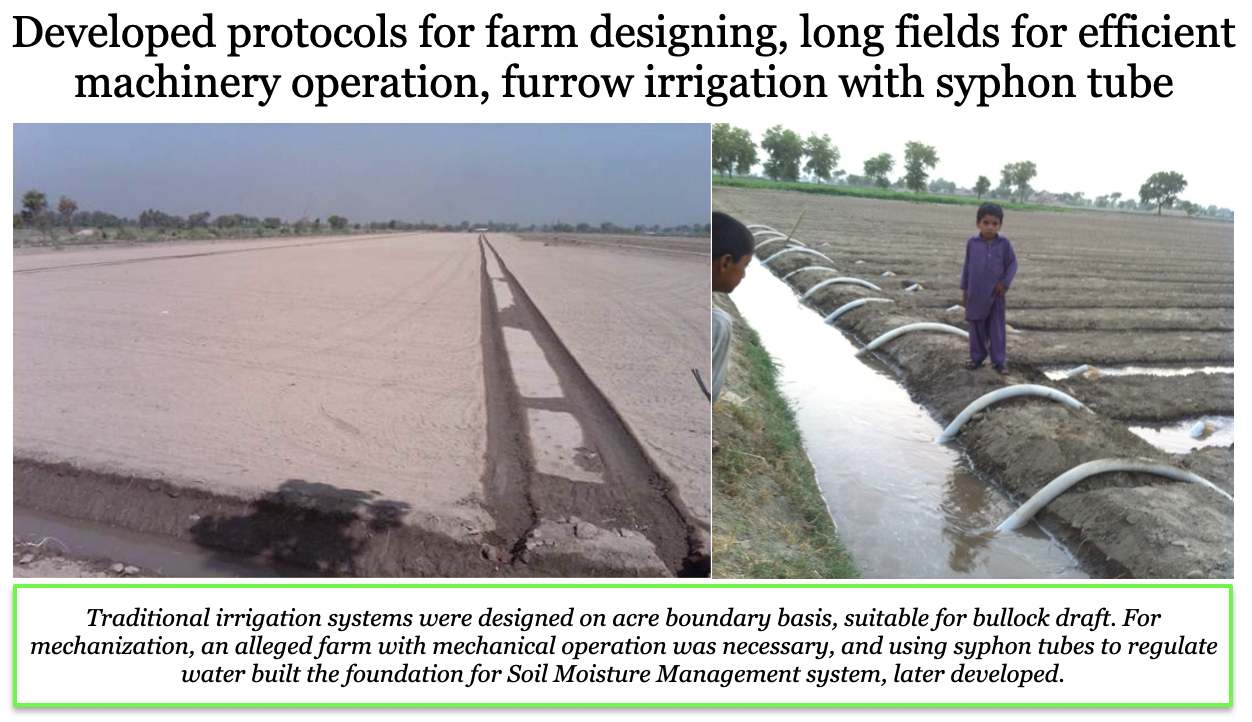
Farm design itself became part of that early work. Traditional irrigation layouts in Punjab followed the Bunna-Kiarri pattern, small fields bounded on an acre-by-acre basis and suited to bullock-drawn implements, not to machinery. Mechanised operation required a different geometry: long, uniform fields that let machinery run efficiently from end to end. Furrow irrigation, regulated at each furrow by a syphon tube rather than released and left to find its own level across the whole field, gave the water a precision the old boundary-based layout never had. That precision, developed here for entirely practical, mechanical reasons, built the foundation for what would later become Soil Moisture Management, the PQNK principle that treats how carefully water is regulated, not merely how much is applied, as the thing that actually determines whether a crop thrives.
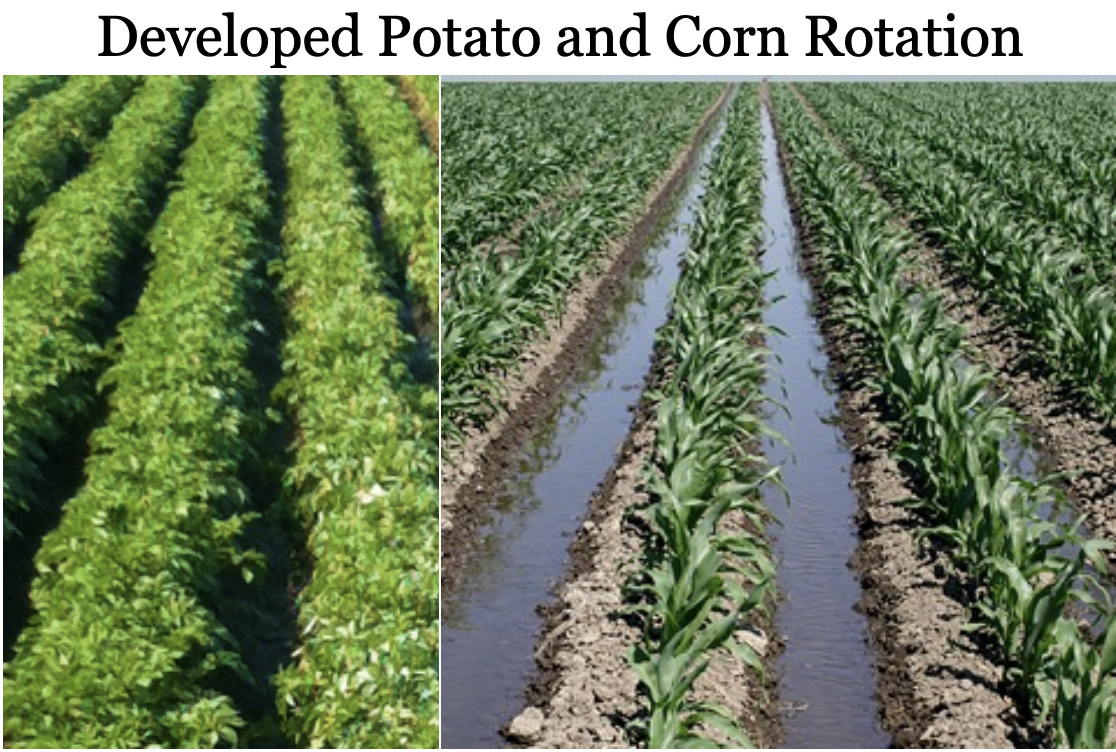
Planting potato in October, harvesting in January; immediately planting corn, harvesting in May; replanting corn soon after, harvesting in September and replanting. The new cycle starts with potato.
One example from this period illustrates the pattern. Working with imported seed, from Cargill, Deltapine and other suppliers, for corn, cotton, sunflower and potato, Sharif developed a potato-corn-corn-potato rotation that drew three crops from the same land in a single year: potato planted in October and harvested in January, corn planted immediately after and harvested by May, a second corn crop planted and harvested by September, and the cycle restarting with potato. The rotation did not depend on more land or more purchased input. It depended on using the land’s own calendar more completely, and its effect reached well beyond his own fields: potato became a major cash crop across the districts where the rotation spread, and hundreds of cold-storage facilities were built in the years that followed to hold it. It was the same logic that would later shape PQNK: more production drawn from what the land and the season already offered, not from adding to them.
In 1973, Asif Sharif began his agricultural engineering career during a period of rapid agricultural modernisation in Pakistan. The Green Revolution had already reshaped crop production, and government, international development organisations and private industry were promoting mechanisation, improved seed, irrigation and agrochemical inputs as the route to higher production. Over the years that followed, tractors, combine harvesters, precision planters, sprayers, land-levelling equipment and increasingly specialised crop-production technologies became central to his work.
Sharif’s role in this transformation was practical and direct. He imported, demonstrated, adapted and operated machinery for planting, irrigation, harvesting and land preparation, while working with farmers across Punjab. His own chronological record documents early use of long furrows, ridge planting, syphon-tube irrigation and foliar application in the 1970s, followed by machinery and crop innovations that expanded through the 1980s and 1990s. The immediate gains were often real: operations became faster, placement more precise, harvesting losses could be reduced, and improved crop material could raise output under favourable conditions.
He was helping build the production architecture that Part Two has examined critically. He did so because, at the time, its advantages were visible and persuasive. What became clear only through repeated seasons was that higher short-term output could coexist with rising dependence on tillage, irrigation, purchased nutrients and crop-protection interventions. That tension, between visible production and the condition of the underlying system, became one of the questions that eventually led to PQNK.
COTTON AND THE FIRST OBSERVATION: 1976-1977
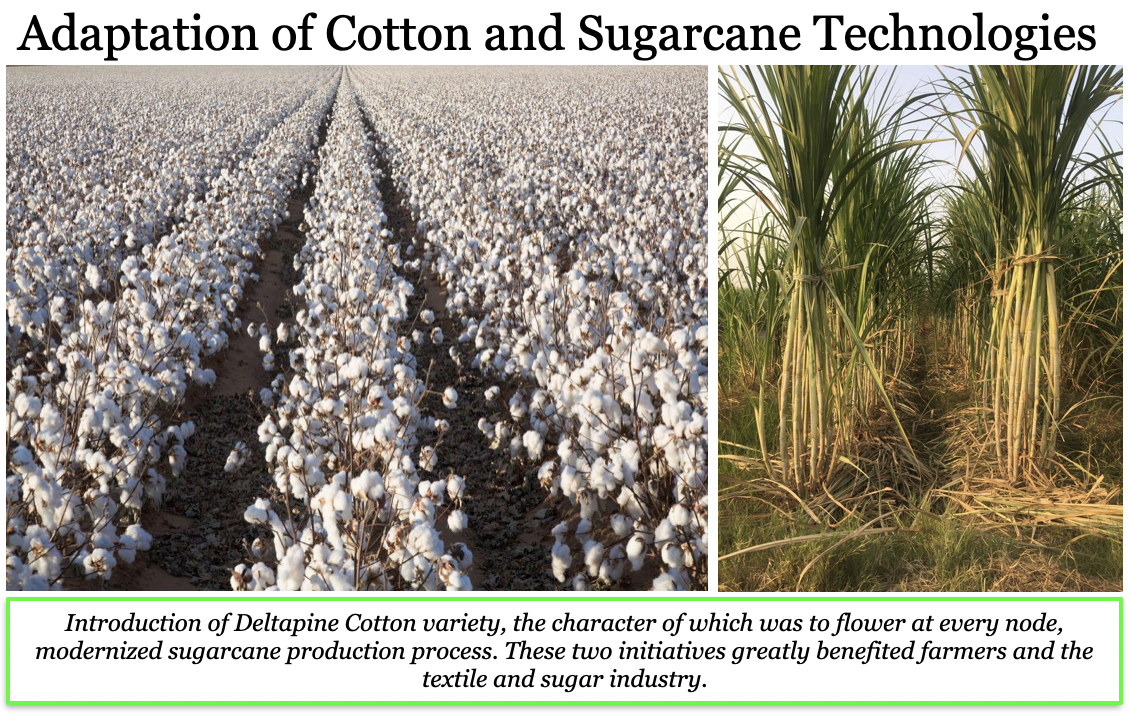
One of the formative episodes in Sharif’s own field record began in 1976, with the Deltapine-15 cotton variety. Its distinguishing character, a flower produced alongside every leaf on the plant, was not a curiosity; it translated directly into yield. Seed-cotton output rose from around fifteen maunds, roughly 600 kilograms, to around forty-five maunds, roughly 1,800 kilograms, per acre, while the lint-to-seed ratio and the fibre’s length and softness improved alongside it. Sharif later helped develop that same flowering character into a locally bred variety, NIAB-78. Sugarcane received a parallel upgrade a few years later: production practices adapted from growers in Bundaberg, Queensland, were introduced from 1978 and subsequently propagated more widely through Baba Farid Sugar Mill. At the time, both were read simply as evidence in favour of the system: better genetics and better practice, in cotton and in sugarcane alike, producing substantially better crops.
The more important lesson appeared over the successive seasons that followed. Sharif’s field observations increasingly suggested that impressive crop performance did not by itself reveal what was happening to the production environment. Maintaining that output could require more intervention as pest pressure, soil condition and input dependence changed. The observation did not prove a single cause, but it changed the question he was asking. Instead of looking only at yield, he began looking at what the system had to consume, disturb or replace in order to produce that yield.
This observation did not immediately produce a conclusion. It produced a question: why can a production system that performs impressively in the short term become progressively more dependent on external intervention? That question remained open for decades, but from the mid-1970s onward it shaped the way Sharif looked at farms, crops and soils, not only at what the system produced, but at what it required in order to keep producing.
Decades later, PQNK’s diagnosis would identify the underlying production-system causes: intensive tillage, repeated chemical intervention, excessive irrigation and the associated deterioration of soil structure, biological function and organic matter, a chain of intervention that progressively weakened the soil’s own biological capacity, so that the system needed ever more external correction simply to sustain the yields it had already reached. In 1976, Sharif did not yet have that diagnosis. He had the question. For the next thirty years, that question was what he kept working at.
BUILDING NATIONAL INFRASTRUCTURE: THE 1980s
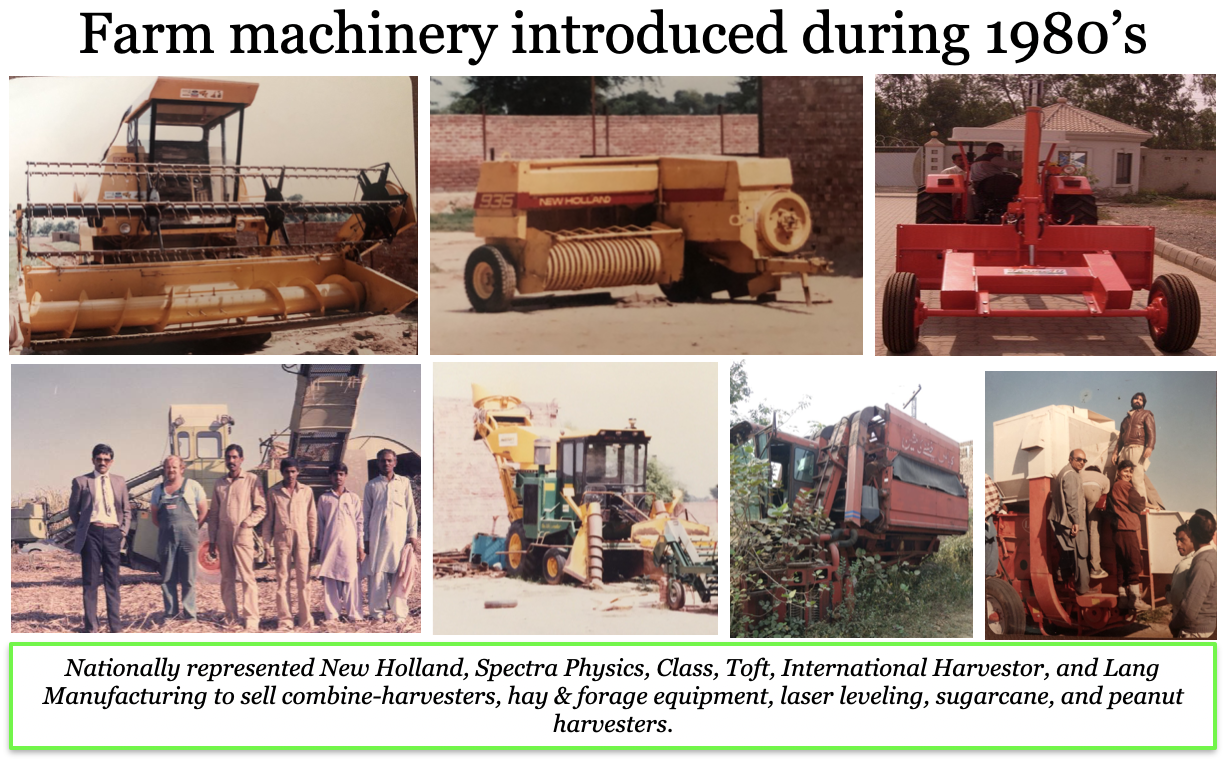
Through the late 1970s and into the 1980s, Sharif’s work expanded from farm-level demonstration into machinery distribution, irrigation improvement and wider agricultural infrastructure. Syphon-tube irrigation, long furrows, land shaping and later laser-guided levelling were part of a continuing effort to improve the precision with which water and machinery were used. These developments belonged to the modernisation programme of the period, but they also gave Sharif an unusually detailed understanding of how field geometry, traffic, irrigation and machinery interact.
That expansion had a specific shape. In 1981 Sharif established an IMT tractor and farm machinery dealership in Sahiwal, which grew into a hub for technology and best practice across the surrounding districts, and set up production facilities there and in Mian Chunnu, Okara and Depalpur that manufactured, modified and customised farm machinery locally. Further dealerships followed in quick succession: Ford in Jhang in 1982, Massey Ferguson in Bahawalnagar and Fiat in Okara in 1983, the year Sharif also moved his operational headquarters to Lahore for national reach. The same year brought the national distributorship for Sperry New Holland’s full range of harvesting machinery, a position that solved a chronic seasonal labour shortage, cut infield harvesting losses, and helped establish New Holland as a major force in Pakistan’s combine-harvester market. The purpose throughout was practical: reduce labour bottlenecks, improve timeliness and make mechanised operations available to more farmers. Each dealership taught the same engineering lesson that would later matter to PQNK: a production system succeeds or fails not through one machine, but through the way machinery, soil, water, crop and operator work together.
It was also at the Sahiwal dealership, during this same period, that Sharif’s confidence in routine agrochemical dependence began to weaken. His own record places a decisive personal change in 1981, when he stopped promoting agrochemicals through his business activities. This was not yet a complete biological theory of agriculture. It was a response to what he believed he was seeing in the field: repeated pesticide use affecting non-target life, and fertiliser and pesticide programmes becoming recurring requirements rather than occasional corrections.
Sharif later described the decision in his own words: “The decision to stop promoting agrochemicals in 1981 was not a political statement. It was a field decision. I had spent years watching what repeated chemical intervention was doing to the production system and to the farmer’s dependence on it. I could no longer treat that dependence as progress.”
THE FORMAL SEED INDUSTRY: THE EARLY 1990s
The early 1990s brought another important change: the rapid expansion of private and multinational participation in Pakistan’s formal seed industry. Government policy had encouraged private-sector seed activity from the 1980s, and participation accelerated in the following decade. Hybrid seed, particularly in maize and other commercial crops, demonstrated the power of genetics but also introduced a different production relationship. Farmers increasingly purchased fresh commercial seed to retain hybrid performance and followed management packages designed around the chosen variety.
This did not make improved genetics inherently wrong. It demonstrated a distinction that would later become important in PQNK: the seed carries genetic potential, while the production environment determines how that potential is expressed. A seed business can improve genetics, but genetics cannot substitute for a functioning soil, balanced moisture, biological nutrient cycling and a resilient field ecosystem.
Two further developments anchored this period. In 1989, on the strength of New Holland’s combine-harvester success, Ford granted a licence to manufacture Ford tractors in Pakistan; tractors built under that licence three decades ago are, by Sharif’s own account, still working today.
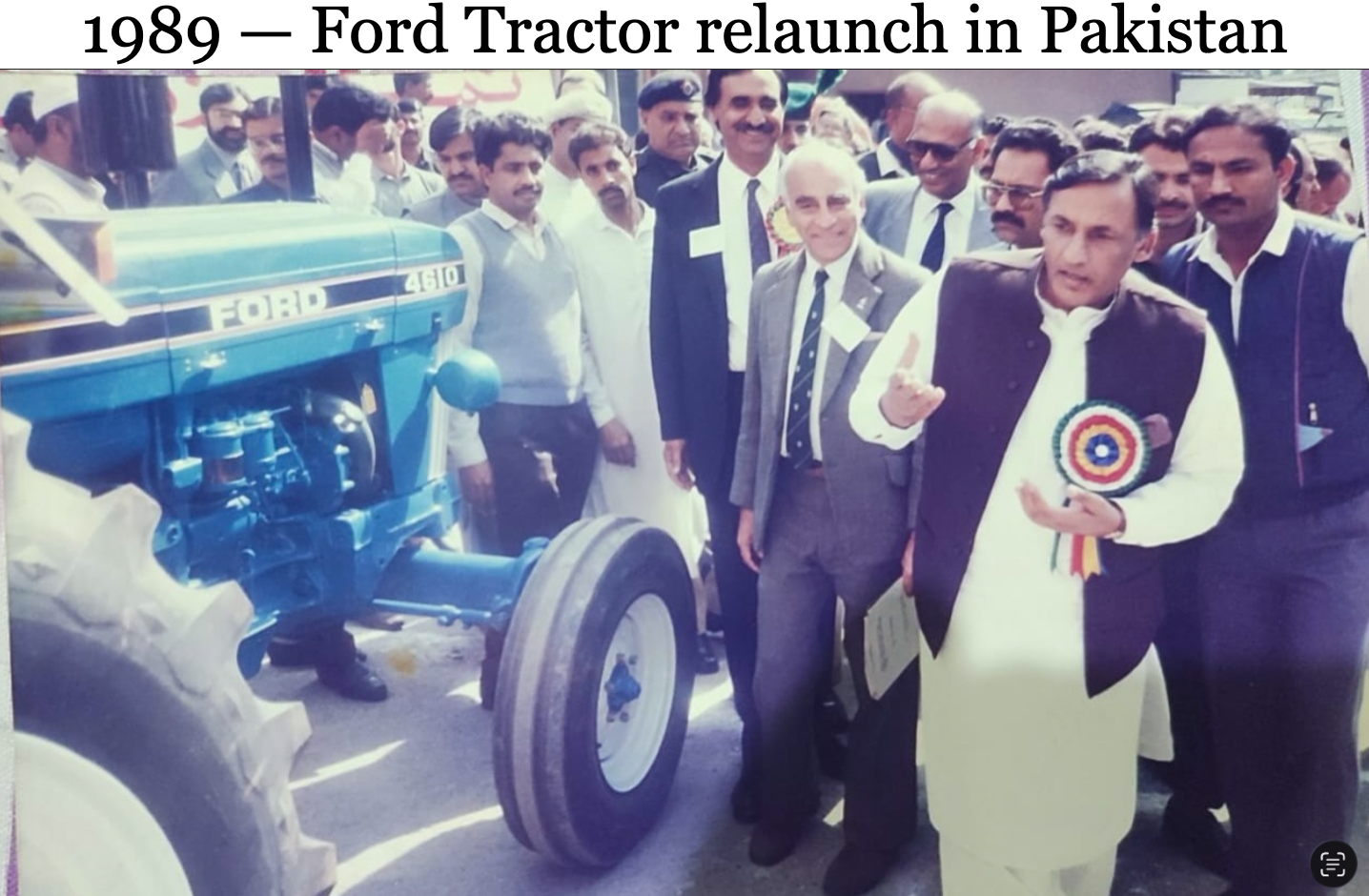
Punjab Governor Mian Azhar inaugurating the Ford tractor, 1989. The event marked the transition from machinery distribution toward domestic tractor manufacturing and wider institutional-scale mechanisation.
In 1991, building on an established seed partnership with Cargill, the Pioneer Seed Company was formally established in Pakistan with its plant at Sahiwal, an initiative recognised with an award presented to Sharif by Prime Minister Nawaz Sharif.
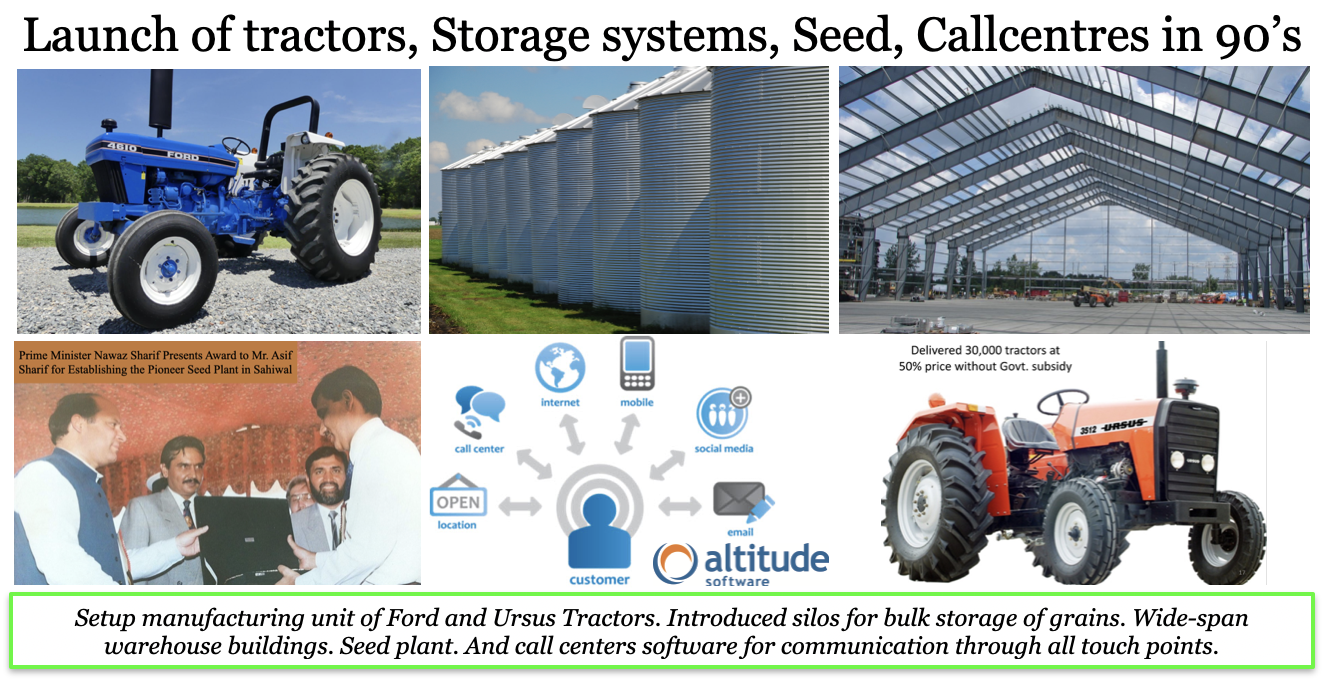
Corn, the crop that plant did most to develop, became Pakistan’s second-largest crop within a few years, feeding a poultry and dairy industry that would otherwise have struggled to meet the country’s protein requirements.
What Sharif was accumulating in these years was not only machinery experience and policy exposure. He was building an integrated understanding of how industrial agriculture worked across agronomy, economics, seed genetics, machinery engineering, irrigation and markets. Without yet naming PQNK, he was acquiring the knowledge needed to distinguish which technologies genuinely helped the farmer from those that merely compensated for weaknesses created elsewhere in the production system.
THE POLICY BREAKTHROUGH: 1994–1996
In the mid-1990s, Sharif’s institutional experience extended into agricultural policy. His own record describes work with national agricultural leadership on commodity pricing, generic agrochemicals, tractor access and oilseed development. Pakistan was also moving through a broader period of agricultural liberalisation in which private trade expanded and domestic agricultural prices were increasingly considered alongside international price trends and production economics.
Sharif served on a committee formed by Prime Minister Benazir Bhutto to carry that liberalisation into practice, work that delinked agricultural commodity prices from government trading corporations, abolished the Agricultural Price Commission, and broke the multinational agrochemical monopoly by requiring generic naming. The same committee tackled the domestic tractor monopoly by opening the market to imports: under the resulting Awami Tractor Scheme, more than thirty thousand European-standard tractors were imported and delivered to small farmers at close to half the price of locally assembled equivalents. For Sharif, the wider lesson from this period was not that one price or one subsidy could solve agriculture, but that policy architecture could materially alter farmers’ access to technology, markets and working capital.
That lesson would later inform PQNK’s own policy position. Many of the constraints facing farmers are institutional rather than natural, and institutional reform can remove them quickly. But policy can also lock farmers into recurring dependence if it subsidises replacement inputs without repairing the biological production system underneath them. The long-term objective, Sharif concluded, has to be farmer capability and independence, not permanent dependence on either industry or government support.
1995 AND AFTER: THE BT QUESTION
Sharif’s introduction to Bt cotton, in 1995, began by chance. Travelling by road from Houston to El Paso, he noticed a cotton research farm beside the highway and stopped to look. The farm manager mentioned, almost in passing, that the station had developed a cotton variety resistant to bollworm, the insect responsible for some of the heaviest losses in Pakistani cotton. Sharif arranged for a small quantity of the seed, around two kilograms, to be brought back and distributed among farmers in the Pakpattan area for field testing. The results were promising enough that growers began sharing the seed among themselves, and the variety spread on its own momentum. Pakistan’s formal regulatory and adoption history developed on a separate, later track: official and published accounts place biosafety permissions, field testing and widespread farmer adoption from the late 1990s into the 2000s. The distinction matters. This chapter records Sharif’s personal field chronology while recognising that it is not the same thing as the formal national release history.
Investigating how the seed worked raised a question that became important to Sharif’s later thinking. Bacillus thuringiensis is a naturally occurring bacterium whose insecticidal proteins are used in microbial pesticides and, through genetic engineering, can be produced within Bt crops. Some Bt strains have also been reported in rhizosphere or endophytic associations with plants, although the ecological significance of those associations for crop protection is still an active research question. Sharif’s field interpretation was therefore not that natural soil Bt had already been proven to provide the same protection as a Bt transgene, but that the technology exposed a larger question: which protective functions can a healthy biological system provide, and which functions genuinely require an engineered substitute?
That question became part of the organising framework of the years that followed. Applied to pest management, it encouraged closer attention to predators, microbial ecology and plant health. Applied to nutrient supply, it led toward biological nutrient cycling. Applied to water, it led toward Soil Moisture Management. The common thread was to ask first what function the natural ecosystem performs, then determine what engineering is actually necessary to let that function operate under production agriculture.
Sharif has since distilled that period into a single governing question: “The question I began asking was simple: before we buy or engineer a substitute, what function is nature already trying to perform, and what have we done to prevent it from functioning? Following that question through soil, water, roots, biodiversity and machinery eventually led to PQNK.”
The Bt breakthrough did not last. Within a few years, the pink bollworm, the most damaging of the pests it had been bred to resist, developed resistance of its own, and crop damage returned in force. The lesson reinforced the question Sharif had been carrying since the Deltapine seasons of the 1970s: a solution built around a single trait, however powerful at first, is only ever a temporary answer if it leaves the underlying system unchanged.
THE QUIET YEARS: 1997–2006
Not every part of this record is a story of expansion. For roughly a decade beginning in the late 1990s, Sharif’s business activities were substantially interrupted by circumstances outside his control, a period he does not narrate in detail and regards, in his own words, as a significant personal sacrifice made in service of the wider farming community rather than as a setback. He speaks of it with pride, not complaint. It was also, by his own account, a period of enforced reflection: away from the pace of active business, the question sharpened by the bollworm’s resistance, and by everything observed since 1976, had time to mature undisturbed. When Sharif returned to active work in 2007, it was with that same question, considerably more developed, still unanswered.
WHAT TWENTY-ONE YEARS OF MASTERY PROVIDED
By the mid-1990s, Asif Sharif had spent more than two decades at the operational frontier of Pakistani agricultural modernisation. He had worked with machinery, crop production, irrigation, seed systems, markets and policy, and had operated at the intersection of government, private enterprise and the farming community. That breadth of experience became central to the later development of PQNK.
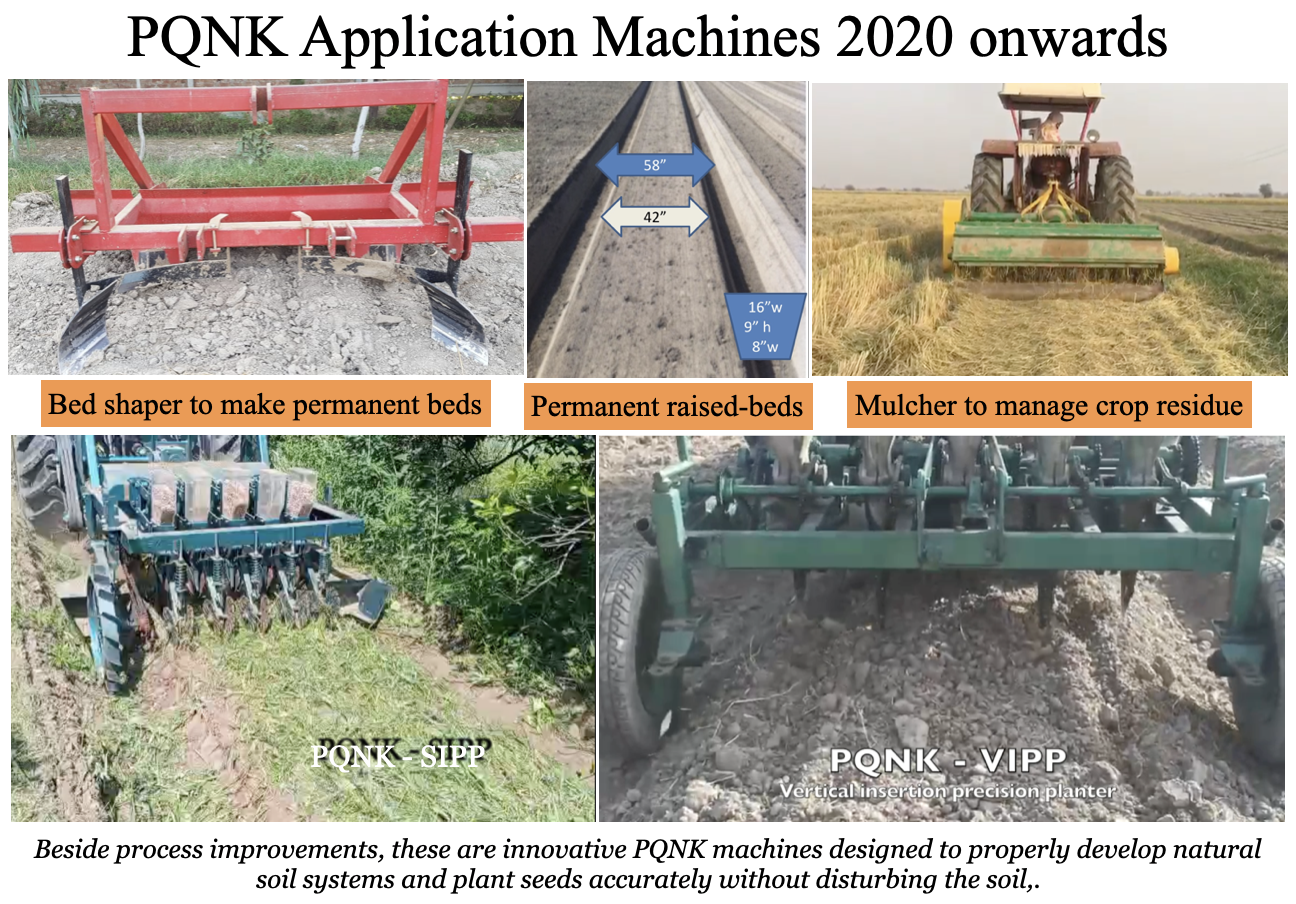
This mastery was not incidental to PQNK. It was a prerequisite for translating natural-ecosystem principles into mechanised production agriculture. PQNK is not a proposal to abandon engineering. Its permanent beds, controlled traffic, Soil Moisture Management and purpose-built planters are attempts to make machinery serve the biological system rather than repeatedly disturb it. The SIPP, VIPP, raised-bed shaper and mulcher all belong to that engineering task.
Although this chapter’s historical journey ends at the threshold of PQNK in 2007, the later machines shown here are included deliberately: they reveal what the engineering knowledge accumulated during those earlier decades eventually became once the production objective changed.
The machinery shown here records more than a sequence of inventions. It records a change in the question being asked of the machine. During the earlier period, machinery was designed primarily to increase capacity, speed, precision and output. As the weaknesses of the production system became clearer, the engineering objective began to change. The question was no longer simply how to perform an agricultural operation more efficiently. It became: how can the necessary operation be performed while disturbing the soil and its biological system as little as possible?
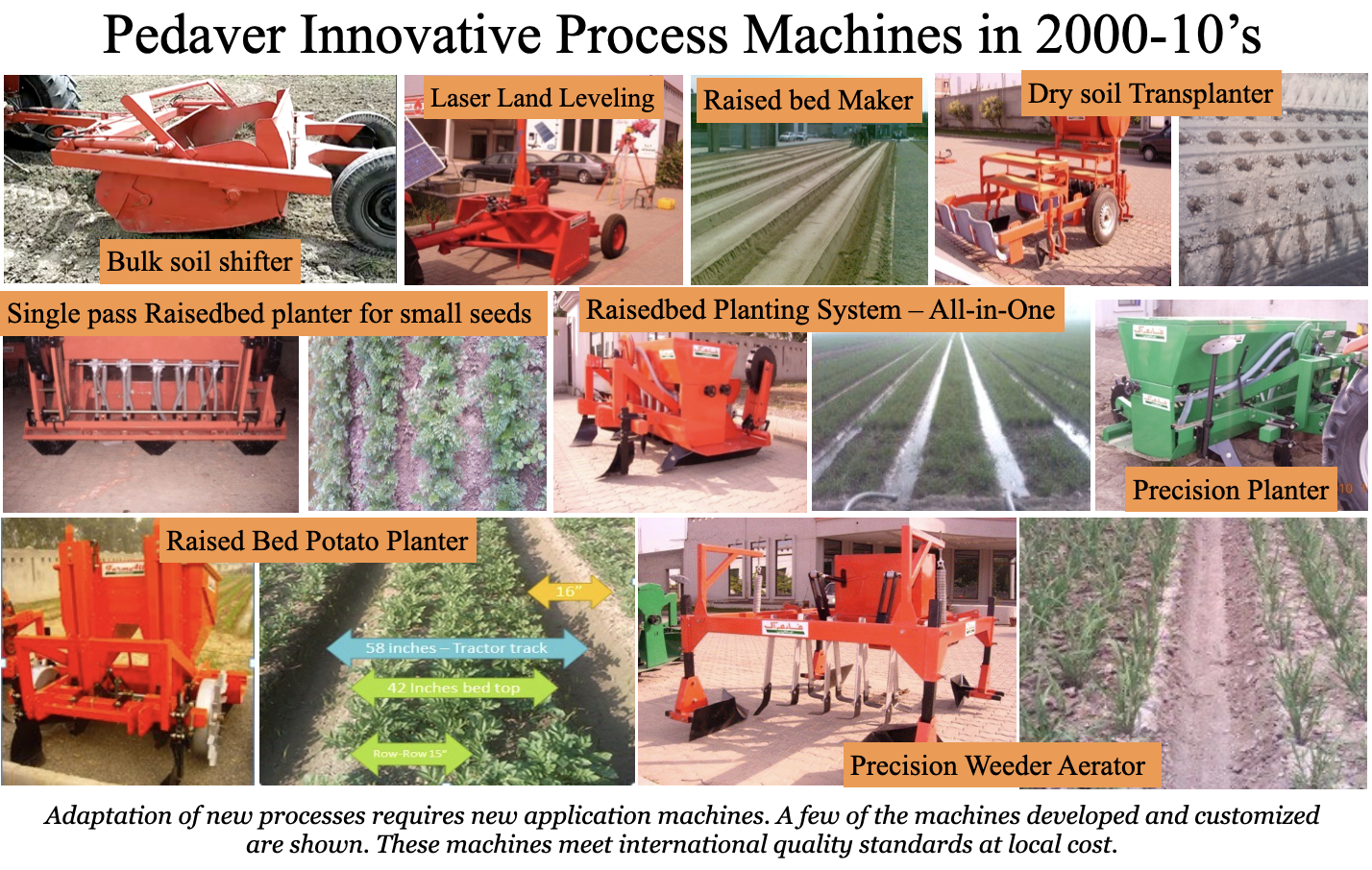
The machines developed through the 2000s represent the intermediate stage of that progression. Laser levelling improved control of water. Raised-bed makers reorganised the field into a geometry that separated the crop zone from machinery traffic. Raised-bed planters, potato planters, precision seeders and weeder-aerators progressively reduced unnecessary field operations. Each development solved a practical problem, but together they were moving machinery toward a different relationship with the soil. The machine was gradually being removed from the role of repeatedly reconstructing the seedbed.
SIPP and VIPP represent the logical outcome of that progression. Once the permanent bed is established and the soil is protected by residue and living biology, planting should no longer require destruction of that environment. SIPP opens only the narrow slit required for seed placement through surface residue. VIPP carries the principle further by inserting the seed vertically with extremely limited disturbance. The mulcher manages the previous crop above the soil, while the permanent-bed system keeps tractor traffic in the furrows. What began decades earlier as mechanisation of agriculture had therefore become something fundamentally different: the engineering of machinery to serve the living production system rather than repeatedly rebuilding it.
The experience also provided credibility with farmers. When Sharif argues that many recurring purchased inputs can be progressively removed as biological function is restored, he speaks as someone who first spent decades working inside the mechanised, input-intensive system. The argument is therefore not against technology. It is for a different test of technology: does it strengthen the production ecosystem, or does it merely compensate for damage created by the production system itself?
THE SOLAR IRRIGATION INTERLUDE: 2007
Before the 2008 Amazon study that helped crystallise PQNK, one further engineering episode deserves recording. In 2007, FarmAll Technology worked on solar-powered irrigation in Cholistan. The episode reinforced a principle already familiar from machinery design: removing one binding technical constraint can transform what is possible for a farm or a community. Solar pumping addressed access to energy for lifting water; it did not, by itself, answer the larger questions of how much water should be applied or how the soil should store and use it.
That distinction became important in PQNK. Appropriate engineering can remove a constraint, but the engineering must remain subordinate to the natural production system. A subsoiler can break an existing hardpan once; permanent beds and controlled traffic are then needed to prevent its recreation. A precision planter can place seed through residue; the living soil beneath it must still be protected. Solar energy can power irrigation; Soil Moisture Management must still determine whether irrigation is needed at all. The machine is valuable when it restores access to a natural function, rather than becoming another reason to override it.
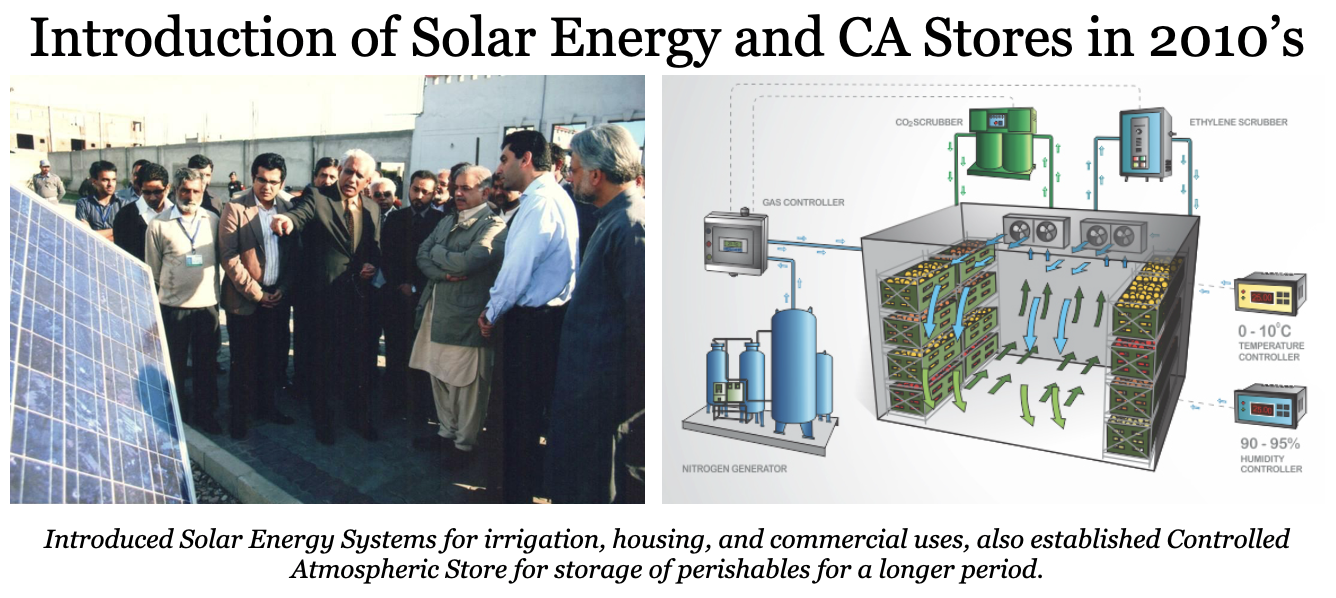
The same solar principle scaled up over the following years. What began as a single demonstration pump in Cholistan grew into broader systems for irrigation, household electrification and commercial use, and was joined by a complementary technology addressing the other end of the production cycle: Controlled Atmosphere storage, which extends how long perishable produce can be held after harvest by regulating the gas composition, temperature and humidity around it. Between them, the two technologies addressed energy and storage, the two constraints that had least to do with the soil itself, while leaving Soil Moisture Management to govern everything that happened in the field.
WHAT THIS CHAPTER HAS ESTABLISHED
The first twenty-one years from 1973 to 1994 were the foundation of the PQNK story, but the questions they generated continued through the policy, biotechnology and irrigation episodes that followed. Machinery engineering, agronomy, seed science, irrigation design and policy experience provided the practical vocabulary from which a different production architecture could later be built. You cannot intelligently replace a system you have never understood from within.
Three developments from this period were especially important: the growing awareness that impressive yields could conceal rising intervention and declining system resilience; the 1981 decision to move away from promoting agrochemicals; and the biotechnology question that sharpened the distinction between a natural function and an engineered substitute. The later Cholistan irrigation work added the engineering corollary: technology is most valuable when it removes a constraint without taking over the role of the ecosystem.
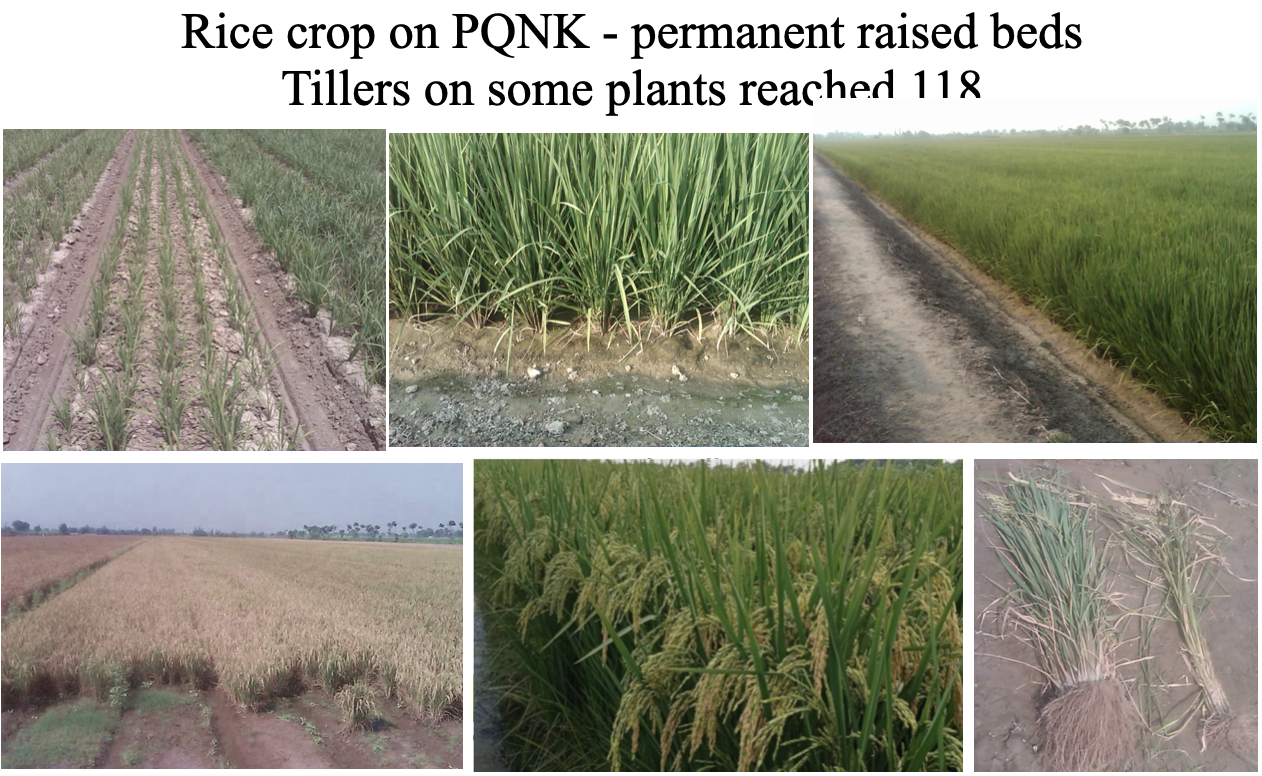
That same discipline, asking what the machine and the water were actually there to do, would within a few years produce one of PQNK’s most striking early proofs: rice, a crop every convention assumed required standing water, grown instead on moist rather than saturated soil, a method with no known precedent elsewhere at the time, delivering reported water savings of seventy to ninety percent. A later chapter, The First Experiment, tells that story in full.
The next chapter follows the turning points that converted these observations into a coherent direction: the cotton experience, the Amazon study of 2008, and the recognition that soil, water, biodiversity and machinery were all pointing toward the same answer.
A note from one farmer, received after Chapters Nine and Ten were published, captures what this long apprenticeship in the industrial machine was ultimately for:
“One day we will again see fireflies flying in the dark… we will again see honeybees in our surroundings. This is only possible with adoption of PQNK… We all must become true ambassadors of this for our future generations.”
Farmer Abdul Wajid
Chapter Seventeen: The Turning Points, Cotton, the Amazon, and the Moment of Realisation