
KP-200 · PQNK Philosophy, Framework & Economics
The Farmers' Crisis Will Not Be Solved by Another Support Price: Why Pakistan's Farmers Must Reduce Cost, Improve Quality and Build Independence Through PQNK
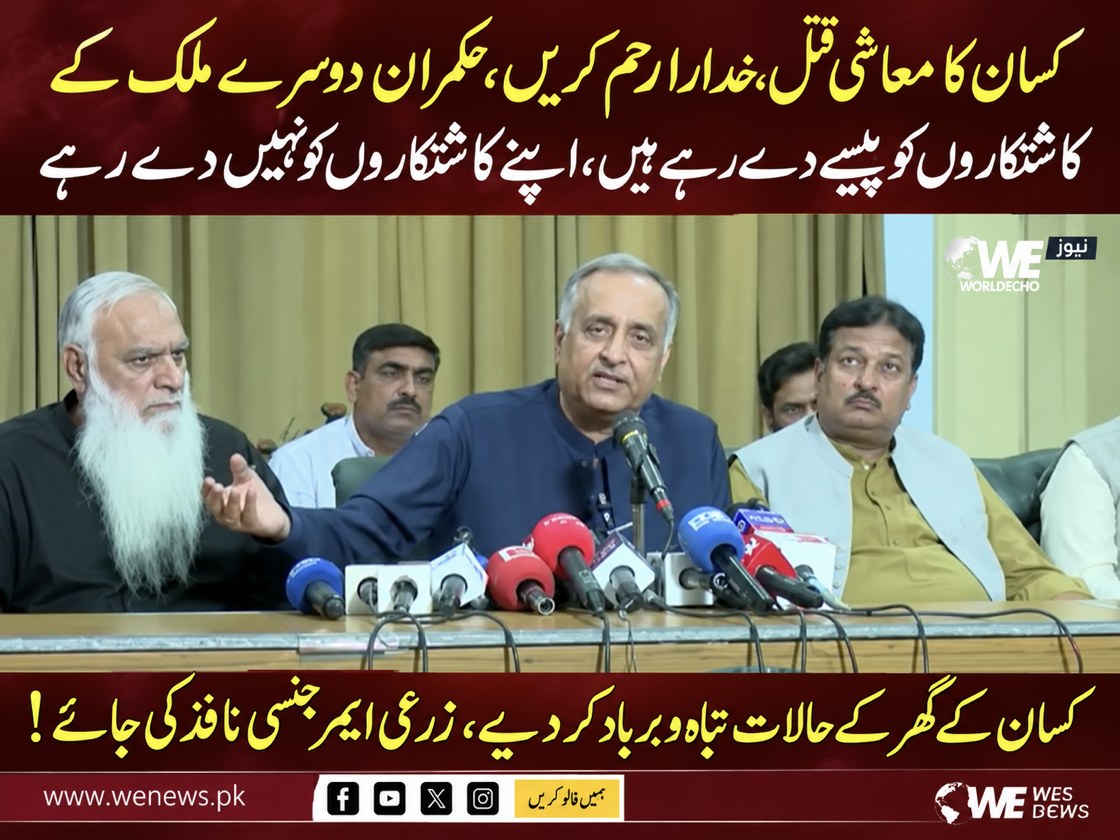
A nationwide farmers' association's press conference voiced real distress over diesel, fertiliser, wheat and sugarcane policy, and the danger that one failed crop leaves a farmer unable to finance the next. This paper argues that distress is real but the standard remedy, another support price or subsidy, cannot be the permanent foundation of farm viability, because it exchanges biological dependence for political dependence. PQNK reframes the question: since a farmer cannot control the market price, government policy, rainfall or the exchange rate, his strongest and most durable defence is progressively lowering his own cost of production by restoring the soil's biological functions, while building resilience to climate shocks and competing through demonstrable produce quality.
Read or listen to the full paper ↓Abstract
A nationwide farmers' association's press conference voiced anger and anxiety now widespread across Pakistani agriculture: rising diesel and fertiliser costs, uncertainty over wheat and sugarcane policy, import competition, debt, and the danger that the failure of one crop leaves the farmer unable to finance the next. This paper takes that distress at face value while questioning where the remedy is being sought. The proposed remedy in the press conference depends mainly on government action; PQNK asks a harder question, how can the farmer remain viable even when policy, prices and climate move against him. The paper's central claim is that the crisis is not only a commodity-price problem but a production-system problem: when one failed crop destroys a farmer's ability to finance the next, the production system itself has become financially fragile.
Government policy matters, the paper argues, but it cannot be the production system. Farmers are justified in demanding coherent policy, since sudden changes in imports, exports, procurement or regulation can damage a farmer who has already invested in a crop. But no government can permanently remove agricultural risk: governments change, fiscal conditions change, international prices move, currencies move, weather changes. If farming remains profitable only when government announces the right support price, subsidises the right input and prevents the wrong import, the paper contends the farmer has not achieved economic security, he has exchanged biological dependence for political dependence. The price a farmer can influence most directly, the paper notes, is not the market price he receives but his own cost of production.
The paper sets out how PQNK attacks cost at the production-system level, through four operating rules derived from the natural terrestrial ecosystem, no inundation, no repeated soil disturbance, permanent organic soil cover and encouraged biodiversity. As transition progresses, permanent raised beds, controlled traffic, mulched residues and Soil Moisture Management progressively reduce the need for repeated tillage, large irrigation volumes, routine synthetic fertiliser and routine pesticide use, so the farm relies increasingly on solar energy, roots, microorganisms and nutrient cycling rather than on purchased inputs. The same transformation, the paper argues, builds climate resilience: permanent mulch and improved soil structure increase infiltration and protect the root zone from heat and evaporation, so two farmers selling into the same market at the same price do not receive the same profit, because one carries a far lower cost base.
Reducing cost, the paper argues, is only half the strategy; the farmer's second defence is demonstrable produce quality, since commodity agriculture has trained farmers to measure success only in tonnes and maunds when taste, nutritional composition and keeping quality can also capture market value once documented rather than merely claimed. The paper extends the argument to food security: a country cannot call its food system secure if its farmers cannot produce without continuous access to expensive fuel, fertiliser, chemicals, credit and policy rescue, so farmer autonomy is treated as part of national food security, not a separate concern. It closes by arguing that the appropriate agricultural emergency is a production-cost emergency, measuring the true cost of every purchased input and asking which of those functions a restored biological system can perform itself, so that public investment finances transition toward independence rather than indefinitely subsidising dependency. The paper is explicit that it does not independently authenticate every numerical or market claim from the press conference it responds to, and that PQNK field outcomes on cost, quality and resilience should be documented and measured crop by crop rather than treated as universal guarantees.
Full Paper
If you use “Listen”, the text of the page may be sent to your browser or operating system’s speech provider, such as Apple, Google or Microsoft, depending on the voice your device uses. Pedaver does not process, transmit or store any audio.
Why Pakistan’s Farmers Must Reduce Cost, Improve Quality and Build Independence Through PQNK
The farmer should demand good government. But he should build a production system capable of surviving bad government.
2. The Farmers’ Leader Is Describing a Real Structural Failure
The press conference repeatedly returns to the same reality. The farmer commits money and labour months before harvest, while the selling price may later be shaped by procurement policy, imports, exports, movement restrictions, sugar policy, wheat policy and changing market conditions.
The farmer therefore carries production risk without controlling many of the variables that determine his final return. Rising diesel, fertiliser and other input costs make that exposure still more dangerous.
One statement in the press conference is particularly important: the failure of one crop can lead to the failure of the next several crops. Once working capital is lost, the farmer enters the next season with less capacity to buy fertiliser, fuel, seed and other inputs. Debt and dependency deepen.
This is why the present crisis should not be understood only as a commodity-price problem. It is also a production-system problem.
When one failed crop destroys the farmer’s ability to finance the next crop, the production system itself has become financially fragile.
3. Government Policy Matters, but It Cannot Be the Production System
Farmers are justified in demanding coherent agricultural policy. Sudden changes in imports, exports, procurement, movement restrictions or regulation can damage farmers who have already invested in a crop.
But no govern“ A farmer who cannot control his selling price must learn to control what it costs him to produce. — PQNK1. A Press Conference That Describes the CrisisA nationwide farmers’ association has voiced the anger and anxiety now felt across agriculture: rising diesel and fertiliser costs, uncertainty over wheat and sugarcane, changing government policies, import competition, debt, and the danger that failure of one crop leaves the farmer unable to finance the next.The distress is real. But the proposed remedy still depends mainly on government action. PQNK asks a harder question: how can the farmer remain viable even when policy, prices and climate move against him?Central Proposition• Reduce cost of production.• Restore the soil production system.• Reduce dependence on purchased inputs.• Improve produce quality.• Build resilience to market and climate shocks.• Treat government support as policy, not as the farm’s survival mechanism.ment can permanently remove agricultural risk. Governments change. Fiscal conditions change. International prices change. Currencies move. Wars disturb trade. Weather changes. A support price announced this season cannot guarantee the economics of the next season.
If farming remains profitable only when government announces the right support price, subsidises the right input, permits the right export and prevents the wrong import, then the farmer has not achieved economic security. He has exchanged biological dependence for political dependence.
PQNK does not argue that government is irrelevant. It argues that the farmer’s production system must not require government rescue in order to remain viable.
4. The Price the Farmer Can Influence Most Is His Own Cost
The farmer cannot determine the international wheat price, the sugar price, the exchange rate or the price of diesel. He cannot command rainfall or prevent a heatwave.
But he can progressively change the cost structure of his own farm.
This is the point at which PQNK changes the discussion. Instead of beginning with the question, ‘What price will government give us?’, it begins with: ‘Why does producing this crop require so many purchased interventions?’
The strongest economic protection available to a farmer is the ability to produce at a cost low enough to survive an unfavourable market.
5. PQNK Attacks Cost at the Production-System Level
PQNK is based on four operating rules derived from the natural terrestrial ecosystem: no inundation, no repeated soil disturbance, permanent organic soil cover, and encouraged biodiversity.
During transition, the farmer stops rebuilding the field mechanically before every crop and begins rebuilding the soil biologically. Hardpan is corrected once where necessary. Permanent raised beds and controlled traffic protect the biological bed. Crop roots remain in the soil. Residues become mulch. Soil Moisture Management replaces routine flooding. Crop follows crop without repeated destruction of soil structure.
As biological function recovers, the production system progressively reduces the need for repeated tillage, large quantities of irrigation water, routine synthetic fertiliser and routine pesticide use. Purchased inputs cease to be the foundation of production.
The economic consequence is profound. The farm begins to rely more upon solar energy, roots, microorganisms, nutrient cycling, organic residues, soil structure and natural biological regulation, functions that do not arrive on a truck with an invoice.
PQNK does not ask how to subsidise an expensive production system. It asks how much of that expense agriculture can stop creating.
6. The Same Transformation Builds Climate Resilience
The farmer’s vulnerability is not only economic. Heat, erratic rainfall, dry periods and extreme events can destroy the value of even a favourable market price.
PQNK addresses market and climate vulnerability through many of the same changes. Permanent mulch protects the soil surface from direct solar heating and evaporation. Improved structure increases infiltration and gives roots access to a larger soil volume. Correcting hardpan removes an artificial restriction on rooting and water movement. Soil Moisture Management seeks a moist but aerated root zone rather than repeated inundation.
These changes cannot abolish drought, heat or storms. They can, however, improve the capacity of the soil-plant system to absorb stress. Resilience comes from increasing the functioning capacity of the farm itself rather than assuming that every climatic shock can be corrected with another purchased input.
7. A Farmer Selling Into the Same Market Can Have Different Economics
Consider two farmers receiving the same market price for the same commodity. One has paid for repeated land preparation, diesel, fertiliser, pesticides, herbicides, large irrigation volumes and repeated machinery operations. The other has progressively removed many of those costs through a functioning PQNK system.
They receive the same selling price, but they do not receive the same profit.
The first farmer needs a high market price simply to recover his expenditure. The second has a wider margin within which he can remain viable when prices weaken.
This is why the PQNK answer to the farmers’ crisis begins with cost of production rather than waiting for the selling price to rescue an expensive production system.
8. Quality Must Become the Farmer’s Second Defence
Reducing cost is only half of the strategy. The farmer must also improve what he sells.
Commodity agriculture has trained farmers to measure success mainly in tonnes and maunds. But agriculture ultimately exists to produce food, fibre and biological materials of value to people.
PQNK therefore seeks abundance of nutritious food, not merely bulk production. Farmer observations under PQNK have repeatedly reported differences in taste, eating quality and perceived satisfaction.
Where nutritional composition, taste, keeping quality, processing performance or other measurable attributes improve, farmers should be able to communicate and eventually capture that value in the market.
The strategic position is therefore stronger than a demand for a higher support price: lower cost of production combined with higher and demonstrable quality of produce.
LOWER COST + HIGHER QUALITY = MARKET RESILIENCE
9. Food Security Cannot Rest on Farmer Dependency
The farmers’ leader correctly connects agriculture with national food security. That connection should be taken to its logical conclusion.
A country cannot call its food system secure if its farmers cannot produce without continuous access to expensive fuel, fertiliser, chemicals, credit and policy rescue. If essential production depends upon imported inputs and unstable external supply chains, national food security inherits those dependencies.
PQNK therefore treats farmer autonomy as part of food security. This does not mean isolation from markets, science, machinery or government. It means that the essential biological functions of production should remain inside the soil-plant-ecosystem relationship wherever nature already provides them.
Technology should assist those functions, not continuously substitute for them.
10. The Agricultural Emergency Should Be a Production-Cost Emergency
The press conference calls for an agricultural emergency. Pakistan does need urgency, but another package of subsidies, support prices, credit and temporary input concessions will not correct the underlying production architecture.
A more useful emergency would begin by measuring the cost of every operation and every purchased input on representative farms: tillage, diesel, fertiliser, pesticides, irrigation, machinery, seed, labour and finance.
Then ask a second question for each cost: is this expenditure performing a function that a restored biological system can perform itself?
That exercise would shift agricultural policy from subsidising dependency toward financing transition.
11. What Farmers Should Do Instead of Waiting
PQNK does not ask farmers to ignore markets or stop demanding fair policy. It asks them to build a farm capable of surviving uncertainty.
First, calculate the true cost of production crop by crop. A farmer who does not know the cost of producing a kilogram or maund cannot know which intervention is earning money and which is merely customary expenditure.
Second, begin transition toward permanent biological production. Correct hardpan where required, establish permanent beds and traffic lanes, retain roots and residues, maintain soil cover, manage moisture rather than flood the field, and allow soil biology to recover.
Third, reduce purchased inputs carefully through the transition rather than treating input elimination as a slogan. PQNK permits transitional intervention when genuine deficiency or damaging pest pressure requires it. The destination is independence; the transition must remain agronomically responsible.
Fourth, measure quality as seriously as yield. Document taste, grain or produce characteristics, nutritional composition where testing is available, storage behaviour and processing quality.
Fifth, organise farmers around production knowledge and market quality, not only around demands for subsidies and support prices.
12. What Government Should Do
The PQNK position is not that government has no responsibility. Government can either accelerate farmer independence or reinforce dependency.
Public policy should support measurement of real production costs, farmer training in biological transition, locally appropriate machinery for permanent beds and no-till planting, water-use measurement, soil and food-quality testing, transparent markets and independent comparison of production systems.
Research institutions should compare the same crops under ACI and mature PQNK conditions, measuring yield, water, purchased inputs, energy, quality, nutrition and net return.
The objective of public investment should be to make the farmer progressively less dependent upon subsidy, imported inputs and emergency relief, not more dependent upon them.
The best agricultural support programme is one that progressively reduces the farmer’s need for support.
13. The Farmer Must Stop Betting His Survival on the Next Notification
The press conference repeatedly asks government to announce policies quickly. That urgency is understandable because crops already standing in the field cannot wait indefinitely for market clarity.
But this is precisely the weakness that must be corrected over the longer term. A production system whose profitability can be destroyed by a notification is economically exposed before the crop is even planted.
Farmers should continue to hold government accountable. At the same time, they should build a production system whose biological engine continues functioning regardless of whether a ministry announces a fertiliser subsidy, changes a procurement policy or delays an export decision.
A functioning soil ecosystem does not wait for a government notification before cycling nutrients.
14. From Price Protection to Farmer Autonomy
The conventional political response to agricultural distress is price protection. PQNK adds a more durable objective: farmer autonomy.
Autonomy does not mean the farmer needs nobody. Agriculture will always interact with markets, processors, transport, finance, technology and public institutions. It means that the farmer retains control over the core biological capacity to produce.
When soil fertility is treated as something that must be purchased every season, weed control as something that must be purchased every season, pest regulation as something that must be purchased every season, and water as something that must be repeatedly pumped or delivered in excessive quantities, the farmer becomes an operator of a purchased-input system.
PQNK seeks to return those functions toward the farm itself.
15. The Choice Before Pakistan’s Farmers
The farmers’ crisis is real. The anger expressed in the press conference should not be dismissed. But repeating the same demands while retaining the same high-cost production system cannot provide a permanent solution.
Farmers should demand coherent policy, fair markets and freedom from arbitrary restrictions. But they should simultaneously reduce the power that policy and input markets hold over their survival.
The farmer’s strongest defence against an uncertain market is low production cost. His strongest defence against climatic stress is healthy, biologically functioning soil. His strongest opportunity in the market is high-quality produce. His strongest protection against political uncertainty is the ability to produce without continuous rescue.
That is the transition PQNK offers.
The farmer should demand good government. But he should build a production system capable of surviving bad government.
Conclusion
The present agricultural crisis cannot be solved permanently by deciding one more wheat price, sugar price, diesel subsidy or fertiliser allocation. Such decisions may provide temporary relief and may sometimes be necessary, but they leave the underlying dependency intact.
PQNK addresses the crisis upstream. It seeks to lower production cost by restoring biological functions, improve resilience by rebuilding soil structure and moisture management, improve the quality and nutritional value of produce, and reduce the farmer’s dependence on purchased inputs and political rescue.
This is not an argument for abandoning government responsibility. It is an argument for changing the objective of agricultural policy from supporting an expensive dependency system to helping farmers become economically and biologically independent.
Pakistan’s food security will ultimately be strongest when its farmers can remain productive through changing governments, changing markets and changing climate.
Key Propositions
• The current farmers’ crisis is not only a price crisis; it is a production-system crisis.
• One failed crop can weaken the farmer’s ability to finance subsequent crops because the system requires repeated purchased inputs.
• Government policy matters, but support prices and subsidies cannot be the permanent foundation of farm viability.
• The price a farmer can influence most directly is his own cost of production.
• PQNK reduces dependency by restoring biological functions now substituted by repeated tillage, flooding and purchased agrochemicals.
• Lower production cost increases the farmer’s ability to withstand weak commodity prices.
• Healthy soil, permanent cover, deep rooting and Soil Moisture Management strengthen resilience to climatic stress.
• Farmers should compete through lower cost and higher, measurable produce quality.
• Farmer autonomy is part of national food security.
• Public agricultural investment should finance transition toward independence rather than indefinitely subsidise dependency.
Source and Editorial Note
This Knowledge Paper was developed in response to a transcript supplied by the author from a press conference by the leader of a nationwide farmers’ association. The transcript raises concerns about farm-gate prices, wheat and sugarcane policy, diesel and fertiliser costs, imports, regulation, farmer working capital and national food security. The paper does not independently authenticate every numerical or market claim made during the press conference; it addresses the structural agricultural argument raised by those concerns through the PQNK framework.
The PQNK interpretation and recommendations are the author’s framework.
About This Paper
- Crop
- Wheat · Sugarcane
- Problem
- High Input / Production Cost · External Input Dependency · Farmer Income Instability / Debt · Price Volatility / Market Glut
- Science
- Production Architecture · Climate · Transition
- Evidence
- Philosophical/Framework Argument
- Authority
- Current / Approved PQNK Knowledge
Related PQNK Science
Key Takeaways
- The current farmers' crisis is not only a price crisis; it is a production-system crisis.
- One failed crop can weaken a farmer's ability to finance subsequent crops, because the system requires repeated purchased inputs.
- Government policy matters, but support prices and subsidies cannot be the permanent foundation of farm viability.
- The price a farmer can influence most directly is his own cost of production.
- PQNK reduces dependency by restoring biological functions now substituted by repeated tillage, flooding and purchased agrochemicals.
- Lower production cost increases a farmer's ability to withstand weak commodity prices.
- Healthy soil, permanent cover, deep rooting and Soil Moisture Management strengthen resilience to climatic stress.
- Farmers should compete through lower cost and higher, measurable produce quality.
- Farmer autonomy is part of national food security.
- Public agricultural investment should finance transition toward independence rather than indefinitely subsidise dependency.
Related Crops
Related Knowledge
same problem
Knowledge Paper: The Looming Convergence of Oil and Food Crises — The Imperative for a Paradigm Shift toward PQNK
Written against the backdrop of an escalating Middle East conflict and its spillover into global oil markets, this paper maps how deeply Pakistan's and India's food systems are structurally dependent on fossil fuel, from Haber-Bosch fertilizer to diesel-pumped irrigation, and argues PQNK is the only de-risking strategy that breaks the link entirely rather than subsidizing around it.
same problem
Transforming Pakistan's Sugar Industry Through the PQNK (Pristine Organic Farming) System
Pakistan's sugar sector runs on a decades-old cycle of farmer exploitation, long-haul cane transport, and volatile supply. This paper proposes concentrating high-yield PQNK sugarcane cultivation within a 10-15 km radius of each mill, and models the profit, sugar-recovery, and crushing-season gains that follow.
same problem
The Purchased-Input Treadmill: Why Rising Agricultural Production Does Not Necessarily Create Farmer Prosperity
Rising yield does not automatically mean a farmer keeps more of what the farm produces. This paper names the Purchased-Input Treadmill, the pattern in which functions the farm ecosystem once performed for itself are progressively replaced by recurring purchases of fertilizer, pesticide, seed, fuel and irrigation energy, and argues that PQNK's real economic proposition is not cheaper inputs but the structural return of those functions to the farm itself.
same problem
Open Field Vertical Farming Under PQNK: Stacking Biology Instead of Expanding Land
Translates a field lecture into a structured framework for growing tunnel-style vining crops in open fields without tunnels, greenhouses, or chemical inputs, arguing that vertical canopy management and time-based crop replacement can turn one acre into a resilient, year-round livelihood unit.