

Crop-Specific Guides
Potato Planting Depth vs Mulch-Based No-Till Planting: A Production, Economics, and Quality Analysis under the PQNK System
A scientific and economic comparison of conventional 6-inch deep seed burial against PQNK's surface-placement-plus-mulch method, showing that mulch delivers the same tuber-zone temperature control as deep burial while also enabling earlier sowing, denser planting, and a roughly 90% cut in per-acre production cost.
Abstract
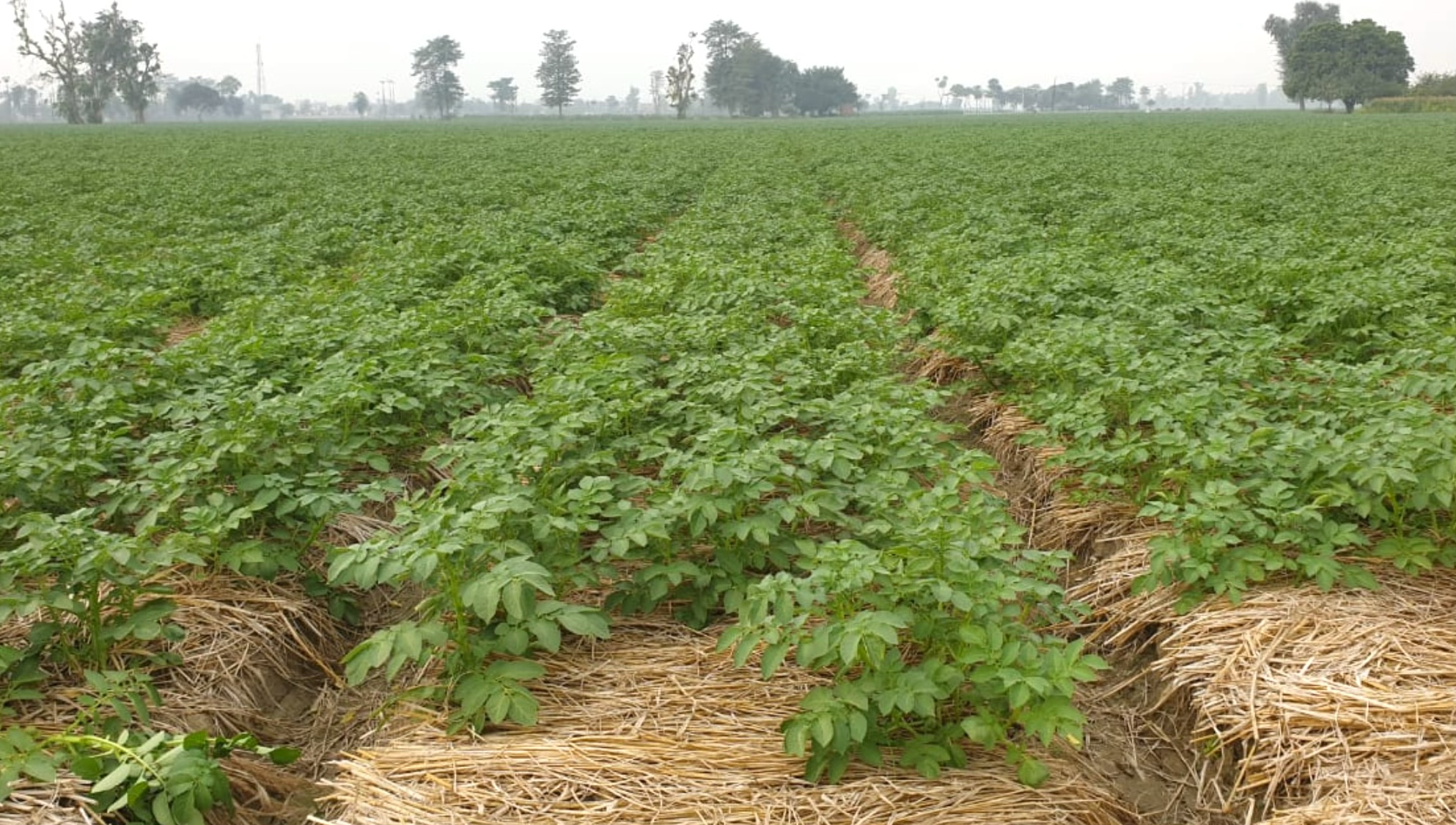
Potatoes are biologically adapted to cool, aerated, loose soil, and conventional agriculture has historically managed this through ridging and deep seed burial, planting seed tubers roughly 6 inches down to escape the 30-35°C temperatures common in the top 0-3 inches of hot-region soil during autumn planting. This paper argues the fix works but at a high structural cost: it requires repeated tillage, destroys soil aggregates, and increases both energy use and production cost, while the PQNK alternative, surface seed placement under 4-6 inches of organic mulch on permanent no-till raised beds, achieves the same thermal protection biologically rather than mechanically.
Field measurements in Punjab show bare soil summer surface temperatures reaching 70°C against mulched soil running 30°C cooler, holding the tuber zone within a 13-26°C physiological range ideal for bulking. Because mulched soil reaches a workable planting temperature earlier in the season than soil that must cool by depth alone, PQNK sowing can begin 2 to 4 weeks earlier than conventional systems, extending the crop's total bulking window before winter frost ends growth.
PQNK also re-engineers bed geometry: rather than the conventional two ridges and one furrow per 60-inch tractor track (36,050 plants/acre), the furrow is filled to create a single 42-inch permanent raised bed carrying 3 or 4 seed rows, lifting population to a range of 54,074-86,519 plants/acre depending on row configuration, a 50-100% increase without any additional land. The mulch's protective, microbially active surface also eliminates the rot risk that normally requires chemical seed treatment, allowing an 80g whole seed tuber to be cut into four single-eye pieces (~20g each) and planted independently, cutting seed cost by roughly 75% while a mechanical roller stamper applied around 25 days after germination redirects the plant's energy from excess vegetative growth toward tuber bulking.
The resulting per-acre cost comparison shows conventional production at roughly $1,400 (land prep, ridging, seed, NPK fertilizer, pesticides, irrigation, labor) against approximately $140 under PQNK, a 90% reduction, achieved even though average yield is comparable (10.5 t/acre conventional versus a 9.5-11.0 t/acre PQNK range). The paper also reports quality gains: denser tuber structure, longer shelf life, negligible disease incidence, brighter skin color, and premium market pricing, attributing the full package of benefits, temperature control, moisture retention, oxygen balance, lower cost, and higher plant population, to mulch alone, without any of the structural damage that deep tillage causes.
Key Takeaways
- Mulched soil runs roughly 30°C cooler than bare soil in summer (up to 70°C bare vs. 30°C lower mulched), holding the tuber zone within the ideal 13-26°C range without deep burial.
- PQNK's 42-inch raised-bed geometry lifts plant population from 36,050 plants/acre (conventional 2-row/60-inch track) to 54,074-86,519 plants/acre (3-4 rows per bed), a 50-100% increase on the same land.
- Cutting an 80g seed tuber into four single-eye pieces (~20g each) cuts seed cost by roughly 75% while supporting the higher plant population.
- Total production cost falls from roughly $1,400/acre conventional to about $140/acre under PQNK, a 90% reduction, with comparable yield (10.5 t/acre conventional vs. 9.5-11.0 t/acre PQNK).
- Mulch-enabled early planting extends the season by 2-4 weeks versus conventional depth-based sowing, since mulched soil reaches workable planting temperature sooner than soil cooling by depth alone.
- A roller stamper applied ~25 days after germination mechanically signals the plant to redirect energy from vegetative growth to tuber bulking, improving harvest index and tuber uniformity.