

Water & Climate
Comprehensive Guidance for Farmers Adapting to Man-Made Erratic Weather Using PQNK Principles
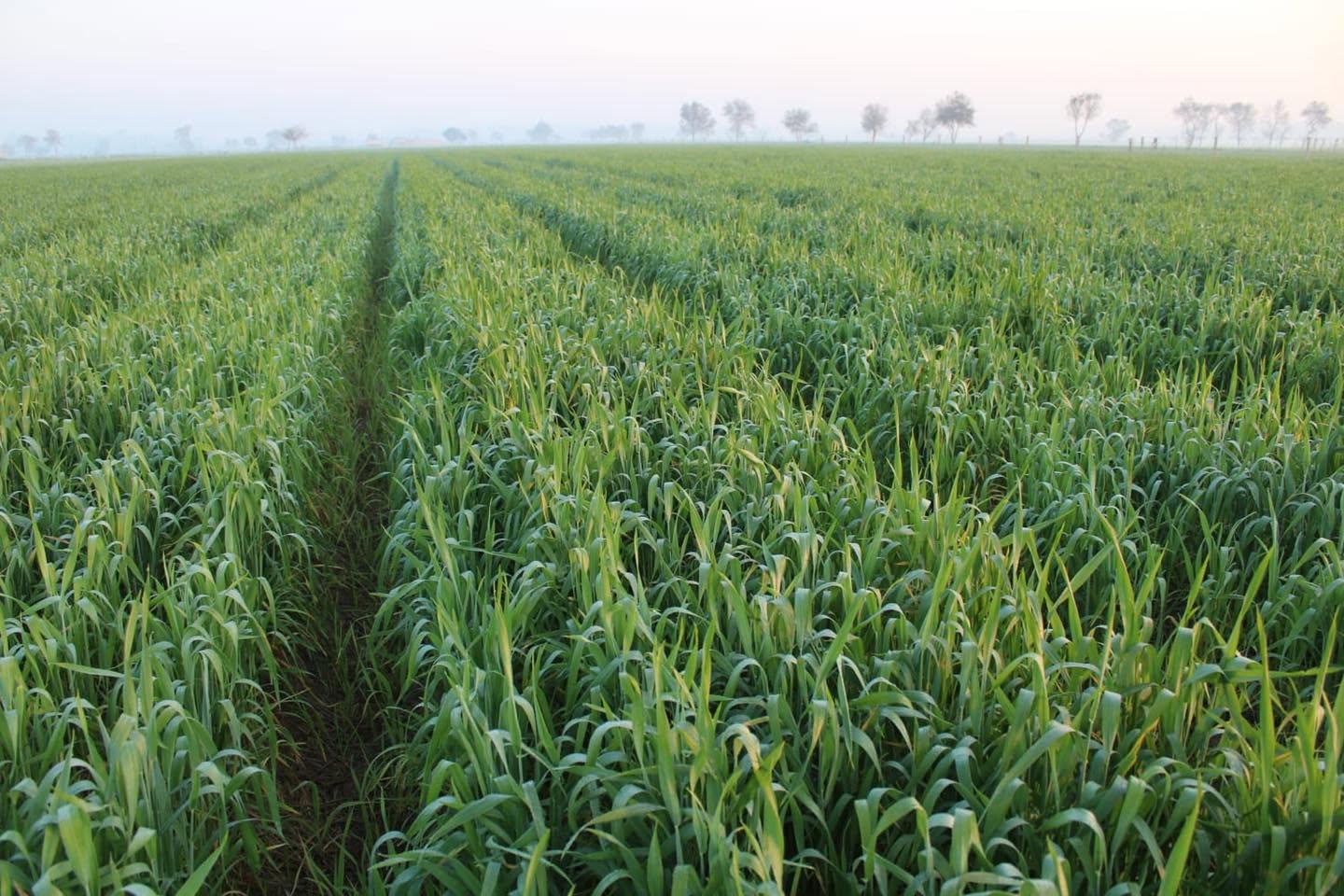
A farmer Q&A collection addressing a delayed, compressed winter season (monsoon arriving early, winter delayed 1-1.5 months) and its effect on wheat, alongside related questions on why weeds outperform crops under drought stress; the wheat section lays out a biology-based, soil-temperature-triggered sowing and pruning protocol built specifically to recover the lost growing time.
Abstract
The paper opens with a farmer's direct climate observation: monsoon now arrives earlier, winter is delayed by 1 to 1.5 months, and the intermediate season is nearly skipped, compressing wheat's already-short 4-5 month maturation window (versus 9-10 months in temperate countries) even further, and forcing grain-filling into the rapidly warming days of March-April, which produces shriveled grain and low tillering. PQNK's answer is a full shift from calendar-based to biology-based sowing: sow when soil temperature at seeding depth is consistently 22-24°C, not by waiting for a 'feels cold enough' calendar cue, with thick organic mulch doing the work of lowering soil temperature, conserving residual monsoon moisture, and buffering the root zone against extremes so that this target can be reached weeks earlier than a bare, unmulched field would allow.
Two further practices complete the wheat protocol. Seed rate is cut drastically to 2.5-3.5 kg/acre (roughly 60,000 seeds), since healthy, buffered soil promotes prolific tillering without needing high seed density to compensate. And because early October sowing risks the mother tiller sensing residual heat and bolting prematurely into straw (which halts further tillering), plants are pruned back from 6-8 inches to 3-4 inches around November, before any tiller begins forming a stem node, removing apical dominance and redirecting energy into basal tiller production; the paper reports this produces a target of 700 heads per square meter by the tiller-boom phase (December-February) and grains averaging roughly 17,000 per kg versus 26,000-30,000 for conventional wheat, i.e. plumper, heavier grain from a longer, mulch-buffered grain-filling window.
A second strand of the paper addresses a related farmer observation: why do weeds thrive through drought and stress that visibly damages desired crops? The answer combines deep or dense root architecture, allelopathic chemical suppression of neighboring plants (e.g. sorgoleone from sorghum, juglone from black walnut), inherent stress adaptability (C4 photosynthesis, rapid life cycles, seed dormancy), and, from the PQNK lens, superior microbial partnership, weeds' root exudates actively recruit soil microbes for nutrient and water access in ways that domesticated crops bred for high-input systems often fail to do in degraded soil.
The paper's practical takeaway is to make crops behave more like weeds by rebuilding the soil ecosystem around them: never leave soil bare (cover crops, thick organic mulch), inoculate with compost/vermiwash to build microbial life, eliminate tillage to protect fungal networks, and read weed species as diagnostic indicators (e.g. dandelion and dock signal compaction) of what the underlying soil actually needs rather than treating them purely as competitors to eliminate.
Key Takeaways
- Wheat sowing should be triggered by soil temperature (22-24°C at seeding depth), not calendar date; mulch lowers soil temperature and conserves moisture to make this threshold reachable weeks earlier.
- Seed rate is cut to 2.5-3.5 kg/acre (~60,000 seeds), relying on soil-driven tillering rather than high seed density.
- A single pruning pass (6-8in cut back to 3-4in) around November, done before any tiller forms a stem node, prevents premature bolting and redirects energy into basal tiller production.
- Target outcomes: 700 heads/sq.m by the tiller-boom phase, and grain averaging ~17,000 grains/kg versus 26,000-30,000/kg for conventional wheat (plumper, heavier grain).
- Weed resilience under drought is attributed to deep/dense root architecture, allelopathic chemical suppression, inherent stress adaptations (C4 photosynthesis, rapid cycles, seed dormancy), and superior microbial recruitment via root exudates.
- Recommended crop-resilience practices mirror weed strategy: never leave soil bare, inoculate with compost/vermiwash, eliminate tillage, and read weed species as diagnostic indicators of soil deficiency.