

Crop-Specific Guides
A Farmer's Guide to Establishing a Prosperous Olive Orchard
A practical planting guide for olive growers in Mediterranean-equivalent climates, laying out two distinct PQNK establishment paths, high-density irrigated beds versus a low-cost curved-furrow-and-borehole system for rain-fed sloping land, plus a year-by-year yield projection showing how consistent soil biology breaks the crop's typical biennial-bearing cycle.
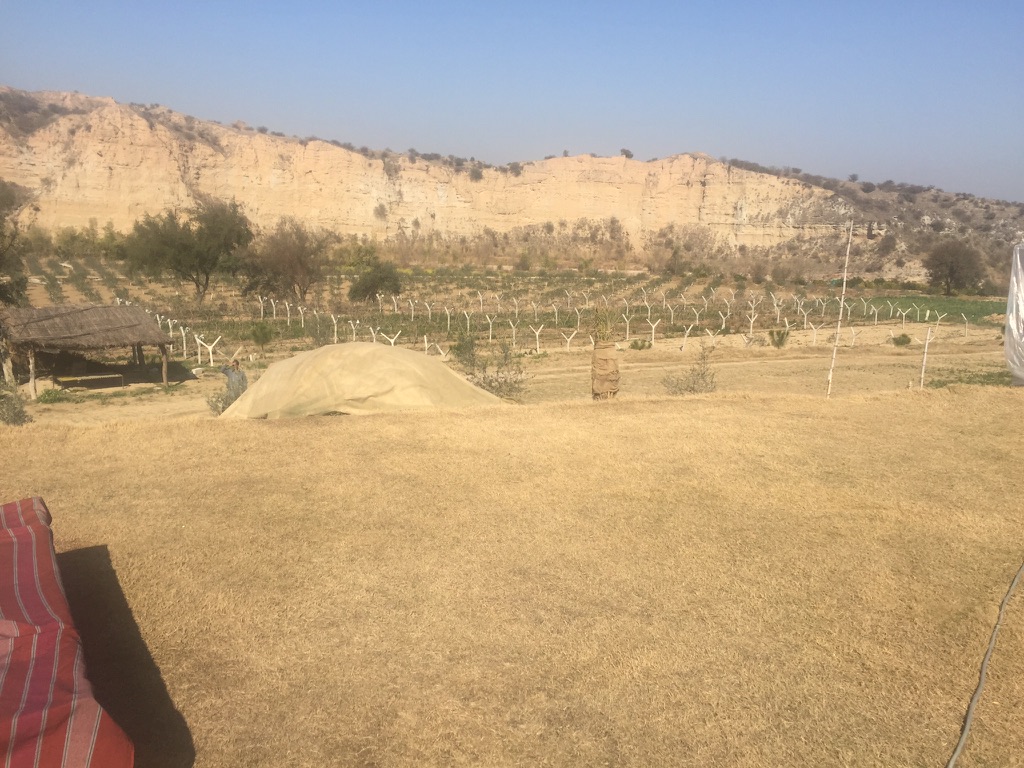
Abstract
Olive trees are naturally suited to Mediterranean-equivalent climates, hot dry summers and mild rainy winters, and this guide sets out two PQNK establishment paths depending on whether a farm has an existing irrigation source. For irrigated land, the sequence follows the standard PQNK conversion: level the ground, break the hardpan, wash down accumulated salts with a heavy irrigation, then form permanent 42-inch raised beds with 18-inch furrows sized to the local tractor track, and grow a cover crop on the beds before transplanting. Trees are spaced 10 feet between rows and 8 feet within the row, a high-density layout giving roughly 545 plants per acre, with irrigation applied sparingly through the furrows since a tree only needs water equal to what it loses through transpiration.
For rain-fed, sloping land with no irrigation system, the guide details an 'optimized curved furrow and borehole' method built around a single strategically placed borehole per tree, 1 foot in diameter and 4 feet deep, dug on the downhill side inside a shallow curved furrow that intercepts and channels rainwater into it. A separate planting hole, 1 foot in diameter and 2 feet deep, is dug at least 2 feet away on the uphill side and backfilled with the same loose soil for root establishment. The entire area, planted spot, open borehole, and furrow, is then covered in thick organic mulch, which absorbs rain, dew, and humidity and keeps the underground reservoir charged through the dry season; strawberries or other low-height crops can be intercropped in the mulched zone around each young tree for additional early income.
Once established, orchard management is reduced to two tasks, harvesting and pruning, and the guide recommends combining them into a single operation: removing dead, diseased, or inward-growing branches while picking fruit. The paper argues this consistent, stress-free nutrient and water supply from the soil ecosystem breaks 'biennial bearing,' the on-off fruiting cycle common in conventionally managed olives, because the tree is never forced to exhaust its energy reserves in a heavy year and rest the next.
A year-by-year yield table projects output per tree rising from 0-5 kg in years 1-2 (establishment, light formative pruning), to 10-20 kg in years 3-4 (canopy management as yield ramps up), 25-40 kg in years 5-7 (sustained productivity), and 45-60+ kg from year 8 through 15-plus (full genetic potential, minimal management beyond harvest and light annual pruning). The guide frames this trajectory as evidence that the PQNK soil system lets the tree grow and fruit simultaneously rather than trading one for the other.
Key Takeaways
- Two establishment paths: irrigated high-density planting at 10ft x 8ft spacing (~545 plants/acre) on 42-inch raised beds, or a rain-fed 'curved furrow and borehole' system for sloping, non-irrigated land.
- The rain-fed borehole is 1 foot in diameter and 4 feet deep, positioned within a curved furrow on the downhill side of each tree; the separate planting hole is 1 foot in diameter and 2 feet deep on the uphill side.
- Projected per-tree yield rises from 0-5 kg (years 1-2) to 10-20 kg (years 3-4), 25-40 kg (years 5-7), and 45-60+ kg from year 8 onward.
- Consistent soil-driven nutrition is presented as the mechanism that eliminates 'biennial bearing,' the heavy-year/rest-year cycle typical of conventionally managed olive trees.
- Long-term management reduces to two combined tasks: harvesting and pruning performed as a single pass, removing dead, diseased, or inward branches while picking fruit.
- No chemical fertilizer or agrochemicals are used at any stage; the mulched borehole system alone is sized to meet a tree's annual water requirement from rain, dew, and humidity.