
Fruits & Orchards
Olive
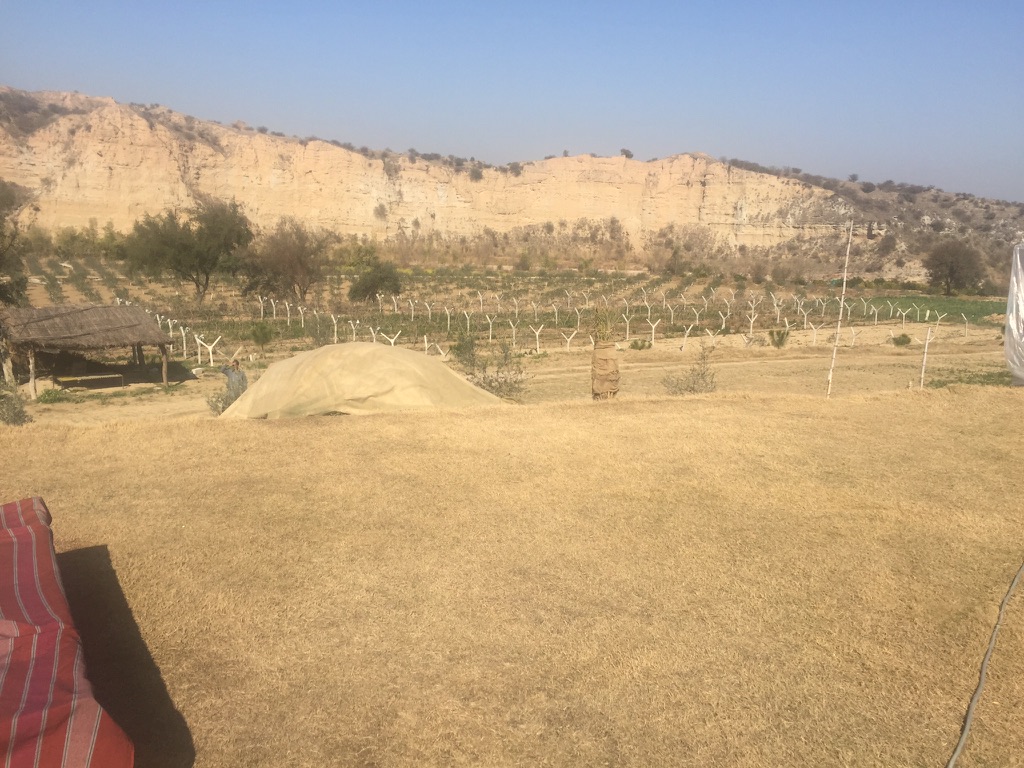
Two orchard paths under PQNK: high-density irrigated planting, or a clever rainwater-harvesting system for dry, sloping land.
Like every PQNK crop, Olive is governed by the same four principles: no soil disturbance, no inundation, permanent biological cover and maximum biodiversity. What follows is specific to Olive — the engineering and management, not the underlying biology.
Overview
Pedaver's farmer's guide to establishing an olive orchard offers two paths depending on land and resources: high-density planting for irrigated land, and an ingenious "curved furrow & borehole" rainwater-harvesting system for rain-fed, sloping land with no irrigation access.
PQNK Practices Applied
- Irrigated land: permanent 42-inch raised beds with 18-inch furrows, high-density spacing of 10 ft × 8 ft (about 545 plants per acre)
- Rain-fed slopes: a curved furrow on the downhill side of each tree traps rainwater into a dedicated 1 ft × 4 ft borehole, sized to store a full year's water requirement
- The tree's own planting hole is dug uphill of the borehole and refilled with loose, aerated soil for root establishment
- Thick organic mulch over the planted area, furrow and borehole absorbs rain, dew and humidity, and keeps the whole system moist year-round
Results & Testimony
With as little as 400mm of annual rainfall properly captured in the soil, this system makes olive orchards viable on rolling, rain-fed land with no irrigation infrastructure at all.
Related Knowledge Papers
The full science and field data behind olive under PQNK.