
Industrial Devastation To Natural Abundance
The Discovery · Chapter 20
The Naming of PQNK
From Paradox to Picnic, the System Codified and Named
Release 1.1 · 2026-09-28
If you use “Listen”, the text of the page may be sent to your browser or operating system’s speech provider, such as Apple, Google or Microsoft, depending on the voice your device uses. Pedaver does not process, transmit or store any audio.
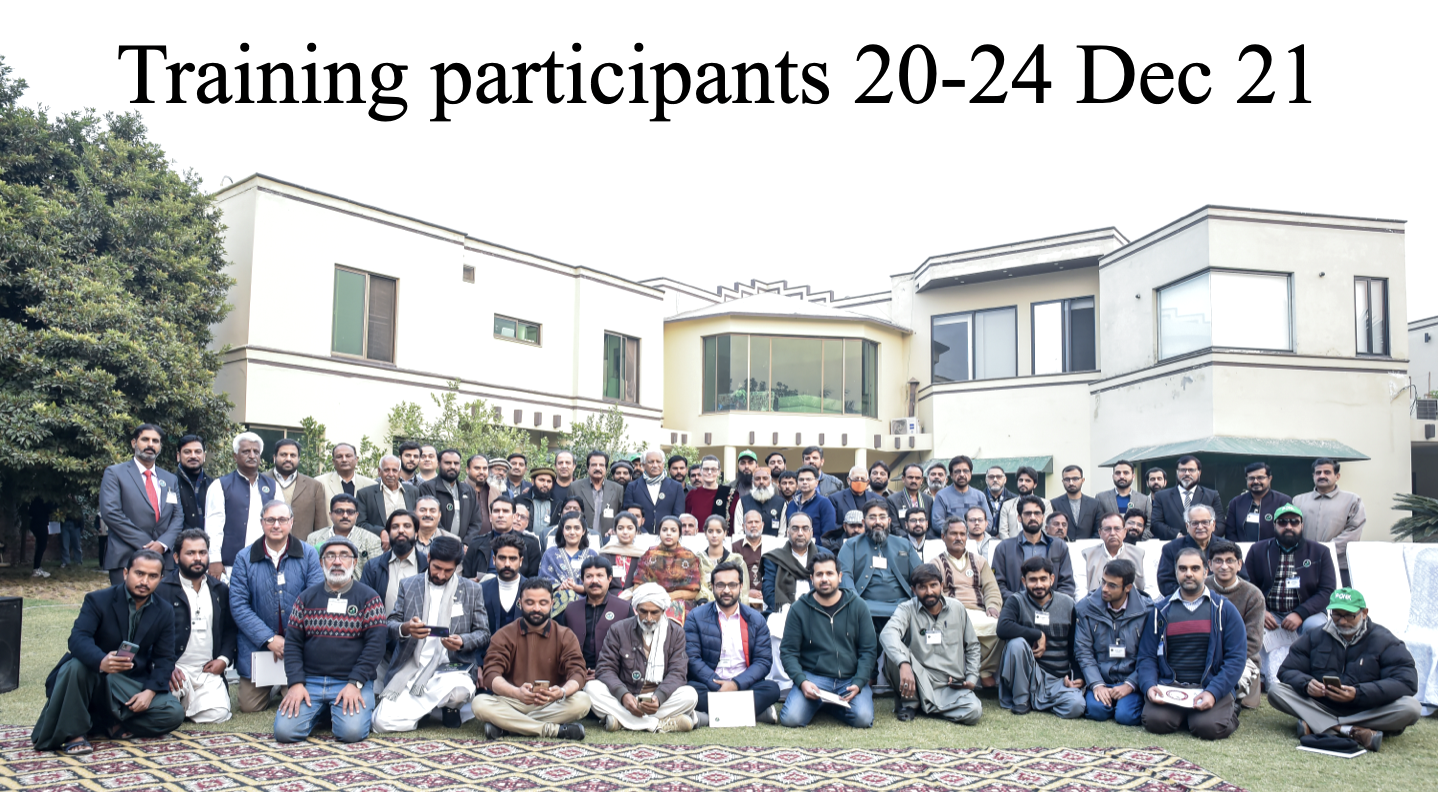
PQNK training participants – final session
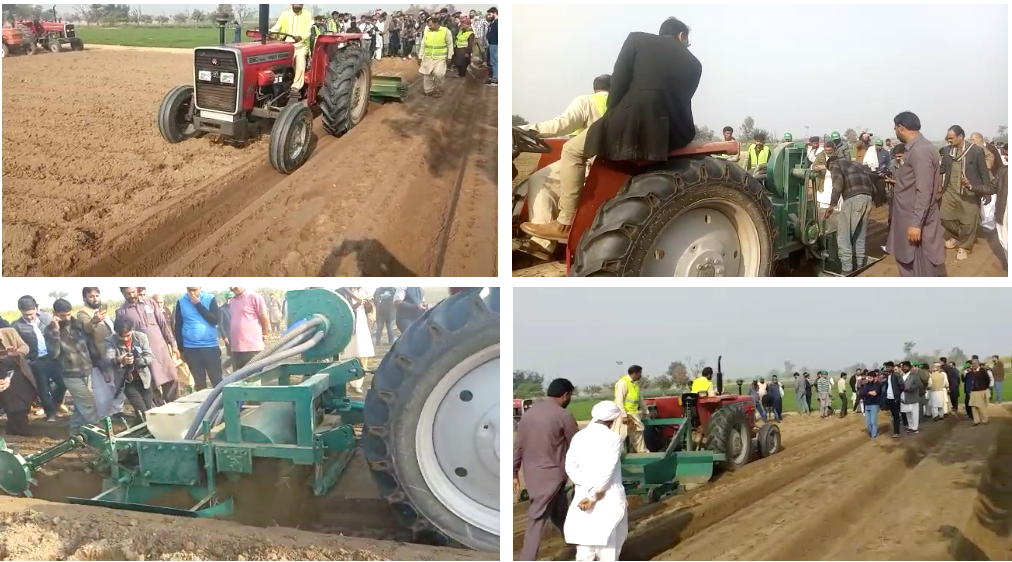
PQNK field training participants observe transformative machines in operation.
“A name is not cosmetic. A name is a claim about what a thing is. When I named this system Paedar Qudratti Nizam Kashatqari, I was not describing a technique. I was claiming that agriculture, practised according to the natural order, is by definition permanent and sustainable. And that any system that is not permanent is not really agriculture. It is mining.”
Asif Sharif, Lahore, 2014
FROM PARADOXICAL AGRICULTURE TO PQNK
This production system suppressed pests through biological regulation rather than routine dependence on pesticides. It maintained fertility through the continuous cycling of organic matter and nutrients rather than through a production system built around repeated applications of synthetic fertiliser. To someone trained within the conventional agricultural framework, such results appeared contradictory. More production was being achieved with less water, less tillage, less energy, less seed, less labour, and fewer purchased inputs. It was More from Less.
It was this apparent contradiction that led Prof. Dr. Norman Uphoff, during Asif Sharif’s visit to Cornell University, to describe the production system as “Paradoxical Agriculture.” The paradox was not in the biology. Natural ecosystems had long demonstrated that biological production could be sustained through cycling, diversity, soil protection, water management and biological regulation. The paradox existed between what the field results were demonstrating and what the prevailing agricultural framework had conditioned people to expect. Paradoxical Agriculture was therefore an appropriate description of how the system appeared when viewed through the assumptions of conventional agriculture.
Later, the name PQNK, Paedar Qudratti Nizam Kashatqari, was adopted. The change was more than a change of terminology. Paradoxical Agriculture described the apparent contradiction; PQNK defined the science behind it. The new name expressed a production system based on the operating principles of the natural terrestrial ecosystem and gave that system a distinct identity rooted in the language and farming culture from which its agricultural application had emerged.
Between the first mechanised raised-bed rice experiment of 2009–10 and the adoption of the PQNK name came an important period of observation, engineering and field development. The task was to translate the principles increasingly understood from natural ecosystem function and field experience into a practical agricultural system that could be taught, repeated and progressively improved. Raised beds, controlled water application, reduced soil disturbance, biological soil function, crop establishment methods and machinery all became parts of this continuing development. The rice experiment had provided important measured evidence that a radically different production pathway was possible. The years that followed were about understanding how far that pathway could be taken.
Paedar Qudratti Nizam Kashatqari gave that developing science a name. Its meaning reaches beyond a particular crop, technique or machine. It describes agriculture moving through regeneration towards a sustained, self-regulating, near-closed-loop biological production state, in which soil, water, plants, microorganisms and biodiversity function together and dependence on recurring external intervention is progressively reduced. The familiar pronunciation, “picnic,” made PQNK memorable and accessible, but the significance of the name lies in the production philosophy it represents: nature is the production system, and agricultural engineering must learn to operate within its rules.
THE NAME: WORD BY WORD
Each word in the PQNK name was chosen with precision to capture a specific dimension of what the system is. Together these four words constitute a complete philosophical statement about the relationship between agriculture and the natural order. The following table unpacks the name word by word.
Paedar (Pay-dar). Enduring, permanent, sustainable, implies a system that does not deplete what it uses, that can continue indefinitely without degradation. To state this with precision: when three specific conditions are absent, inundation of soil with standing water, mechanical inversion through tillage, and deliberate bare soil exposure, the biological system renews mineral availability at a rate that continuously exceeds agricultural withdrawal. This is an empirical claim, not a circular one. The conditions for permanence are identifiable, achievable, and reversible. Remove the three disruptions, and the biology reconstitutes with the speed of a biological process that has been waiting for its conditions to be restored.
Qudratti (Qud-ra-ti). Natural, of nature, according to the divine order of creation, the adjective that qualifies the entire system as grounded in natural law rather than industrial chemistry.
Nizam (Ni-zam). System, order, organisation, acknowledges that what PQNK describes is not a technique or a practice but a complete, self-organising biological system.
Kashatqari (Kash-at-qar-i). Agriculture, farming, cultivation, the domain to which the paedar qudratti nizam is being applied: not gardening, not conservation, but full-scale commercial crop production.
PQNK — Paedar Qudratti Nizam Kashatqari, “picnic”. PQNK is the Natural Ecosystem Science of Production Agriculture: a regenerative transition that restores cultivated land to a sustained, self-regulating, near-closed-loop biological production state, where soil, water, plants, microorganisms, biodiversity and atmosphere function as one integrated living system, continuously cycling resources and sustaining production with minimal dependence on external inputs and disturbance.
The completeness of this name is worth pausing on. ‘Paedar’ establishes the permanence claim: not sustainable in the weak sense of merely less damaging than the alternative, but permanent in the strong sense of a system that genuinely does not deplete what it uses, provided the three conditions that destroy biological function are absent. Those conditions are inundation, tillage, and bare soil. The permanence is not a metaphysical property of the system; it is the consequence of allowing the biological machinery to function without interruption. Identify the conditions. Remove them. The permanence follows. ‘Qudratti’ establishes the grounding claim: the system is natural not as a marketing description but as a biological fact, it operates through natural mechanisms and is validated by natural precedents. ‘Nizam’ establishes the systems claim: this is not a set of practices but a self-organising biological order that, once initiated, maintains itself. And ‘Kashatqari’ establishes the ambition: this is agriculture in the full commercial sense, not a garden or a hobby or a conservation project, but a production system for farmers who need to make a living from the land.
WHY NOT ‘ORGANIC’, ‘REGENERATIVE’, OR ‘NATURAL’?
The choice of a new name, rather than positioning PQNK within an existing agricultural movement such as organic farming, regenerative agriculture, or natural farming, was deliberate and reflects specific, documented differences between PQNK and each of these approaches.
PQNK is not organic farming. The certified organic movement, whatever its merits in reducing chemical exposure, is fundamentally an input-substitution system: it replaces synthetic inputs with permitted organic ones, purchased compost, purchased bio-fertiliser, purchased organic pesticide, certified organic seed, without addressing the biological architecture of the soil that determines whether any inputs are required at all. PQNK does not purchase any input, organic or synthetic. It builds the soil biological system that makes input purchase unnecessary. Once the field reaches maturity, often around the third crop cycle, a management target rather than a guarantee, PQNK requires no compost, no bio-fertiliser, no biological pest spray, no certified seed. Organic farming, at its most advanced level, still requires all of these. PQNK is organic-plus: it achieves what organic farming aims for through biological restoration rather than organic input substitution.
PQNK is not regenerative agriculture. Regenerative agriculture is a set of broad principles, reduce tillage, add diversity, build soil organic matter, without a standardised, measurable, reproducible protocol. Different practitioners describe very different practices as regenerative. The term has no agreed definition, no consistent methodology, no reproducible outcome standard, and no mechanism for ensuring that what is claimed as regenerative is actually achieving biological recovery. PQNK is precisely the opposite: an eight-step protocol with four absolute prohibitions, four positive principles, specific tool requirements, specific mulch application standards, and measurable outcome targets that allow a farmer, an extension worker, or a researcher to confirm that the system is being implemented correctly and that it is producing the results it promises.
PQNK is not natural farming. PQNK is not simply another form of natural farming. Natural farming approaches, including those associated with Masanobu Fukuoka in Japan and Subhash Palekar in India, share important principles with PQNK, particularly reduced soil disturbance, reduced dependence on chemical inputs and greater reliance on biological processes. PQNK, however, begins from a broader premise: the natural terrestrial ecosystem is itself the production system designed by nature for vegetation. Its fundamental operating principles function across topographies, climates, soils, crops and naturally available water resources. PQNK identifies these principles and translates them into production agriculture without changing the underlying biological process.
The same principles therefore apply whether the land is flat, sloping, arid, humid, hot or cold; whether the crop is rice, wheat, cotton, maize, vegetables, orchards or perennial vegetation; whether moisture comes from rainfall, dew, humidity from air, irrigation, groundwater or combinations of available sources; and whether the farmer operates one acre or 100,000 acres. The engineering, machinery, crop geometry and water-delivery method may change with local conditions and scale, but the biological process does not. Soil remains protected and undisturbed, water and air are managed within the root zone, organic matter remains in biological circulation, biodiversity performs ecological functions, and production is driven increasingly by the living system rather than recurring external intervention.
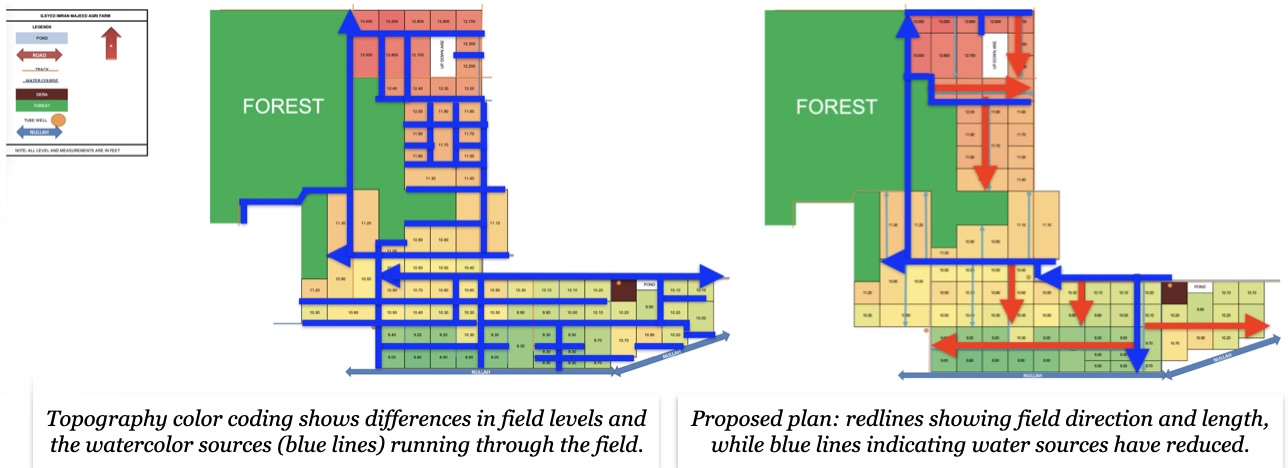
This is why PQNK can operate on a small family farm as well as within highly mechanised commercial agriculture. Tractor-based farming, precision machinery, permanent raised beds and large-scale crop production are not the definition of PQNK; they are engineering adaptations that allow the same natural ecosystem principles to function at commercial scale. PQNK is therefore not defined by farm size, crop, geography, climate or machinery. It is defined by the operating rules of the natural ecosystem. The scale may change. The engineering may change. The crop may change. The source of water may change. The process remains the same.
Organic farming substitutes organic inputs for synthetic ones. Regenerative agriculture describes principles without a protocol. Natural farming offers philosophy without commercial precision. PQNK does none of these. It restores the biological system that makes all inputs unnecessary and provides a reproducible eight-step protocol for doing so on any farm, in any climate, with maturity judged from field evidence rather than a fixed number of crop cycles.
THE EIGHT STEPS: THE PROTOCOL CODIFIED
The eight-step PQNK transition protocol converts a conventionally managed field into a permanent biological production system. The sequence is practical rather than ceremonial: first correct the physical conditions created by conventional agriculture, then establish the permanent field architecture, restore continuous biological cover, and manage every succeeding crop without rebuilding the soil. The principles are universal, but their engineering is adapted to topography, soil, climate, water source, crop and scale of operation.
For flood-irrigated flatland, conversion has two distinct machinery phases. The first is the one-time conversion operation: field design, formation of the longest practical plots with minimum soil disturbance, hardpan fracturing and permanent raised-bed formation. These are traction-demanding operations and may require a heavy tractor with normal wide agricultural tyres. The second phase begins after the permanent beds have been formed. From that point onward, field traffic is confined to the furrows and operations are low-disturbance. Ideally, tractors used for SIPP/VIPP planting and other routine bed operations should carry narrow tyres, approximately 9–11 inches wide, so the tyres remain within the furrows and do not press the raised-bed sidewalls. Sidewall compaction restricts lateral water infiltration from the furrow into the bed, directly interfering with the hydraulic function of the PQNK bed system.
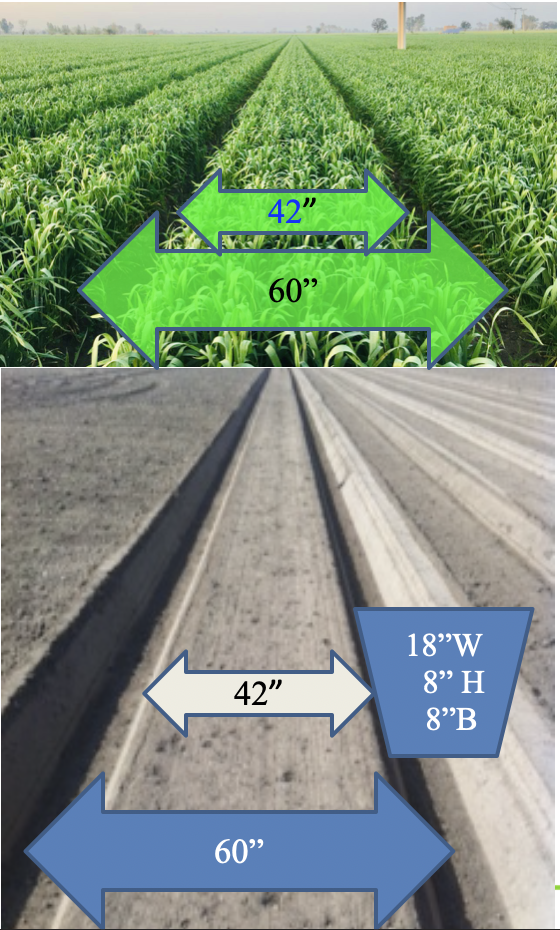
Step One: Design the field. On flat land previously managed by flood irrigation, redesign the field into the longest practical plots that can be irrigated uniformly, while disturbing the soil as little as possible. Field length, water entry, drainage and access roads are considered before permanent beds are formed. Laser leveling may be used where correction is necessary, but the objective is not repeated land preparation. It is a one-time design operation that prepares the field for permanent controlled traffic and furrow irrigation. On sloping or rolling land, the same biological principles are applied through contour-based field design rather than imposing a flatland geometry.
Step Two: Break the hardpan. Where a hardpan (plough pan) has been created by years of tillage and machinery traffic, fracture it once with a heavy-duty subsoiler operating to approximately 22 inches. The hardpan commonly occupies the compacted zone below normal cultivation depth; the subsoiler must pass beneath it to reopen vertical continuity for roots, air and water. This is a conversion operation, not a recurring tillage practice. Because deep subsoiling demands traction, a heavy tractor with appropriately wide agricultural tyres may be used at this stage. The 9–11 inch narrow-tyre requirement applies to routine operations after the permanent beds have been established, not to this heavy conversion pass.
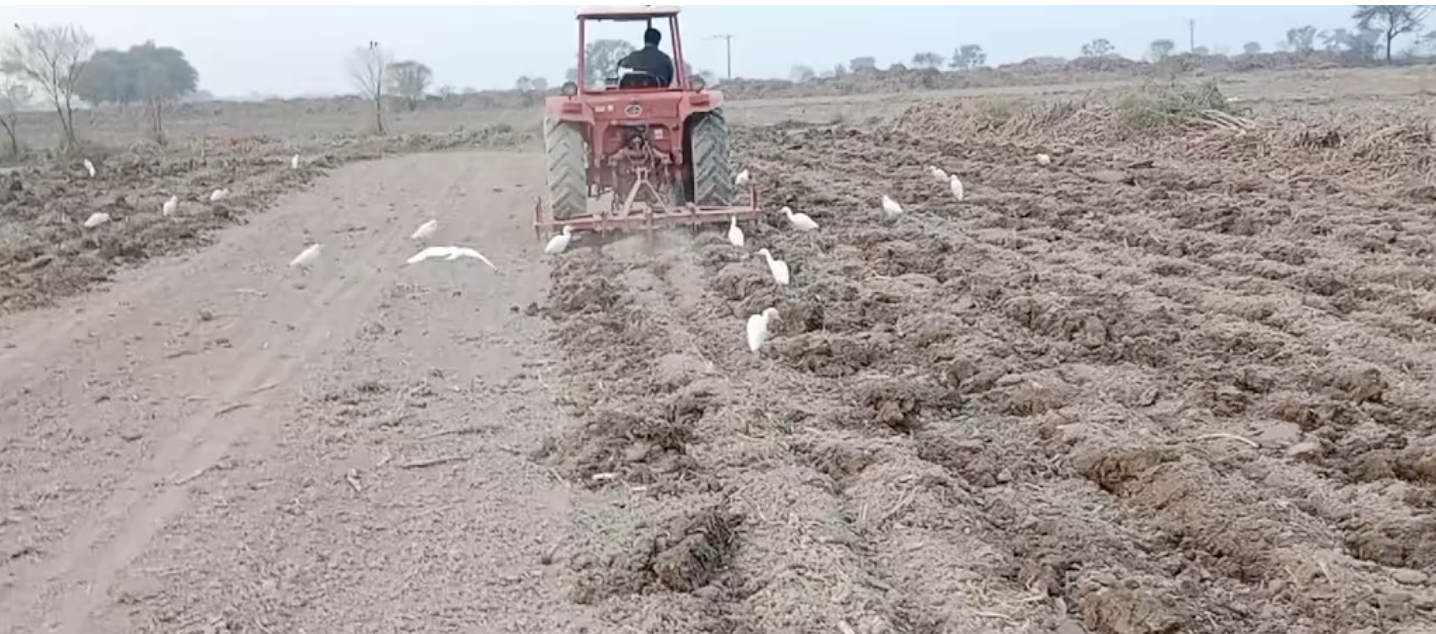
Hardpan is being broken with a subsoiler penetrating soil between 22 and 24 inches.
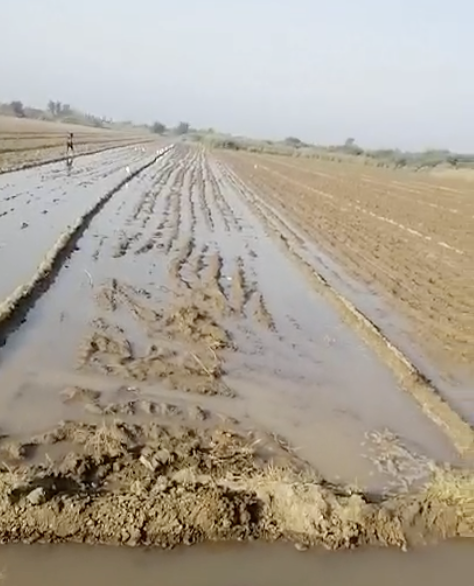
Step Three: Wash the soil where required. After hardpan fracturing, apply a deep water wash so accumulated soluble salts can move downward through the reopened soil profile. Where soil pH is above 8, the PQNK transition practice is to apply approximately 8 kg of sulfuric acid per acre with the irrigation water. This is a corrective transition operation for the stated condition, not a routine recurring input. Local water quality, soil condition and safe acid handling must be considered before application.
Step Four: Form the permanent raised beds. Shape the field into permanent raised beds designed around the tractor wheel track while also considering soil characteristics where adjustment is required. The standard PQNK 42–18 bed-furrow profile is designed for the 45–65 HP tractors commonly used in this region, which normally have a rear tyre centre-to-centre spacing of approximately 58–60 inches. In this configuration, the bed top is 42 inches, while the furrow is 18 inches wide at the top, approximately 8 inches wide at the bottom, and about 8 inches deep. In other regions, where tractor size and wheel-track dimensions differ, the bed-furrow profile must be adjusted to match the tractor geometry and, where necessary, the soil type. The dimensions are therefore adaptable, but the engineering principle is fixed: the tractor tyres must always travel within the furrows under controlled traffic and must never run over the raised beds. This protects the beds from compaction and preserves them as permanent biological production zones. Once established, the beds remain in place from crop to crop and are not destroyed and rebuilt between seasons.
Step Five: Establish biological cover. Grow a vigorous, deep-rooted cover crop such as Jantar where locally appropriate. At termination, retain the roots undisturbed in the soil and place the above-ground biomass on the surface as mulch. The purpose is not merely to add organic matter. Living roots begin rebuilding biological pathways through the soil, while the retained surface biomass protects the soil from direct sun, temperature extremes, raindrop impact and rapid moisture loss. From this point forward, the objective is continuous cover: living plants, retained residue, or preferably both.
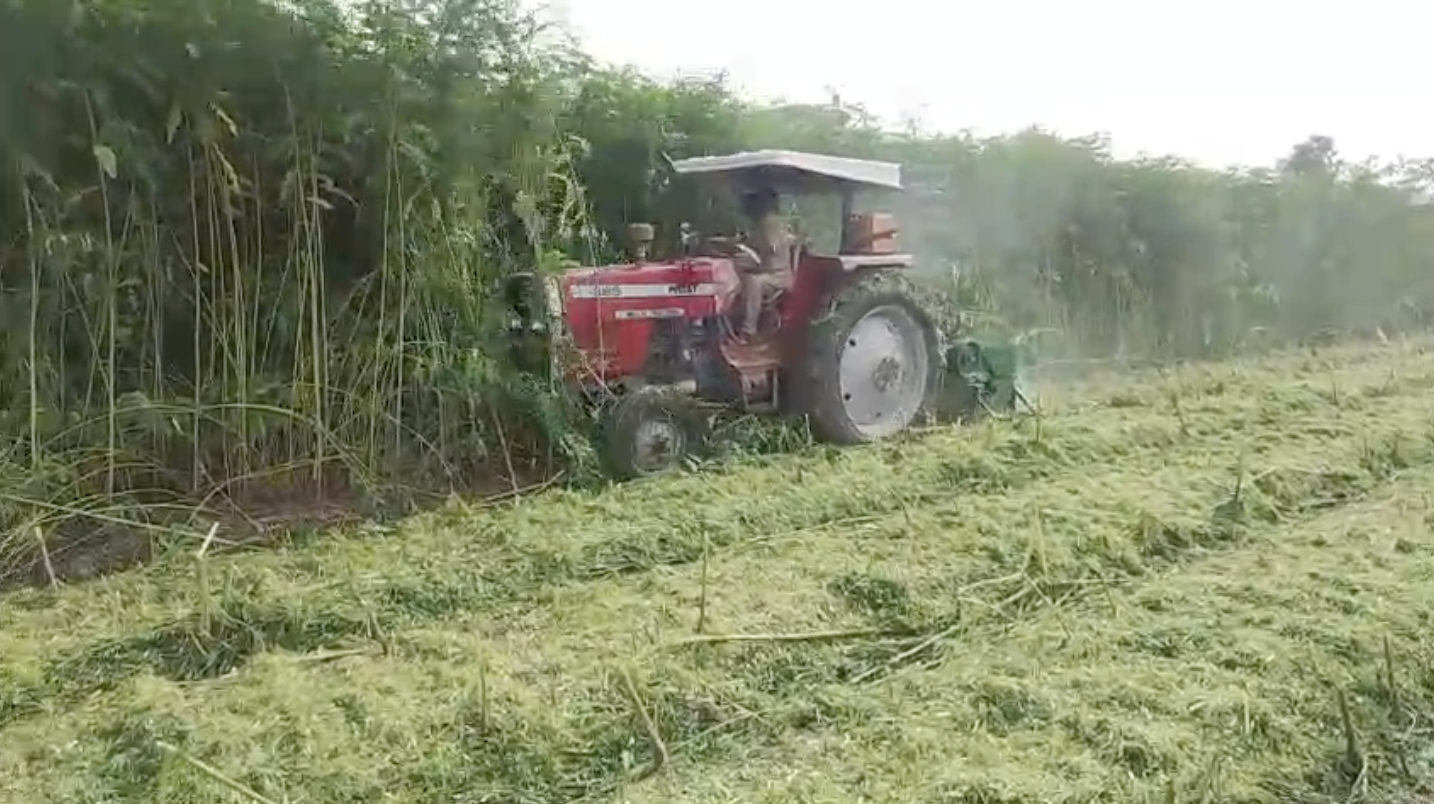
Cover crop grown on beds is being mulched while the next cash crop is planted in one pass.
Step Six: Move to crop-after-crop and crop-in-crop. Plant the next crop without destroying the bed, removing the previous root system or recreating a seedbed. Crop-after-crop becomes the normal sequence, and crop-in-crop is preferred wherever crop compatibility and management allow it. SIPP and VIPP are designed for this purpose: precise seed placement through residue with minimal disturbance. Crop choice, geometry and diversity change with climate, market and farming system, but the biological objective remains continuous roots, continuous cover and increasing functional biodiversity.
Step Seven: Manage soil moisture, not irrigation schedules. Apply Soil Moisture Management (SMM). The objective is a moist, aerated root zone rather than saturated soil. Use the ball test and field observation to decide when irrigation is required. Where furrow irrigation is used, water is applied slowly to approximately half the furrow height, allowing lateral movement into the bed without inundating the soil surface. Rainfall, dew, atmospheric humidity and capillary rise contribute to the field water balance, while irrigation supplies the deficit when required. As soil structure, aggregation, rooting depth and mulch cover improve, the field becomes increasingly efficient in capturing, holding and using available moisture.
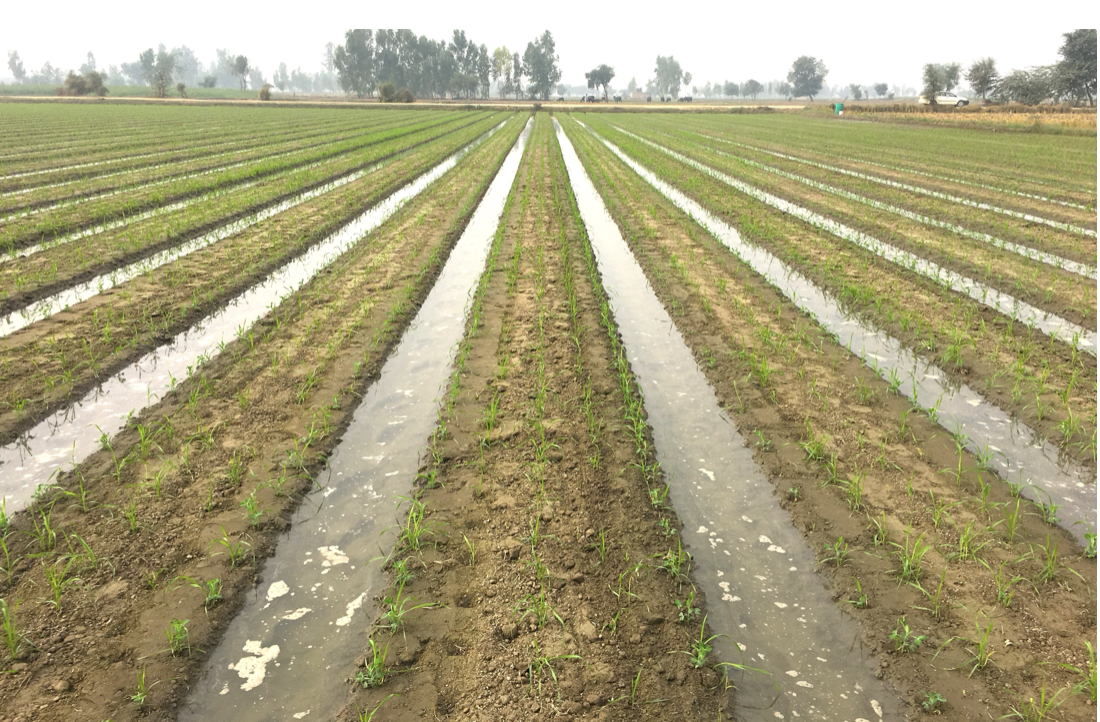
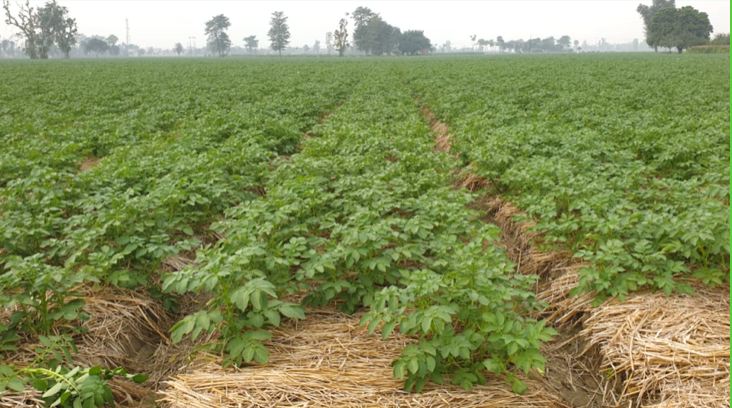
During the transitional phase, water is applied through furrows in case of deficiency - irrigation requirement is reduced to zero when beds are matured and properly covered with organic mulch.
Step Eight: Harvest without resetting the system. Harvest the crop while leaving the soil architecture intact. Retain roots in place and keep useful crop residues on the surface as the mulch and biological feedstock for the next crop. Do not plough, burn or expose the soil in preparation for another season. The next crop enters the living system left by the previous crop. This is the point at which agriculture begins to move from repeated reconstruction toward a sustained, self-regulating, near-closed-loop biological production state.
Conversion is temporary. The permanent bed and the biological process are not. Once the field architecture is established, PQNK changes from rebuilding the field for every crop to managing a living production system crop after crop.
THE FOUR GOVERNING RULES: THE ARCHITECTURE OF THE SYSTEM
The eight steps explain how a field is converted. The four governing rules explain the conditions that must then be protected. They are simple because the natural ecosystem is governed by processes, not by a long list of purchased products.
1. No inundation or flooding. Maintain a moist, aerated soil. Prolonged saturation changes the soil oxygen environment and disrupts the aerobic biological processes on which PQNK depends.
2. No soil disturbance or tillage. Once the conversion work is complete, do not invert or repeatedly disturb the soil. Root channels, aggregates, fungal networks, pore continuity and biological habitats are allowed to persist from crop to crop.
3. Keep the soil continuously covered with organic mulch. Bare soil is an exposed production surface. Mulch buffers temperature, reduces direct evaporation and erosion, feeds decomposer organisms and protects the environment in which soil biology functions.
4. Encourage biodiversity. Diversity above and below ground expands biological functions, distributes risk and strengthens ecological regulation. Crop-after-crop, crop-in-crop, retained roots, cover crops and associated organisms progressively replace the simplification created by monoculture.
These rules operate together. No-till without cover leaves the soil exposed. Mulch over a compacted, repeatedly inundated soil cannot by itself restore the root-zone environment. Biodiversity cannot express its full function if the soil is continually disturbed. PQNK is therefore a system, not a menu of independent practices.
THE TOOLS: ENGINEERING THAT SERVES THE BIOLOGY
PQNK is neither low-tech nor anti-machinery. It changes the purpose of machinery. During conversion, machinery corrects the physical legacy of conventional agriculture and creates the permanent field architecture. After conversion, machinery must operate with minimum power and minimum disturbance so that the biological structure is protected rather than repeatedly destroyed.
The subsoiler. A heavy-duty one-time conversion implement used to fracture the hardpan to approximately 22 inches. This is a high-draft operation, so traction takes priority over narrow tyres. A heavy tractor with normal wide agricultural tyres may be required. Once the hardpan has been fractured and the permanent system established, the operation is not repeated as routine tillage.
The raised-bed shaper. A one-time conversion implement used to establish the permanent bed-and-furrow geometry. The rear tractor tyres travel in the furrows and the bed is formed between them. The standard 42-inch bed is an engineering reference for the common tractor track used in PQNK development; geometry is adapted where necessary so controlled traffic remains in the furrows.
The SIPP and VIPP planters. These are low-disturbance precision planting machines designed to place seed through retained residues without preparing a conventional seedbed. Because planting requires relatively low power and high traction is not the limiting requirement, tractors used after bed formation should ideally carry 9–11 inch wide tyres. Narrow tyres remain inside the permanent traffic furrows and avoid pressing the bed sidewalls. Protecting those sidewalls is important because lateral infiltration from the furrow is part of the hydraulic design of the raised bed.
The mulcher or residue-management equipment. Where standing crop biomass must be reduced, suitable equipment cuts or lays the material onto the soil surface without incorporation. The objective is to retain the biomass as protective cover while leaving roots in place. The machine serves the mulch system; it does not recreate a tilled seedbed.
The machinery requirement therefore changes after conversion. Heavy power and traction may be necessary to correct the inherited physical condition of the field. Once the permanent beds exist, the engineering objective reverses: lighter operations, narrow tyres, controlled traffic and the least possible disturbance. The tractor remains, but it is no longer allowed to redesign the soil every season.
THE PRONUNCIATION AND WHY IT MATTERS
Paedar Qudratti Nizam Kashatqari is abbreviated PQNK and pronounced “picnic.” The familiar sound makes an otherwise unfamiliar four-word name easy for farmers, students and institutions to remember and discuss. Its importance, however, lies in the meaning of the original name rather than in an analogy with the English word picnic.
Paedar expresses permanence and sustainability. Qudratti identifies nature as the governing reference. Nizam establishes that PQNK is a system rather than an isolated practice. Kashatqari places that system in production agriculture. The name therefore carries the central claim of PQNK: agriculture can move through regeneration into a sustained biological state when farming is reorganised around the operating rules of the natural ecosystem.
PQNK AND THE FIVE LEVELS OF PRODUCTION
The five-level framework is a way of locating different production approaches according to their dependence on external inputs and the degree to which biological function carries the production load. It should be read as a conceptual progression, not as a ranking of individual farmers.
Level One: Orthodox. Traditional resource-constrained production in which the farmer may use few purchased inputs, but low biological function, limited mechanisation, weak water control or other constraints keep productivity and income low. Low input use by itself is not PQNK.
Level Two: Conventional or industrial. Production is organised around repeated soil preparation, purchased fertiliser and crop-protection chemicals, simplified cropping and, in many irrigated systems, inundation or heavy irrigation. Productivity depends substantially on recurring external intervention.
Level Three: Organic input-based. Synthetic inputs are reduced or excluded, but production may continue to depend on purchased composts, biological fertilisers, approved pest-control products and recurring external nutrient sources. Chemical substitution can reduce some harms without necessarily restoring the complete soil production system.
Level Four: PQNK transition. The field architecture and biological conditions are being restored. Purchased inputs and corrective interventions are reduced as biological function strengthens. Transitional support may still be used where observation shows a genuine deficiency or unacceptable pest pressure. The purpose of transition is not to satisfy a calendar deadline but to move the production load progressively from purchased intervention to the living system.
Level Five: Sustained PQNK. The field has reached a sustained, self-regulating, near-closed-loop biological production state. Permanent soil architecture, retained roots and residues, biodiversity, biological nutrient cycling and SMM carry the production process with minimal dependence on external inputs and disturbance. Harvested produce still exports matter from the field, so the agricultural system should be understood as near-closed-loop rather than literally closed.
The speed of transition varies with the starting condition of the soil, climate, crop sequence, water quality, management and the degree of degradation inherited from the previous system. PQNK therefore treats regeneration as the transition and the sustained biological state as the destination.
WHAT THIS CHAPTER HAS ESTABLISHED
The naming of PQNK made a developing body of field observation, ecological understanding and agricultural engineering communicable as one system. Paradoxical Agriculture had described the apparent contradiction of producing more from less. PQNK gave the science its permanent identity: Paedar Qudratti Nizam Kashatqari, the Natural Ecosystem Science of Production Agriculture.
The chapter has also established the distinction that governs everything that follows. PQNK is universal at the level of natural operating principles and adaptive at the level of engineering. A one-acre farmer and a 100,000-acre operation may use different machines, crop geometries and water-delivery arrangements, but the biological process remains the same. Conversion corrects the inherited physical damage once; permanent management then protects the living system crop after crop.
The system was now named and codified. The next stage of the story is not the invention of another farming technique, but the accumulation, organisation and communication of the knowledge needed to make this natural production science understandable and usable at scale.
Chapter Twenty-One: Adversity as Laboratory, The Years That Forged the PQNK Knowledge System