

Workforce & Practice Advisories
What Is This White and Green Growth Seen After Irrigation? A Farmer Q&A
Answers a farmer's question about white and green growth appearing on a Khapli wheat plot after a second irrigation, identifying it as beneficial fungal mycelium and early microbial/algal activity, not disease, and advising the farmer to leave it alone entirely.
Abstract
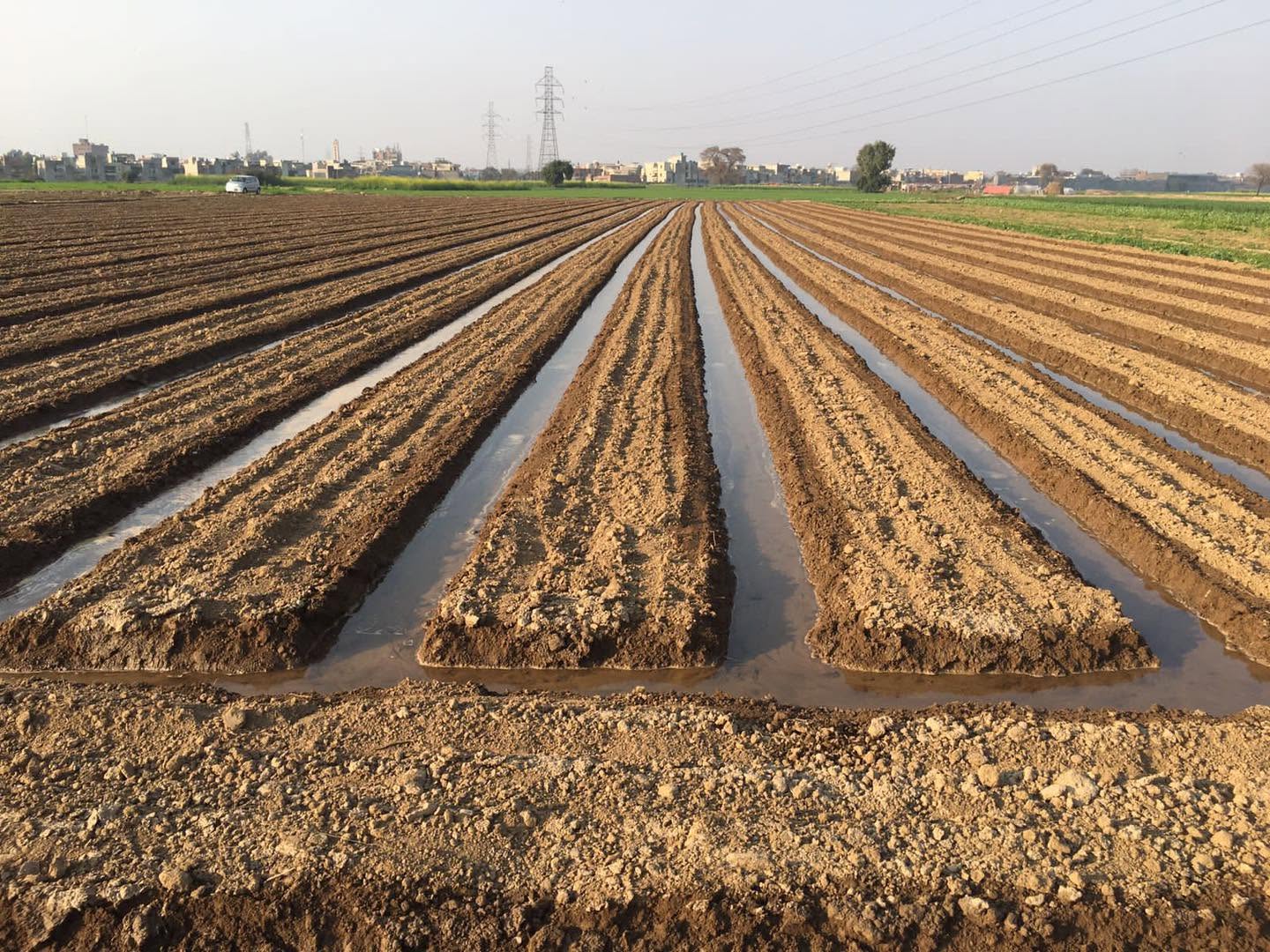
The advisory answers a specific field question: after a second irrigation on a Khapli wheat plot, moist and cooled furrows produced white and green growth, and the farmer asked whether this signaled a problem. The short answer given is that this is beneficial biological activity, not disease, identified as fungal mycelium (the white threads) and beneficial algae or early microbial colonies (the green tint), organisms that appear only when moisture, oxygen, and organic residues or minerals are simultaneously present, meaning the soil is alive and responding, and that a saffron discoloration noted alongside it indicates iron or mineral exposure rather than damage.
It explains why the growth appeared specifically at this point: the soil had previously been dry and biologically inactive, and irrigation restored the water-air balance needed to wake dormant soil life, with the paper noting the Khapli plot's likely low chemical toxicity as a contributing factor, and stating as a general principle that biology always responds before plants show any visible change.
On harm, the answer is unambiguous: the growth is beneficial, breaking minerals into plant-available form, improving soil aggregation, protecting the soil surface from crusting, and supporting root-microbe communication, all of which directly benefit root health. It explains this growth is rarely seen in conventional fields because repeated flooding removes oxygen, chemicals suppress fungi and microbes, and bare soil overheats and dries, meaning biology is either killed outright or never allowed to establish, which the paper argues leads farmers to mistake clean-looking soil for healthy soil when the opposite is often true.
Framed through the PQNK lens, the phenomenon is termed biological activation rather than infestation, following the principle that soil always shows signs of life before plants show improvement, biology first, yield later, a positive indicator rather than a warning sign. The farmer's prescribed response is explicitly to do nothing: not to spray anything, not to disturb the soil, and not to re-flood it, allowing the soil to dry naturally so the growth self-regulates.
A closing technical note distinguishes the two colors more precisely: white mycelium indicates aerobic fungal dominance and improved carbon-mineral exchange consistent with early-stage soil regeneration, while the green tint suggests algal or cyanobacterial presence contributing nitrogen at the soil surface under moist but oxygenated conditions, both of which are expected to disappear or stabilize naturally as the system balances itself.
Key Takeaways
- Identifies the white growth as fungal mycelium and the green tint as beneficial algae or early microbial colonies, both requiring simultaneous moisture, oxygen, and organic residues or minerals to appear.
- States plainly that soil always shows biological activity before plants show visible improvement, biology first, yield later, framing the growth as a positive indicator rather than a warning sign.
- Explains this growth is rarely seen in conventional fields specifically because repeated flooding removes oxygen and chemical inputs suppress the fungi and microbes that would otherwise establish it.
- Prescribes explicit inaction: do not spray, do not disturb the soil, and do not re-irrigate; let the soil dry naturally and the growth self-regulate.
- Distinguishes the two colors technically: white mycelium signals aerobic fungal dominance and carbon-mineral exchange, while green tint signals algal/cyanobacterial nitrogen contribution at the soil surface.