
Nutrition & Food Quality
The PQNK Food Chain: From Soil to Soul — The Principle of Bio-potentiation
Introduces bio-potentiation as the inverse of biomagnification: where conventional agriculture concentrates toxins as they move up the food chain, a PQNK-managed living-soil system is argued to amplify nutritional value and potency at each successive trophic level, from soil to plant to animal to human.
Abstract
The paper opens by naming the conventional agricultural pattern it inverts: biomagnification of toxins, in which synthetic chemicals concentrate in a roughly geometric progression as they ascend the food chain, reaching peak toxicity at the human level. Against this 'Pyramid of Poison,' it proposes a 'Fountain of Life' model in which nutritional potency amplifies from the soil upward rather than degrading.
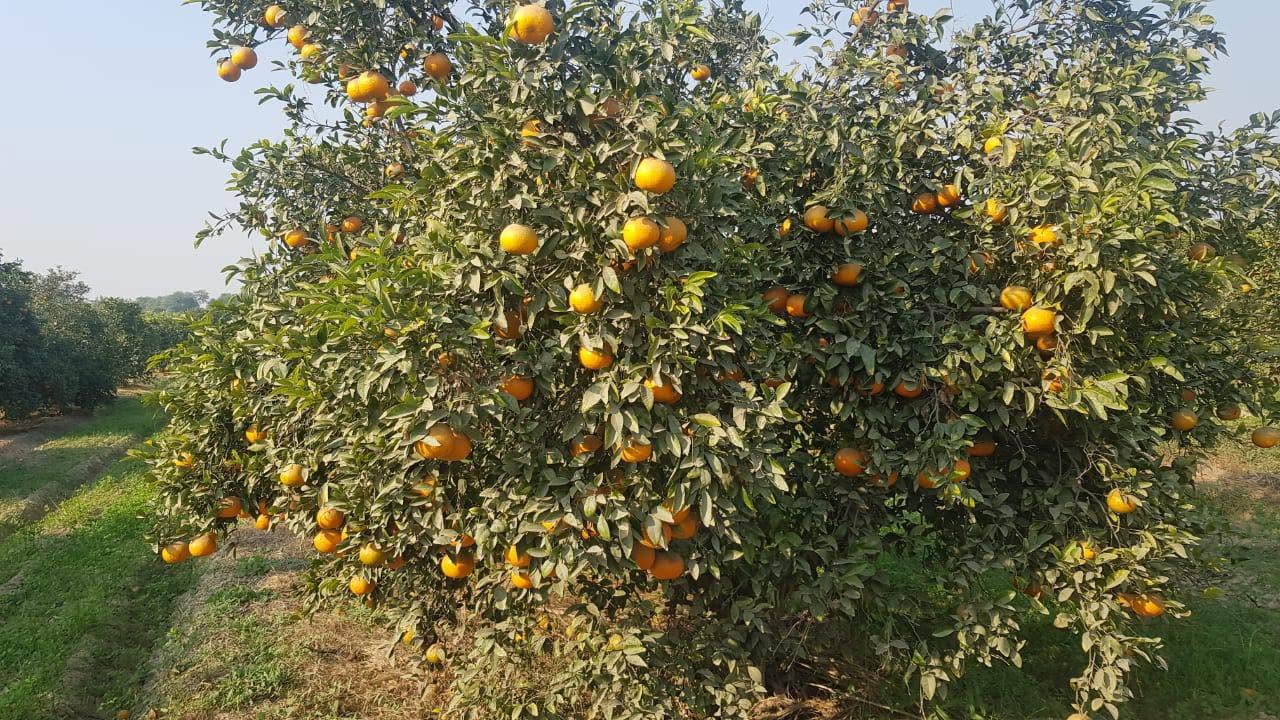
It grounds the foundation of this cascade in self-generating, living soil, citing links between soil microbial diversity, particularly mycorrhizal fungi, and increased plant uptake of phosphorus and zinc, and describing on-farm nutrient cycling, mulching with crop residues, retention of roots in soil, as building a complex soil mineral and organic matrix that moves beyond simplistic NPK management. The soil is described as a 'perpetual knowledge bank' that grows its own capital through recycling on-farm biomass rather than importing it.
The first biological transformation is attributed to the plant itself: in resilient, low-stress ecosystems, plants produce a wider array of secondary metabolites, antioxidants, polyphenols, flavonoids, as part of natural defense, with the paper citing the Baranski et al. (2014) meta-analysis showing organic crops can carry significantly higher levels of certain antioxidants as scientific grounding for this step.
The paper's central mechanism, bio-potentiation, is illustrated through the herbivore stage: beta-carotene from diverse PQNK pasture grass is converted in an animal's liver to pre-formed, more bioavailable Vitamin A (retinol), while research by Benbrook et al. (2013) is cited showing biodiverse grazing produces milk and meat with a superior Omega-3 to Omega-6 ratio and beneficial fats such as conjugated linoleic acid (CLA). The animal is described as a 'nutritional refinement unit' whose output, milk, meat, manure, is of a higher order than its input of grass. At the human consumer stage, the paper references research such as the SMILES trial to argue diets from diverse, organic whole-food systems improve health outcomes not merely by removing toxins but by supplying superior, more assimilable nutrition.
A final section treats dew as a specific, measurable key performance indicator of a balanced farm organism: not a direct nutrient itself, but a catalyst supporting phyllosphere microbe activity and pre-dawn hydration, whose consistent presence signals a thriving PQNK microclimate where water, mineral, and energy cycles are in harmony. The paper closes by framing the real choice as not toxic versus non-toxic food, but a degenerative chain of poison versus a regenerative cascade of nutrition.
Key Takeaways
- Defines bio-potentiation as the structural inverse of biomagnification: nutrient value amplifies rather than degrades as it moves up a healthy, closed-loop food web.
- Cites Baranski et al. (2014) on elevated antioxidant levels in organic crops, and Benbrook et al. (2013) on superior Omega-3 to Omega-6 ratios and CLA content in biodiverse-pasture milk and meat, as scientific anchors for the plant and animal stages of the model.
- Describes the herbivore as a 'nutritional refinement unit' that converts beta-carotene to pre-formed Vitamin A and synthesizes proteins, enzymes, and co-factors absent in the grass it consumes.
- References the SMILES trial and related research to argue organic/whole-food diets improve outcomes through superior nutrient assimilability, not solely through toxin absence.
- Treats dew as a specific, observable KPI of farm-system balance, a catalyst for phyllosphere microbe activity and pre-dawn hydration rather than a nutrient in itself.
- Reframes the consumer choice as being between a degenerative chain of poison and a regenerative cascade of nutrition, rather than a binary of toxic versus non-toxic food.