

Soil Science & PQNK System
The Pest-Free Revolution: Eliminating Agrochemicals by Unleashing Soil Biology with the PQNK System
A knowledge paper arguing that a properly implemented PQNK system leaves crops 98-99% free of pest and disease pressure through native Bt bacteria and a conserved predator population, and that the system's single greatest failure point is not input scarcity but over-irrigation.
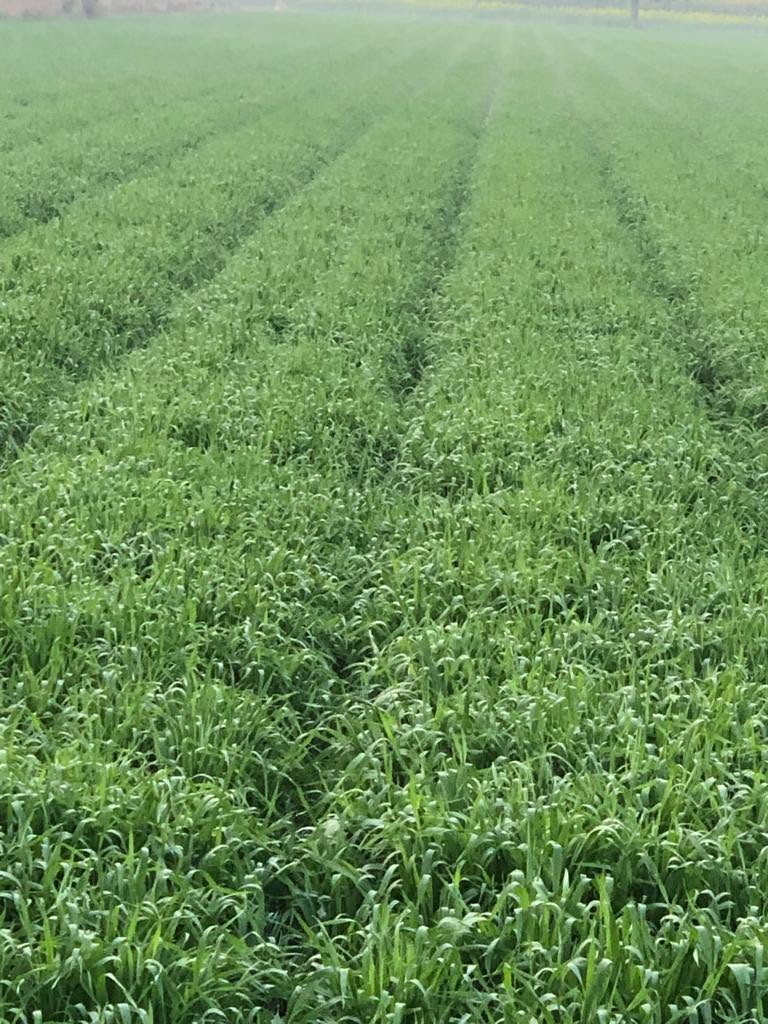
Abstract
This paper presents PQNK as a shift from symptomatic, 'find and destroy' pest control toward Ecological Pest Management, reporting that a properly implemented system achieves 98-99% freedom from pest and disease pressure without chemical pesticides or GMO seed. It documents two core protective mechanisms: native, soil-resident Bacillus thuringiensis (Bt), whose Cry and Cyt protein crystals disrupt a susceptible larva's gut lining after ingestion, and a conserved predator population the paper describes with the field metaphor 'against every pest there are 1,700 predators,' citing examples such as lady beetle larvae consuming 300-400 aphids each and Trichogramma wasps parasitizing pest eggs directly.
A third mechanism, Induced Systemic Resistance (ISR), is described as arising from Plant Growth-Promoting Rhizobacteria that prime a plant's own defense responses, meaning the same practices that foster Bt and predator populations also 'vaccinate' the plant from within.
The paper's most consequential claim concerns failure mode: it identifies the field-observed 1-2% system failure rate as tracing consistently back to over-irrigation and root-zone saturation, not a lack of inputs. Waterlogging dilutes the concentration of Bt toxins and other defensive compounds in the soil solution below a lethal threshold for pests, while simultaneously driving out oxygen and favoring anaerobic pathogens like Pythium and Phytophthora; the resulting oxygen-starved roots trigger a stress cascade of compensatory leaf overgrowth, watery low-brix produce, and pest-attracting volatile organic compounds.
Actionable practice is organized around two levers. Soil preparation includes subsoiling to break hardpan (typically found 7 to 20 inches deep), permanent raised beds built up through in-situ residue recycling rather than imported compost, and precision-disturbance planting via SIPP or VIPP implements that preserve soil structure across 99% of the field. Water management centers on a furrow-irrigation method using lightly compacted furrow bottoms to force lateral, horizontal infiltration into raised beds, which the paper argues is superior to drip irrigation on three counts: it eliminates the bare-soil evaporation typical under drip emitters, avoids the saturated 'bulb' of soil that drip creates around each emitter, and encourages more extensive, resilient root systems.
Weeds are treated as facilitators rather than competitors, since tap-rooted species break up localized compaction and non-cropped field margins provide habitat, nectar, and pollen that sustain the predator population without dedicated insectary plantings.
Key Takeaways
- A properly implemented PQNK system is reported to achieve 98-99% freedom from pest and disease pressure without chemical pesticides or GMO seed.
- The field-observed 1-2% system failure rate traces consistently to over-irrigation and root-zone saturation, not to a shortage of inputs, since waterlogging dilutes Bt toxin concentration below a lethal threshold and shifts soil anaerobic.
- Hardpan is typically found 7-20 inches deep and is addressed by one-time subsoiling; ongoing planting uses precision SIPP/VIPP implements that disturb less than 1% of the field.
- PQNK's lateral furrow-irrigation method is argued to outperform drip irrigation by eliminating bare-soil evaporation, avoiding drip's saturated root 'bulb,' and promoting more extensive root systems.
- Predator conservation relies on the field metaphor of roughly 1,700 predator species per pest, with examples including lady beetle larvae (300-400 aphids consumed each) and Trichogramma parasitic wasps, sustained through weedy field margins rather than dedicated insectary strips.