

Soil Science & PQNK System
Breaking the Perennial Design: How Industrial Agriculture Sabotaged the Soil System and Broke the Production Cycle
Argues that industrial agriculture's foundational error is a deliberate break from the perennial, self-renewing design that soil systems have run on for 400 million years, and traces that break through tillage, bare soil, flood irrigation, and chemical substitution to its production consequences.
Abstract
The paper opens by framing terrestrial soil systems as operating, for over 400 million years, on a perennial design: a continuous cycle of life, death, and rebirth in which soil functions as a living biological engine rather than a passive growing medium. It argues that Ancient Conventional Industrial (ACI) agriculture's core failure was not a technical misstep but a wholesale rejection of that design, substituting a linear, extractive process for a circular, self-fertilizing one.
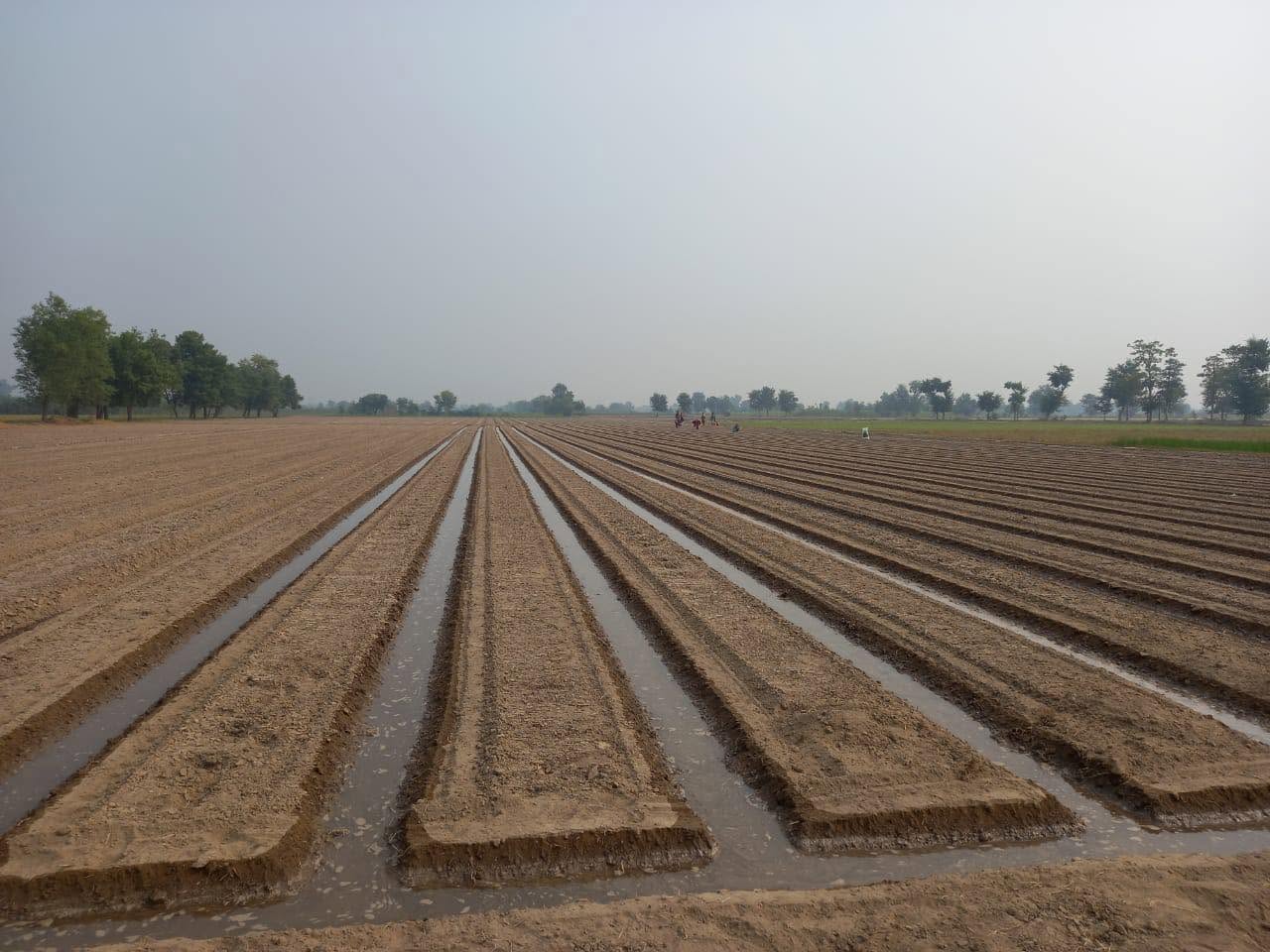
This sabotage is broken into three deliberate acts. First, imposing periodicity on a naturally continuous system: tillage is described as severing fungal networks and burning soil carbon through oxidation, creating the hardpan that seals off the water cycle, while mandating bare soil between crops actively maintains a heat-damaged, eroding 'death state' (soil temperatures exceeding 70°C are cited). Second, breaking the hydrological cycle: bare soil becomes what the paper calls an 'evaporation engine' that pumps water vapor unproductively into the atmosphere, rainfall becomes destructive runoff rather than stored resource, and flood irrigation is framed as a compensating overcorrection that drowns aerobic soil life. Third, replacing biology with chemistry: broad-spectrum herbicides are compared to a chemical antibiotic sterilizing the medium, and soluble NPK fertilizers are described as force-feeding a narrow diet that bypasses the soil's own nutrient bank, producing what the paper calls 'dirt-based hydroponics,' where production depends on external input efficiency rather than land health.
Against this, the paper defines a non-negotiable PQNK Triad: no soil disturbance, no bare soil, and no soil inundation. Adherence to this triad is presented as what allows five interlocking cycles, soil, water, nutrient, climate, and life, to operate perpetually, with crop production treated as an emergent property of a functioning system rather than an extracted output of a broken one.
The paper closes by naming the three shifts it argues are required to restore the perennial design: from periodicity to perenniality (constant soil life and cover), from feeding plants to feeding the soil (recognizing that output depends on internal biological processes), and from chemical substitution to biological management (restoring the microbiome as fertility's primary engine).
Key Takeaways
- Frames industrial agriculture's core error as breaking a 400-million-year-old perennial soil design, not merely using the wrong inputs or techniques.
- Identifies three acts of sabotage: imposing periodicity via tillage and bare soil (with bare soil able to exceed 70°C), breaking the hydrological cycle via evaporation and runoff, and replacing soil biology with herbicides and soluble NPK.
- Defines a non-negotiable PQNK Triad: no soil disturbance, no bare soil, no soil inundation, as the precondition for five interlocking cycles (soil, water, nutrient, climate, life) to run continuously.
- Describes conventional high-input production as 'dirt-based hydroponics,' where output depends on external input efficiency rather than the land's own biological health.
- Prescribes three paradigm shifts for restoration: periodicity to perenniality, feeding plants to feeding soil, and chemical substitution to biological management.