

Water & Climate
The Hidden Crisis: How Industrial Agriculture Has Broken Earth's Water Cycle
A quantified case that industrial agriculture has driven global groundwater tables from 20-30 feet to over 300 feet deep, creating a roughly $200 billion annual crisis addressable through a costed $15 billion, 24-month PQNK rollout plan.
Abstract
The paper opens with a single headline figure: groundwater that sat 20-30 feet below the surface for billions of years has fallen to over 300 feet in many agricultural regions today, a loss of roughly 280 feet of water storage displaced from the ground into atmospheric instability. It attributes this to three compounding industrial practices: bare soil exposed to direct sun regularly reaches 70°C (158°F), driving explosive upward air movement that displaces moisture far from where it fell; heavy machinery compacts soil into hardpan layers that block infiltration entirely, turning rainfall into fast runoff; and the combination displaces trillions of tonnes of water from stable underground storage into unpredictable atmospheric circulation.
The stated annual cost of this disruption is over $200 billion: more than $50 billion in flood damage to infrastructure and crops, over $30 billion in drought-related agricultural losses, over $20 billion in progressively deeper well-drilling and expanded water treatment, and over $100 billion in emergency response and disaster recovery, framed as an accelerating, compounding cost rather than a stable baseline.
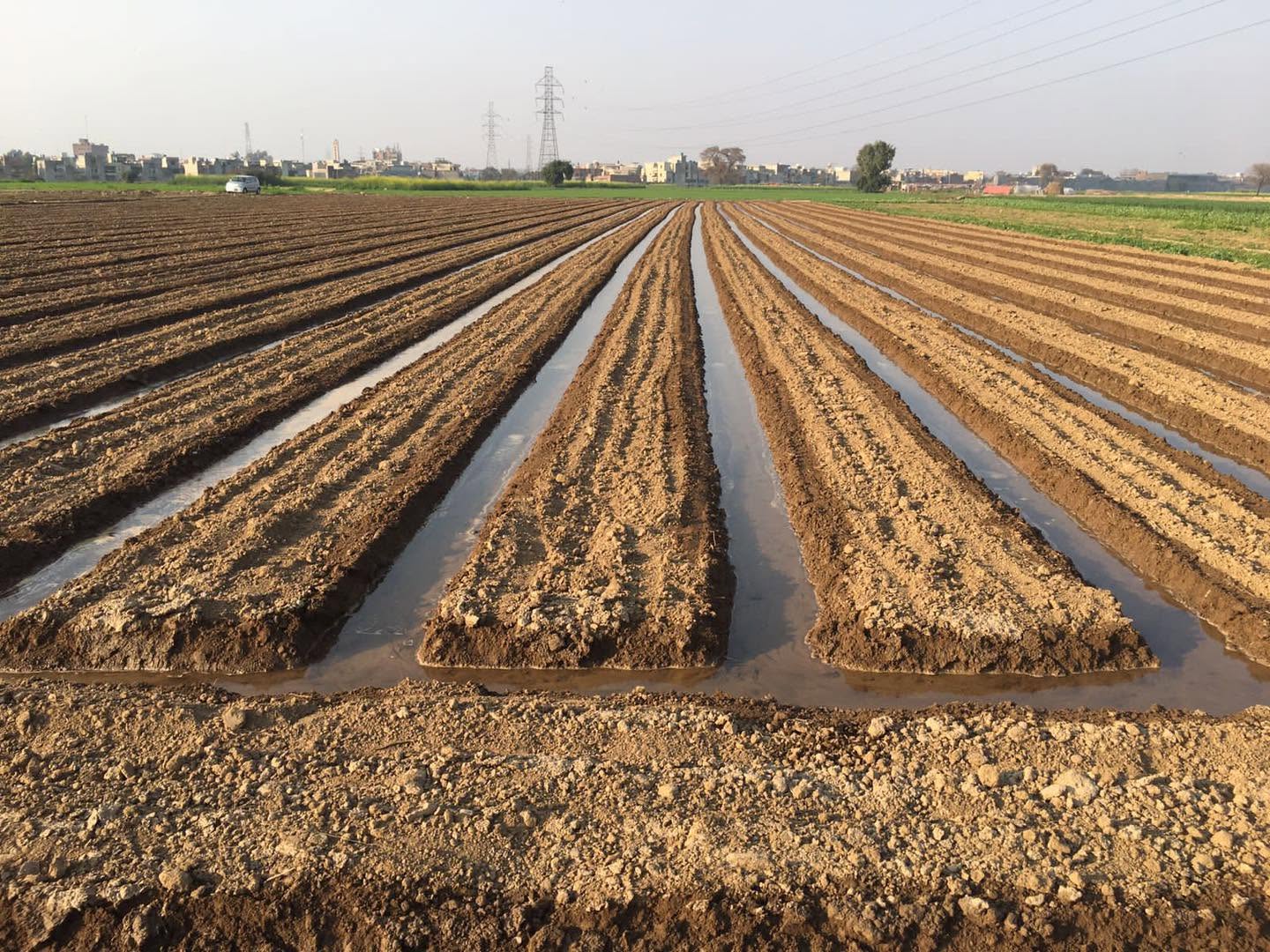
The proposed remedy is the same four-step PQNK sequence scaled to national policy: subsoilers cutting 18-24 inches deep to break hardpan; permanent raised beds preventing future inundation and compaction; a fast-growing cover crop (Jantar) grown to roughly six feet and then mulched in place, root system intact, using a specialized mulcher; and continuous no-till planting into the same beds using SIPP or VIPP precision planters. A complete machine set (subsoiler, raised-bed maker, mulcher, and SIPP/VIPP planter) is costed at approximately $10,000 per 200-acre unit.
The paper's economic argument rests on a stated 13-to-1 return: a one-time $15 billion investment, broken into roughly $3 billion for hardpan-breaking, $4 billion for raised-bed construction, $2 billion for initial cover-crop establishment, $5 billion for machine-set distribution, and $1 billion for monitoring, against $200 billion in current annual losses. It lays out a 24-month, four-phase emergency rollout: crisis declaration and mapping (months 1-6), machinery and cover-crop distribution (months 7-12), completion of hardpan-breaking and bed construction with cash-crop planting beginning (months 13-18), and performance assessment with policy formalization (months 19-24).
Key Takeaways
- Groundwater depth in heavily farmed regions has fallen from a historical 20-30 feet to over 300 feet, a loss of roughly 280 feet of underground water storage displaced into atmospheric instability.
- Current industrial-agriculture water-cycle disruption is costed at over $200 billion annually: $50B+ flood damage, $30B+ drought losses, $20B+ deepening wells/water treatment, $100B+ emergency response.
- Bare agricultural soil regularly reaches 70°C (158°F) under direct sun, hot enough to burn skin, driving explosive upward air movement that displaces water vapour far from where it fell.
- The proposed fix is the four-step PQNK sequence (subsoiling 18-24 inches deep, permanent raised beds, six-foot Jantar cover crop mulched in place, continuous no-till SIPP/VIPP planting), costed at about $10,000 per 200-acre machine set.
- The paper proposes a one-time $15 billion national investment against $200 billion in current annual losses, a stated 13-to-1 return, deployed over a costed 24-month, four-phase rollout plan.