

Soil Science & PQNK System
Subsoiler Line Spacing and Stony-Land Conversion: A Farmer Q&A
A Nigerian farmer's questions on subsoiler line spacing, converting gravelly land, integrating cocoa into an alley system, and diagnosing nitrogen lock-up, answered with the PQNK conversion protocol step by step.
Abstract
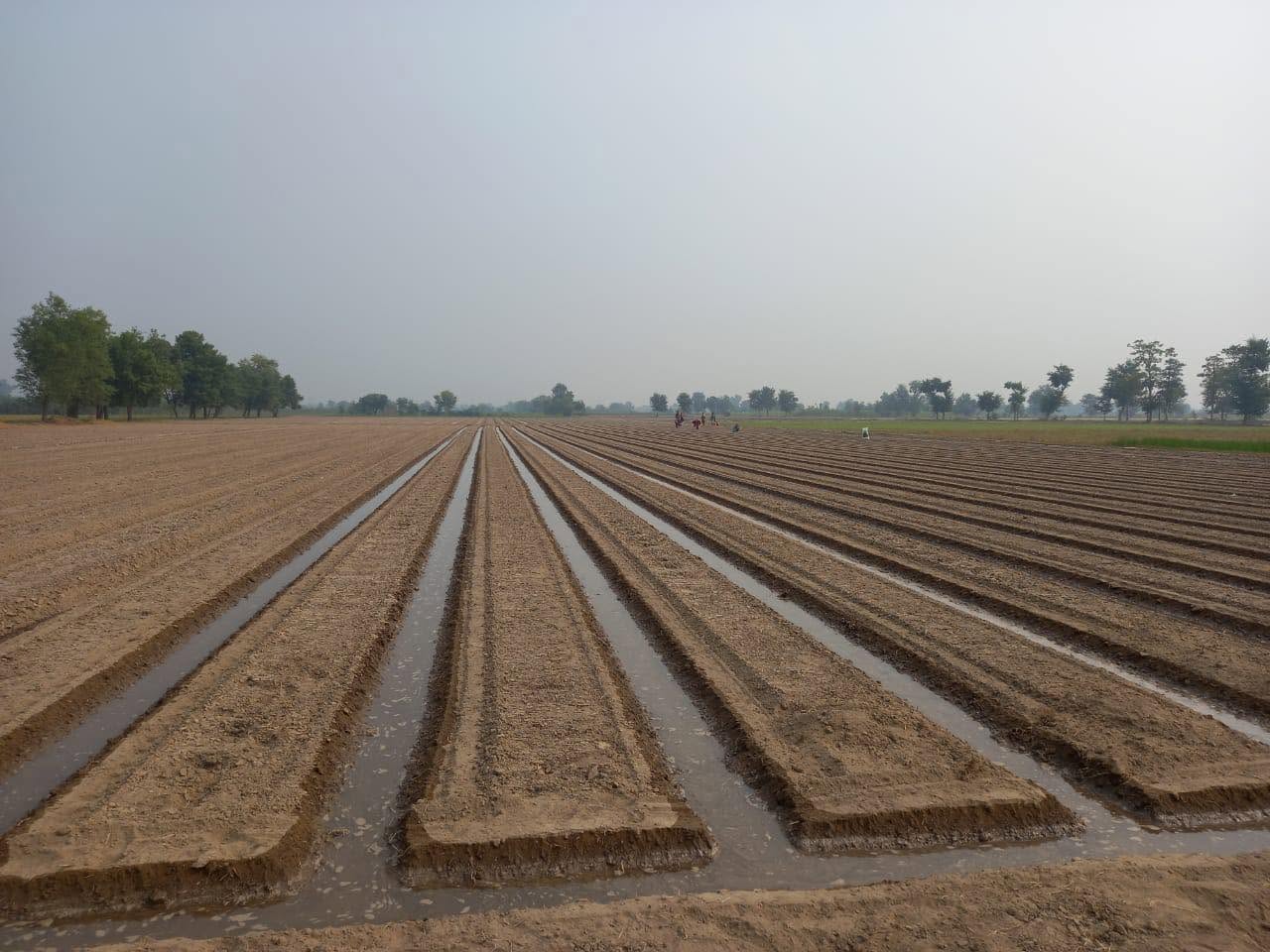
The PQNK guideline for parallel subsoiling lines is 2 to 2.5 feet (roughly 24 to 30 inches), a spacing chosen so the fracture zone from each tine overlaps the next line and shatters the hardpan across the whole field rather than leaving unbroken bands between passes; this spacing also aligns directly with the width of the permanent beds built afterward.
For land with buried gravel or stones, the paper sets out an eight-step conversion protocol that begins with diagnosis rather than mechanical intervention: a soil pit or probe check confirms whether a hardpan actually exists above the stone layer, since subsoiling blind risks dragging stones to the surface where they will obstruct future bed preparation. Subsoiling proceeds only if a hardpan is confirmed, and only deep enough to break that layer without disturbing the stones beneath it.
Once beds are formed, a dense cover crop such as Jantar, sorghum, or millet is grown to full maturity, then cut at ground level rather than pulled, leaving roots to decompose in place and create air and water channels while feeding soil microbes; the cut stalks and leaves are then used as a thick mulch layer that smothers surfaced gravel, conserves moisture, and feeds soil life ahead of zero-tillage planting of the cash crop.
On cocoa integration, the paper reframes the conventional need for tall shade trees as a temporary requirement rather than a permanent architectural constraint: permanent mulch keeps soil cool and moist without a full canopy, while young cocoa trees are protected instead by temporary nurse-tree cover crops providing 1-2 years of dappled shade. The response also addresses the yellowing-seedling question directly: dry, high-carbon sorghum-stalk mulch triggers a temporary microbial nitrogen draw-down, resolved either by mixing in nitrogen-rich green material or, more durably, by running the full cover-crop cycle so that decomposing roots and mixed mulch keep the soil's carbon-to-nitrogen ratio balanced from the outset.
Key Takeaways
- Parallel subsoiling lines are spaced 2 to 2.5 feet (24-30 inches) apart so fracture zones overlap and the entire field is loosened, a spacing that also matches permanent bed width.
- On stony land, subsoil only if a confirmed hardpan sits above the stone layer; subsoiling blind risks dragging buried stones to the surface and hindering future bed preparation.
- Cover crops (Jantar, sorghum, millet) are cut at ground level, not pulled, so roots decompose in place to build air and water channels while the cut tops become surface mulch.
- Young cocoa trees need only temporary nurse-tree shade for 1-2 years; permanent mulch on the beds substitutes for a full shade canopy once established.
- Yellowing seedlings after high-carbon mulching reflect a real but temporary microbial nitrogen draw-down, resolved by mixing carbon-rich and nitrogen-rich mulch or running the full cover-crop-to-mulch cycle.