PQNK Philosophy, Framework & Economics
Recalibrating Pakistan's Textile Value Chain: From Farm to Fabric and Beyond
Deconstructs the cotton-to-garment value chain stage by stage to argue that Pakistani policy misattributes value creation to industrial processing while sidelining the farm as the base of all value, and traces three historical cotton epochs, Deltapine-15, Bt cotton, and PQNK, to argue PQNK is the next necessary revolution.
Abstract
The paper's core argument is that Pakistan's textile policy misattributes value creation, crediting the industry's processing stages for the total value of the exported product while sidelining the farm-level production that establishes the entire chain's quality potential and carries its highest inherent risk. It sets out a stage-by-stage value attribution: farm production as the 100 percent base value, ginning adding roughly 15 to 20 percent, spinning 25 to 35 percent, weaving or knitting 15 to 20 percent, wet processing (calendaring, coloring, printing) 20 to 30 percent, and garment making 40 to 60 percent, the largest single marginal addition, credited to design, branding, and tailoring.
It situates this within a historical retrospective of three epochs of cotton revolution in Pakistan, each credited to the author's own organization. Epoch 1 (1974) introduced the Deltapine-15 variety, tripling yields from 600 kg to 1,800 kg per acre while improving lint-to-seed ratio, fiber length, and softness, with its flower-at-each-leaf-axil trait later indigenized into NIAB-78. Epoch 2 (1990s) introduced Bt cotton in response to bollworm infestation, based on a soil bacterium producing an insect-toxic protein, which saved the crop but eventually produced resistance in pests like the pink bollworm, exposing the vulnerability of single-technology reliance.
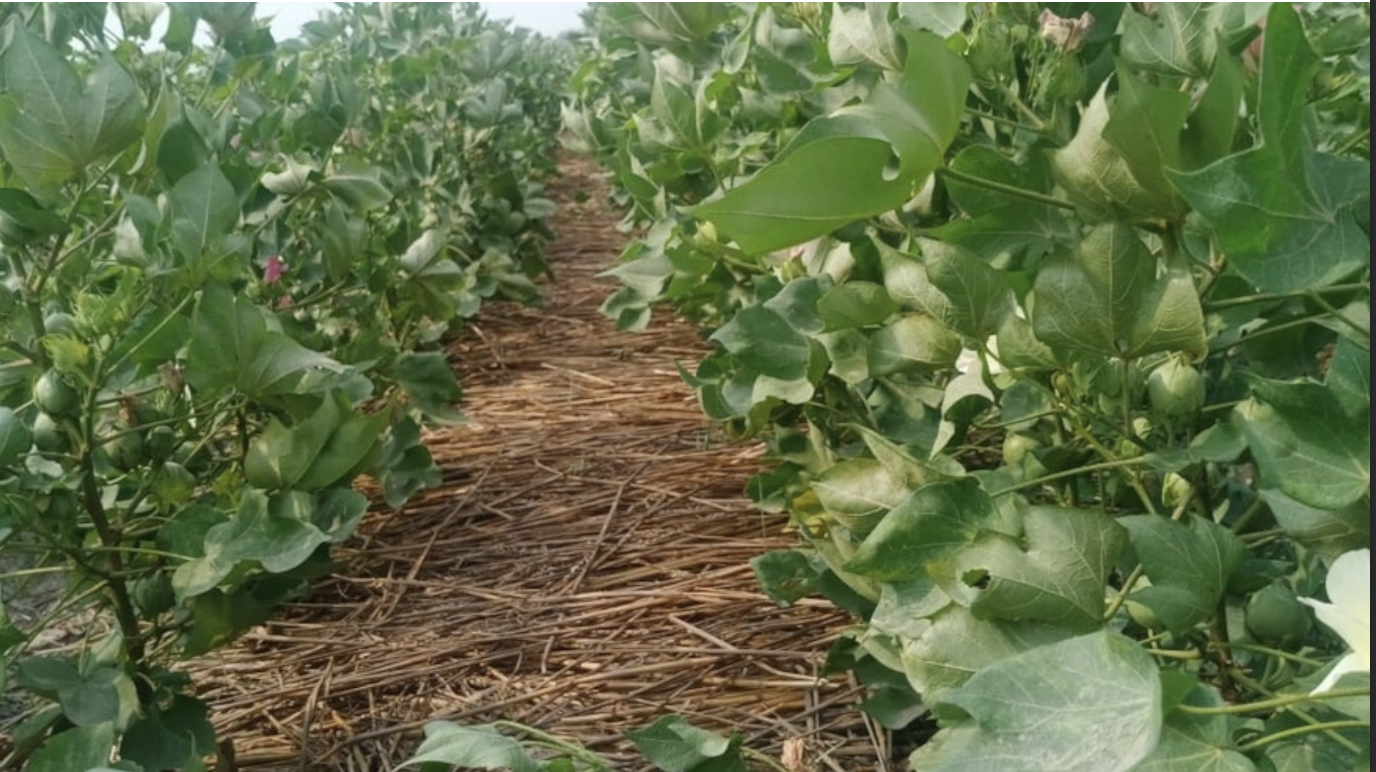
Epoch 3 (2008 to present) is framed as the Sustainable Quality Revolution through PQNK, offering lowest cost of production by eliminating chemical inputs, certified organic 'plus' quality, and a price premium commanding up to double the price in international markets, positioning Pakistan to lead global sustainable textile production.
The paper argues the current policy framework, built on the industry's mischaracterization of value creation, grants undue subsidies, incentives, and rebates that often favor imported raw materials such as cotton and man-made fiber over domestic production, disincentivizing investment in Pakistani cotton and undermining fiber security.
Its recommended policy shift has three parts: phase out subsidies tied to general industrial activity or input imports and redirect funds to farm-level support; mandate contract farming that ties the textile industry to local sourcing, ensuring assured supply, contracted quality parameters such as PQNK organic standards, and lower sourcing cost by eliminating middlemen and import tariffs; and invest directly in the PQNK ecosystem through farmer training, access to PQNK-specified machinery, and certification support for premium international market access.
Key Takeaways
- Assigns specific value-addition ranges across the cotton-to-garment chain: farm production as the 100% base, ginning 15-20%, spinning 25-35%, weaving/knitting 15-20%, wet processing 20-30%, and garment making 40-60%.
- Documents three historical cotton epochs in Pakistan: Deltapine-15 in 1974 (tripling yields from 600 kg to 1,800 kg per acre), Bt cotton in the 1990s (later undermined by pink bollworm resistance), and PQNK from 2008 onward.
- Claims PQNK cotton commands up to double the price premium in international markets while carrying the lowest production cost of the three epochs, due to eliminating purchased chemical inputs.
- Argues current Pakistani textile subsidies and rebates disproportionately favor imported raw materials over domestic cotton production, undermining fiber security.
- Recommends a three-part policy shift: phase out input-import subsidies, mandate contract farming tied to PQNK quality standards, and directly fund PQNK farmer training, machinery access, and certification support.