
Plant Physiology & Production Systems
PQNK Fully Supports Tropism
A farmer-question-and-answer paper on how PQNK relates to plant tropism, phototropism, hydrotropism, geotropism, and acoustic tropism, arguing that PQNK does not apply these natural response systems but removes the soil-level barriers (compaction, chemical damage, blocked water movement) that suppress them in conventional farming.
Abstract
Responding to a farmer question about whether PQNK supports tropism theory, this paper's central position is that tropism, the directional growth response of plants to stimuli, is not a technique to be applied but a natural capacity that functions correctly only when soil, water, air, and biology are restored. PQNK's role, in this framing, is to remove the barriers, compacted soil, chemically burned roots, blocked water movement, dead biology, that suppress a plant's tropic responses in conventionally managed fields, rather than to engineer tropism directly.
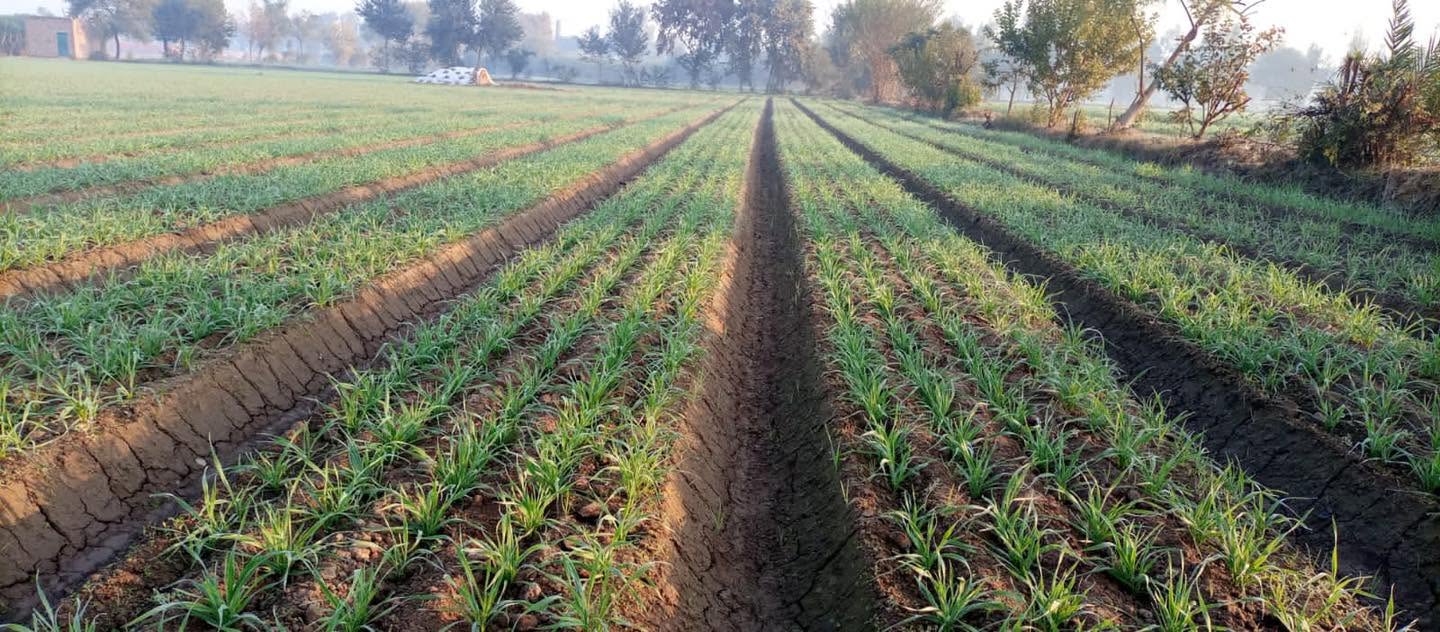
The paper works through each tropism in turn. Phototropism (bending toward light, driven by unequal auxin distribution) is supported through vertical canopy management, proper spacing, and the absence of nitrogen forcing or chemical stress, producing plants that orient their leaves for maximum light capture and stand upright without staking. Hydrotropism (root growth toward moisture) is supported by hardpan breaking, permanent raised beds, and undisturbed living roots and mulch, letting roots grow deeper and wider for better drought tolerance; the paper notes that in compacted or chemically hardened soils, hydrotropism is blocked rather than absent.
Geotropism (roots down, shoots up) is supported by loose, oxygenated, undisturbed soil structure, producing strong anchorage and lodging resistance, with frequent tillage identified as the specific practice that confuses geotropic signals and weakens root architecture. Acoustic tropism (response to sound and vibration), described as an emerging and only partially established field of plant science, is treated cautiously: PQNK does not depend on artificial sound stimulation, but the paper argues that a living PQNK soil is naturally 'noisy' in a biological sense, full of root-zone vibration, flowing water sounds, and root-microbe signaling that a dead, tilled soil cannot produce.
The paper's closing argument is that tropism 'fails' visibly in conventional farming specifically because compaction, chemical root damage, blocked water movement, and excess fertilizer override the natural hormone balance that tropic responses depend on, and that PQNK farmers commonly report deeper roots, better plant posture, reduced irrigation demand, and natural self-orientation of crops as this balance is restored.
Key Takeaways
- PQNK's core claim on tropism: it does not apply tropism as a technique, it removes soil-level barriers (compaction, chemical damage, blocked water, dead biology) that suppress it.
- Phototropism is supported through vertical canopy management, proper spacing, and no nitrogen forcing or chemical stress, producing self-orienting leaves and upright plants without staking.
- Hydrotropism depends on hardpan breaking and undisturbed roots; in compacted or chemically hardened soil, hydrotropism is described as blocked rather than absent.
- Frequent tillage is identified as the specific practice that confuses geotropic (root-down, shoot-up) signals and weakens root architecture, increasing lodging risk.
- Acoustic tropism is treated as an emerging field; PQNK does not rely on artificial sound stimulation but argues a living soil already generates natural root-zone vibration and signaling.
- Reported field effects of restored tropic function include deeper roots, better plant posture, reduced irrigation demand, and improved lodging and drought resilience.