

Crop-Specific Guides
NARC/PNARD Wheat Field Trials: Regenerative Agri-Production System Results (2021-22)
Results from the second year of joint NARC-PNARD wheat trials in Pakistan comparing the standardized RAS/PQNK package against conventional drill and broadcast farmer practice, plus World Bank survey findings on farmer awareness gaps.
Abstract
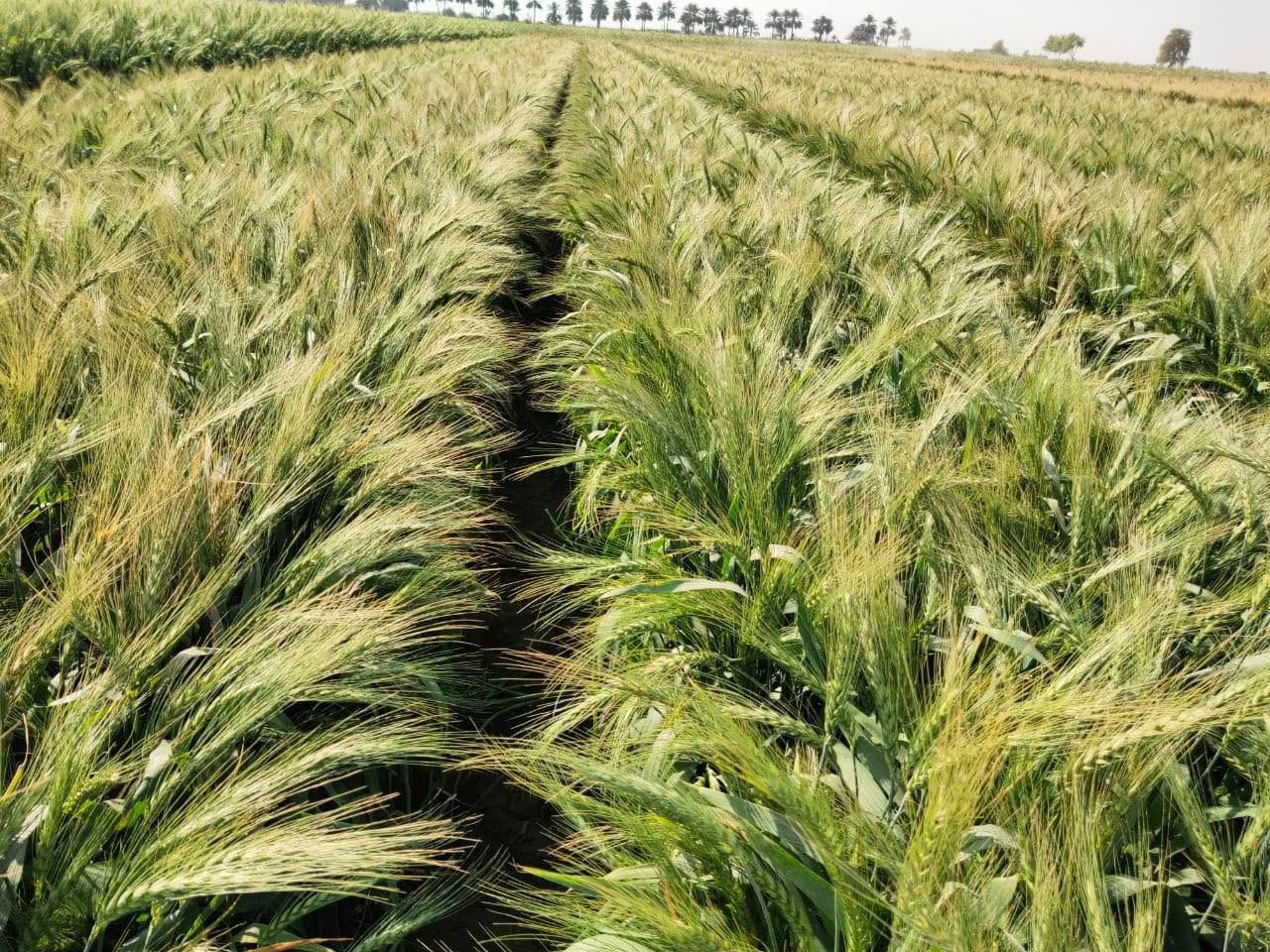
The National Agriculture Research Council (NARC), Islamabad, in collaboration with the Pro Nature Alliance Research & Development (PNARD), ran a 2021-22 wheat trial comparing three treatments on 3-acre plots each, sown 6 December 2021 with Borlaug-2016 variety. T1 used the standardized RAS/PQNK package: hardpan broken as a one-time operation good for at least five years, sowing on 42-inch raised beds with 18-inch water furrows via a pneumatic precision planter, rice-straw mulch, and no chemical fertilizer, pesticide, or weedicide. T2 and T3 represented current best farmer practice with a seed drill or hand broadcasting respectively, flat land, and full chemical inputs.
T1 used only 4.24 kg of seed per acre (against a 5 kg fill, reflecting about 80 percent planter precision), compared to 40 kg/acre for the T2 drill and 50 kg/acre for T3 broadcasting, yet still out-yielded both: T1 produced 46.65 maunds/acre against 42.34 for T2 and 43.50 for T3. T1 also recorded a higher spike length (12.6 cm vs 10.3 and 9.9), more spikelets (22.3 vs 18.4 and 18.8), and a maximum of 86 tillers per seed on individual plants against an average of 29 per plant, substantially higher than the other treatments.
The economic comparison is the sharper result: T1's cost of production was 11,660 PKR/acre against 26,236 for T2 and 22,036 for T3, roughly half, while its profit margin of 100,300 PKR/acre exceeded T2's 75,380 and T3's 82,364, despite the lower seed-use precision. No pest attack occurred in T1 despite using no pesticide or weedicide, and weed pressure remained minimal. Following this trial, PNARD and NARC developed a multi-seed pneumatic precision planter with a built-in mulcher, tested at 100 percent precision and distributed to four farms in Sindh and Punjab growing maize, cotton, moong, and fodder grasses.
A parallel qualitative survey conducted by the World Bank with Pakistan's Planning Commission interviewed 55 farmers in Punjab and Sindh and found that while raised beds, mulching, and precision planting had seen wide adoption, the harder-to-adopt package elements, hardpan breaking, no-tilling, and eliminating chemical inputs, lagged significantly. Farmers largely lacked awareness that RAS/PQNK conversion is a gradual, organic-matter-driven process rather than an overnight switch, and cited a lack of rentable, compatible machinery and public-sector technical support as key adoption barriers.
Key Takeaways
- T1 (RAS/PQNK) used 4.24 kg seed/acre versus 40-50 kg/acre for conventional practice, yet yielded 46.65 maunds/acre against 42.34-43.50 for the conventional treatments.
- T1's cost of production (11,660 PKR/acre) was roughly half that of conventional treatments (22,036-26,236 PKR/acre), producing a profit margin of 100,300 PKR/acre versus 75,380-82,364.
- T1 recorded a maximum of 86 tillers per seed (average 29 per plant), a longer spike (12.6 cm) and more spikelets (22.3) than either conventional treatment.
- No pest attack occurred in T1 despite zero pesticide or weedicide use, and weed pressure remained minimal across the trial.
- A 55-farmer World Bank/Planning Commission survey found raised beds, mulching, and precision planting widely adopted, but hardpan breaking, no-till, and eliminating chemical inputs saw little uptake as a complete package.
- The resulting multi-seed pneumatic precision planter, tested at 100 percent precision with a built-in mulcher, was distributed to four farms in Sindh and Punjab for maize, cotton, moong, and fodder grass trials.