

Soil Science & PQNK System
The Rhizospheric Dialogue: How Microbial Biodiversity Mines Geological Abundance and Plant Diversity Unlocks Nutrient-Dense Food
Answers a practicing farmer's question on whether specific microbes target specific nutrients and whether plant diversity affects food quality, reframing the soil microbiome as a specialized geochemical mining workforce rather than a passive recycling system.
Abstract
Responding directly to a farmer's question about nutrient-specific microbes and the food-quality effect of plant diversity, this paper argues that the soil microbiome's primary function is not waste recycling but the active liberation of nutrient wealth already locked in soil's geological parent material. It documents four specialist microbial groups by element: mycorrhizal fungi and phosphate-solubilizing bacteria (Pseudomonas, Bacillus) that secrete organic acids to dissolve calcium phosphates, with mycorrhizal hyphal networks increasing the soil volume mined for phosphorus by several hundredfold; potassium-solubilizing bacteria such as Bacillus mucilaginosus that bioleach feldspar, mica, and illite, releasing potassium alongside iron, zinc, manganese, and silicon; siderophore-producing bacteria and fungi that chelate insoluble ferric iron oxide into a plant-absorbable complex; and nitrogen-fixing Rhizobia and free-living diazotrophs such as Azotobacter, the only organisms capable of breaking atmospheric N2's triple bond, which the paper distinguishes as primary production from an infinite atmospheric source rather than recycling.
Root exudates are framed as a conscious biochemical "work order": plants detect their own nutrient status and exude a targeted blend of sugars, acids, enzymes, and phenolics that selectively recruits the specific microbial specialists needed at that moment, a mechanism the paper backs with Bais et al. (2006) on root exudates as mediators of rhizosphere community structure.
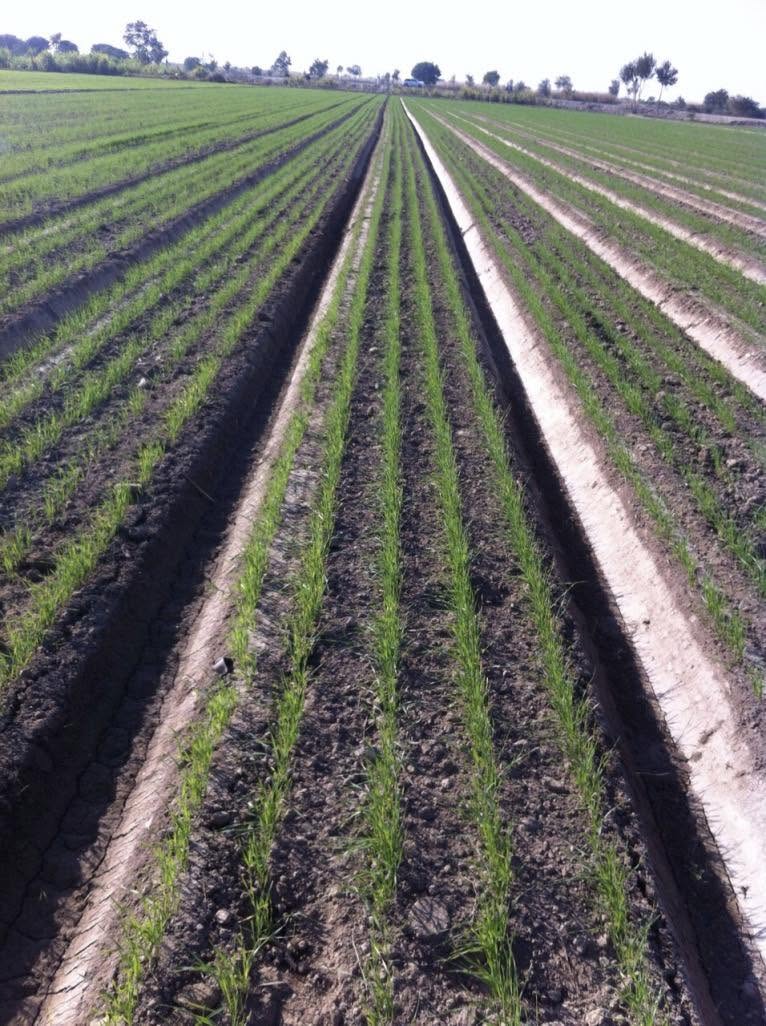
This produces a direct contrast between monoculture and polyculture systems: a single-crop field issues one narrow, repetitive biochemical order, cultivating a limited microbial crew vulnerable to the collapse of any single pathway, while a diverse plant community issues a continuous, varied symphony of directives that sustains a versatile, functionally redundant mining consortium capable of extracting a complete nutrient profile.
The paper links this microbial completeness directly to food quality, citing Baranski et al. (2014), whose meta-analysis found significantly higher antioxidant concentrations and lower cadmium levels in organically grown, typically more biodiverse-managed crops, and argues that functional redundancy across microbial pathways is what buffers nutrient availability against drought, pH shifts, and other stresses.
It closes by answering the farmer's original question directly: yes, specific microbes do target specific nutrients as a specialized geochemical workforce, and yes, plant diversity critically affects food quality because it is the mechanism that recruits and sustains that workforce, positioning the PQNK farmer's task as Phytocentric Management, cultivating diverse, continuous plant cover to feed and direct the mining consortium rather than feeding the plant directly.
Key Takeaways
- Four microbial specialist groups mine specific elements: mycorrhizal fungi/PSB for phosphorus (extending the mined soil volume several hundredfold), KSB like Bacillus mucilaginosus for potassium via bioleaching of feldspar and mica, siderophore producers for iron, and Rhizobia/Azotobacter for atmospheric nitrogen fixation.
- Root exudates function as a targeted biochemical 'work order,' with plants exuding specific sugar/acid/enzyme blends to recruit exactly the microbial specialists needed for their current deficiency.
- Monoculture issues a single narrow biochemical order, producing a vulnerable, limited microbial crew; polyculture issues a continuous varied signal that sustains a complete, functionally redundant mining consortium.
- Cites Baranski et al. (2014): organically/biodiversity-managed crops show significantly higher antioxidant concentrations and lower cadmium levels in a systematic meta-analysis.
- Frames the regenerative farmer's core task as Phytocentric Management: cultivating diverse, continuous plant cover (cover cropping, rotation, intercropping, agroforestry) to recruit and sustain the microbial mining workforce, rather than feeding the plant directly with inputs.