

Workforce & Practice Advisories
Failure in Farm Management: Inheritance Without Professionalization
Argues the least-discussed root cause of agricultural failure is that most farmers inherit land, tools, and habits rather than choosing farming after training, leaving a profession with no equivalent to a production manager, and proposes PQNK's One Acre Prosperity model as the structural fix for the compulsory-selling trap this creates.
Abstract
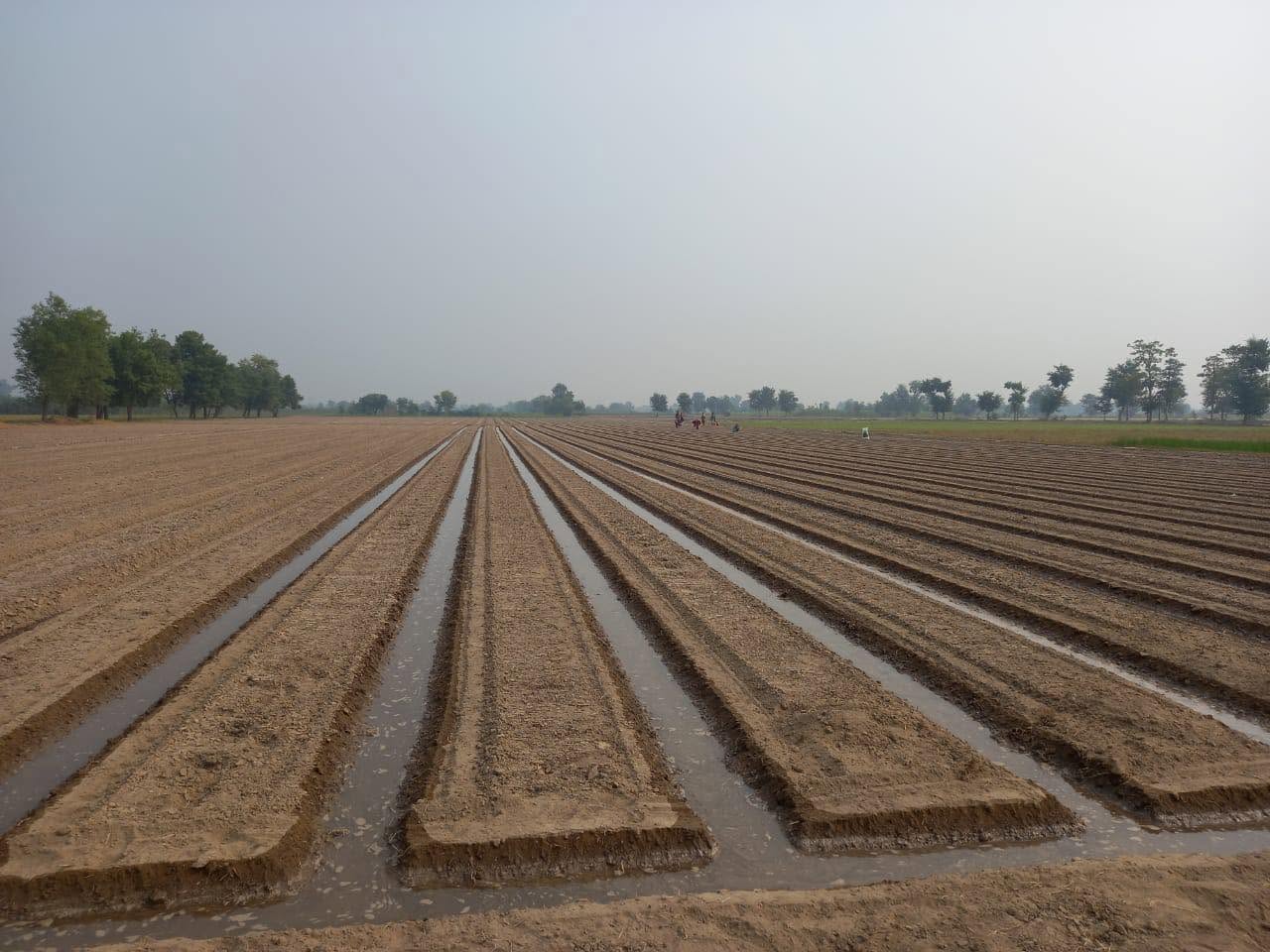
The paper's starting claim is that the vast majority of farmers enter farming by inheritance, not choice, inheriting land, tools, crops, production habits, beliefs, and degraded production systems, but not formal training, systems thinking, biological understanding, or production planning skills. The typical inherited mindset, it argues, is simply 'this is how our land has always been farmed,' with the only 'innovation' most farmers introduce being bigger tractors, heavier implements, and more automation, changes that accelerate degradation rather than altering the underlying production logic.
It describes a near-total absence of soil biology from conventional farm decision-making: farmers can typically state fertilizer dose, seed rate, and tractor horsepower, but cannot explain why soil compacts, why roots suffocate, or why nutrition declines despite continued input use. It notes a corresponding gap in the training landscape itself: agricultural universities are theoretical and oriented toward validating input use, input company advisories are sales-driven, and machinery demonstrations are equipment-focused, but almost no action-learning schools exist to train farmers in soil restoration, farm layout, moisture management, or harvest timing, leaving agriculture with no professional production-manager role comparable to other industries, and few skilled machinery operators who understand precision planter calibration, seed spacing, or planting depth relative to plant type.
A second structural failure identified is compulsory selling: farmers must sell immediately after harvest because they need cash for the next crop, lack storage, and carry input-loan burdens, creating a forced pattern of selling at the lowest prices and buying inputs at the highest, and a herd effect where a good price one year draws everyone into the same crop the next, glutting the market and crashing prices. The paper argues farm size does not solve this: large farms can delay failure through capital and storage but still follow the same degraded input-dependent logic, while small and marginal farmers feel the failure immediately with no buffer; the problem, it states, is system design, not scale.
PQNK is presented as addressing the root cause by changing how farming is understood rather than merely how it is executed, teaching farmers to read soil as a living system, design farms rather than simply plant fields, and treat soil improvement as insurance rather than an afterthought. Its specific structural fix for smallholders is the One Acre Prosperity (OAP) model, built on perennial plant combinations, continuous ground cover, and daily rather than seasonal planting and harvesting.
The paper argues OAP directly dissolves the compulsory-selling trap: daily harvesting produces daily income, eliminating the single harvest glut, the price-collapse shock, and the dependence on seasonal credit, returning timing control and price flexibility to the farmer. Its closing synthesis is that agriculture fails not because farmers are careless, but because farming is inherited rather than professionally learned, and that shifting from inheritance to profession, from reaction to design, is what stops failure from being inevitable.
Key Takeaways
- Identifies inheritance without professional training, not farm size or effort, as the primary structural cause of agricultural failure: farmers inherit land and habits but rarely formal training in soil systems, plant physiology, or production planning.
- Notes the training landscape has no equivalent to an industrial production manager: agricultural universities are theoretical, input advisories are sales-driven, and almost no action-learning schools teach soil restoration or farm design directly.
- Describes compulsory selling as a structural trap: no storage and input-loan pressure force farmers to sell at seasonal lows and buy inputs at seasonal highs, with herd behavior periodically glutting markets and crashing prices.
- Argues farm size does not resolve this: large farms delay the same failure with capital, while small farms feel it immediately with no buffer, making system design, not scale, the actual variable.
- Proposes the One Acre Prosperity (OAP) model, built on perennial combinations and daily planting/harvesting, as the direct structural fix, converting seasonal income shocks into continuous daily cash flow.
- Frames the needed shift as farming moving from inheritance to profession, from reaction to design, from extraction to regeneration.