

Periodic Production Engineering
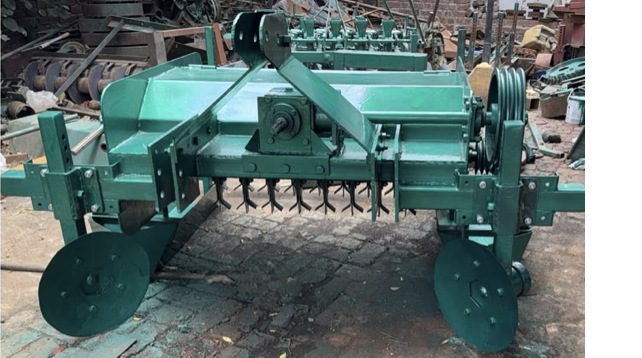
The Mulcher & Bed Renovator
One dual-purpose implement: turns crop residue into future fertility, then keeps the permanent bed architecture precise for years.
Why It's Needed
Conventional agriculture treats post-harvest residue as an obstacle: burned, removed, or buried out of the way. PQNK treats it as future soil — the same logic a forest applies to its own fallen leaves.
Even a permanent bed system experiences minor wear over time: rainfall reshapes furrow edges, and machinery traffic gradually affects corridors.
Operating Principle
In mulching mode, this implement reduces and evenly distributes residue so it stays in contact with the soil surface, where microbes, fungi, and earthworms can break it down without removing that organic matter from the field. The machine performs a brief operation; biology carries on the transformation for months afterward, compounding into reduced surface temperature swings, lower evaporation, better infiltration, and a steady feed of carbon and nutrients back into the system.
In its other role, the same implement maintains the permanent bed architecture the raised bed shaper first established. Switched to bed-renovation mode, it corrects only the specific portions that need it, restoring the original architecture's precision without reconstructing the field.
Relationship to PQNK
Whichever job it is doing, it is a maintenance machine, not a construction or cultivation one, closer to a conservation engineer than a builder. As a PQNK system matures and its accumulated root channels, carbon reserves, and biological structure become more valuable, this precision matters more, not less. Mulch is returned to the surface, never incorporated into the soil by tillage — surface retention is fundamental to what the mulch layer does.
Field Operation
Mulching mode runs after harvest, processing standing residue into surface cover ahead of the next no-till planting pass. Bed-renovation mode runs periodically, as needed, to correct minor wear in the permanent bed architecture rather than on a fixed schedule.