

Black Carrot
Grown under contract farming for nutraceutical anthocyanin extraction, with quality tuned through cold and mild water stress.
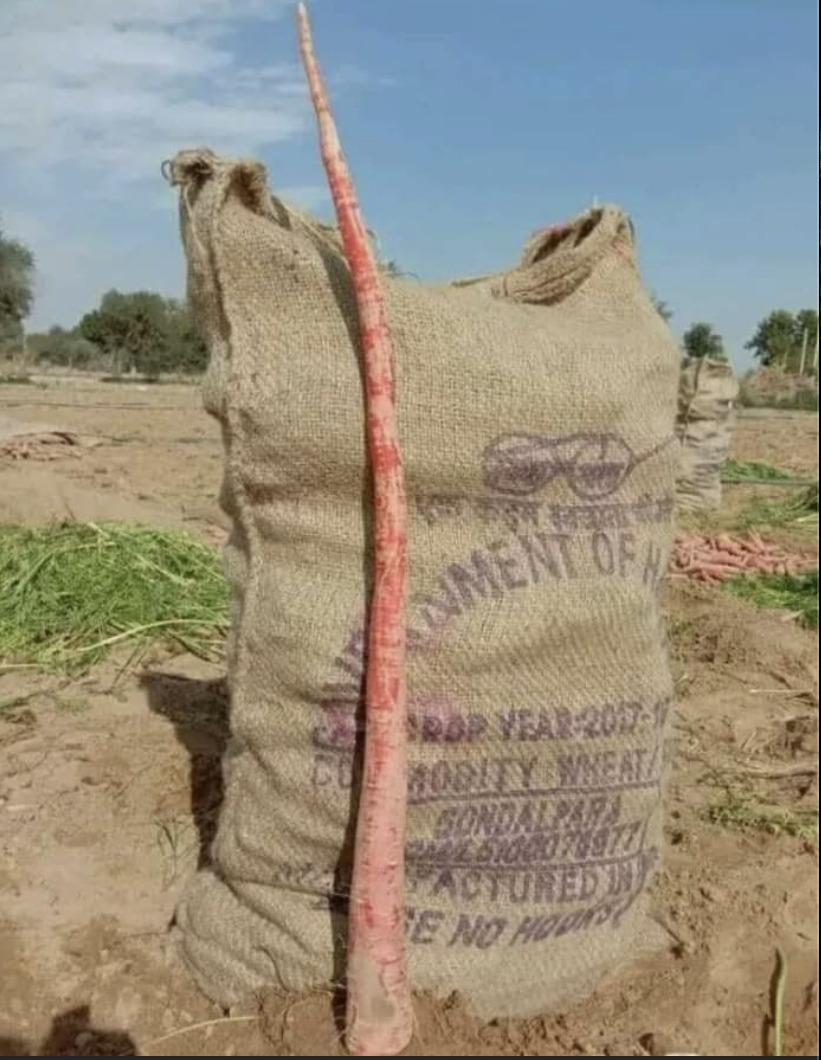
Overview
Black carrot is grown under PQNK for its anthocyanin content — a plant pigment prized for nutraceutical extraction, with some buyers offering contract prices tied directly to pigment concentration. PQNK's stable, mulch-buffered soil temperature (13–26°C year-round) gives farmers precise control over the conditions that drive pigment production.
PQNK Practices Applied
- Hardpan broken before planting — with the restriction gone, roots have been documented reaching close to 4 feet in length
- No external NPK — nutrition comes entirely from the soil's own gradient, accessed by the plant as needed
- Full root-size growth allowed for the first 60–70 days, before introducing mild water stress
- Deliberately extended irrigation intervals in the final 25–30 days to signal mild drought and trigger pigment synthesis
- Cool nights and full sun exposure, which together drive the strongest anthocyanin response
Results & Testimony
Breaking the hardpan alone is reported to roughly quadruple yield versus conventional carrot production, with no fertilizer or pesticide applied and a lower cost of production at the same time. Winter-grown roots are smaller but far more pigment-dense than summer roots — a direct, controllable trade-off between size and nutraceutical value that PQNK's stable soil system lets farmers manage deliberately.
Related Knowledge Papers
The full science and field data behind black carrot under PQNK.